


Chapter One
2022-08-20 23:32:13
The Dao that can be spoken of is not the eternal Dao. A name can be named, but it is not a permanent name. Nameless ④ is the beginning of all things. It is named ⑤ and is the mother of all things ⑥. Therefore, one should always be free from desires to observe their insignificance. Always have desires; observe where they end. The two come from the same source but are called the same under different names ⑩. Mysterious and profound, the door of all the insignificance. If the "Tao" can be expressed in words, then it is the constant "Tao" (the "Tao" can be expressed in words; it is not an ordinary "Tao"). If a "name" can be named after a literary character, then it is a common "name" (a "name" can also be explained; it is not an ordinary "name"). "Nothingness" can be used to describe the state of the universe before it was created. And "having" is the name given to the origin of all things in the universe. Therefore, one should always observe and understand the mystery of the "Tao" from "nothingness". One should always observe and understand the clues of the "Way" from the "being". Both non-existence and existence, having the same origin but different names, can be called mysterious and profound. It is not merely mysterious or profound, but rather mysterious and profound, far-reaching and profound. It is the ultimate gateway to the mysteries of all things in the universe (from the "named" mysteries to the intangible ones, the "Tao" is the path to understanding all the mysterious changes). [Note] ① The first "Dao" is a noun, referring to the origin and essence of the universe, and is extended to mean principle, rule, truth, law, etc. The second "Dao" is a verb. It refers to the meaning of explanation or expression, similar to "being able to speak out". ② Constant: Ordinary, common. ③ The first "name" is a noun, referring to the form of the "Way". The second "name" is a verb, indicating the meaning. ④ Nameless: Refers to the formless. ⑤ Named: Refers to having a tangible form. ⑥ Mother: Maternal origin, root cause. ⑦ Constant: frequently. ⑧ miao: It means to be ingenious and subtle. ⑨ jiao: Edge, boundary. The meaning of an extension. ⑩ Wei: Title. This is "reference". ⑾ Xuan: Deep black, with a profound and mysterious meaning. Door: The door of all things, the general path of all mysterious changes, is used as a metaphor for the path of the only original "Way" of all things in the universe. Laozi, for the first time, put forward the concept of "Dao" as the core of his philosophical thought system. Its meaning is profound and extensive. It can be recognized from a historical perspective, understood from a literary aspect, explored from aesthetic principles, and even thought about from the dialectics of the philosophical system... Philosophers do not always agree when interpreting the category of "Dao". Some consider it a material thing, an element that constitutes all things in the universe. Some people believe that it is a spiritual thing and also the source of all things in the universe. However, in the interpretation of the "Tao", scholars also share a roughly similar understanding, that is, they believe it is in motion and change rather than rigid and static. Moreover, all things in the universe, including nature, human society, and human thinking, develop and change in accordance with the laws of the "Tao". In conclusion, in this chapter, Laozi says that the "Tao" gave birth to all things in heaven and earth, but it cannot be explained in words. Instead, it is extremely profound and mysterious, and cannot be easily comprehended. This requires a gradual process from "nothingness" to "existence". [Commentary] In this chapter, Laozi focuses on introducing his philosophical category - "Dao". Is the attribute of the Tao materialistic or idealistic? This is a long-standing issue that has aroused great interest among many scholars from ancient times to the present. In history, Han Feizi lived in an era relatively close to Laozi's, and he was the first scholar to write annotations for the Tao Te Ching. In "Xie Lao", Han Feizi said about what the Dao is: "The Dao is where all things are." This is what all principles verify. The principle is the writing that shapes things. The Tao is the reason why all things come into being. Therefore, it is said that the Dao is the one who governs. This indicates that Han Feizi understood Laozi's "Dao" from a materialistic perspective. In the Records of the Grand Historian, Sima Qian included Laozi and Han Feizi in the same biography (along with Zhuangzi and Shen Buhai), that is, he believed that Han, Zhuang and Shen "all originated from the meaning of morality, while Laozi was profound." In his book Lunheng, Wang Chong of the Han Dynasty also held that Laozi's thought of the "Dao" was materialistic. However, from the end of the Eastern Han Dynasty to the Wei and Jin Dynasties, the situation changed. Some scholars, having grasped the profound meaning of Laozi's philosophy that "all things in the world come from being, and being comes from non-being", affirm that the essence of the universe is only one "non-being", which is called metaphysics. Subsequently, Buddhism was introduced to China and gradually flourished. The mysterious and the Buddhist merged, and thus the interpretation of the "Tao" leaned towards idealism. Neo-confucian scholars of the Song and Ming Dynasties also absorbed the thoughts of Buddhism and metaphysics, and still offered an idealist interpretation of Laozi's "Dao". In conclusion, scholars have always held fundamentally different views on whether the "Tao" is materialist or idealist. [Interpretation] The Revolutionary and Authoritative Nature of the "Dao" The philosophical concept of the "Dao" was first proposed by Laozi. This term, which has a touch of Eastern mysticism, frequently appears in the book "Laozi". Sometimes it seems to reveal an incredibly huge original driving force in the universe. Sometimes, it depicts before us the primordial and chaotic state of the universe. Or it showcases the vigorous vitality of the beginning of the division of heaven and earth, the birth of all things, the sprouting of grass and the growth of trees, and so on. From Laozi's various conceptions of the "Tao", we can fully appreciate the origin of his almost devout worship and reverence for the "Tao". Laozi's reverence for the "Tao" stems entirely from his honesty towards nature and its laws, which is completely different from the ideological concept of that era that regarded "Heaven" and "God" as absolute authorities. For Laozi, "Dao" was merely a new basis proposed to completely break away from religious rule, and it was more authoritative than "God". Laozi's "Dao" is a unique understanding and profound perception of the universe and life, which stems from his meticulous observation of nature and a strong mystical intuition. This deliberate attention to nature and its laws constitutes the cornerstone of Laozi's philosophical thought. In a biological sense, the relationship between humans and nature, both spiritually and materially, has shown an almost primitive dependence from ancient times to the present, much like a baby's dependence on its mother. The ancients said, "When a person is poor, he turns to his roots." This so-called "origin", in a broader sense, refers to "nature", the mother of human beings and all things. Why does Qu Yuan's long poem "Heavenly Questions" raise so many questions about the universe, celestial bodies, history, myths and the human world? When he is disappointed with the political future and the dark reality, it is natural for him to develop a mentality of returning to nature and a desire for help. Out of dissatisfaction and anxiety towards reality, pushing to the root cause, there is an urgent desire to find a suitable position for human beings in the face of the mysterious natural forces. Freud's "Pleasure Principle" theory argues that while civilization brings material benefits to humanity, it also imposes extremely heavy suppression on the human spirit, which is one of the major shortcomings of civilization. However, the principle of human beings' innate pursuit of happiness that he mentioned is precisely based on the harmonious relationship between humans and nature. Today, the trend of "returning to nature" that is surging among people in terms of their living needs and cultural thoughts, doesn't it also explain in a broader sense the reasons why ancient scholars explored the universe and nature with all their might and wisdom? From this, we can also understand the historical reasons why Laozi's philosophy revered nature, rejected knowledge, pursued a political life of "small state and few people", and emphasized the simple nature and mysterious original driving force of the "Tao". During the Spring and Autumn and Warring States Periods, the royal power shifted upwards, and the local authorities held orders. Both political and social relations underwent drastic changes. When the clan system in the real society restricts the development of history, the old "Mandate of Heaven" and "Way of Heaven" also restrain the development of thought. The proposition of the "Dao" in Laozi's metaphysics is to seek the theoretical basis for rejecting the "Heavenly Mandate View" and the "Heavenly Way View" from the understanding of natural history, and thus possesses revolutionary and reasonable characteristics in the history of ancient Chinese philosophy.
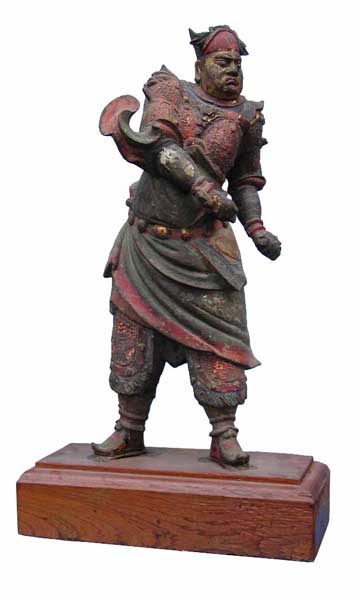
One of the stars of the Big Dipper
2026-04-15 11:51:31
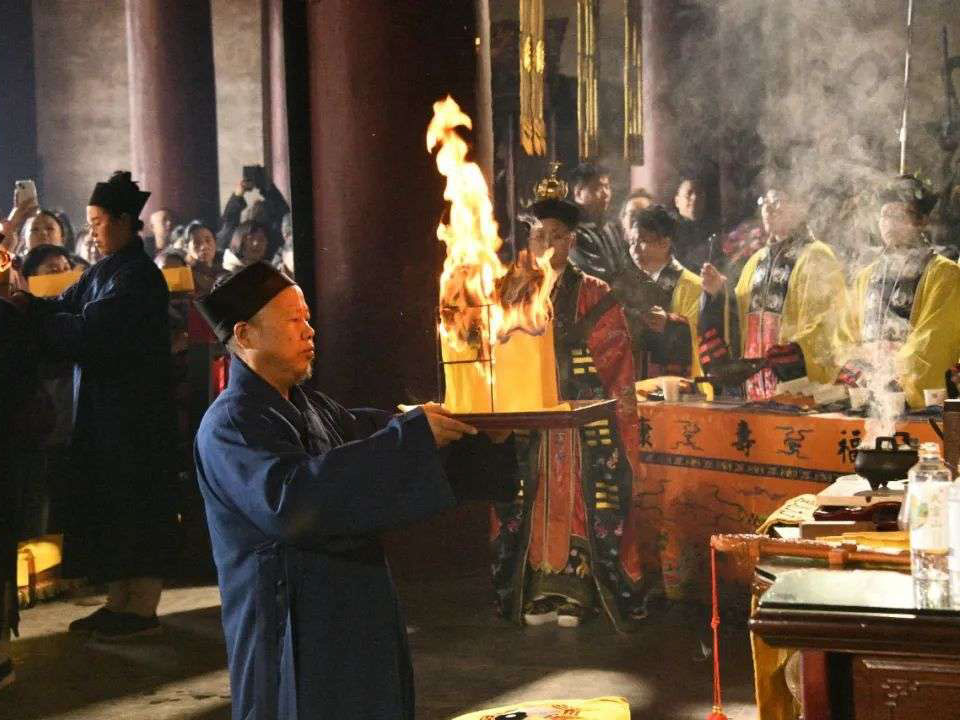
(1) The meaning of the ritual of fasting and Taoist ceremonies
2022-08-20 23:32:13
The original meaning of "zhai" was to be neat, harmonious an...
Yin GUI
2022-08-20 23:32:13
Chapter 27
2022-08-20 23:32:13
Chapter 72
2022-08-20 23:32:13
The couplet of the ancestral hall of the Wudang Mountain Temple
2022-08-20 23:32:13
A Tour of Taihe Mountain (Excerpt)
2022-08-20 23:32:13