


(3) Taoist music
2022-08-20 23:32:13
Taoist music is used during Taoist rituals to celebrate the birthdays of immortals and pray for blessings from heaven. The music used in various ritual activities such as exorcism and exorcism, as well as the salvation of the deceased, is called ritual music or dojo music. Taoist music is an indispensable part of Taoist rituals. It can enhance and heighten the religious atmosphere, and strengthen believers' yearning for the world of immortals and their reverence for them. (1) The Origin and Development of Taoist Music: The early Taoist religious activities were an inheritance and development of the ancient shamanic rituals for worshipping deities. At first, chanting sutras was done directly, and there were no records of the use of music. The use of Taoist music was approximately during the Northern and Southern Dynasties. According to the "Shi Lao Zhi" in the "Book of Wei", in the second year of the Shenrui era of Emperor Ming of the Northern Wei Dynasty (415), Kou Qian met Laozi on Mount Song and ascended to his position as the Celestial Master. He bestowed upon him the "New Sutra and Precepts Recited in the Clouds" and formulated the "New Method of Reciting Precepts in Musical Music", thus giving rise to the initial Taoist music rhymes such as "Huaxia Song" and "Bu Xu Ci". The so-called "Ode to the Huaxia" was adapted from the elegant music played in the imperial courts of the Qin and Han dynasties. According to the annotation of "Yuyu Fashi", "Huaxia, three thousand five hundred li is Huaxia, which implies its vastness. Now, Huaxia is raised from the Hall of Sizhen, recited slowly, passed through 廊庑, ascended the hall, and concluded." It seems to convey the meaning of distance." This is probably a kind of rhyme recited during the march before the opening of a Taoist ritual. The "Bu Xu Ci" are mostly words of praise for immortals, usually in the form of five-character or seven-character poems, with no fixed length, depending on the needs of the ritual. The "Essential Explanations of Ancient Yuefu Poems" states: "Bu is an empty word; it is a Taoist tune." According to the "Yiyuan" written by Liu Jingshu of the Southern Dynasties, "When King Si of Chen (Cao Zhi) was traveling on Yushan Mountain, he suddenly heard the sound of chanting scriptures in the air, which was clear, distant and vigorous. He asked the interpreter to write it down, making it the voice of a deity. A Taoist followed his example and made it the sound of walking in the void." According to the "Chao Zhi", "All his chapters were composed by high immortals and sages who, during their visit to the Xuan Capital and the Jade Capital, flew through the void to mock and recite, thus it is called 'walking in the Void'." It is named for its sound, which is like the ethereal chanting of immortals wandering in the void, and its style is ancient and elegant. In the "Taishang Dongxuan Lingbao Reception" written by Lu Xiujing, a Taoist priest of Maoshan in the Southern Dynasties, there is a collection of "Bu Xu Ci". In the "Yuyin Fa Shi" collected in the "Dongxuan Section" of the "Zhengtong Daozang" of the Ming Dynasty, there are many "Bu Xu Ci" recorded. The Tang Dynasty was one of the prosperous periods for the development of Taoist music. Emperor Gaozong of Tang once ordered the palace musicians to create Taoist tunes. Emperor Xuanzong once ordered Taoist priests and ministers to present Taoist music and personally composed and taught Taoist music. In the eighth volume of "The Holy Record of the Hunyuan", it is written: "On the day Xinmao of the second month, the emperor prepared the Feathered Robe Dance and the Purple Micro Eight Trigrams Dance to be presented to the Taqing Palace. They were more precious than the nine Temples." In the 54th volume of the "Cifu Wugui", it is recorded that "In the fourth month of the tenth year of the Tianbao era, the emperor personally taught the Taoist priests the sound and rhythm of the step void at the Taoist temple." He also ordered the local chiefs Ma Chengzhen and Li Huiyuan to compose the "Xuanzhen Daoqu" and the "Daluo Tianqu". An imperial edict was issued to He Zhizhang, the Minister of the Ministry of Works, to compose the "Zi Qing Shang Sheng Dao Qu". The Grand Changqing Weiyuan was ordered to compose six pieces of music, namely "Jingyun", "Jiuzhen", "Ziji", "Chengtian", "Shuntianle" and "Xiaochangshou". Emperor Xuanzong composed his own Taoist songs such as "The Song of Subduing the True and Summoning Immortals" and "The Song of Zi Wei Sending Immortals". Many Tang Dynasty poets also mentioned Daoist music in their poems. For instance, Zhang Ji wrote, "But when I sleep on the top of the Yao Altar, I should hear the faint sound of walking in the air." In her poem "Trial of the Initial Completion of the New Clothing", Xue Tao, a female poet, wrote: "Changju was originally a noble instrument of the upper Qing Dynasty, and once chased the immortals to gather jade." Every time they attended the palace dance and song festival, they would bend their waists and sing the line "Bu Xu Ci" in unison. It can be seen that music creation was extremely popular at that time. During the Tang Dynasty, due to the movement of Taoists, Taoist music spread from the imperial court to the common people and absorbed many folk tunes, including some Buddhist music and music from the Western Regions. Some of them were renamed and immediately used in Taoist activities. For instance, "Wu Chou" was renamed "Chang Huan", and "Su Luo Mi" was renamed "Sheng Chao Yang", all of which were incorporated into the category of Taoist music. At the end of the Tang Dynasty, Zhang Ruohai wrote "Xuan Tan Ban Fei", referring to the Taoist music of the Tang Dynasty as "incorporating a wide range of Chen's mixed music, Ba songs and Yu dances." During the late Tang and Five Dynasties period, Du Guangting, a renowned Taoist priest, compiled the "Comprehensive Collection of Taoist Rituals and Ceremonies" by integrating the essence of previous Taoist rituals and ceremonies, further standardizing Taoist rituals and ceremonies. By this time, Daoist music had evolved from simple percussion instruments such as bells, bells and drums to include wind instruments and plucked string instruments. The Song Dynasty was another significant period in the development of Daoist music. Emperors Taizong, Zhenzong and Huizong of the Song Dynasty respectively composed Daoist music, totaling dozens of pieces, such as "Bu Xu Ci", "SAN Hua Ci", "Bai He Zan", "Yu Qing Yue" and "Tai Qing Yue". In particular, Emperor Huizong of the Song Dynasty was fond of Taoism and highly valued Taoist priest Lin Lingsu to revise and supplement Taoist ritual ceremonies. He issued 426 volumes of the "金箓 Lingbao Taoist Temple Rituals" and selected Taoist priests from all over the country to come to Beijing to study Taoist music. The earliest existing collection of Taoist music in China, "Yuyu Fashi", was compiled during the Northern Song Dynasty. It included 50 poems and eulogies composed by Emperor Laizhenzong and Emperor Huizong of the Song Dynasty in a cursive notation system, from the Northern and Southern Dynasties to the Sui and Tang Dynasties. The curving notation in the "Yiwen Zhi" section of the "History of the Han Dynasty" is referred to as "the sound is tortuous", resembling a continuous singing with many interludes, and it has the style of Southern Qu. At this time, stringed instruments had joined the ranks of Taoist music, and the accompanying instruments of Taoist music were becoming increasingly complete. By the Yuan Dynasty, the Quanzhen and Zhengda schools emerged in Taoism, and two different styles of Taoist music also appeared. Quanzhen attaches great importance to pure cultivation, and his pleasures are mostly secluded and transcendent. And the Zhengyi Chong ritual and 符箓, the Taoist music is powerful and elegant. In the early Ming Dynasty, Zhu Yuanzhang established the Xuanjiao Institute to govern Taoism throughout the country (which was later renamed the Daolu Office), ordered the rectification of Taoism, and instructed Taoists to compile ritual norms for Taoist ceremonies. As a result, Taoist music gradually became standardized. In the 11th year of the Hongwu reign of the Ming Dynasty (1380), the "Shenyangguang" was established, with positions such as the director and the Taoist priest set up. It was under the jurisdiction of the Taichang Temple and was in charge of the court's sacrificial activities and the music and dance students. It was led by Taoist priests proficient in music and dance, and the music and dance students were filled by collected Taoist priests. Their costumes were similar to those of Quanzhen Taoist priests. Apart from the capital, there are also music and dance students in the Five Great Mountains for national festivals. In the early Ming Dynasty, the renowned Taoist priest Leng Qian once advocated "Divine Optimism" and "refined music". In the 15th year of the Hongwu reign (1382), Zhu Yuanzhang personally determined the Taoist ritual music. During the Yongle reign (1403-1424), Emperor Chengzu Zhu Di composed the "Great Ming Xuanjiao Music", which was recorded using the "Gongchi" method. It consists of three parts: the sacrificial altar Praise and Ode music, the Xuantian God Music, and the Hongen Lingji Zhenjun Music. The pieces include "Yingfeng Nian", "Tianxia Yue", "Sages' Record", "Welcoming Immortal Guests", "Step by Step Higher", and 14 others. Later, they were included in the "Zhengtong Daozang" and have become valuable materials for the study of ancient music in the Ming Dynasty. In the Qing Dynasty, the management of Taoist music basically followed the old system of the Ming Dynasty. The Dongyue Temple, Fantao Palace, Luzu Shrine, Yue Temple and Guan Temple in Beijing all belong to the category of "Divine optimistic people", who live in music and dance. They usually wear costumes, keep their hair and live in the temple, but they can have families and the family line is inherited from father to son. Whenever there was a grand ceremony of the imperial court, he was summoned to the palace to participate in the sacrificial ceremony. The music performed belongs to the court festival music, featuring a large number of instruments. It is grand and imposing yet cheerful. In folk culture, Taoist music has been widely integrated with local tunes from various regions, giving rise to different styles of Taoist music in different areas. Daole has embarked on a path of diversification, regionalization and secularization. (2) Characteristics of Taoist Music As an ancient religious music, Taoist music is permeated with the basic beliefs and aesthetic thoughts of Taoism in its musical form and mood, thus forming its own unique pattern. Taoist music is mainly used for praising immortals, praying for blessings and warding off disasters, exorcising the souls of the deceased and cultivating oneself. In terms of melody form, it can be divided into "Yangyun" and "Yinyun". "Yangyun" is mostly used for morning services and auspicious rituals. "Yin Yun" is often used in evening services and rituals for the liberation of the deceased. Its aesthetic thought reflects Taoism's pursuit of longevity and long-term vision as well as tranquility and non-action. It is both detached and engaged in the world, with a solemn and dignified tone, yet not lacking in serenity and tranquility. When summoning deities and dispatching generals, it shows the grandeur and might; when subduing demons and exorcising evil spirits, it shows the joy and lightness; when praising immortals, it shows the elegance and tranquility; and when praying and cultivating, it shows the melodious and ethereal. Through the embellishment and rendering of music, the Taoist ritual of the sacrificial ceremony appears more solemn, dignified, sacred and mysterious. In the vocal music, various immortals' artistic conceptions are harmoniously and vividly recreated, bringing people's emotions into the mysterious world of immortals. Taoist beliefs have a very close connection with the customs of the Han ethnic group, and in terms of doctrine, they emphasize both the transcendent and the worldly. Therefore, Daoist music has a very close relationship with the traditional music of the Han ethnic group. It has extensively absorbed and explored the tunes and performance methods of both court music and folk music, which has endowed Daoist music with wide mass and local characteristics. On the one hand, its melody and form are easy for ordinary people to understand and accept, and are popular among people. It not only has the function of enhancing religion but also the function of entertaining people. Even some Taoist music tunes have once again broken away from Taoist music and returned to the folk, transforming into new types of folk music and drama. The folk Taoist sentiment in Shaanxi and the popular grand lyrics in southern Zhejiang both evolved and differentiated from Taoist music. On the other hand, it also endows Taoist music with a strong local flavor. Different places have different styles, and there are significant differences among them. For instance, the music of Quanzhen Taoism is divided into "Ten Directions Melody" and "Local Melody". The Ten Directions Rhyme is a Taoist music rhyme commonly used in all Quanzhen Taoist temples across the country, also known as. "Full True Rhyme" Local rhymes, on the other hand, are merely the Taoist phonological sounds that are popular and used in a certain region. These local rhymes vary greatly and mostly absorb the tunes and contents of local folk operas, folk songs and ballads. Therefore, they are also called "rural rhymes", including Beijing rhymes, Guanghan rhymes, Laoshan rhymes, Wenzhou rhymes, Shaanxi rhymes, and so on. As a result, the characteristics of Daoist music, such as popularization, popularization and diversity, have been formed. Daoist music consists of two parts: vocal music and instrumental music. Its performance forms are diverse, including solo singing, unison singing, solo playing, ensemble playing, and accompaniment. Vocal music is the main part of Taoist ritual music, which is divided into formats such as song, praise, bu Xu, gatha and chanting. Ode, praise, step and verse are separate forms of music, with short sections of two or four lines, and sometimes long sections of more than four lines. Among them, the musical forms of "song", "praise" and "bu xu" were already formed in the Tang Dynasty, while "ji" emerged after the Yuan Dynasty. In the form of music, the rhyme is the melody, which plays a role in enhancing the atmosphere and intensifying emotions. The melody (i.e., the scripture) is always very specific, expressing the wishes and prayers of the person performing the ritual, either seeking help from the divine realm or praising the immortals. The melody and the lyrics are in harmony and unity, and various forms of music are interlinked and combined, forming the entire ritual activity. The Musical Instruments in Taoist music almost cover all the Musical Instruments of the Han ethnic group. The most commonly used ones are percussion instruments such as bells, drums, clappers, cymbals, bells and wooden fish, wind instruments such as sheng, guan, di and xiao, and plucked instruments such as guqin, erhu, banhu and ruan. They are usually used for the opening, interlude, conclusion and accompaniment of religious ceremonies. The Taoist priest who presides over religious ceremonies is called "Gao Gong", and the Taoist priest who recites scriptures is called "Jing Shi". They must be well-versed in Taoist scriptures, proficient in the rituals of Taoist ceremonies, and be able to walk the "Yu Step", "Ta Gang Step" and various hand gestures, and be well-versed in doing, reciting, singing and playing Musical Instruments before they can be competent. In Chinese history, there were many Taoists who were famous musicians, such as Lin Lingsu and Leng Qian mentioned earlier. The most renowned figure in modern times is Hua Yanjun (also known as "Abing"), and his works such as "Erquan Yinyue" are rare masterpieces in Chinese national music. In the 1980s and 1990s, local Taoist temples in China, with the assistance of music professionals, sorted out and rescued a large number of Taoist music works, and produced many audio and video products, making contributions to promoting traditional Chinese culture and Taoist music.
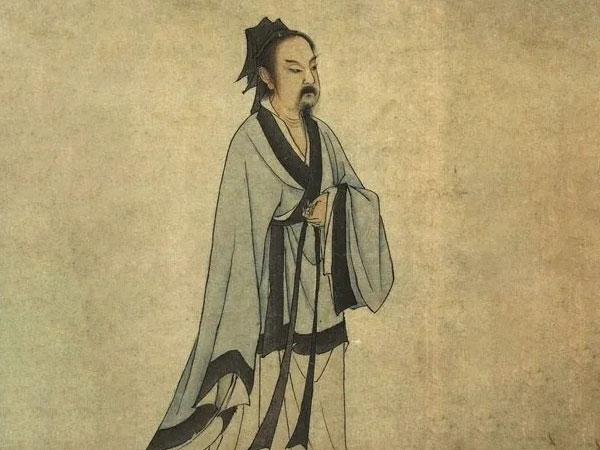
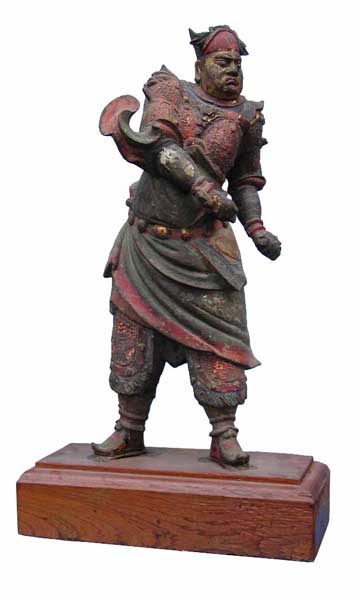
One of the stars of the Big Dipper
2026-04-15 11:51:31
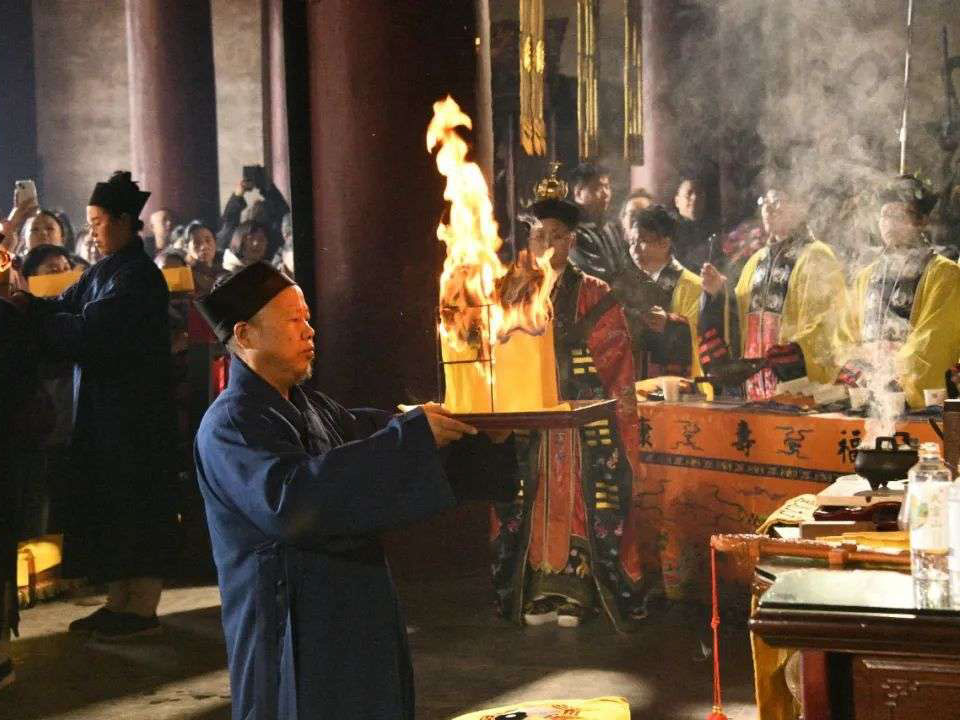
(1) The meaning of the ritual of fasting and Taoist ceremonies
2022-08-20 23:32:13
The original meaning of "zhai" was to be neat, harmonious an...
Yin GUI
2022-08-20 23:32:13
Chapter 27
2022-08-20 23:32:13
Chapter 72
2022-08-20 23:32:13
The couplet of the ancestral hall of the Wudang Mountain Temple
2022-08-20 23:32:13
The Wudang Taoist couplet congratulating the Rain
2022-08-20 23:32:13