


(2) Taoist Architecture
2022-08-20 23:32:13
Taoist architecture refers to religious buildings mainly in the form of Taoist palaces. The "palace" was the residence of the emperor and also a place for deities, mostly large divine palaces bestowed by emperors. "Guan", also known as "Lou Guan", was originally a place to climb high and look out in ancient times, and also a place to welcome the gods. Later generations generally referred to Taoist temples as "gong Guan". (1) The Origin and Function of Taoist Temples Taoist temple architecture developed from the traditional palaces, temples and altars of ancient China. It was a place for Taoists to worship deities and also a place for them to live in seclusion and cultivate. Since the Jin and Yuan Dynasties, after the rise of Quanzhen Taoism, a Taoist monastic system was established, and temples became places where Quanzhen Taoists collectively chanted scriptures and cultivated themselves after becoming monks. Taoism has always held the belief that there are 36 caverns and 72 blessed lands. It is said that these caverns and blessed lands were all places where immortals resided and wandered, and they were the realms that reached the heavens. Therefore, later generations often practiced and cultivated themselves in these places and built temples. Especially the reverence of emperors throughout history for Taoism; This has led to the widespread presence of Taoist temples throughout China. Although they vary in scale and form, they can generally be classified into the following three categories: palace-style temples; Ordinary ancestral temples; A simple hut or cave. The three have significant differences in architectural scale, but their purposes and functions are unified. (2) The Architectural Philosophy of Taoist Temples Taoist temples not only vividly inherit the traditional architectural ideas, patterns and methods of China in their layout, volume and structure, but also incorporate the aesthetic thoughts and values of Taoism and Taoism, thus forming their own unique style. The Supreme Elder Lord said, "Man follows the earth, the earth follows the heaven, the heaven follows the Dao, and the Dao follows nature." "Therefore, the Dao is great, heaven is great, earth is great, and the king is also great." There are four great elements in the realm, and the king is one of them. (See the Tao Te Ching) The Dao is the foundation of all things in the universe, and human beings should imitate the vast and boundless nature of the universe. In the early Taoist classic "Taiping Jing", it is more clearly stated: "The law of heaven and earth, upper and lower correspond: Heaven has children, and earth also has children." The sky has its noon, and so does the earth. The sky has its obstacles, and so does the earth. The sky is separated, and so is the earth. Their correspondence is just like this. Therefore, Chou Wei is the harem of Yin. Shen belongs to MAO and is the 壻 of a marquis or king. The idea of "correspondence between heaven and man" in the scriptures, which corresponds heaven and earth with human affairs, is an important basis for the current architecture and layout of Taoist palaces. It is also an important feature of Taoist palace-style architecture. According to the "Yunji Qiqian · Twenty-Eight Governance", it is stated: "In accordance with Zhang Tianshi's Twenty-Four Governance of the State: On the seventh day of the first lunar month of the second year of the Han 'an era, at the hour of Shen, the Supreme Ruler established twenty-four governance periods, namely the Supreme Ruler, the Middle Ruler, and the Lower ruler, which correspond to the twenty-four celestial qi and the twenty-eight constellations." "Zhi" was a combined administrative institution of Taoism, politics and religion in Wudou Mi. It was also the place where early Taoism worshipped deities. Its organizational structure was established in accordance with the principles of celestial phenomena and directions. Later Taoist temples were built based on the ideas of following heaven, earth, Taoism and nature, in accordance with the laws of "nature". The current layout of the Taoist Palace, based on the Eight Trigrams' directions, with the Heavenly Stem south and the Heavenly Stem North, that is, the south of the sky and the north of the earth, takes the meridian as the central axis and faces south with its back to the north. This layout ensures that all the halls dedicated to Taoist deities are located along the central axis. On both sides, according to the principle of the sun in the east and the moon in the west, and the symmetry of the Kanli, side halls are set up to worship the gods. This symmetrical layout embodies the hierarchical idea of "the venerable being in the center". Symmetrical buildings also reflect the aesthetic taste of pursuing stability, solemnity and serenity. In large jungles, the residences of Taoists were mostly located to the east of palaces and temples. According to the thought of Yin-Yang and the Five Elements, the east represents the Azure Dragon, which is wood and belongs to Yang. This precisely aligns with the goal of Taoist cultivation to achieve "pure Yang" and return to the "Tao". The west wing serves as a side hall or as a temporary guest room for wandering Taoists and pilgrims. The architectural layout of most palaces and temples is the traditional quadrangle courtyard or three-sided courtyard. Taoism holds that this layout corresponds to the four cardinal elements of wood, fire, metal and water, along with the central earth element, ensuring that all five elements are present. The large palaces and temples are spread out longitudinally from several quadrangle courtyards and three-sided courtyards, with each layer of courtyards advancing in sequence, forming a development pattern where the scale is dense and the forest is dense. Taoism holds that this can gather the energy from all directions, welcome the deities from all directions, and also facilitate the distinction of the ranks of the deities. In front of some large palaces and temples, there are screen walls and Lingxing gates. Taoism believes that screen walls can store wind and gather energy, and also have the function of warding off evil spirits. The Lingxing Gate is where Taoists observe the stars and look at the spirits, and welcome the immortals. There is another saying that the Lingxing Gate was a sacrificial altar for the spiritual stars of the Song people. Because most Taoist temples are built in the mountains, their main gates are called "mountain gates". Most mountain gates have three openings. This not only conforms to the symmetrical layout but also implies that only after entering the mountain gate and passing through the three realms (the Boundless Realm, the Taiji Realm, and the present World) can one be called a true monk. In addition, palace architecture also has its own particularities in terms of color usage and decorative patterns. (3) Architectural Specifications of Taoist Temples The architectural specifications of Taoist temples are closely related to the rank of the deities enshrined and whether the feudal emperors held Taoism in high regard. Taoism is a polytheistic religion with a vast system of divine groups. The distinction between the seniority and seniority among the immortals is also very strict. As early as the Liang Dynasty of the Southern Dynasties, the renowned Taoist scholar Tao Hongjing wrote the "True Spirit Position and Occupation Map", which specifically recorded the sequence of Taoist immortals. According to the "True Spirit Position and Occupation Diagram", the world of immortals is divided into seven levels, each with a central main deity and several other deities on either side. Taoism believes that the residences of these immortals of different levels are the same as those of emperors, generals and ministers living in palaces, princesses and official residences of different levels in the human world. Therefore, the architecture of Taoist temples also has hierarchical differences. In the secular world, ancient Chinese architecture can be classified into three grades: palace-style architecture, large-scale architecture and small-scale architecture. The palace-style architecture, also known as the palace style, was the place where emperors and empresses lived. Grand buildings are inferior to palace buildings. They are not allowed to use glazed tiles or painted with dragons. There are also certain restrictions on the use of dougong brackets, roofs and bases. Small-style buildings refer to ordinary civilian houses. Temples dedicated to Taoist deities and emperors and bestowed by emperors are mostly of the hall or grand style. Generally, they are small temples dedicated to local deities or exclusively for spiritual practice. Except for a few temples that are of the grand style, most are of the small style. For instance, temples and halls dedicated to the Three Pure Ones, the Four Emperors, the Jade Emperor, the Five Great Mountains, and the True Martial Deity are mostly in the style of palaces or grand buildings. For instance, the Dai Temple, which enshrines the deity of Mount Tai in the east, was "built as a field in the Qin Dynasty", "constructed as a palace in the Han Dynasty", and expanded in the Tang Dynasty. By the Xuanhe period of the Northern Song Dynasty, the scale of the Dai Temple had reached "a total of 8110 floors including halls, quarters, halls, pavilions, gates, pavilions, storage rooms, halls, towers, observation halls, and corridors", with the main hall having yellow tiles and red roofs. Surrounded by corridors, ancient cypresses tower into the sky, and steles stand in rows. The main temples of the other four Great Mountains are also red walls and yellow tiles, with halls, sleeping quarters, pavilions, gates and towers all present, no different from imperial palaces. Moreover, the scale and specifications of Taoist temples are also closely related to the attitudes of emperors of successive dynasties towards Taoism. (4) Architectural Forms of Taoism Taoist temples are mostly in the traditional group architectural form of China, that is, a building complex composed of individual and single buildings connected and combined. From the perspective of individual buildings, this architectural form is low and ordinary, but when it comes to the overall architectural complex, it is structurally square and symmetrical and strict. This architectural image fully embodies the traditional rational spirit of seriousness and orderliness, as well as the aesthetic psychology of Taoists who pursue stability, self-restraint and tranquility. This kind of courtyard composed of individual buildings serves as the unit, and through clear axial relationships, it is connected into a myriad of architectural groups, allowing it to have flexible and diverse changes within a strict symmetrical layout, and these changes do not affect the overall architectural style. This kind of group building composed of machines unfolds step by step in the depth direction, advancing in sequence, highlighting the artistic effect of the architectural space and making it even more magnificent and spectacular. The Baiyun Taoist Temple complex in Beijing is the existing Taoist temple complex that best embodies this feature. (5) The Structure of Taoist Architecture The majority of Taoist temples and monasteries are traditional wooden structures, with wooden frames as the main framework. The walls are built with bricks and the roof is covered with tiles. The wall panels are only used as partitions between the inside and outside and do not bear the weight of the roof. This wooden frame structure involves setting up beams at the top of the columns, then overlapping several layers of melon columns and beams on top of the beams. On the topmost layer of beams, a spine melon column is erected to form a wooden frame. Between the two sets of frameworks, the upper ends of the columns are connected horizontally by beams. On the beam heads and ridge beam columns of each floor, beams are installed. These purlins not only arrange the rafters that support the weight of the roof but also have the function of connecting the framework. In palace-style buildings, dougong is installed on the columns and the lintels of the inner and outer eaves to support the beam heads, 枵 heads and the weight of the eaves protruding. The farther the eaves protruding, the more layers of dougong there are. In addition to bearing weight, dougong also has a decorative function. Meanwhile, the number of dougong layers is also one of the standards for measuring the grade of a building. Most palace-style halls are built with dougong brackets for the hip-and-gable and double-eaved roofs. The eaves extend far and fold upwards, and with the addition of 鸱吻 and ridge decorations, they form beautiful and ever-changing curves, making the originally heavy roof transparent and elegant. Especially against the backdrop of the upright and thick walls and the wide platforms or altars beneath the halls, the entire building appears extremely solemn and stable, creating a harmonious beauty of curvature and straightness, stillness and movement, strength and softness. Due to the differences in era, region and materials used, the architectural techniques and styles of Taoist temples in various places also vary. (6) Regulations of Taoist Architecture The traditional architectural regulations of large-scale Taoist temples are as follows: a screen wall is built in front of the central temple, followed by the mountain gate, banner pole, bell and drum towers, Lingguan Hall (some have a stage behind them), Jade Emperor Hall, Four Palaces Hall, Three Pure Ones Hall, and their respective ancestral master halls (with a dedicated hall in front of them), etc. There are side halls, deacons' quarters, reception halls, dining halls and residences for Taoists on both sides. Large temples have east and west courtyards. In front of the grand palaces and temples bestowed by emperors, there are lattice star gates, ornamental pillars, stone lions and so on. The Huabiao, known as "Slanmu" in ancient times and later as "Huabiao Mu", is said to have been set up during the reigns of Yao and Shun to receive advice. In later times, the Huabiao became a symbol of palaces and mausoleums, and was occasionally seen at the bridgeheads. Generally, small temples are not allowed to have ornamental pillars. The pillars of imperial palaces and mausoleums are carved with clouds and dragons, while the pillars in front of Taoist temples are mostly octagonal columns, and the reliefs are mostly auspicious clouds or the Eight Trigrams. Most of the Guan Guan Mountain gates have a pair of stone lions. The lion is the third of all beasts and is placed in front of the door to show its divine might. To the east is a male lion. Stepping on a hydrangea under the left hoof, commonly known as a lion rolling a hydrangea, symbolizes the unity of the primordial and the boundless divine power. On the west side is a female lion, with a small lion under her right hoof, commonly known as "Grand Tutor and Young Tutor", symbolizing the prosperity of the Taoist sect. The architectural systems of most of the existing palaces and Taoist temples are incomplete and not strict. There are also many palaces and temples built along the mountain terrain, but they cannot fully comply with the regulations either. ; (7) Taoist Architecture and Gardens Most Taoist temples and monasteries are built in the mountains and forests. Some large temples and monasteries built in cities, in addition to having shrines and living quarters, also have garden buildings. The garden architecture of Taoist temples varies depending on the region and the environment they are in. Generally, it can be divided into two major categories: First, it mainly features artificial landscapes, such as the small Penglai of Baiyun Taoist Temple in Beijing, which builds orderly structures, terraces, pavilions and corridors in artificial mountain forests. The Qingyang Palace and Erxian Nunnery in Chengdu both belong to this category. Second, it takes natural landscapes as the main body and is supplemented by artificial landscapes. For instance, the Louguantai in Shaanxi Province is built on the top of a small hill, surrounded by ancient trees and bamboo forests. Looking south, it undulates continuously. Below the platform, there are living quarters, large halls and affiliated scenic spots. The main halls such as the Supreme Elder Lord Hall are built on the platform. The Tianshi Cave in Qingcheng Mountain, Sichuan Province, is surrounded by empty valleys, with ancient trees and hanging vines. It is quiet and deep. The mountain gate, the Three Pure Ones Hall and the Yellow Emperor Hall are built on the central axis, solemn and dignified. The Heavenly Master Cave is built in a cliff cave. More than ten courtyards of different sizes and winding corridors are arranged in a staggered manner according to the terrain. Pavilions, Bridges and archways are dotted among the natural mountains and forests. Taoist temples such as Longmen Cave in Shaanxi Province, Qianshan Wuliang Taoist Temple, and Taqing Palace in Laoshan Mountain all fall into this category. The garden architecture of Taoist temples provides Taoists with an environment to get close to nature, return to simplicity and practice meditation, and has also become a popular destination for believers and tourists to visit. Taoist temple architecture is a development of traditional Chinese architecture, but it is different from traditional secular architecture and also distinct from Buddhist architecture. The belief characteristics of Taoism determine the diversity, the unity of sacredness and secularism of Taoist architecture. The coexistence of rural-style buildings and palace-style buildings reflects the Taoist religious thought that "immortality and Taoism value life", emphasizing the equal importance of transcending the mundane and engaging in the world.
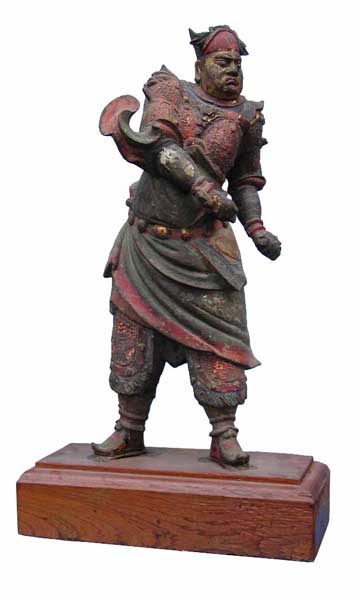
One of the stars of the Big Dipper
2026-04-15 11:51:31
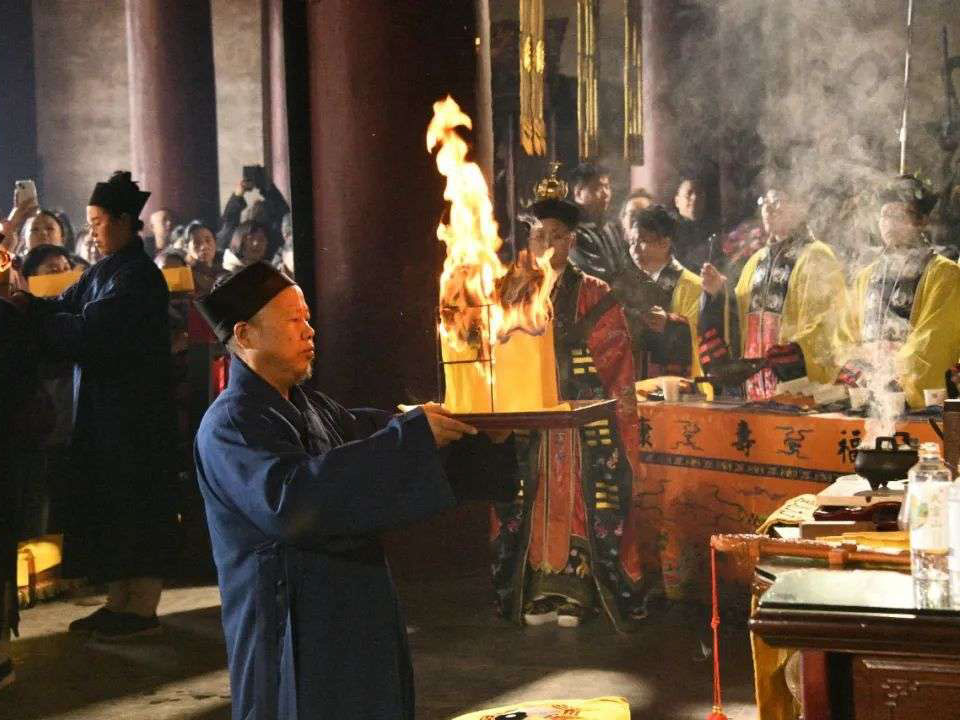
(1) The meaning of the ritual of fasting and Taoist ceremonies
2022-08-20 23:32:13
The original meaning of "zhai" was to be neat, harmonious an...
Yin GUI
2022-08-20 23:32:13
Chapter 27
2022-08-20 23:32:13
Chapter 72
2022-08-20 23:32:13
The couplet of the ancestral hall of the Wudang Mountain Temple
2022-08-20 23:32:13
The Wudang Taoist couplet congratulating the Rain
2022-08-20 23:32:13