


(4) Taoist Literature
2022-08-20 23:32:13
Taoist literature reflects Taoist doctrines and beliefs in immortals. The general term for various forms of literary works with Taoist stories and Taoist activities as their subject matter. Taoist literature, like other literature, reflects the ideal pursuit of Taoism and its typical images through language and words. Some of his works are collected in the Daozang, while others are found outside of it. Some were composed by Taoists, while others were created by scholars. The genres and forms are diverse, including poetry, prose, miscellaneous notes, biographies, novels and dramas, etc. The content reflected includes praising immortals, expounding doctrines, recording magic arts, legends of immortals, stories of gods and demons, and plays about the transformation of immortals, etc. He has a large number of works and his writing style is rich and diverse. (1) Taoist Poetry Since its inception, Taoism has been closely related to poetry. Taoism often uses the form of poetry to expound its doctrines, praise immortals, record elixirs, and write the chapters, rhymes, and incantations for rituals and ceremonies. Taoist poetry often employs five-character and seven-character poems. After the Song and Yuan Dynasties, ci and Sanqu forms were also utilized by Taoism. The representative works of Taoist classics written in poetic style include the Tao Te Ching, the Wuzhen Chapter, and so on. The Tao Te Ching was written in ancient-style rhyming script and is quite similar to Qu Yuan's Chu Ci, which came later. The entire scripture consists of five thousand words and is rich in meaning. Each of the eighty-one chapters rhymes harmoniously. In the early Taoist classic "Taiping Jing", many verses are written in seven-character poems. Although the language of these poems is a bit rough, every line rhymes and remains consistent throughout. Describing the process of refining internal and external elixirs and their techniques in the form of poetry is a major feature of Taoist culture. The renowned elixir classics, "Zhouyi Cantongqi" and "Wuzhen Pian", are both composed of four-character, five-character and seven-character poems, making them easy to read and remember. Especially, the literary and artistic attainments of the "Wuzhen Chapter" are quite high. The step inscriptions, chapter summaries, green lyrics and mantras used in Taoist rituals and ceremonies are all important components of Taoist poetry. The "Bu Xu Ci" probably originated before the Northern and Southern Dynasties. From Liu Jingshu's "Yi Yuan" of the Southern Dynasties, it can be known that the "Bu Xu Ci" already existed in the Northern Wei Dynasty. Most of the empty words are praises to immortals, and they are usually five-character or seven-character poems. The "Dongxuan Lingbaoyu Jingshan Buxu Jing" compiled in the Southern Dynasties, Lu Xiujing's "Taishang Dongxuan Lingbao Shoudu Yi", Du Guangting's "Taishang Huang 箓 Zhai Yi" in the Tang Dynasty, as well as the "Zongxian Zangling Zhang" and "Zhuzhen Zang Shang" and other scriptures, all contain numerous buxu ci. During the reign of Emperor Xuanzong of Tang, many scholars were appreciated by the emperor for their proficiency in writing empty words about steps. Qingci, also known as "Green Chapter", is a type of Taoist poetry. It is so named because it is written on green vine paper. It is a token presented by Taoism to celestial immortals during Taoist rituals. It originated in the Tang Dynasty and has certain formats and requirements. After the Tang Dynasty, many scholars were good at writing Qing ci. In the Ming Dynasty, Yan Song was called the "Prime Minister of Qing Ci" for his proficiency in writing Qing Ci. Poems depicting the wandering of immortals, as well as those of scholars and Taoist masters, are rich and diverse, and possess high artistic value. Cao Cao's "The Turtle Lives Long" and Cao Zhi's "The Ode to the Luo River Goddess" from The Three Kingdoms period can both be regarded as timeless masterpieces. Famous Chinese poets of all ages, such as Li Bai, Wang Wei, Meng Haoran, Liu Yuxi, Bai Juyi, Li He, Li Shangyin, Zhang Zhihe, Su Shi, Lu You, Xin Qiji, Liu Yong, Li Qingzhao, Ma Zhiyuan and so on, have all produced excellent poems reflecting Taoist content. In Li Bai's poems such as "Dreaming of the Heavenly Mother and Leaving Farewell", "Presenting to the Coking Master of Songshan Mountain", and "Lady of Shangyuan", not only are the activities of Taoism at that time recorded, but also his yearning for the realm of immortals is expressed. Li He, known as a "genius", is revered as a deity in Taoism. He has many works depicting Taoist legends and activities, such as "Immortal", "Green Seal Seal", "Heavenly Ballad", and so on. In his poems, he depicted the harmony and freedom of the immortal world with a romantic approach to reflect his concern and indignation towards the mundane world. Among the Taoist priests and female priests throughout history, there have also been many highly skilled poets and poets. Among them, the most famous ones include Sun Simiao, Shi Jianwu, Zhang Guo, Wu Yun, Lyu Yan, Chen Tuan, Zhang Boduan, Zhang Jixian, Qiu Chuji, Li Ye, Lu Meiniang, and so on. They have left behind many excellent poems and verses that have been passed down to this day. (2) Taoist biographies and novels: There are numerous biographies of immortals and true figures in Taoism, as well as legends, strange tales, and supernatural novels depicting the tales of Taoist immortals. Many of these are well-known masterpieces that have been widely circulated among the people. Some of these works are included in the Taoist Canon, while others are from outside the Canon. According to the statistics of "Daozang Sub-Catalogue Introduction", the Daozang includes 77 kinds of biographies and legendary stories about immortals and Taoists. There are those that specifically record a certain individual, some that specifically record a certain sect, some that specifically record the immortals and true figures in a certain region, and there are also those that compile the deeds of numerous immortals and true figures into one book. Among them, the works that had a greater influence on later generations and achieved relatively high literary and artistic accomplishments include: "Shan Hai Jing", which is included in the Taiping section of the Daozang, with 18 volumes. According to research, it was compiled during the period from the Warring States to the Qin and Han Dynasties. The original book includes five chapters of the "Five Treasures Mountain Classic", thirteen chapters of the "Inner Sea Classic", "Outer Sea Classic" and "Great Wilderness Classic". The book records the mountains, rivers, geography, products, local customs and myths and legends of 54,000 people both at home and abroad. Many of the novels and biographies of Shenjun created by later generations are based on this book, so he is called the "ancestor of strange sayings throughout history". The "Biographies of Immortals" was written by Liu Xiang of the Western Han Dynasty and included in the Daozang under the category of biographies of the Dongzhen School, consisting of two volumes. It is the earliest biography of Taoist deities, recording 72 true figures from the Three Sovereigns to the Western Han Dynasty. Most of the later immortal tales were created based on this book. The "Biography of Immortals" was written by Ge Hong of the Jin Dynasty. His preface states: "I have copied ancient immortals, which are found in immortal classics, dietary prescriptions, and books of various schools. The teachings of my predecessors and the discussions of senior scholars constitute ten volumes." According to Liang Su's "Treatise on the Biographies of Immortals", the Tang Dynasty's "Biographies of Immortals" recorded 190 immortals. Only 92 of them are recorded in the extent "Hanwei Series" edition, while the "Complete Library in Four Sections" edition includes 84. The book records the true deeds of Guangchengzi, Laozi, Peng Zu, He Shang Gong, Li Shaojun, Zhang Daoling, Hu Gong, Zuo Ci, Gan Shi and others, and has had a considerable influence on the biographies and novels of immortals in later generations. The "Yongcheng Jixian Lu", compiled by Du Guangting of the Tang and Five Dynasties periods, records the stories of women becoming immortals throughout the ages. It was named so because the Queen Mother of the West resided in Jinjing City. According to the "General Annals: Art and Literature Brief", the book consists of 10 volumes and records 190 female immortals. Today, the Dongzhen Section of the Daozang contains six volumes of the "Hualu" category, but the number of female immortals recorded is no more than 30. The "Record of Immortals in the Three Caves" was compiled by Chen Baoguang, a Taoist priest of the Southern Song Dynasty. It is included in the first volume of the Daozang Canon, 20 volumes. This book compiles the stories of over 1,000 people attaining immortality and becoming immortals, starting from Pangu and ending in the Northern Song Dynasty, and quotes nearly 200 ancient books. The "Comprehensive Mirror of the True Immortal Body Dao Through the Ages" was compiled by Zhao Daoyi, a Taoist priest of the Yuan Dynasty. The book consists of 53 volumes and includes 745 deities such as ascending, ascending, dissolving corpses, and concealing. It starts with the Yellow Emperor Xuanyuan, the Three Pure Ones, Laozi, Yin Xi Zhenren, Zhang Daoling, Ge Xiangong, Tao Hongjing, Lyu Yan, Chen Tuan, etc., and ends with Lin Lingsu and Wang Wenqing. All historical and Taoist books with available sources have relatively detailed records. The Sequel consists of five volumes and mainly includes 34 Taoist figures from the Jin and Yuan dynasties, with Wang Chongyang and his disciples as the main ones. The "Second Volume" consists of 6 volumes and contains 120 female immortals from past dynasties, starting from ancient immortals and ending at the end of the Song Dynasty, such as Shangyuan Jun, Jiutian Xuan Nu, Shangyuan Lady, and Mingxing Yu Nu, etc. The sequel and the sequel were also compiled by Zhao Daoyi. Because it includes a large number of figures and is based on old news and historical research, it is an important source of information for studying the beliefs of Taoist immortals. This book is included in the category of biographies of the Dongzhen School in the Daozang. In addition to the above, there are many other biographies and novels about immortals both inside and outside Xizang, such as "The Record of Immortals", "Taiping Guangji", "Jinlian Zhengzong", "The Family of Han Celestial Masters", "Xuan Guai Lu", "Four Travelogues", and so on. There are also many contents reflecting Taoist stories in famous Chinese classical novels such as "Dream of the Red Chamber", "Journey to the West", "Water Margin", "Three Words" and "Two Beat". (3) Taoist Prose The main genre for writing Taoist classics is prose, among which there are many excellent articles that can be regarded as first-class. The most superior one is the "Nanhua Zhenjing", also known as the "Zhuangzi". The Zhuangzi is divided into Inner and Outer chapters. The Inner Chapter consists of 7 parts and the Outer Chapter 15 parts. Although it was written by Zhuang Zhou, it is actually a collection of the works of the Zhuangzi School from the Middle of the Warring States Period to the Qin and Han Dynasties. It inherits Laozi's thoughts, expounding the way of nothingness, advocating non-action, non-waiting and non-self, and experiencing the Way. The articles in this book are short in length and simple in structure. The people, events and objects in it are all fictional. The article often employs personification and metaphor to express profound philosophy through vivid images. Its exaggerated language, rich imagination, romantic charm and elegant fables are truly rare works in the literature of the Pre-Qin period. Later generations praised it as "unrestrained and boundless, full of wit and charm, and grand and fantastical", which shows how high its literary achievements were. Ge Hong's "Inner and Outer Chapters of Baopuzi" consists of 20 volumes of "Inner Chapters" and 50 volumes of "Outer Chapters", which are included in the Taqing section of the Daozang. According to his preface, the Inner Chapter states, "The practices of immortals, prescriptions, the transformation of ghosts and monsters, health preservation, longevity, and the elimination of evil spirits and disasters belong to Taoism." The Outer Chapters discuss gains and losses in the human world and the judgment and criticism of the affairs of the world, which belongs to Confucianism. This book is written in the style of parallel prose, with smooth writing and exquisite language, and has high literary value. The outer part, when discussing the way of governing literature, put forward that "the relationship between literature and virtue is like ten feet and one zhang; it is called the remaining affairs and the previous words", and "Literature can undermine the way, but if the way has not been practiced, there cannot be no literature." That is, the ideological content and writing techniques are interdependent, breaking free from the shackles of "carrying the way through literature" and emphasizing the intrinsic value of literature itself. This point is not only of great significance to Taoist literature, but also has an important influence in the history of Chinese literature. In Taoist classics, there are many excellent prose works. For instance, in "The Reclusive Collection of Huayang Tao", there are many famous prose pieces with fresh and elegant language and no artificial embellishment. They have been passed down through the ages and remain popular. For instance, Bai Yuchan's "Record of Yongcui Pavilion" has a beautiful writing style and is a fine work of Taoist prose. (4) The drama that reflects the beliefs of Taoist immortals and promotes the doctrines of Taoism is called the "Immortal Taoist Transformation Drama". Chinese drama is an art form that integrates singing, acting and acting. It emerged relatively late and did not reach maturity and completeness until the Yuan Dynasty. However, from the very beginning, it has been closely associated with Taoism and has become an important means of promoting Taoism and entertaining deities, giving rise to a number of immortal Taoist transformation plays that reflect Taoist content. At the end of the Ming Dynasty, Quan classified Yuan Zaju into twelve categories in the "Taihe Zhengyin Pu", and the play of immortals and Daoist transformation was one of them. The Yuan Dynasty was an era when ethnic and class contradictions were extremely acute. Among the intellectuals who had cut off their official careers and were reduced to the status of "Nine Scholars and ten beggars", some mingled among the lower classes and created many literary and artistic works that reflected the lives of the lower-class people and exposed the darkness of society. For instance, Guan Hanqing, the great dramatist ranked first in "The Book of Ghosts" and known as the "leader of the prodigal sons", was such a person. There were also some intellectuals who secluded themselves from the world, advocating Buddhism and Taoism to show their uncooperative attitude towards the rule of the Yuan Dynasty. The Quanzhen School, which originated in the Southern Song, Liao and Jin Dynasties, developed under such circumstances. The immortal Taoist transformation plays of the Yuan Dynasty mainly reflected the content of the Quanzhen School. The playwrights of the Yuan Dynasty told the stories of the gods and the beauty, freedom and harmony of the immortal world through dramatic forms. It sets off the darkness and injustice of the real society, the corruption in the officialdom and the author's dissatisfaction with the rule of the Yuan Dynasty. Secondly, through the promotion of the deeds of immortals, it is demonstrated that people can achieve immortality and longevity through cultivation, attain personal liberation, get rid of the troubles of mundane life and the brevity of human existence. Thirdly, through drama, the mystery of Taoist magic and the subtleties of internal and external elixirs are told to achieve the purpose of preaching. The remaining immortal Taoist transformation dramas today include "Chen Tuan Lying High", "Jianfu Stele", "Yueyang Tower", "Huangliang Dream", "Renfengzi", "Fenghua Xuanye", "Liu Yi's Transmission of Letters", "Tieguai Li", "Zhuangzhou's Dream", "Zhang Sheng Boiling the Sea", "Bamboo Leaf Boat", "Taohua Girl", "Accidentally Entering Taoyuan", "Jin Anshou", "LAN Caihe", "Walking Alone in the Great Luo Sky", "Dongtian Xuanji", "Shenxian Meeting", "Yaochi Meeting" Among the dozens of works such as "Chen Tuan's High Bed", the most famous one is introduced as follows: "Chen Tuan's High Bed", written by Ma Zhiyuan in the Yuan Dynasty. It is said that during the Five Dynasties period, Chen Tuan, a hermit on Mount Hua, had a discerning eye for talent and predicted that Zhao Kuangyin would become the emperor. After Emperor Taizu of the Song Dynasty ascended the throne, he invited him to come out of seclusion. He refused to take office and continued to cultivate on Mount Hua, saying, "Do ancient things in the human world, play a game of chess under the pine tree," "In the hustle and bustle of the world, one is not smart, right and wrong never end," "Push aside the barrier of fame and fortune, break free from the net of heroes, open the hanging window of the southern mountain high, often plant lotus flowers outside the misty rain, and watch the palm of the immortal from the cloud platform." Yueyang Tower, whose full name is Pin Dong Bin SAN Zui Yueyang Tower, was written by Ma Zhiyuan of the Yuan Dynasty. Lu Dongbin visited the Yueyang Tower three times to transform the willow spirit and the white plum spirit, teaching them that life is short and they should not be obsessed with fame and fortune in the blink of an eye, guiding them to ascend the path to immortality together. The Yellow Millet Dream, whose full name is "The Enlightenment of the Yellow Millet Dream in Handan Dao Sheng", was a collaboration between Ma Zhiyuan and Li Shizhong and others during the Yuan Dynasty. Lu Dongbin was on his way to the capital for the imperial examination. On his way, he passed by a yellow flower shop in Handan. The old mother of Lishan became the shop owner and cooked yellow millet rice for him. Meanwhile, Han Zhongli transformed into a Taoist priest, causing Lu Dongbin to experience 18 years of hardships in a dream. Eventually, he had a profound enlightenment, cut off the "wine, women, wealth and power", and achieved enlightenment to become an immortal. This play is a model work of immortal Daoist transformation plays. "Tie Guai Li", whose full name is "Lu Dongbin's Visit to Tie Guai Li Yue", was written by Yue Bochuan of the Yuan Dynasty. In the Song Dynasty, Kongmu Yue Shou, the capital of the Six Cases in Zhengzhou, was misunderstood by Han Qi and died of terror. He was saved by Lu Dongbin and his body was borrowed to "return" his soul to the kidnapper Xiao Litu. After being enlightened by Lu Dongbin, he transformed into an immortal. The Dream of Zhuangzi, whose full name is The Dream of Laozi and Zhuangzi sleeping on a Butterfly, was written by Shi Zhang of the Yuan Dynasty. Zhuang Zhou was originally a deity of the Great Luo Kingdom. Later, he was promoted to the Supreme Deity of Nanhua in the Jade Capital. Due to his mistake, he was demoted to the human world. Taibai Jinxing took advantage of the story of Zhuang Zhou encountering a butterfly in his dream to enlighten and liberate him, allowing him to return to the immortal realm. The custom of performing plays to entertain and honor the deities in Taoist temples during Taoist festivals, which began to form in the Yuan Dynasty, can still be seen in some places today. Many Taoist temples still retain stage buildings. The above are just some of the most significant aspects of Taoism's influence on the development of China's culture and art. In fact, the scope of Taoism's influence on China's culture and art far exceeds this range. Even in some cultural and artistic forms that do not show obvious traces of Taoism on the surface, they unconsciously contain the influence of Taoism. Taoism, the only native religion of the Chinese nation, has directly inherited the beliefs of its ancestors in ancient times and absorbed many customs and worshipping practices of ethnic minorities. These forms and contents of belief have long constituted the national characteristics and values of the Chinese nation and have become one of the main contents and forms of cultural and artistic absorption of the Chinese nation. It is also one of the important cornerstones for building China's culture and art. This kind of culture and art, along with the development of Taoism, has been deeply integrated into the entire culture and art of the Chinese nation and will long serve as a precious national asset to contribute to the prosperity of our national culture. Perhaps this is the charm of religious culture.
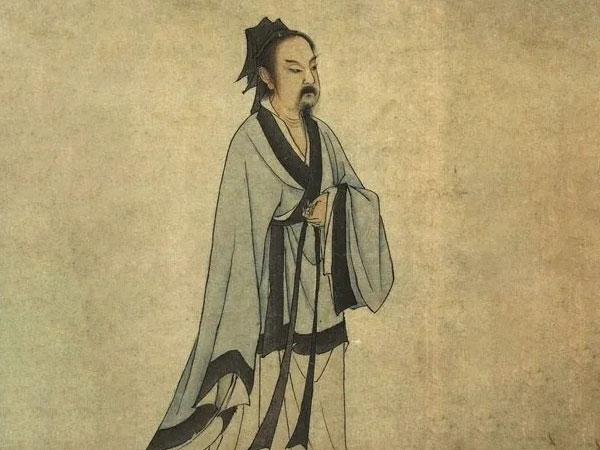
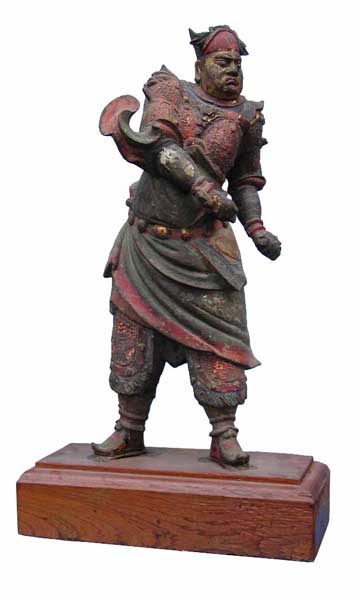
One of the stars of the Big Dipper
2026-04-15 11:51:31
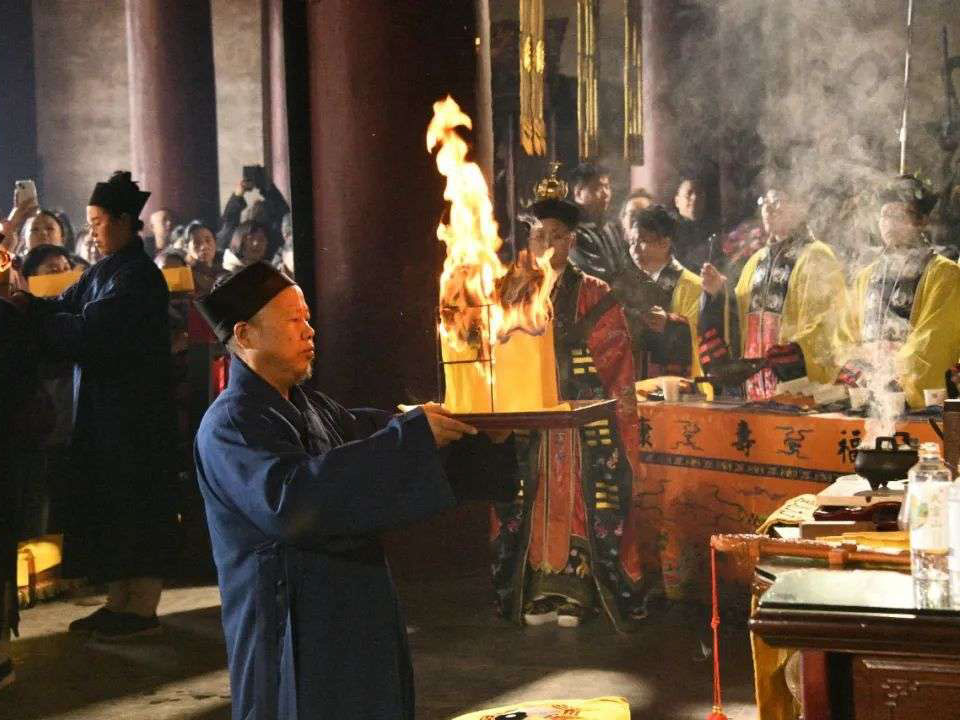
(1) The meaning of the ritual of fasting and Taoist ceremonies
2022-08-20 23:32:13
The original meaning of "zhai" was to be neat, harmonious an...
Yin GUI
2022-08-20 23:32:13
Chapter 27
2022-08-20 23:32:13
Chapter 72
2022-08-20 23:32:13
The couplet of the ancestral hall of the Wudang Mountain Temple
2022-08-20 23:32:13
The Wudang Taoist couplet congratulating the Rain
2022-08-20 23:32:13