


(1) Taoist art
2022-08-20 23:32:13
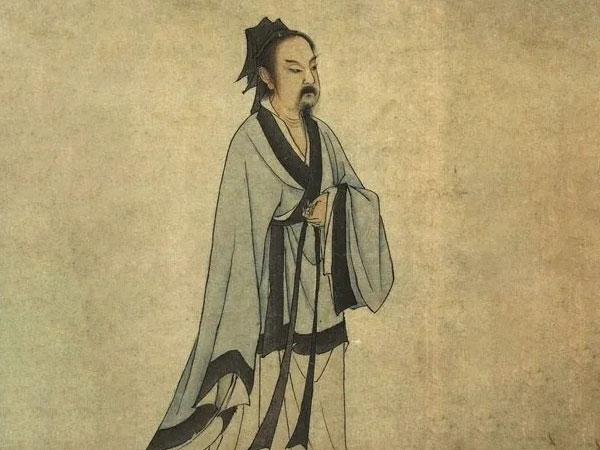
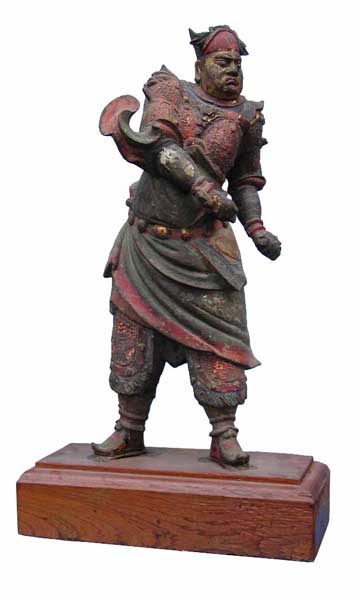
Taoist art generally refers to paintings, statues and other works that take Taoism as their content or serve Taoism. Fine arts are activities and their products that contain aesthetic sentiments and aesthetic values, and originated in ancient times. When people process and imagine the things they observe and yearn for, they naturally express their beliefs, objects of worship and the other world they yearn for in the form of art. Thus, religious art emerged. The ancestors of the Chinese nation's worship of immortals gave rise to ancient Chinese artworks that reflected the belief in immortals. After the establishment of Taoism, this kind of art based on the belief in immortals evolved into Taoist art. The characteristic of Taoist art is to reflect and express the faith and worship of Taoists towards Taoist immortals. Or reflect and promote its profound and abstruse doctrines and teachings in the form of vivid art. In the long history of the development of Taoism, there are many precious Taoist artworks, mainly manifested in: statues, murals, Taoist paintings by scholars, etc. (1) Taoist Statues Taoist statues refer to the deities made in temples, grottoes and other places for Taoist believers to worship. Taoism initially did not worship deities; it only had altars or murals. The "Laozi Xiang Er Zhu" states: "The Dao is supreme, subtle and hidden, without any form or image. However, it can be admonished from its teachings; it is known through the invisible." The Inner Biography of Tao Yinyu states: "In Maoshan, two halls, one for Buddhism and the other for Taoism, were established. Every other day, they paid homage. There were statues in the Buddhist hall, but no in the Taoist hall." The worship of deities in Taoism originated approximately during the Wei, Jin, Northern and Southern Dynasties. The "History of the Sui Dynasty: Annals of Classics" states: During the reign of Emperor Taiwu of the Northern Wei Dynasty, Kou Qianzhi "built a temple in the southeast of the Dai capital,..." "Carve the images of the Celestial Lord and all the immortals and offer them as offerings." Moreover, in the Appendix Two of Chen Guofu's "Research on the Origin and Development of Daozang", titled "Research on the Origin of Daoist Images", it is stated: "Wang Chun's 'On the Three Teachings' says:' In modern times, Taoists have no way to survive. If they want people to believe, they will learn from Buddhism to create images. '" The false title of Heavenly Lord and the two Immortals on the left and right were set up in the Dao Hall to provide for their food and clothing. Lu Xiujing of the Song Dynasty was also like this. It was the Taoism of the Song Dynasty that had already taken shape." It can be seen that during the reign of Lu Xiujing of the Liu Song Dynasty, Taoist activities of making statues had already begun. There are about dozens of early Taoist statues from the Wei, Jin and Sui Dynasties that have been preserved to this day, mainly stone carvings. At this time, Taoist statues were greatly influenced by Buddhist statues in terms of both technique and style. For instance, there were boat-shaped backlights behind the deities and their hands were joined together. Some Taoist deities and Buddha statues are even built together, such as the Buddha and Taoist statues made in the first year of Shiguang of the Northern Wei Dynasty (424), with the Taoist statue on the left and the Buddha statue on the right. In the early days, the figures in Taoist statues were all dressed in loose Taoist robes, with slender bones and clear figures. The clothing patterns were deep, straight and flat, with even, fine and raised lines. After the Tang Dynasty, Taoism developed greatly and the activity of making statues gradually flourished. According to its beliefs and aesthetic thoughts, Taoist statues also formed their own unique production models, norms and artistic styles. During the Song and Yuan dynasties, Taoist statue art had reached an extremely high level. The figures were vivid and lifelike, with rich facial expressions and prominent personalities. The agricultural patterns were simple and clean, and the knife techniques were rough and bold. Whether in terms of artistic expression or craftsmanship, it had a significant influence on the development of Chinese sculpture art. After the Ming and Qing dynasties, the art of Taoist statues became more refined, but it was merely elaborate and lacked grandeur, being overly delicate and lacking in lifelike expression. Due to the different statuses and functions of deities, the images and production requirements of Taoist statues also vary. In the "Daozang: The Beginning of the Taoist Precepts Camp in the Three Caves of Dongli Lingbao", it is recorded: "The precepts state: All the statues are made in accordance with the scriptures and have their own appearance and form..." One must wear fine clothes, hats and seats, and follow the Dharma. The Celestial Lord is adorned with nine-colored Lilas or five-colored clouds and mists, a mixture of mountains and waters, a yellow robe, a golden crown, and a jade crown. "Pure purple, painted blue, and emerald green are not allowed." A true person must not have loose hair, long ears or a single horn, and must wear a crown of lotus, flying cloud or primordial origin. Both the left and right true men should offer or hold the scriptures and slips. They must hold all the incense and flowers with reverence and must not let their hands or feet go wild. Their clothes should not be slanted. The Celestial Venerable sat flat, his fingers grasping the Primordial essence, and neither held the dust of the wish-fulfilling heart in his hands, but was empty. If the statues are not made in accordance with the regulations or are slightly disrespectful, "ghosts and gods will punish people. Since it is not an act of tyranny or abuse, disaster can be avoided." According to the "Tao Shang Dong Xuan Ling Bao King Xing Jing", Taoist statues "are made according to all they have, made of gold, silver, pearls, jade, embroidered and painted, engraved in clay, carved into niches, carved into stones, carved into teeth and bones, printed on paper and painted in pictures", "with a single thought, the size is determined by one's own strength, solemn and simple, each in its time". That is, the materials used for Taoist statues can be whatever they have. Taoism not only regards deities as objects of worship, but also integrates the entire process of statue creation with its beliefs. For instance, when making wooden statues, after selecting the wood, an axe opening ceremony is also held. In the middle, there is also the ritual of filling the deities into the statues of gods. Finally, there is the consecration and eye-dotting ceremony. Only at this point does the deity statue acquire the status of a deity and become a dwelling body for the deities. Taoism is a polytheistic religion with a wide variety of deities, and their images are also rich and diverse: the elegant and dignified Jade Emperor, the kind and gentle Earth God, the majestic Celestial Master Zhang, and so on. The existing famous Taoist statues mainly include: the stone carving of Laozi from the Tang Dynasty preserved in Xi 'an Stele Forest Museum. The Tang Dynasty statue of the Celestial Venerable Changyang in the Second Department of Shanxi Provincial Museum in Taiyuan City; A portrait of a Song Dynasty maidservant in Taiyuan's Jin Ci poetry. The Twenty People's Accommodation statues from the Jin and Yuan Dynasties in the Yuhuang Temple of Jincheng, Shanxi Province, and others are all world-renowned treasures of ancient Chinese sculpture. (2) Taoist murals: Murals refer to the art of painting on walls, such as those in palaces, temples, tombs, grottoes, etc. Their subjects are very rich, among which murals reflecting religious content account for a large proportion. The expression techniques of murals are diverse, including line drawing, meticulous and heavy color painting, ink and wash freehand brushwork, and gilding with powder, etc. Most of the pigments used are mineral pigments, so the pictures are bright in color and remain unchanged for a long time. The authors of murals, apart from a few famous painters, are mostly unknown folk painters, and few of them have left their names. Murals in our country emerged very early and have been inextricably linked to the immortals worshipped by the ancient Han people and their stories from the very beginning. After the emergence of Taoism, great attention has been paid to the use of murals as an art form. In the early Taoist classic "Taiping Jing", regarding the "Four Seasons and Five Deities", it is stated: "Their patterns are their portraits. People are also three-tiered farmers, with the king's aura on the outside, followed by the facial aura, and the subtle aura on the inside. They all wear crowns 帻 and ride horses, and the horses are also shaped according to their five colors." ……” And there are pictures drawn. It can be seen that early Taoism had already begun to depict the deities it worshipped through images. The Tang people revered Taoism, so Taoist murals were also very prosperous. At that time, painters were all good at painting murals. According to records, there was a "Picture of the Five Sages and a Thousand Officials" painted by Wu Daozi in the temple of the Yuan Emperor in Luoyang. There are also murals in Taqing Palace, Longxing Temple and Xianyi Temple. The "Heavenly Palace Map" that still exists in the Antian King Holy Emperor Temple of Beiyue Temple in Quyang County, Hebei Province, is said to have been painted by Wu Daozi. The Song Dynasty was the heyday of the development of Taoist murals. Taoist murals got the opportunity to develop due to several large-scale construction of palaces and temples by the Jia Dynasty. According to records, during the Jingde period of Emperor Zhenzong of the Song Dynasty (1004-1007), in order to build the Yuqing Zhaoying Palace, more than 3,000 painters from all over the country were recruited, with the renowned painters Wu Zongyuan and Wang Zhuo serving as the leaders of the left and right teams. The extant work of Wu Zongyuan, "The Celestial Guard of the Morning Yuan", which is now in New York, USA, is the powder version of the murals of that time. Taoist murals of the Yuan Dynasty hold an important position in the history of Chinese art. Artistically, they inherited the styles of the Tang and Song Dynasties, and the authors were mostly folk painters. There are many existing Taoist murals from the Yuan Dynasty, mainly including those in the Mingying Hall of the Water God Temple in Hongtong County, Shanxi Province, the Shenggu Temple in Gaoping County, Shanxi Province, the Qinglong Temple in Jishan County, Shanxi Province, the Bilu Temple in Hebei Province, and the Yongle Palace in Ruicheng City, Shanxi Province. Among them, the murals in Yongle Palace, Ruicheng, Shanxi Province are the most famous. Yongle Palace, also known as Nayang Palace, was originally located in Yongle Town, Ruicheng, Shanxi Province. Later, it was moved to its current site in Longquan Village. Except for the main gate, the four main halls of Yongle Palace are all decorated with exquisite Taoist murals, covering a total area of 1,005.68 square meters. The Dragon and Tiger Hall was the original gate of the Yongle Palace. Inside the two rear bays, there are paintings depicting divine tea, Yu Lei, the City God, the Earth God, and the guardian divine officials and generals, which are vivid and imposing. The Three Pure Ones Hall is the main hall of Yongle Palace. The "Morning Yuan" painting on the inner wall of the hall is the essence of the murals in Yongle Palace, with a total area of 403.34 square meters. The entire painting is led by the Green Dragon and White Tiger Star Gods on both sides of the south wall, with the thirty-two Heavenly Emperors behind the shrine as the rear guards. Centered around the eight main deities painted on the east, west and north walls and the fan-shaped walls on the left and right sides of the shrine, there are over 290 deities serving around, including the Golden Boy, the Jade Girl, the Heavenly Ding, the Mighty Man, the Emperor Xuan Yuan, the Immortal Marquis, the Stars, the Left Assistant, the Right Assistant, the Divine Officer, the Divine general, and the attendants. Each image is over two meters tall. The figures in the painting have flying beards and hair, splendid clothes and hats, and various postures. The painters, with their concise and brisk painting techniques, vividly depict the different statuses and personalities of numerous immortals. Especially the huge lines are smooth and ever-changing, captivating the viewers. The Pure Yang Hall features the painting "The Pure Yang Emperor's Immortal Journey and Manifestation", which is composed of comic strips and covers a total area of 213 square meters. The Chongyang Hall features the "Manifestation of Wang Chongyang" by the Quanzhen Patriarch and is also in the form of a comic strip. Among them, the "Pan Dao Tu" in the Pure Yang Hall has a strong flavor of literati painting and is a rare work in the history of Chinese painting. Although there have been many Taoist murals since the Ming and Qing dynasties, there are not many excellent ones, and they do not have the same brilliant artistic achievements as the murals of the Song and Yuan Dynasties. Some of the more outstanding existing murals include those in Jiyi Temple, Xinlv County, Shanxi Province, etc. In Chinese history, there have been many Taoist literati paintings by scholars based on the stories of Taoist immortals. Among them, the most famous ones are those by Gu Kaizhi, who created works such as "The Picture of Immortals" and "The Picture of the Ode to the Luo River Goddess". The immortal realm depicted in "The Ode to the Luo River Goddess" has had a significant influence on later generations. Yan Liben, a renowned painter of the Tang Dynasty, once painted nearly 20 Taoist paintings such as "The Image of the Primordial Beginning" and "The Image of the Supreme Deity of Transformation". Wu Daozi also painted Buddhist and Taoist paintings. His Taoist paintings include "The Image of the Heavenly Lord", "The Picture of the Sages Facing the Sky", "The Image of the Twenty-Eight Constellations", etc. The image of Zhong Kui he painted was once very famous. About half of the figure paintings in the Song Dynasty were Buddhist and Taoist paintings. The Taoist paintings created by painters in the Song Dynasty mostly depicted immortal figures living in seclusion in the mountains and forests, pursuing the charm of "tranquility and non-action" and "returning to simplicity and nature". After the Ming and Qing dynasties, there were relatively few Taoist paintings by scholars. In addition, there were many famous Taoist painters in Chinese history, among whom the most renowned and accomplished ones include Tao Hongjing, Zhang Suqing, Li Guizhen, Li Derou, Zhang Yanfu, Huang Gongwang, Ni Gang, Zhang Yu, Fang Congyi, Zhu Da, and so on. Their artistic achievements occupy an important position in the history of Chinese painting. After the Ming and Qing dynasties, water and land paintings that were popular among the common people and used in Taoist religious activities began to develop, such as the works included in the "Album of Taoist Immortals" compiled and printed by the Chinese Taoist Association. Most of them were created by folk painters, without any signature, and their artistic levels vary. Among them, there are many excellent works. Water and land paintings are important materials for the study of folk art and the beliefs of Taoist immortals.
One of the stars of the Big Dipper
2026-04-15 11:51:31
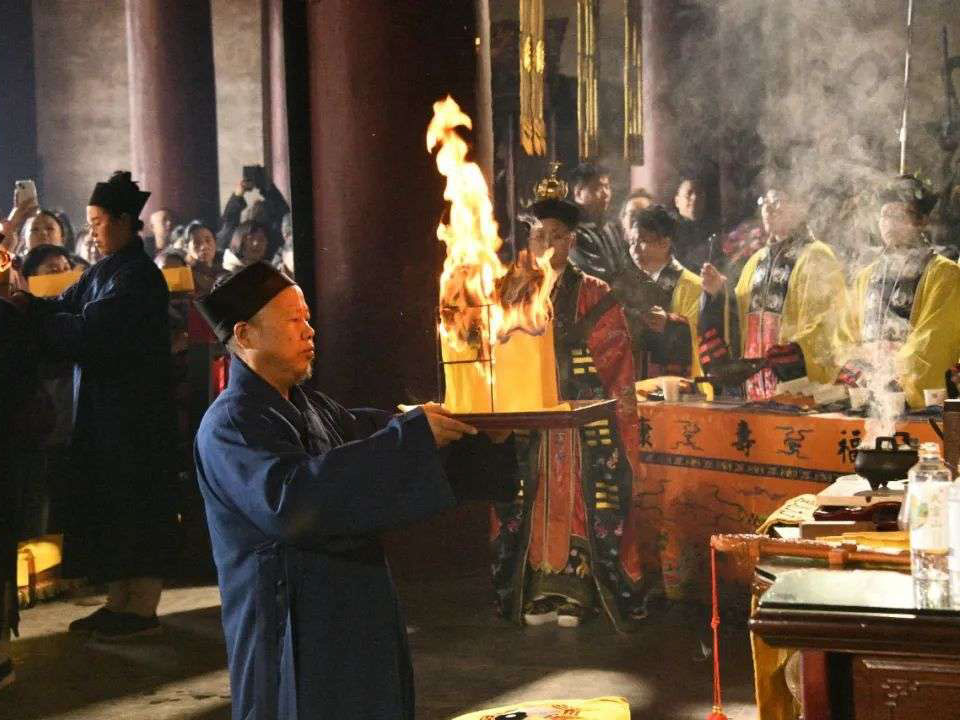
(1) The meaning of the ritual of fasting and Taoist ceremonies
2022-08-20 23:32:13
The original meaning of "zhai" was to be neat, harmonious an...
Yin GUI
2022-08-20 23:32:13
Chapter 27
2022-08-20 23:32:13
Chapter 72
2022-08-20 23:32:13
The couplet of the ancestral hall of the Wudang Mountain Temple
2022-08-20 23:32:13
The Wudang Taoist couplet congratulating the Rain
2022-08-20 23:32:13