


(1) Taoist Precepts
2022-08-20 23:32:13
The precepts of Taoism are norms for the behavior and conduct of Taoists and adherents, and they are one of the notable features that distinguish Taoists from laypeople. Taoism, through the regulation of precepts, aims to enable those who are devoted to and follow the Tao to correct some bad habits, purify their minds and bodies, and improve their cultivation, ultimately integrating into the right path. The main precepts of Taoism include: the precept text, the law text and the rules of the palace and temple. Since its establishment, Taoism has formulated precepts. When Zhang Daoling, the Celestial Master, founded Taoism, he formulated the "Nine Precepts of Thinking", requiring those who are devoted to Taoism to "practice non-action". Be gentle and weak; "Follow the rule that a woman should not act first," and then the "Female Green Ghost Law" came into being. Since the Wei and Jin Dynasties, with the compilation and publication of the Three Taoist Scriptures, the number of precepts has increased, and various precepts of different simplicity and complexity have been formed, with the "Five Precepts" of returning to the root and accumulating merit as the basic ones. All the norms from entering the Tao to practicing it are very specific and detailed, and they have undergone a historical evolution and improvement process. Among the three existing sections of the Daozang, namely "Dongzhen", "Dongxuan" and "Dongshen", there are all "Precepts". There are dozens of various precepts and scriptures, which shows how much Taoism attaches to the norms of precepts. The precepts are the rules and regulations in Taoism that restrain the words and deeds of Taoists and prevent "evil desires" and "malicious words". Precepts are rules and regulations, mainly aimed at prevention. The precepts can be complex or simple, the norms can be lax or strict, and they are classified into three grades: upper, middle and lower. There is a saying that there are some precepts to be taken and no precepts to be taken. There is a distinction between fasting and precepts. There are still some differences among various sects within Taoism. For instance, the precepts of the Quanzhen Sect and the Qingxian Sect are more complex and strict, while those of the Zhengyi Sect are relatively simple. However, the basic norms of the "Five Precepts" for accumulating merit at the root are consistent. The vinaya is also the text in Taoism that restrains the words and deeds of the Taoist community and prevents "evil desires" and "perverse words and ill deeds". A law is a law text, using punishment as a means. The precepts are established based on the precepts. Common precepts include the "Xuan Du Precepts" and the "Nu Qing GUI Precepts", etc. The "Qinggui" is the disciplinary regulation for Taoists who violate the precepts in the Quanzhen Sect of Taoism. Precepts are behavioral norms that warn in advance, while clear regulations are disciplinary rules that punish afterwards. The rules and regulations are generally established by each Taoist temple itself. During the Xianfeng period of the Qing Dynasty, the 23 regulations of the Baiyun Temple in Beijing included punishments such as "kneeling to burn incense", "moving 袇", "expulsion", and "beating and expelling", which are now basically not implemented. Taoism formulates precepts to warn Taoists to cultivate the Tao with a pure heart and be devout in their cultivation, so that their essence, energy and spirit can be integrated into one, and they can better inherit the fine traditions of Taoism and improve their self-cultivation. (1) The Main Precepts of Taoism include the Nine Precepts. The Five Precepts Ten Precepts The Great Precepts of the Jade True Palace Ten Precepts for Military Protection of the Emperor The Supreme Precept of Wisdom When wisdom is blocked, the six emotions are of the highest quality. The Supreme Precept of Wisdom in Saving Sentient Beings; The people of the Three Caves have written a complete text. The Three Great Precepts and the reverence for a Hundred Medicines; Talk about all kinds of diseases and so on. The contents of these precepts are largely the same. It's just that they emerged in different eras and some eminent masters held different views on the precepts. However, their purposes are all the same. The main points are described as follows: (1) The Nine Precepts of Xiang 'er: Also known as "Laozi's Precepts of Xiang 'er", or "The Precepts of Xiang 'er in the Tao Te Ching". The precepts originated from the "Commentary on the Tao Te Ching" by Laozi and are divided into three grades: upper, middle and lower, totaling nine articles. The supreme precept text is: "Practice non-action." Be gentle and weak; Be a woman and do not act first. The precepts of the Middle Grade are: "Conduct without name." Practice tranquility; Do all good deeds. The lower precept text is: "Practice without desire." One's knowledge stops at its limit. Make concessions. The Nine Precepts embody the essence of Laozi's "Tao Te Ching". Master Zhengyi believes that those who can observe the highest grade precepts are expected to ascend to the ranks of immortals. Those who can observe the intermediate-grade precepts can prolong their lives. Those who can observe the lower-grade precepts can avoid death and injury. The Nine Precepts have become one of the main precepts of the Zhengyi School. (2) The Five Precepts: Also known as the Five Precepts of Laozi, they are referred to as the precepts given by the Supreme Laozi in his speech. The first is to refrain from killing, the second from stealing, the third from sexual misconduct, the fourth from lying, and the fifth from abstaining from alcohol. Taoism stipulates that after a 箓 disciple takes the three precepts, he will take the five precepts. The five precepts and the three precepts together form the eight Precepts. The Five Precepts in heaven form the five latitudes. If one fails to abide by the precepts in the way of heaven, it will be regarded as a disaster or an anomaly. In the earth, there are the Five Great Mountains; if the earth's precepts are lost, no grain can be achieved. In terms of the Five Elements, if the five elements are not complete, water and fire will be weak, and metal and wood will be harmful. During his reign, he became one of the five emperors. If the five emperors failed to keep their precepts, they would die prematurely. When the five internal organs of a person are not regulated, their sexual behavior will go wild. If one of the five precepts is lost, one's life will not be fulfilled. The Supreme Elder Lord's Precepts Sutra states: "The Five Precepts are the foundation for maintaining one's character and the root for upholding the Dharma." A good man and a good woman, who wish to embrace the good Dharma and abide by it for a lifetime without transgression, is true faith. That is, the precepts received by Qingxin disciples and Halal disciples. (3) The Nine True Precepts: Also known as the "Nine True and Wonderful Precepts", they are the precepts observed by the deceased. It was the Emperor of the Nine Heavens who personally declared that those who worshipped him would ascend to the Nine Heavens, while those who lightly violated him would fall to the Nine Earths. In Volume 20 of the "Dao Fa Hui Yuan", it is stated, "The Nine True Precepts are proclaimed to the spirits of the deceased. By concentrating on the precepts, one can reach the wonderful path." According to Volume 6 of the "Sutra of the Northern Emperor's Magic Curse", the content of this precept is as follows: First, respect and yield, and be filial to one's parents; Both are diligent and loyal to the king. The three do not kill and save all living beings with kindness. The fourth is not to be lustful and to be in the right place. The five must not be stolen. Pushing others harms oneself. The six do not cough and are fierce and angry, bullying others. The seventh is not to be deceitful; flattery and treachery harm the good. Those who enter do not become arrogant; arrogance suddenly becomes true. The nine are not unique, and they are dedicated and single-minded. The Supreme Xuan Yuan Three Days Jade Hall Great Dharma states: If people can receive the Nine true and wonderful Precepts and wear the treasure of salvation and longevity 箓, on the day they are born, they will receive the blessings, enjoy a long life, have their fortune come to an end, not be subject to the cycle of rebirth, and directly ascend to the Dan Heaven. (4) Upholding the True Precepts: The First true precepts are the golden rules that all human beings must abide by. They are the gateway to human beings and the starting point of spiritual cultivation. The first True Precepts include the Five Precepts, the Eight Precepts, the Ten Precepts and the Nine Precepts of the Jurchen, etc. In the "Explanation of the Initial True Precepts", the significance of formulating the Initial True Precepts is elaborated in great detail. The purpose is to cultivate the aspiration for the Dharma, promote the Dharma and establish virtue. The First True Precepts require that the ten evil deeds not arise, that one should have no thoughts or actions, cultivate the path with a single thought, get rid of the mundane mind, and take the precepts as the teacher. In the "Precepts of the First True Precepts" written by Wang Changyue of the Qing Dynasty, those who practice humanity are first required to take the Threefold Refuge precepts: the first refuge, the Supreme and boundless path. Forever free from the cycle of rebirth, thus it is called the treasure of the Dao. The Second Refuge to God, the thirty-six Noble Sutras. To hear the true Dharma, one should release the daily treasures. The third refuge, the profound and great law, does not fall into wrong views, and thus is called the Treasure of the teacher. ① The Five Precepts of the Initial Truth: The Five Precepts of the initial Truth are the foundation of the initial truth precepts, the initial gateway to the human way, a good prescription for purifying the mind, and the hub between transcending the mundane and the mundane. Every person who follows the path must firmly understand their meaning. Five Rings: 1. Do not kill any living being; Second, no meat or alcohol is allowed. Third, one must not say one thing and mean another. Iv. Theft is prohibited. V. One must not engage in sexual misconduct. These Five precepts are the foundation for maintaining one's character and the root for protecting the Dharma. If one can take these five precepts as a reference, one can increase one's age, be protected by the gods, be free from the suffering of the five punishments forever, and never lose one's human body in every life. The Five Precepts later developed into the Eight Precepts. Lu Xiujing said in "Observing the Eight Precepts" : "In addition to the five precepts, add: Sixth, do not lie on a large or high bed." Vii. One must not universally apply sesame oil as a mere adornment. Viii. One must not indulge in such behavior as a courtesan. ② The Ten Precepts of the Initial Truth: Those who observe the five precepts correct their minds and bodies, eliminate distractions, and are permitted to receive the ten precepts of the initial truth as commanded by the Heavenly Venerable of the Void Emperor. The Ten Precepts are as follows: The first precept is that one must not be loyal but not filial, not benevolent and not trustworthy. One should fulfill the duties of a ruler and a parent, and promote the development of all things. The second precept is that one must not engage in the underhanded schemes of villains who harm others for personal gain. Instead, one should perform good deeds in secret and widely help all living beings. The third precept is that one must not kill living creatures to satisfy their taste, but should practice kindness and compassion, as well as insects. The fourth precept is that one must not engage in lewdness and evil to defeat the true, or be disrespectful to the spiritual energy. One should remain chaste and not commit any transgressions. The fifth precept is that one must not undermine others to achieve success, leave one's own flesh and blood, and use the Tao to assist all things, so that the nine generations of the family can be harmonious. The sixth principle is that one must not slander the virtuous and virtuous, nor should one show off one's own talents and promote oneself. One should praise the goodness and beauty of others and not enhance one's own abilities. The seventh precept is that one must not drink alcohol or eat meat, as it violates the law or contraband. Instead, one should regulate one's qi nature and focus solely on clearing emptiness. The eighth precept is that one must not be insatiable in greed or accumulate wealth without giving up. One should practice frugality and show kindness to the poor. The ninth precept is that one should not associate with the unworthy and live in a filthy and chaotic place. Instead, one should seek to surpass oneself and dwell in a state of purity and emptiness. The tenth precept is that one must not take words or laughter lightly. Actions are not genuine. One should be prudent and taciturn, and prioritize morality. These ten precepts, commanded by the Supreme Lord of the Void Heaven, those who can fulfill them will be protected by the gods and be free from all suffering forever. The "Ten Precepts" emphasize the moral cultivation of Taoists, emphasizing loyalty, filial piety, benefiting the world, self-discipline, frugality, benefiting others, and pure practice as the prerequisites for cultivating one's moral character. The moral norms of keeping oneself clean and observing precepts can make Taoists have upright conduct, and the world will admire and follow them. Taoism particularly emphasizes the extensive relief of all living beings. One should be kind to others and last for a moment, then widely bestow good deeds and universally benefit all living beings, which is the foundation of humanity. In terms of chastity, one should stand alone in the mundane world, cease all worldly ties, cut off lust, and diligently cultivate one's moral conduct. One should reach the stage of immortality, bestow blessings upon the nine ancestors, and bring joy to the entire lineage. In terms of wealth: The wealth of a wife is already determined by her birth. If she has a share of wealth, it should be returned when used up. If she was born poor, she will not become rich by asking for more. Understanding this principle, all gains and losses should be natural. One should not take what is not one's own wealth and should not obtain what is not righteous. When one acquires wealth, they can take it as they please without getting trapped in insatiable desires. Those who can abide by the "Ten Precepts" will understand it clearly and have a distinct spirit. The first step in cultivating virtue and accumulating virtue is thus accomplished. ③ The Nine Precepts of the Jurchen: After the First Precepts of the Jurchen, Wang Changyue added the Nine Precepts of the Jurchen as precepts for the practice of the female believers at the Taoist station. The nine precepts are: First, be filial and gentle, and be cautious in speech without jealousy; Second, remain chaste and upright, and avoid engaging in defilement. For three days, by borrowing the lives of all things, one should hold back with compassion and not kill. Fourth, be diligent and cautious in reciting rituals and refrain from eating meat or drinking alcohol. Five days later, the clothes should be of good quality and free from ostentation. Sixth, adjust your temperament and avoid generating worries. For seven days, one shall not attend the fasting assembly several times. On the eighth day, no servant shall be tortured. On the ninth day, no person shall be stolen. According to Taoist scriptures, as long as one can observe precepts and cultivate oneself, one will surely be reborn in a family of the Ten virtues, not passing through the realm of hell. If one diligently practices the Tao, one will ascend to the Purple Mansion and be ranked among the immortals. (5) The Great Middle Precept: The Great Middle Precept was bestowed by the Primordial Heavenly King upon the Supreme Sage Daojun to pass on the teachings to the Emperor of Taiwei and the Supreme Immortal of Taiji. This subtraction consists of three hundred items and is called "The Great Perfection of the Middle Three Hundred". The content of the Zhongji Precepts is extremely detailed, covering everything from words and deeds to the transmission of precepts. It can be said to be one of the most detailed precepts in Taoism. However, if some of the content in Zhongji Cheng no longer meets the requirements of The Times, it should be treated differently. Only when one holds the first true precepts without any transgressions can one receive the Middle extreme precepts. (6) The Great Precept of the Celestial Immortal: The Great Precept of the Celestial Immortal is the last major precept of the completion of the three Platforms. The completion of the Three Platforms refers to the three-platform transmission method mainly consisting of the Initial True Precepts, the Intermediate Extreme Precepts, and the Great Precepts of Celestial Immortals when the True Precepts are passed down. Only those who have observed the three hundred great precepts without any transgression will be granted the great precepts of immortals. The Taoist scriptures state that those who receive the celestial immortal precepts are called wonderful Taoist masters. Those who receive the supreme authority are called virtuous teachers. Those who receive the first true precepts are called wonderful sutra teachers. (7) Fasting Day: A fasting day refers to a certain day during the month of Ramadan, the birthday of an ancestor, or when there are activities such as fasting and awakening rituals. Taoists must strictly follow the contents stipulated by Taoist rituals. While formulating precepts, Taoism also specially established the "Zhai Tian" (fasting fields), which are the days within a month when one should observe fasting. On this day, one must strictly abide by the Taoist precepts so that when the ceremony is held, there will be the protection of the gods, all requests will be granted, and the spirit will be in harmony. The Taoist fasting fields include the Ten Straight Fasting Days, the Eight Fasting Days, the Three Fasting Days, the Four Beginning Fasting Days, and the Three Assembly Fasting days. The ten direct fasting days are: the 1st, 8th, 14th, 15th, 18th, 23rd, 24th, 28th, 29th, and 30th of each month (for small months, the 27th can be taken). ② The eight fasting days: Start of Spring, Vernal Equinox, Start of Summer, Summer Solstice, Start of Autumn, Autumnal Equinox, Start of Winter, and Winter Solstice. ③ The Three Yuan Fasting Days: the 15th day of the first lunar month, the 15th day of the seventh lunar month, and the 15th day of the tenth lunar month. ④ The Four Beginnings Fasting Days: the first day of the first lunar month, the first day of the fourth lunar month, the first day of the seventh lunar month, and the first day of the tenth lunar month. ⑤ The Three fasting Days: the seventh day of the first lunar month, the seventh day of the seventh lunar month, and the fifth day of the tenth lunar month. These fasting days are specific times for observing precepts and fasting. During these days, one must strictly observe precepts and protect them. Only in this way can one truly educate the world with upright conduct and influence the world with a pure heart. ⑥ Penalties for violating precepts: Violation refers to the situation where a Taoist priest who has taken the precepts violates the rules and regulations they should abide by. Breaking the precepts refers to the situation where a Taoist priest, after taking the precepts, violates them again. For those who violate or break the precepts, there were originally uniform regulations. Later, each temple used the clear rules as the standard for punishment. Now, criticism and education are the main approach, until they are dismissed. ⑦ Current main fasting days: Currently, the fasting days in various Quanzhen temples have some changes compared to the traditional custom ones. In the Ten Directions Monastery, the first and fifteenth days of the lunar month and the birthday of the ancestors are mainly used as fasting days, while in the descendants Temple, the traditional custom fasting days are still the main practice. (2) Main Rituals and Norms of Taoism (1) Morning and Evening Services: Morning and evening services are compulsory courses for the two major schools in China, Quanzhen and Zhengyi. The morning and evening classes began after the Northern and Southern Dynasties. On the day of the second and third hours of the twelfth lunar month, people attend the main hall to give lectures, reciting the incense praise, the opening verse, the mantra for purifying the mind, the mantra for purifying the mouth, the mantra for purifying the body, as well as the Sutra of Tranquility and the Sutra of the Jade Emperor's Heart Seal and other sutras. They sing praises and pay homage. This is for the first purpose of cultivating one's true nature and character, the second is to pray and worship, the third is to strengthen one's faith in the Dharma, and the fourth is to reflect the management of the Taoist style of the temple. Nowadays, each resident customizes the morning and evening services according to tradition. (2) True Ordination: Ordination, also known as the opening ordination. It refers to the entire process from the opening of the ordination ceremony to the successful completion of the ordination. When a Taoist priest first enters the monastic life, he becomes a Taoist boy and studies the scriptures at the Descendants' Temple. When it is time for the ten Directions' monasteries to open altars and spread the precepts, the master at the descendants' temple will recommend him to the monasteries to receive the precepts. After the emergence of the Quanzhen Sect in the Jin and Yuan Dynasties, Qiu Chuji, the immortal of Changchun, gradually established the ritual norms for the Quanzhen Precepts of Taoism based on the existing precepts of Taoism. During the Shunzhi period of the Qing Dynasty, Abbot Wang Changyue, the seventh-generation lawyer of the Quanzhen Longmen School, established the Quanzhen Monastery and set up a public altar for the first time to transmit precepts at the Baiyun Taoist Temple in Beijing. He inherited the precepts and rituals of the Quanzhen School and expounded the "First True Precepts", "Intermediate Precepts", and "Great Precepts of Celestial Immortals", collectively known as the "Three Platforms of Perfect Precepts". Wang Changyue said, "If one studies the tao without observing precepts, there will be no chance to ascend to the true state 箓." When passing on the precepts, the ordination platform is generally divided into three phases. The ordination is handled by the abbot of the Ten Directions Monastery, who is called the "Ordination lawyer" and is also assigned as the ordination master. During the ordination period, the disciples who received the precepts were ranked and numbered in the order of the "Thousand Character Text". After the ordination was completed, they were compiled into the "Dengzhen 箓". After obtaining the precept name, if one voluntarily abides by the precepts without breaking them, and passes the review, a "precept certificate" will be issued as proof. (3) The official title of 箓 "箓" usually refers to the documents that record the names of celestial officials, the names of the ten directions of immortals, the summoning of divine officers, and the implementation of magical arts. Only when a Zhengyi Taoist priest receives the Dharma 箓 can he ascend to the heavens and hold the position of a Taoist priest. Only when a Taoist priest holds a religious position can the verses in his Taoist ritual reach the Heavenly Court and receive the protection of the deities. Otherwise, the verses in the Taoist ritual will be invalid. After the Taoist priest receives 箓, the 箓 certificate bestows upon the 箓 recipient a protective general to assist the 箓 recipient in slaying demons and evil spirits during the ritual. Save all living beings and relieve those in distress. Without the office of 箓, one has no right to cast gods and subdue demons. The meaning of "receiving 箓" is "to abstaining from emotions and natures, to stop transgressions and wrongdoings, to cut off the roots of evil, to develop the karma of the path, to progress from the mundane to the sage, from beginning to end, one must first discipline 箓, and only then can one reach the true state." After receiving 箓, the Taoist priest is issued a certificate to certify the position he has obtained and to name the recorded divine realm, so as to reach the deities. It is simply referred to as "job certificate". (3) The Transmission of Precepts after the founding of the People's Republic of China 箓 (1) The complete Restoration of the Precept Transmission system The complete transmission of the precept transmission method has a history of more than 700 years since the establishment of the precept transmission norms by the Zhenren Qiu Changchun in the Yuan Dynasty. During the reign of Emperor Kangxi of the Qing Dynasty, Abbot Wang Changyue held the "Three Great Precepts" at Baiyun Taoist Temple, broadening his disciples and greatly enhancing the Quanzhen Taoist tradition. Later, due to the war, it was once suspended. After being held at Erxian Nunnery in Chengdu, Sichuan Province in 1947, it has never been held. In order to carry forward the fine traditions of Quanzhen, the first Quanzhen Ordination ceremony after the founding of the People's Republic of China was held at Baiyun Taoist Temple in Beijing in 1989. A total of 75 Quanzhen Taoists participated in the ordination ceremony, among whom 60% were Qian Taoists and 40% were Kun Taoists. The vast majority were young Taoists. Through the ordination activities, the precepts have learned Taoist knowledge and improved their moral qualities, which is beneficial to their personal cultivation and the promotion of Taoist traditions. In order to meet the needs of the development of the Quanzhen School in the new era, the China Taoist Association held the second ordination ceremony after the founding of the People's Republic of China in Qingcheng Mountain, Sichuan Province in November 1995. More than 400 disciples seeking precepts from famous mountains and temples across the country participated in this ceremony. This ordination ceremony lasted for more than 20 days and was of an unprecedented scale. After review by the precept platform, the precepts are issued a "Pure Precept Certificate", as well as scriptures and precepts such as "The First True Precept", "The Middle Extreme Precept", "The Great Precepts of Celestial Immortals", and "The Precepts Must Be Observed". (2) The domestic 箓 transmission ceremony of the Zhengyi School of Taoism, which had been suspended for many years, was resumed at the Celestial Master's Mansion on Longhu Mountain in Jiangxi Province, the ancestral temple of the Zhengyi School of Taoism, from December 5th to 7th, 1995. For the first time, over 190 箓 students participated in this 箓 transmission event. After the 箓 activity, 箓 students will be issued a "certificate of the First position" as proof. Through this transmission by 箓, the precept norms and systems of the Zhengyi school of Taoism were restored and improved, Taoist talents were cultivated, and the faith demands of domestic Taoists were met.
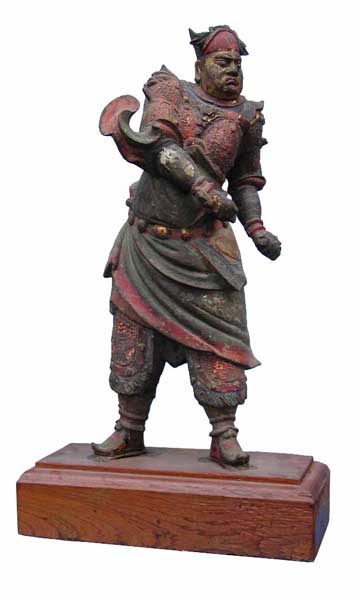
One of the stars of the Big Dipper
2026-04-15 11:51:31
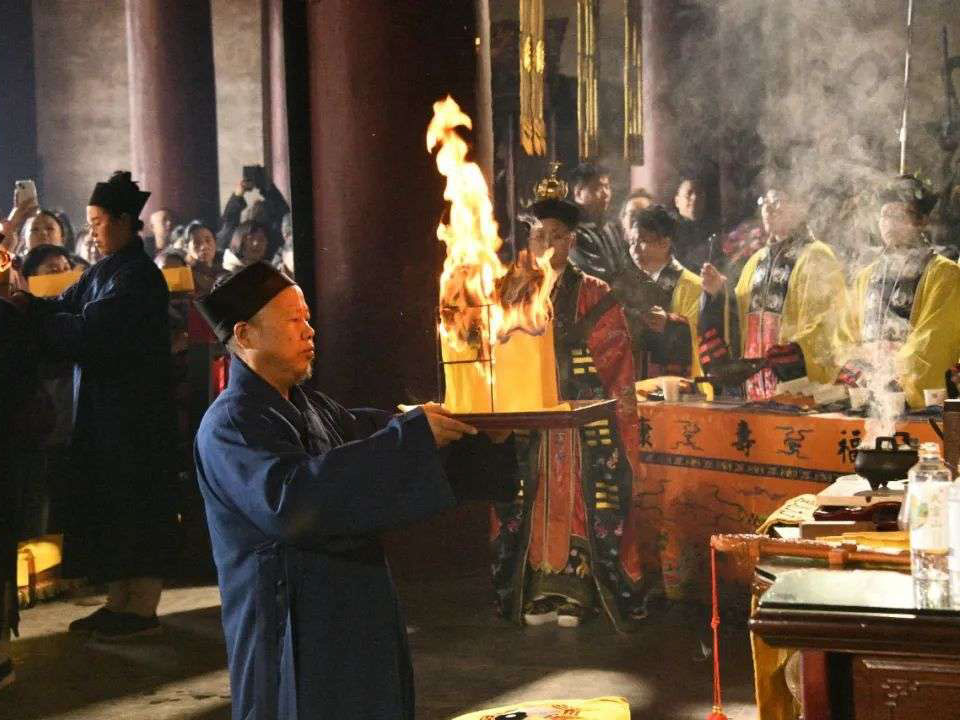
(1) The meaning of the ritual of fasting and Taoist ceremonies
2022-08-20 23:32:13
The original meaning of "zhai" was to be neat, harmonious an...
Yin GUI
2022-08-20 23:32:13
Chapter 27
2022-08-20 23:32:13
Chapter 72
2022-08-20 23:32:13
The couplet of the ancestral hall of the Wudang Mountain Temple
2022-08-20 23:32:13
The Wudang Taoist couplet congratulating the Rain
2022-08-20 23:32:13