


(6) The cultural value of sacrificial ceremonies and rituals
2022-08-20 23:32:13
Religious etiquette is a kind of culture that has been recognized by today's society. And the Taoist ritual is an important part of Taoist rituals and should be regarded as a kind of culture. As a culture, it has its cultural value, and so does the ritual. (1) The doctrine of Taoist Rituals: Taoism embodies its doctrinal ideas and the faith behaviors of its followers through the combination of the content and form of Taoist rituals, mainly manifested in various aspects such as Taoism, deities, and alleviating poverty and suffering. The Dao is the theoretical foundation of Taoism. It is not only the cosmology of Taoism but also its fundamental belief. Because the "Dao" was eventually personified as "The Supreme Elder Lord", the saying "one 炁 transforms the three pure ones" emerged. When humans (all of whom here refer to Taoist believers) and ghosts are added, the relationship between humans and gods, as well as humans and ghosts, emerges. In the 金箓 and jade 箓 meals, most of the rituals reflect the relationship between humans and deities, while in the 黄箓 meal, most of the rituals reflect the relationship between humans and ghosts. Therefore, through rituals such as inviting deities, celebrating, and offering birthday packages, people pray for blessings and express gratitude to both humans and deities. Through rituals such as breaking through the prison, refining the spirit, and offering food, people and ghosts are rescued from the dead. For instance, the lamp ritual indicates the doctrinal content of Taoists' pursuit of light. In conclusion, everything reflects the doctrines and ideas of Taoism. (2) In the ritual of fasting and literary fasting, many praising poems and verses are used, namely the "Bu Xu" and "Qing Ci", which belong to two literary genres. "Bu Xu" is a term used to flatter the gods. During a Taoist ritual, Taoists must circle the incense burner or candle lamp, reciting lyrics to a certain tune as they walk around. It is generally in poetic form, either five-character, seven-character, or eight-line, ten-line, or twenty-two lines. As early as the time of Kou Qianzhi and Lu Xiujing, "Ode to the Huaxia" and "Bu Xu Ci" had already emerged. There are many step function words in Lu Xiujing's "Taishang Dongxuan Lingbao Shoudu Yi" and Du Guangting's "Taishang Huangxiang Zhai Yi" that still exist. Qingci, also known as Qingci or Lvzhang, is a memorial and congratulatory message presented to the deities during Taoist rituals. Generally, parallel prose is often used, composed of four or six sentences, with neat antithesis and elegant language. There are also those that use both humble and scattered expressions. At the beginning, they state the name of the person making the prayer, the title of the deity being prayed for, and the reason for the report. At the end, they use words like "to hear" or "to be cautious with words" to express their humble requests. During the Tang and Song dynasties, many scholars and officials frequently visited Taoist temples and, upon imperial orders, personally composed green poems. In addition, emperors also composed eulogies praising sacrificial ceremonies. Emperor Taizong, Emperor Weizhen and Emperor Huizong of the Song Dynasty respectively composed dozens of "Bu Xu Ci", "SAN Hua Ci", "Bai He Zan", "Yu Qing Yue" and "Tai Qing Yue". Due to the wide influence of sacrificial ceremonies, there are also many descriptions in ancient literary works. In novels such as "Dream of the Red Chamber", "水浒传", and "Romance of The Three Kingdoms", there are descriptions of passionate sacrificial ceremonies. (3) Sacrificial Ceremonies and Music Sacrificial ceremony music, also known as ritual music, ritual music and temple music, includes rhymes such as "bu xu", "ji", "zan", "song" and "gao", as well as vocal music such as solo singing, chorus, chanting and Taoist recitation, and various forms of music such as instrumental and percussion instruments. During its development, the music of sacrificial ceremonies has merged with traditional Chinese shamanic music, court music and folk music, gradually forming its own style and system, and has become an important part of traditional Chinese music art. It was not until the end of the Northern Song Dynasty that a model of musical score for Taoist rituals emerged - the "Jade Sound Ritual", which is the earliest collection of vocal music scores among the existing Taoist musical scores. This collection of scores is included in the Ming Dynasty's "Zhengtong Daozang" and records 50 Daoist curves from the Tang Dynasty to the Song Dynasty. Because the method of notation is extremely peculiar, it remains difficult to decipher to this day. By the Ming Dynasty, another volume of the "Imperial Compilation of Taoist Music Chapters of the Great Ming Dynasty" emerged, containing 14 Taoist music pieces with precise foot notation. In the Qing Dynasty, the "Re-published Essentials of the Taoist Canon: Quanzhen Rhyme" included 56 commonly used pieces of Quanzhen Taoist music, which were performed on the "dangcha board". These are all important collections of Taoist music. Quanzhen Taoism emphasizes cultivation, and the music for the ritual altar is relatively reserved. When the altar was open to the public, the music was very lively. (4) Taoist Rituals and Health Preservation: During Taoist rituals, Taoist practices often go hand in hand with cultivation and health preservation. For instance, before holding a Taoist ritual, one must fast and take a bath, that is, to purify the body, mouth and mind, and prevent impurities from getting involved. During the process of holding a Taoist ritual, one should use mindfulness to focus one's mind, eliminate distractions, and achieve a state of true purity and tranquility. In addition, there are also activities such as clenching teeth and breathing, all of which are beneficial to health during the ritual. Overall, Taoist rituals and ceremonies have had a profound impact on both Chinese society and the development of Taoism. It is the main content of normal religious activities carried out by Taoism. It is the behavioral manifestation of the doctrines and teachings of Taoism. It is an important way to promote Taoism and spread the teachings. It is the main way for Taoists to express their faith. It is the bond that connects Taoism with the masses. It is also a bridge for the masses to understand and believe in Taoism.
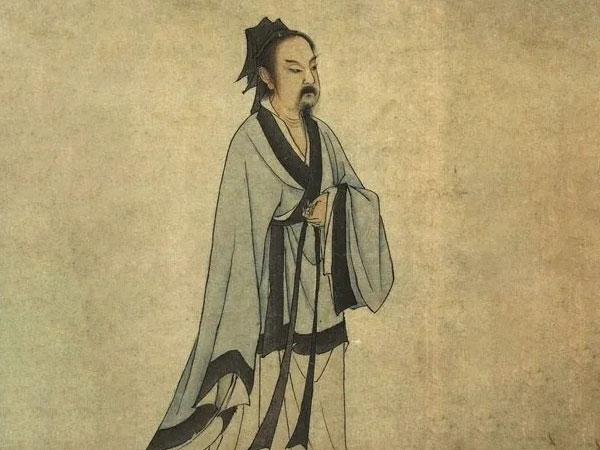
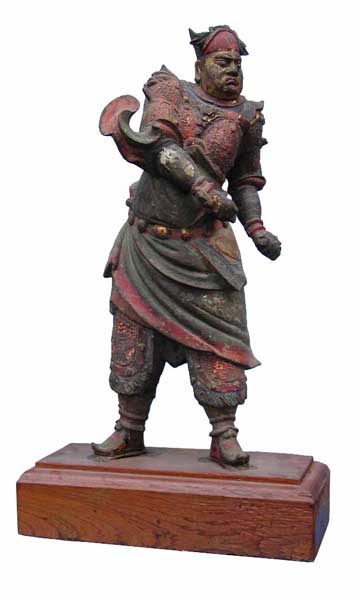
One of the stars of the Big Dipper
2026-04-15 11:51:31
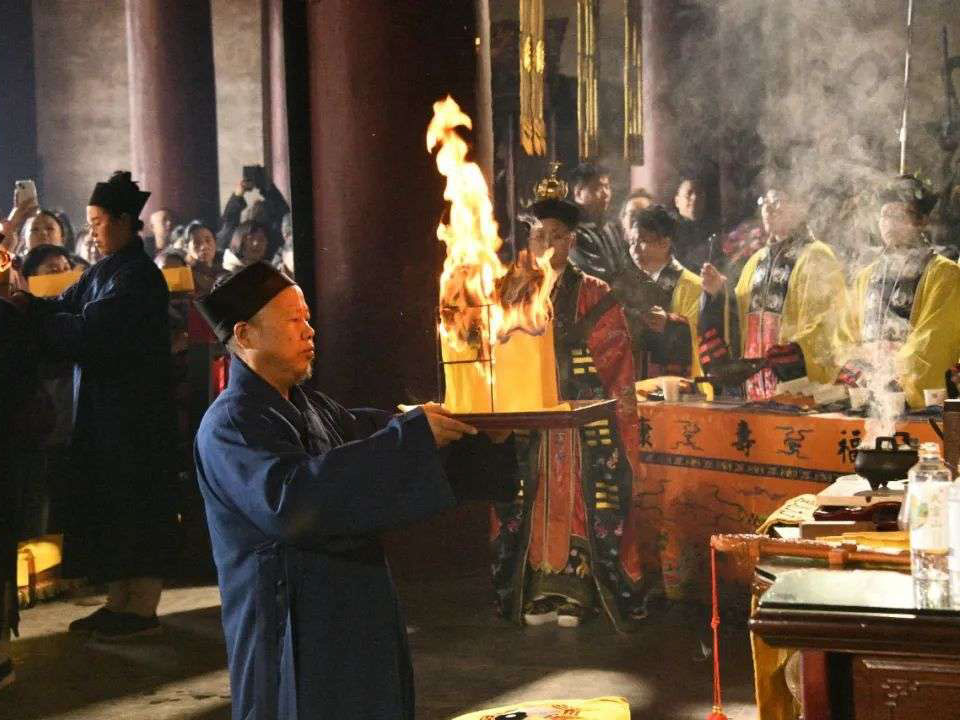
(1) The meaning of the ritual of fasting and Taoist ceremonies
2022-08-20 23:32:13
The original meaning of "zhai" was to be neat, harmonious an...
Yin GUI
2022-08-20 23:32:13
Chapter 27
2022-08-20 23:32:13
Chapter 72
2022-08-20 23:32:13
The couplet of the ancestral hall of the Wudang Mountain Temple
2022-08-20 23:32:13
Chapter 25
2022-08-20 23:32:13