


(3) Composition of the ritual of fasting and Taoist ceremonies
2022-08-20 23:32:13
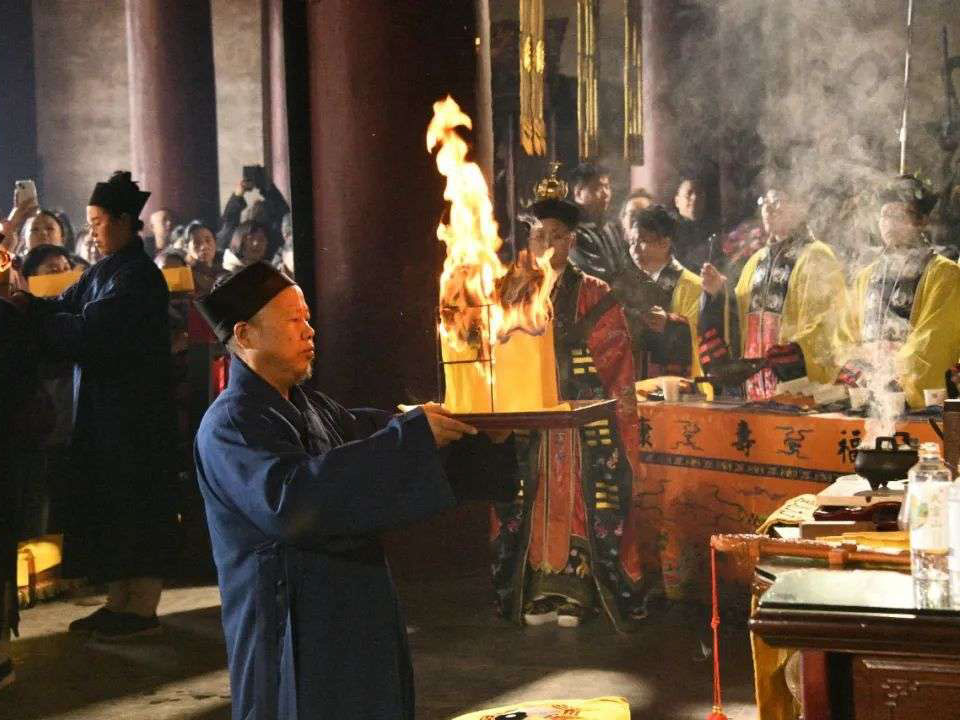
To hold a Taoist ritual, it is often accomplished through the construction of an altar, the setting of items, chanting sutras and performing repentance, walking on the celestial stems and dipper, and reciting incantations and mantras. Among these, people (Taoist priests) are the most active and dynamic factors, as all of these are carried out by them (referred to as the altar attendants in Taoism), and all of this constitutes a complete Taoist ritual. Sacrificial altar. Before holding a Taoist ritual, a altar must be set up first, which is called the "ritual altar" or "Dharma altar". The "tan" refers to a high platform built of earth on a flat ground, used for worshipping the gods and ancestors. According to the "Dao Shu Shou Shen Qi", "In ancient times, all sacrifices had altars; in later times, prefectures and counties had altars for the state and the state." It is recorded that: The altar is not a house; in ancient times, the altar was in the wild. "Now below the room, I'll keep it simple." " The ancient sacrificial altar was originally open-air but later moved inside the hall. Different forms of sacrificial ceremonies often feature altars of varying sizes. For large-scale sacrificial ceremonies, several altars are usually built. One of them is the main altar, called the "Grand Altar", and the rest are called "branch altars". For instance, the "Luo Tian Da Jiao" held at Baiyun Taoist Temple in Beijing in September 1993. A total of 1,200 memorial tablets of various deities are enshrined, with separate altars such as the Capital Altar, the Imperial Altar, the Altar for Saving People, the Altar for the Three Officials, the Altar for Repaying Kindness, the Altar for Rescuing the Suffering, the Altar for Helping the Dead, and the Altar for the Blue and Dark. Sutras are chanted and repentance is performed, and incense and lamps are offered day and night. The Quanzhen School's ritual altar, known as the "Hunyuan School Altar", uses the seal of "Dao Jing Shi Bao". The precept platform where the abbot transmits the precepts is called the "Xuandu Precept Platform". The Zhengyi School's ritual altar, known as the "Wan Fa Zong Altar", uses the seal of the Celestial Master, which is the "Yang Ping Zhi Du Gong" seal and has been passed down to this day. In the ritual of the Taoist altar, the Taoist priests with specific titles and duties are collectively called "deacons", that is, the deacons of the altar. According to the "金箓 Dazhai Buzhi Shucheng Yi", the main deacons were: Gao Gong: ranked first among all deacons. The person in charge must be "morally upright within and dignified without, with the return of both heaven and man, and the presence of ghosts and gods." In the ceremony, one should "follow Jing Feichen, inherit Yan Xuande, benefit the three realms of Zhou, and pay homage to all officials." Supervisor of the vegetarian diet: A position second only to that of a high meritorious service. His duties are as follows: First, "to hold the charter in general, to govern the discipline, to correct the position of the altar, and to restore the integrity of the court." The second is to "carefully identify faults, calmly impart simplicity, be strict yet flexible, and neither excessive nor corrupt." That is, in charge of the ritual and the classics, he is the deputy of Gao Gong. It is said that they are collectively known as the "Three Masters" along with Gao Gong and Jian Zhai. The person in charge must "be well-versed in the essentials, practice the laws and regulations clearly, sing praises with great ceremonies, and lead the team in coordination." Xuan Tan stepped forward and ascended to his seat to speak. "Reflect the expectations of the people and be in harmony with their hearts." He is not only the supervisor singing praises and guiding, but also a highly accomplished assistant. The above three positions are called "Three Masters" in the Zhengyi School, while in the Quanzhen School, they are only referred to as "High Skills" and there is no title of "Master". However, each of the three has a clear function in the ritual of the sacrificial ceremony, complementing each other and jointly playing a leading role in the ritual. Other deacons also had their own duties: The attendant of the scriptures: responsible for displaying, arranging and storing the Taoist soil for the scriptures, and making preparations for tuning, adjusting the pitch and grooming for chanting the scriptures. Incense attendant: Responsible for cleaning the incense burner and the incense table, and maintaining the continuous burning of incense during the ceremony. The attendant of the lamp: A Taoist priest responsible for organizing and cleaning the lighting tools, who ensures that the lighting of the lamps and candles is not interrupted during the ceremony. Zhi Pan and Zhi Zhong: The Daoist lands responsible for striking the Pan and the Zhong. The sound of the bell directly stipulates the rhythm of chanting scriptures and the conduct of rituals. In addition, according to Volume Four of the "Taiqing Jade Book", the deacons of the Taoist altar also include: The alchemist: "Their duties are to be pure and pure both inside and out, with a heart as empty as the universe." He is virtuous and well-rounded, and sincerely shows compassion. The wonderful application of the Kan and Li, in combination with the futile efforts of nature; Refine the essence to elevate the true, transcend the mundane to reach the sacred." The director of the photography department said, "This is my duty. I strictly observe the rules and regulations, promote the esoteric teachings, and keep a close watch on the path." The sounds of gold and jade are conveyed through music, and the answers and questions are filled with the charm of a dazzling array. One must be respectful and cautious, expressing gratitude and praying. Zhengyi said, "His duty is to be well-versed in the rituals, to rectify the principles of the universe, and to be carried out by those who are sincere and honest, so as to enforce strict and upright regulations." The supervisor of the altar: "This is the duty of purifying the turbid and promoting the pure, suppressing the evil and assisting the righteous. To ascend the altar and handle affairs, one must first perform strict and clean duties." To truly understand the spirit, one must rely on the power of presence. "Matters must be handled with strictness; orders should be given in a timely manner." Qing Dao said, "My duty is to clear the clouds and paths and cleanse the dust and atmosphere." Zhi Lu: "This is the position of the leader of the immortal class and the dignity of the Xuan Sect." " Ci Chan: "This is my duty: to compose the poems of the cave and sing the songs of the profound model." Declaration: "This is my duty. I will report on the Qian style and pay attention to the concentration of thoughts." On the Taoist altar, certain rules are observed, which are called deportment. Because of the handover between humans and deities during the ritual, no negligence is allowed. Therefore, strict regulations have been established with the aim of "warning them from idleness and arrogance, inspecting their faults and violations, examining their conduct and behavior, and observing their sincerity. If any mistakes are made, they will be corrected and reported accordingly." The "Imperial Supreme Daoist Supreme Purity Jade Book" contains the "Regulations for the Ritual Altar", which includes thirty-five articles. This shows that the discipline on the ritual altar is strict. The necessary Settings and items on the sacrificial altar mainly include: offerings: incense burners, candlesticks, vases, incense tubes, etc. Offerings: Five types of offerings such as incense, flowers, lamps, water and fruits. Ritual implements: There are two types of ritual implements commonly used in Taoism. One type includes those used to summon immortals, pay homage to ancestral masters, and ward off evil spirits, such as the court slip (GUI slip), ruyi, jade book, jade seal, sword (Fa sword), command flag, command arrow, token (a token for summoning divine generals), Tianpeng ruler (a long ruler made of peach wood), and altar guardian wood, etc. One category consists of various percussion instruments, such as mirrors, bells, cymbals, bells, drums, bells, snails, and boulders, etc. The banner: The banner is made with a precious lid on top and a handle for holding. Banners have no covers and are mostly used for hanging. Fu Jian: That is, the symbol on yellow paper. Chapter table: that is, the text of the table. Dharma water: Water used to purify the altar. Hand incense burner: It refers to an incense burner with a handle, which is held by hand. In the ritual of the altar, there is a unique operational form, mainly including external methods such as incantations, celestial steps, incense and praise, and ritual forms, as well as internal practices such as visualization, fortune-telling, and concentrating the spirit by tapping teeth. Here is a brief summary: Mantra: Refers to the language used by deities. In ancient times, "curse" was equivalent to "blessing" and usually ended with "as urgent as a legal order". Reciting mantras can invite deities, drive away evil spirits, save lives and protect the body, etc. The shape formed by coiling and pinching fingers in a certain way is called a "jue", and the process is called "nipping the jue". The technique of "Suijue" can dispel the true and suppress the evil, and it can help generals handle affairs. Different deities have different incantations, such as the Spirit Official Decision and the Dou Mu Decision, etc. Step: Refers to stepping on the firmament and the dipper. It is said to have been created by Yu the Great of the Xia Dynasty, so it is also called "Yu's Step". "Gang" refers to the Heavenly Stems, and "Dou" refers to the Big Dipper. When one is highly skilled on the altar, the place of the abbot is regarded as the ninth heaven. By following the positions of the stars and constellations and stepping on them with one's feet, one can soar to the heavens and report to the heavens. There are various types of the Gang, such as the Three Treasures Gang, the Twenty-Eight Constellations Gang, and the Jiaotai Gang, each with its own specific uses. Lamp: It refers to the common ritual element used to light the altar lamps and candles on the sacrificial altar. Initially, it was an independent ritual entity, but later it was incorporated into other rituals. Its function is to illuminate the celestial court above and Pierce through the netherworld below, to rescue the souls of the deceased. Therefore, after a person passes away, they must "follow the laws of heaven and earth, light lamps and announce talismans" in the hope of achieving "transcending all calamities". Worship: The most common and widespread ritual element in Taoist altars. Commonly known as "kowtowing" or "bowing", whether it is Taoists or believers, inside and outside Taoist temples, when facing deities, they all have to pay homage. This is the primary and fundamental aspect of human faith and religious belief. Those who are new to humanity must first learn to worship, which is called "passing the prostration test". There are four ways to do it, namely prostrating oneself, performing the salutation, following the salutation and performing the heart salutation. Chanting sutras: The most common and widespread ritual element in Taoist altars, referring to the recitation of scriptures. When first practicing rituals, one must first learn to recite scriptures. Sometimes one person recites alone, and sometimes a group recites together. Some recite it once, while others recite it multiple times. There are also various ways, mainly including mental recitation, physical recitation, spiritual recitation, mental blessing, secret blessing, and subtle visualization, etc. Ultimately, by reciting scriptures, one can eliminate natural disasters and protect the emperor. To ward off evil and poison, to save the people, life and death are relied upon, and the blessings are inescapable. Bu Xu: It refers to the melody and intonation used in the chanting of verses on the altar. It is said that its melody is like the ethereal immortals walking in the void, thus it is also called "Bu Xu Sound". The words and characters filled in according to the Bu Xu music are called "Bu Xu Ci". The music sung by Bu Xu Sheng is beautiful and has profound artistic connotations. The great poet Du Fu praised it, saying, "This piece should have existed in heaven, but how many times could it be heard on earth?" Cunxiang: Also known as "Cunsi", abbreviated as "Cun". It is required to close the eyes together or slightly close them, and visualize the appearance, activity state, etc. of a certain object or spirit, in order to achieve concentrated thinking, eliminate distractions, and enter the state of the connection between man and spirit. Taoism holds that the practice of holding a Taoist ritual lacks the ability to think and communicate with the world between humans and deities, thus losing its significance. The objects of contemplation are very extensive, including the contemplation of celestial phenomena (such as the sun, moon, stars, clouds and mists, etc.), scenery (such as qi and fire), the human body (such as the five internal organs and the dantian), and the true spirit (such as the inner spirit of the body). The "external gods" and the like are mostly secretly passed down from master to apprentice. Knocking teeth: That is, knocking the upper and lower teeth together to gather the spirit and drive away evil spirits. It is generally divided into striking the Heavenly Drum (left tap), striking the Heavenly Rock (right tap), and sounding the Dharma Drum (tapping the upper and lower four of the incisors together for a total of eight times). To strike the young heavenly gate and respond to the deity 炁, to strike the right one for subduing and subduing, and to sound the Dharma drum to communicate with the true god. It is used in court reports (see "The Supreme Way of the Emperor and the Pure Jade Book"). "Entering the memorial: It refers to the ceremony where a Taoist priest submits the memorial text (the Qingci memorial chapter) to the Heavenly Court, also known as" submitting the memorial "." The procedure is to open the altar, invite the deity and pay homage. Its usage varies depending on the status of the deities. The highest deity in Taoism is called "Shangda Biao", while the common deities are called "Shangshu". Finally, the inscription is burned, known as "Huabiao", in the hope of being sent to the Heavenly Court to inform the heavens that all the sages will visit the altar, bestow blessings and prolong their age, and the spirits of the deceased will be saved. Refinement: It refers to the use of talismans to transform ghosts and gods, enabling them to achieve liberation. "Refining" refers to the practice of exchanging the souls of the deceased with true water and true fire. "Du" refers to the practice of fasting and walking the path to liberate the souls of the deceased. Its function is that "when living people take it (the talisman method), it can refine the spirit, and when ghosts and gods obtain it, they can also liberate them" (see "The Supreme Purity Lingbao Great Dharma - Water and Fire Refining and Salvation Chapter"). The act of offering food: A ritual element in Taoist rituals, also known as "Hu Shi" or "Yu Ji", commonly referred to as "Yan Kou", which involves setting up a vegetarian meal to exorcise ghosts. In the early days, Taoism did not offer alms, but it had taken shape during the Liu Song Dynasty of the Southern Dynasties and had considerable influence and scale by the Tang Dynasty. During the transition from the Song to the Yuan dynasties, rice was served in huhu and given as food, which was called "huhu food". Until the liberation, some temples still kept this practice. When offering food, the method of "sacrifice and refinement" should be used, that is, to cultivate high spiritual thoughts, using the spirit to save the ghosts, enabling them to ascend to the celestial realm earlier and escape the path of ghosts. Scattering flowers: A commonly used ritual element in the composition of the sacrificial altar ceremony. Through the imagined divine chariot, the sacrificial altar is transformed into the Yao Altar where the immortals reside, and one imagines oneself as the immortals preaching the Dharma at the altar. Therefore, scattering flowers is used as one of the ritual contents to praise the immortals and transform the sacrificial altar. Unlike Buddhism, in Taoism, "scattering flowers" does not involve scattering flowers on the spot but rather chanting and singing. Therefore, there are various types of "scattering flowers" lyrics, mostly five-character, seven-character, and lyrics and music. Resolving grudges and knots: The term "grudges and knots" mainly refers to various interpersonal conflicts in the world, which lead to disputes in the netherworld, entanglements between humans and ghosts, sufferings of the netherworld, and retribution in the living world. It is believed that rituals and runes must be used to resolve grudges and knots, in order to enable the netherworld to ascend to immortality and ensure peace in the living world. Huatan Roller blinds: Huatan refers to transforming the altar into a fairyland of the Yao Altar or a world of immortals. Rolling the curtain is like a human monarch presiding over the court and listening to the reports and memorials of high-ranking officials. This kind of ritual is mostly accomplished through talismans, singing praises, and reciting thoughts. In the rhymes of the scriptures, there is a "reverse rolling curtain". To honor and thank one's teachers: that is, to show respect to the three teachers. The Three teachers refer to the teacher of guidance, the teacher of reference, and the teacher of scriptures. All large Taoist temples have altars for the patriarchs. At the beginning of the opening of the platform, the eminent master respectfully addressed the three masters and requested their protection. This is called the "opening of the Master". When descending from the altar, it is necessary to express gratitude to the three teachers, with the determination to never forget their kindness. This is called expressing gratitude to the teachers. All the above-mentioned ritual elements make up the scenes of various sacrificial ceremonies, big and small.
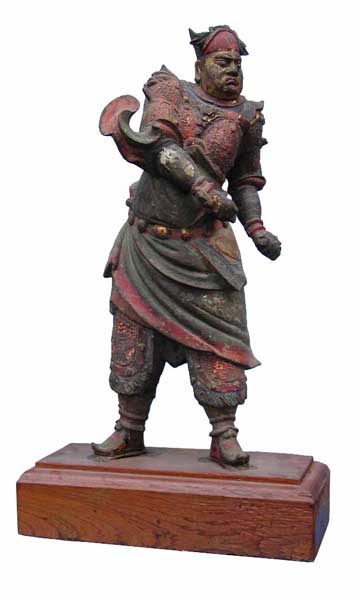
One of the stars of the Big Dipper
2026-04-15 11:51:31
(1) The meaning of the ritual of fasting and Taoist ceremonies
2022-08-20 23:32:13
The original meaning of "zhai" was to be neat, harmonious an...
Yin GUI
2022-08-20 23:32:13
Chapter 27
2022-08-20 23:32:13
Chapter 72
2022-08-20 23:32:13
The couplet of the ancestral hall of the Wudang Mountain Temple
2022-08-20 23:32:13
The Wudang Taoist couplet congratulating the Rain
2022-08-20 23:32:13