


(6) Static Exercises and Qigong
2022-08-20 23:32:13
Jinggong focuses on the word "stillness", and there is no need to make any efforts in "qi". Qigong focuses on the word "qi", but it may not necessarily conform to the principle of "stillness". Take a look at the Qigong taught in various parts of society. Most of them are mental exercises. Either the mind guides the movements, or the mind guides the use of qi, or the movements, qi and mind are all combined. Although there are many methods of Qigong, it always requires the use of the mind and the movement of qi. In contrast, static Qigong is completely static. In terms of qi, it follows the natural course and does not use one's own mind to control the movement. If the mind makes the movement, the meaning of "stillness" is lost. In this comparison, the starting point of static practice is higher than that of qigong. Many Qigong practices regard static practice as the highest level of their own school. Among the internal alchemy techniques, the static practice is merely the initial foundation-building technique. From this, it can be seen that there are differences in levels between static qigong and Qigong. The advantages and disadvantages of static Qigong and Qigong also differ. Those who do Qigong well can cure diseases and keep fit. If not done well, not only will the old illness not be cured, but new ones will also be added. If one practices static meditation in a legitimate manner, it can naturally cure diseases that are difficult to cure with medicine. Even if it is done illegally, one can still gain some benefits for both the body and mind. To put it another way, even if there is no major validation, there will definitely be no new problems. It can be known that Qigong has both advantages and disadvantages, while static Qigong is beneficial without any drawbacks. Some qigong exercises also have the method of sitting in meditation, but in essence, static Qigong is the aspect of stillness, while Qigong is the aspect of movement. The two have different natures. The sitting meditation method of Qigong does not conform to the principles of Neidan Jinggong. In Qigong meditation, although the physical appearance remains motionless, the mind is still functioning within the body without any rest. Although it is called sitting in meditation, it still belongs to the dynamic aspect and cannot be regarded as true static practice. For the treatment of various diseases, the effect of Qigong cannot be separated from static Qigong. Without static Qigong, the effectiveness of Qigong is hard to guarantee. For instance, in cases of gastric ulcers and neurasthenia, relying solely on Qigong without static Qigong is hard to guarantee definite effects. Even if one does not use Qigong but only practice static Qigong, it is completely possible to recover. This is practical experience, and there are quite a few of them. In recent years, the Qigong that has shown better therapeutic effects actually always includes the function of static Qigong, which has played an important role in an intangible way and is of great significance. After recovering from illness, most people believe that it is the effect of Qigong, without realizing that Jinggong has played a leading role in restoring health imperceptibly, while Qigong only plays an auxiliary role. Therefore, in terms of treating diseases, Qigong and Jinggong cannot be separated. For those who have practiced Qigong, further studying the Jinggong method of internal alchemy and foundation building will bring both physical health and longevity as well as the improvement of spiritual realm to a new level.
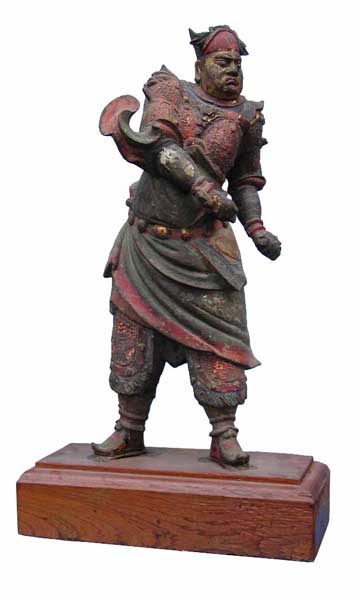
One of the stars of the Big Dipper
2026-04-15 11:51:31
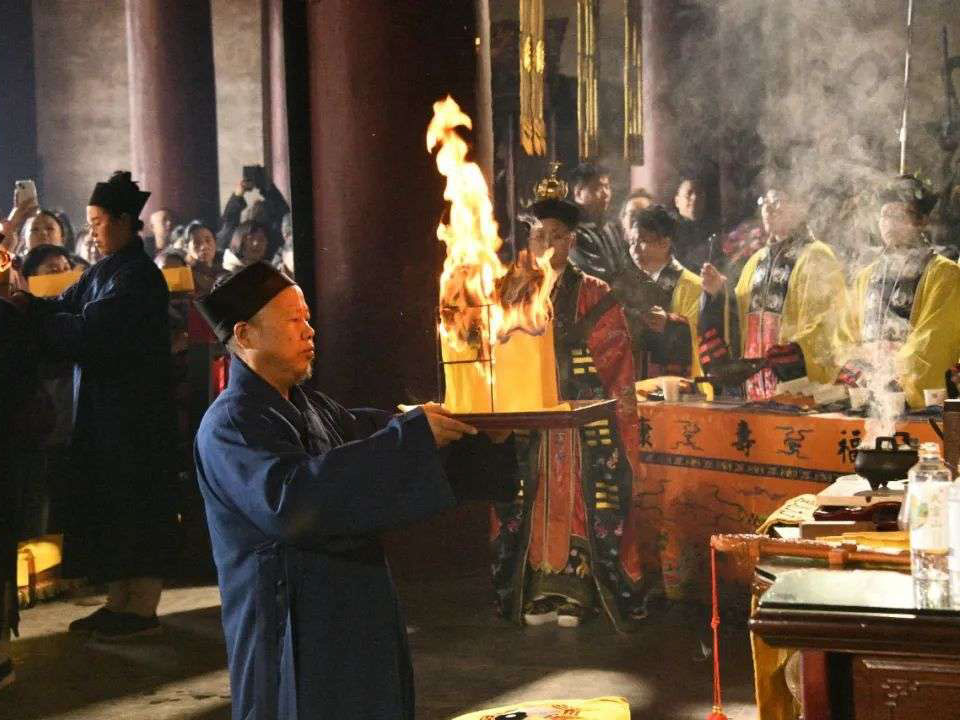
(1) The meaning of the ritual of fasting and Taoist ceremonies
2022-08-20 23:32:13
The original meaning of "zhai" was to be neat, harmonious an...
Yin GUI
2022-08-20 23:32:13
Chapter 27
2022-08-20 23:32:13
Chapter 72
2022-08-20 23:32:13
The couplet of the ancestral hall of the Wudang Mountain Temple
2022-08-20 23:32:13
The Wudang Taoist couplet congratulating the Rain
2022-08-20 23:32:13