


(V) The Fundamental Method of Alchemy Cultivation - Static Practice
2022-08-20 23:32:13
In order to enable readers to have a better understanding of the specific cultivation of the elixir path and the actual needs of those who are interested in learning Taoist martial arts, we hereby disclose the key to the true method of laying a foundation in Taoist cultivation - the method of Jinggong. (1) General Discussion on Static Cultivation: The practice of alchemy should start with static cultivation. In fact, all levels of internal alchemy skills cannot do without the effect of static practice. Whether it is the initial step, the hand, or the intermediate process, each level of every stage and different aspects of the same level is dominated by static practice. Therefore, the general practice of internal alchemy can also be referred to as "Jing Gong", which shows the significance of Jing Gong in Taoist cultivation. Jinggong is the most fundamental starting method among the internal alchemy exercises in Taoism. Among the popular Qigong techniques in society, it belongs to the most advanced level of martial arts. The difference in levels between Neidan and Qigong can be seen from this. (2) The Way of Jinggong: The Taoist internal alchemy lies in cultivating the essence, 炁 and spirit within the body. The external postures and movements are not important. The greatest principle is to keep the head and spine straight, comfortable and natural. You can stand, sit (or sit flat or cross-legged), or lie down (lying on your side is preferred). Requirements: ① Keep your eyes behind the curtain. The term "hanging curtain" means slightly closed. When the eyes are open, it is easy to breed distractions; when they are closed, it is easy to feel drowsy and fall asleep. Both are not conducive to achieving a state of tranquility. At this point, the mnemonic is "Open three times and close seven times". The specific method was passed down orally in the past. Here, it is made public by naturally lowering your eyes until you can see the object in front of you but cannot distinguish it clearly. ② Listen back to both ears. Returning to listen means returning to listen within. Eliminate all external distractions and immerse yourself in a state of utter silence, listening intently. The meaning of inner listening does not lie in listening to sounds, but in concentrating the ears and the mind's inner focus, so as to guide the mind and people to be calm. ③ The mouth must be stuffed. "Dui" means mouth, and "sai Dui" means to close one's mouth. Ask for pursed lips and clenched teeth, forgetting words and remaining silent. ④ Press the tongue against the upper palate. That is, roll the tongue back and press the bottom of the tip of the tongue against the upper palate. Because there are two small depressions on the upper part, they are called "Tianchi acupoints", and they are connected to mud pills, they are most prone to leakage of spirit and energy. Therefore, press the tongue against it, just like a baby breastfeeding. ⑤ Breathe naturally. As the levels of meditation practice continue to deepen, nasal breathing should gradually become deep, long, even, fine and gentle. After meeting the above requirements, one can gradually practice the skill of "listening to the breath". The so-called "listening to the breath" means listening to one's own breath. In the initial practice, just listen with your ears and do not think with your mind. But it doesn't mean to keep your ears shut, nor does it mean to listen to the sound of breathing. Just follow the route of each inhalation and exhalation, and slowly experience it, half listening and half listening. This is considered legal. As for the speed, thickness, depth and duration of breathing, one should not force them to be controlled by one's mind. As I heard this, my mind and breath gradually became affectionate and interdependent. Unconsciously, all distractions vanished, and even breathing seemed to cease to exist. Gradually, I entered a state of tranquility. (3) Levels of static Practice Taoist meditation has three major levels, all of which need to be gradually verified: ① Body meditation. When the body remains still, it is called a still body. When practicing meditation, do not wear tight clothes and avoid having tense emotions. Relax both body and mind, and it will naturally be conducive to tranquility. When it is done just right, although the practice time is long, one does not feel bored in the heart and there is no unbearable situation on the body. As long as one can sit still, do things easily, and even not want to move anymore, then the body has already found peace. Physical tranquility is the initial stage of the practice of stillness. ② Calm mind. When thoughts remain still, it is called a calm mind. After achieving physical tranquility, the thoughts in one's heart have not yet been completely cleared. At this point, one should use the above-mentioned method of listening to the breath to achieve the unity of mind and breath. At this moment, the mind is free from distractions, all attachments are let go, past events are not recalled, current matters are not preoccupied, and future events are not planned. The brain nerves are completely in a state of emptiness. This is when the inner world finds peace. When there are no thoughts in the heart, it is a state of peace. This is achieved through static practice. ③ Calm mind. Not knowing that I am there, it is called a state of tranquility. After the mind is free of thoughts, there is still an "I" existing, not yet completely pure. Furthermore, by achieving the unity of mind and qi, one can forget oneself and enter a state of confusion. Empty but not empty, thus it is called "mixed ton". Only when one reaches the level of self-forgetfulness can one truly enter a state of tranquility. To achieve a state of mental tranquility is the highest level of meditation practice. When most people talk about static practice, they at most mention the state of no movement of thoughts, that is, the state of mental tranquility, which can only reach the middle level. Qigong practitioners talk about static practice. Achieving a state where the body remains still is considered success. It is difficult to delve into the inner thoughts and grasp them. One can only maintain physical stillness and emphasizes the intention, making it even more challenging to achieve mental tranquility. Such an approach merely reaches the initial level. Only the true study of stillness in Taoism, after achieving physical tranquility, further cultivates mental tranquility. However, it is believed that mental tranquility is not complete; one must also deeply practice mental tranquility to reach the true realm of stillness. From this, one can see the profoundness of Taoist cultivation methods, which can be described as mysterious and profound. In addition to dividing the practice of static exercises into three stages: the beginner level, the middle level, and the upper level, there is no end to the higher levels. There is a highest level that can lead to sudden enlightenment and direct transcendence, achieving enlightenment in one's own life. However, this belongs to the aspect of "Dao practice" and is beyond the reach of ordinary people. Therefore, it will not be elaborated here. The three major levels of physical tranquility, mental tranquility and mental tranquility mentioned above may seem ordinary, but they are not. Some people mistakenly believe that cultivating one's mind and nature has nothing to do with the physical body. In fact, this is not the case. The profound mysteries of Taoist meditation directly point to the true essence of cultivation. The Alchemy book states: "When the body remains still, it is called refining the essence; when the mind remains still, it is called refining 炁; when the will remains still, it is called refining the spirit." It can be seen that the three major levels of the Foundation Establishment Static Practice have integrated the practices of refining essence, 炁, and spirit throughout, forming a grand cultivation method. Refining essence is to replenish essence, refining 炁 is to replenish 炁, and refining spirit is to replenish spirit. Thus, through the practice of static practice to establish a foundation, one can make up for the deficiency of the three treasures of essence and spirit until one reaches the state of "when essence is full, one no longer desires; when 炁 is full, one no longer desires to eat; when spirit is full, one no longer desires to sleep". This is precisely the true purpose of establishing a foundation in the way of alchemy.
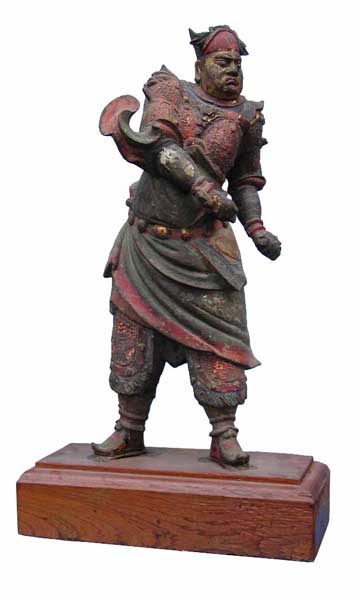
One of the stars of the Big Dipper
2026-04-15 11:51:31
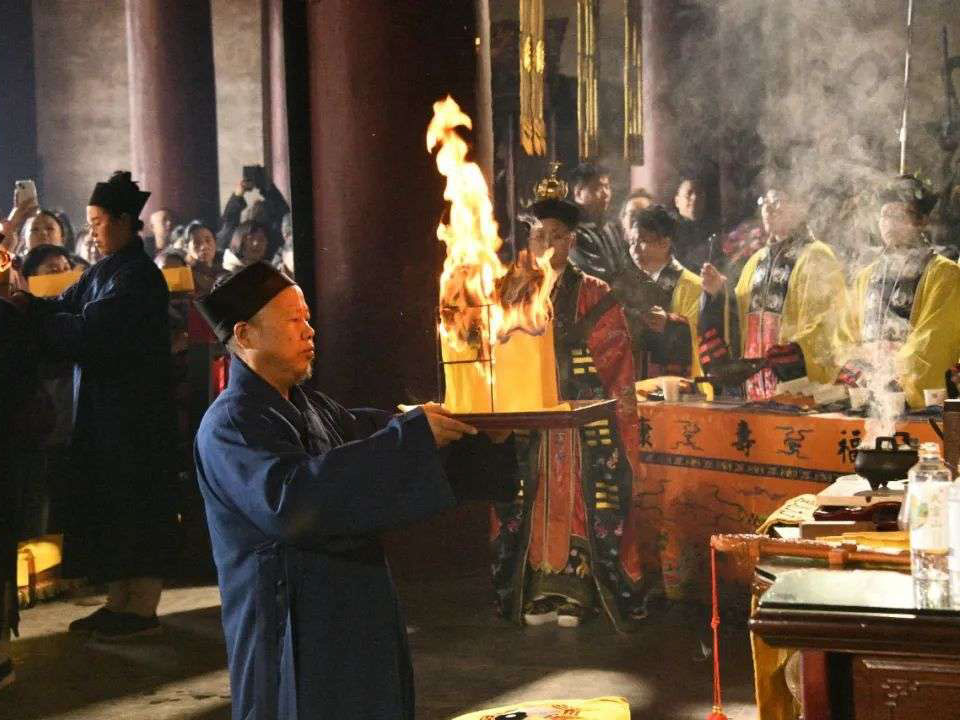
(1) The meaning of the ritual of fasting and Taoist ceremonies
2022-08-20 23:32:13
The original meaning of "zhai" was to be neat, harmonious an...
Yin GUI
2022-08-20 23:32:13
Chapter 27
2022-08-20 23:32:13
Chapter 72
2022-08-20 23:32:13
The couplet of the ancestral hall of the Wudang Mountain Temple
2022-08-20 23:32:13
Chapter 25
2022-08-20 23:32:13