


(2) The basic essentials of Taoist cultivation
2022-08-20 23:32:13
Taoist cultivation is a profound and independent system. Here, the basic essentials are summarized into the following ten points to serve as a guiding guide and help readers understand the true meaning of cultivation. (1) Cultivate virtue and morality, and practice inner strength externally. Cultivating the Tao is an inner cultivation, that is, inner strength. Cultivating virtue refers to external conduct, that is, external conduct. The two complement each other and neither can be dispensable. The deepening of one's cultivation can enhance one's moral character. Noble virtue will also lead to the advancement of one's spiritual practice. Conversely, if one's virtue is insufficient, one will have no connection with the Tao. In ancient times, Emperor Qin Huang and Emperor Wu GUI of Han were emperors. They spent their entire lives seeking immortality but ultimately failed to achieve it. Before Chen Niwan achieved enlightenment, he was just an ordinary barrel-coiling craftsman. It can be known that the way of cultivation does not lie in wealth or social status; the key lies in whether a person has virtue. Therefore, "The way is not spread in vain." There is a saying in the Way: "Ten thousand taels of gold are not sold for the way; it is passed on to people at the crossroads." For cultivators, it is essential to widely establish good deeds and achieve the state of "When the three virtues are fulfilled, the eight hundred deeds are completed." (2) The Dao cannot be passed on without scriptures, and scriptures cannot be understood without a teacher. Taoism regards the Tao, scriptures and teachers as the three treasures, believing that "the Tao cannot be passed down without scriptures, and scriptures cannot be understood without teachers." The Dao, which means cultivating the Dao, refers to the practice of one's own cultivation to understand the Great Way. Jing, that is, reading scriptures, reading the works of ancient cultivators to verify one's own cultivation. A teacher, that is, a teacher's transmission, must be imparted by a true teacher to clarify the essence of the way. A true teacher refers to one who has genuine and practical cultivation skills. To know the way down the mountain, one must ask those who have been through it. The above three Jewels are for personal inner cultivation. Doing good deeds in daily life is still indispensable. (3) Follow the natural way; those who are still will achieve it. The way of cultivation is to learn from nature. The meaning of "nature" has two aspects: First, it is natural and effortless, without any artificial intervention. "Lotus emerges from clear water, naturally unadorned." " Imposing one's own will is actually detrimental to one's cultivation. Therefore, one must act in accordance with the will of heaven, achieve harmony between heaven and man, and "observe the way of heaven and follow the way of heaven", so as to conform to the essence of the Dao. Secondly, it varies from person to person and has different effects. Because everyone has a different constitution and varying levels of perception (i.e., acceptance ability), even if the teachings from the master are the same, the effects of their inner cultivation will not be exactly the same. How can one conform to the way of nature? The key lies in the most emphasized word in Taoism - stillness. The "Yin Fu Jing" states, "The way of nature is still." Therefore, those who are still can achieve it. (4) Self-cultivation. There is no measure of people. Taoist cultivation advocates "saving oneself and others". First of all, it requires an individual to engage in meticulous cultivation and practice. After achieving enlightenment and attaining the right path, one must also manifest oneself in the world to benefit all those with karmic connections. When one person cultivates, many benefit. Otherwise, one would merely be a "self-defeating Han", ascending to heaven with the Tao, achieving nothing in the world and not being accepted by the celestial realm. The Daozang Canon: The Supreme Sutra of the Primordial Heavenly Lord without Measure states: "The immortal path is precious when one enters without measure." The term "without measure" refers to those who, to the greatest extent and selflessly, help those who have the conditions to cultivate the path. When Zhongli Laozu was enlighten Lu Zu in the past, he once asked, "What do you want to say?" Lu Zu replied, "I wish to save all sentient beings before attaining enlightenment." Such a broad mind is the true tradition of a Taoist family. (5) The ultimate way is not complicated; adhering to the middle is the key. The Great way is simple and easy, precise and minute. The Tao Te Ching says, "Less leads to gain; more leads to confusion." The Yellow Court Classic states: "The ultimate creation is not complicated." Complicated and unstructured, all are at the end of the Tao, leaving people unable to grasp the essence. Therefore, the Taoists do not take them. The study of inner alchemy is a matter of essence and refinement, directly attaining the great Way and achieving victory with less. The Tao Te Ching states: "The Tao gives birth to One; one gives birth to two; two gives birth to three; and three gives birth to all things." The simpler and less one becomes, the closer one gets to the great way. During the Western Han Dynasty, Sima, when discussing Taoism, said, "It is easy to control and operate, with less effort and more achievements." It is quite in line with the essence of cultivation. The alchemy path is ever-changing. How can one hold the position of a cardinal? The beauty lies in "adhering to the middle way". Laozi says, "Excessive talk leads to exhaustion; it is better to adhere to the middle way." Zhuangzi says, "By attaining the inner circle, one can respond to the infinite." Too much or too little, excessive Yin and Yang, water and fire not in balance, all can easily damage the elixir. Therefore, it is essential to maintain moderation. This is the true essence of moderation. (6) The way of immortality values practicality and the unity of principle and law. In Taoist cultivation, the key lies in genuine practice and verification. Every step one takes has its own effect, and one should never deviate from the human body itself. All that is said is false when one leaves the human body. The treatises on elixirs left by the ancestors of past generations were all conclusions drawn from their own physical and mental verification. They are things that integrate principle and law. In a sense, not a single word or phrase can be changed. If one merely recognizes these things based on their literal meanings and takes them at face value, they won't truly understand them. Only by comparing and verifying it with one's own actual cultivation can one understand its true meaning. Therefore, the "Tao Te Ching" says, "Observe oneself through one's own actions." (7) Blend in with the light and dust, and cultivate the true by borrowing the false. The doctrines of Taoism are not confined to transcending the mundane world or engaging in it. Instead, they are established with a spirit that transcends the mundane, in harmony with the light and dust, and in accordance with the circumstances. Cultivating the elixir path, also known as "cultivating the true through the false", requires tempering one's temperament and meticulously refining one's moral character to nourish one's foundation in the path and enhance one's elixir cultivation. The patriarch of Taoism advocated "great seclusion in the mundane world", emphasizing the cultivation of oneself in the mundane world. The "Wuzhen Chapter" states: "Those who have not yet refined their elixirs should not enter the mountains; inside and outside the mountains, there is no lead." " When one's martial arts skills have reached a certain level and the foundation is solid, one needs to undergo great meditation before entering the mountains and forests. The difference between being in harmony with the light and going with the flow lies only in the distinction between having the right way and not having the right way. (8) Cultivate both life and nature, with longevity as the foundation. Nature is the heart, the spirit, the will and the virtue. Life is about rest, 炁, form and function. The alchemy emphasizes the cultivation of both life and nature. It not only nurtures one's character to make it bright but also strengthens one's physical form to ensure its enduring existence. And taking immortality as the foundation, the role of immortality has two aspects: First, if the fruit of the Tao is not achieved and the physical body is destroyed before, then there is no hope of attaining the Tao in this life. Therefore, one must strengthen the body and preserve one's capital, and only then will there be hope for cultivation in this life. Secondly, if one does not have a certain life force, it will be extremely difficult to control one's own thoughts when dealing with one's physical body, and it will be hard to achieve great success in cultivation. Therefore, only by first preserving the physical body and achieving immortality can one fully guarantee one's elixir cultivation. (9) Gender equality, women are the fastest. Before the great way, all are equal. Cultivation is not limited by gender; both men and women can achieve the fruit of the Tao together. Moreover, women work harder than men. Because physiologically speaking, the distance between a woman's "sex" (heart palace) and "yu" (dantian) is relatively close. Physiologically speaking, men are active while women are still. Therefore, the alchemy book states: A man can achieve success after ten years of cultivation, while a woman can achieve success after three years. Of course, depending on each person's quality, it's not necessarily ten or three years. This is just a relative discussion. For men and women in the Dan Gong, it is more convenient for women to start the Ming Gong. After completing the Ming Gong, the techniques of men and women are basically the same. As for future achievements, there is no distinction of superiority or inferiority. (10) To live in this world forever, my destiny is in my own hands. According to Xiandao, the normal lifespan of a person is 120 years, which is in line with modern scientific views. A 60-year-old person here is just like a child. It is believed that through cultivation, everyone can live to the fullest and reach over 100 years old. Moreover, just like adding firewood when the fuel runs out, one can also use the art of adding oil to receive life to further extend one's lifespan, live in immortality, and become an immortal with a physical body, becoming a "living immortal" who is not controlled by fate. When one grows tired of living in the human world, one can ascend to the celestial fairyland, as the Zhuangzi states: "A thousand years of weariness of the world, one ascends to immortality." The "living immortal" perspective of Dan Dao Xiu in this life first requires people to maintain a positive and enterprising outlook on life, to cherish life, enjoy life, value life, and respect life, constantly explore the mysteries of life, and be full of confidence in real life. The second is to achieve the full use of one's natural life through cultivation, even to immortality and vision, to ascend to immortality and be free from the control of fate. This is what is meant by "My destiny is in my own hands, not in the hands of heaven."
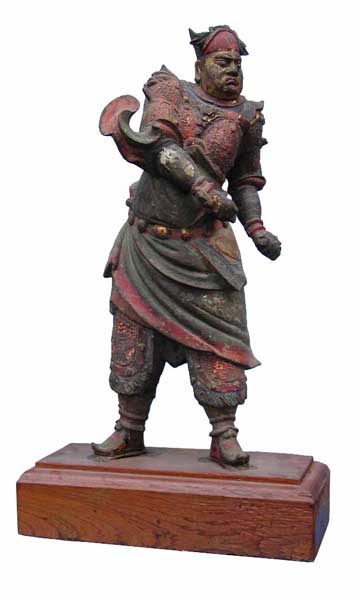
One of the stars of the Big Dipper
2026-04-15 11:51:31
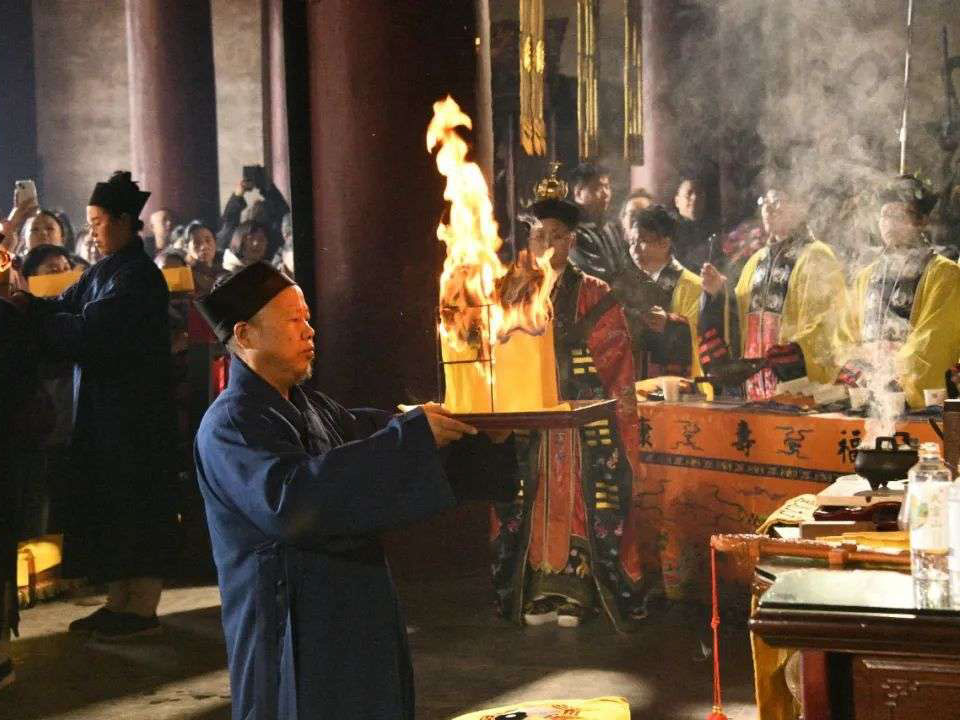
(1) The meaning of the ritual of fasting and Taoist ceremonies
2022-08-20 23:32:13
The original meaning of "zhai" was to be neat, harmonious an...
Yin GUI
2022-08-20 23:32:13
Chapter 27
2022-08-20 23:32:13
Chapter 72
2022-08-20 23:32:13
The couplet of the ancestral hall of the Wudang Mountain Temple
2022-08-20 23:32:13
Chapter 25
2022-08-20 23:32:13