


(1) Taoist Beliefs and Taoist Cultivation
2022-08-20 23:32:13
(1) The Purpose of Cultivation - Longevity and long-term Vision The purpose of Taoist cultivation is to achieve the "longevity and long-term vision" as mentioned by Laozi, or it can be called "immortality" or "eternal life". Some people think that so-called immortality means the immortality of the physical form. This is a fundamental misunderstanding. Taoist doctrine holds that even the Earth has its bad times, let alone human beings. To be precise, immortality refers to both physical immortality and mental immortality. Physical immortality means that on the basis of achieving one's natural lifespan (Taoism holds that the normal human lifespan should be 120 years), one can still use cultivation methods to extend one's life until the physical life can no longer continue. Spiritual immortality is achieved through the cultivation method of the unity of heaven and man, integrating one's limited life into the endless cosmic transformation, to experience the permanence and eternity of life. This is the highest realm of longevity and long-term vision. (2) Taoism, Daoism and Cultivation The root of ancient Chinese culture is Daoist culture, which has an ancient tradition of ";cultivating Daoism for longevity". According to the Records of the Grand Historian, the patriarch of Taoism, the Yellow Emperor Xuanyuan, "studied immortality while fighting", often traveling to famous mountains across the country in search of immortals and the Tao. He passed away at the age of over a hundred. The subsequent Daoist ancestor Laozi, as recorded in history, was "over sixty years old, or even over two hundred years old, through his cultivation of the Tao and his longevity." No matter what age is right, Laozi's pursuit of Taoism is beyond doubt. Cultivating the Tao and prolonging life is the method of cultivation in Taoism. After Laozi, Zhuangzi, in his work "Nanhua Zhenjing", had already specifically described the cultivation methods such as guiding and leading, sitting and forgetting, listening and breathing, mental fasting, breathing exercises, controlling the chest, and heel breathing. Based on this, it is indicated that "cultivating the Tao and maintaining longevity" is an excellent tradition of Taoism. After the emergence of Taoism, it inherited this tradition of Taoism. Throughout history, immortal Taoist masters have taken their own bodies and minds as test subjects to conduct precious explorations of human life, creating profound and extensive theories of alchemy and forming a complete cultivation system. Taoism holds that as long as an individual diligently cultivates, they can achieve "the coexistence of life and the Tao, and the protection of the Tao and life", perfect life, and integrate life and the Tao. "The universe may be corrupted, but this is not", reaching the highest goal of attaining the Tao and realizing it, as well as achieving immortality and long-term vision. Although Taoism differs from the Taoist school in form by adding rituals, precepts, scriptures and penance, and worship, it has always remained committed to the study of cultivation. Therefore, the entry of Taoist cultivation into Taoism can only be regarded as the different manifestations of Taoist culture in different historical stages. Taoism developed the Taoist theory of health preservation and cultivation, and promoted its enduring prosperity throughout Chinese history for thousands of years. Therefore, the theory of cultivation is the essence of Taoism, and all the doctrines and teachings of Taoism develop along this basis. It is hard to say that it is true Taoism without the practice of health preservation and cultivation. If a person does not understand the content of Taoist cultivation, he does not understand the essence of Taoist beliefs, and thus cannot talk about a comprehensive understanding of Taoism at all. (3) Cultivation emphasizes moral cultivation. Taoist cultivation advocates "cultivating virtue". Cultivation emphasizes the foundation of each individual, and this foundation is moral cultivation. Cultivating virtue is to lay the foundation for self-cultivation, so it is of great significance. First of all, cultivating virtue is the prerequisite for self-cultivation. According to the Taoist scriptures, our original nature is "pure and pure both inside and out", that is, our nature is pure. After being reborn, due to the emergence of various material desires and deluded minds, the pure nature is gradually obscured, becoming an obstacle to cultivation. To achieve the goal of cultivation, one must gradually remove these obstacles. This requires accumulating merit and virtue, being kind to others, and doing more good deeds to cultivate one's own gentle, humble and non-contentious moral mind, gradually restoring the purity of one's nature and making it conform to the Tao. As the saying goes, "As long as the human heart is alive, the heart of the Tao will not be born." Therefore, the way of cultivation emphasizes doing more good deeds. The scripture says, "If you want to become an immortal, you should do 1,300 good deeds." If one encounters obstacles in the process of cultivation or if one's skills stagnate, it is all due to insufficient moral cultivation. Furthermore, cultivation is not limited to being accomplished in one lifetime. By accumulating merit and virtue and cultivating good roots, even if one cannot reach the highest level of cultivation in this life for the time being, one can eliminate disasters and avoid calamities, gain blessings and prolong life. Moreover, one is sure to receive blessings in the next life. Therefore, those who have a connection with the Tao in this life all have the cultivation of their previous lives as a foundation. We must not give up on ourselves. Having understood the cultivation of virtue, the great way lies before us, and every immortal can become one. As the saying goes, "One has used it for a hundred years without knowing it." Therefore, Taoist cultivation is a broad concept and by no means a narrow personal practice. If everyone engages in spiritual practice, then who will build the country? This broad view of self-cultivation places great emphasis on moral cultivation and advocates the parallel development of morality. From a social perspective, advocating moral cultivation and maintaining harmonious, amicable, sincere and mutually supportive relationships among people is conducive to the establishment of social order and the stability of the social environment, and is a beneficial supplement to the construction of socialist spiritual civilization. Taoism's cultivation of virtue further demands sincerity towards all things, with the belief that "even insects and plants should not be harmed." It advocates protecting nature with the virtue of cherishing life, which still holds practical significance for maintaining ecological balance and safeguarding the human environment. This broad perspective on cultivation can be summed up in just one word: "virtue", which is the true scripture of a single character. This broad moral outlook reflects the characteristic of Taoism that attaches equal importance to the otherworldly and the worldly. (4) The Intrinsic Relationship between Moral Cultivation and Self-cultivation: For self-cultivation, moral cultivation means cultivating the mind and one's nature. In alchemy, cultivating virtue, the mind and one's nature is of vital importance. Because the changes in one's nature directly determine the changes in qi, the "Huangdi Neijing" states: "Anger causes qi to rise, joy causes qi to slow down, sorrow causes qi to dissipate, fear causes qi to descend, cold causes qi to contract, heat causes qi to escape, shock causes qi to be disrupted, overwork causes qi to be consumed, and overthinking causes qi to accumulate." The Dan Book states, "When one is still, qi arises." In ancient times, Wu Zixu passed through the Zhao Pass and his hair turned white in one night due to sorrow. The Complete Story of Yue Yue describes the tale of "enraged Jin Wuzhu to death and laughing Niu Gao to death". It is evident that the changes in a person's nature and character have such a significant impact that they can determine a person's fortune, misfortune, life and death. As the saying goes, "If you do nothing wrong, you needn't fear the knocking of ghosts." People with profound moral cultivation are kind to others and always ready to help. This is a kind of comfort to their inner selves. They lead a very fulfilling life, have a clear conscience and an open mind. Naturally, they are calm and carefree. As the saying goes, "When virtue is upright, the heart is at peace; when the heart is at peace, the spirit is smooth." On the contrary, if one's virtue is poor, one's heart is impure, or even one's morality is corrupt, harming others for one's own benefit, one's mind will be restless and it will be hard to find peace. One's thoughts will often be full of distractions, which is a huge obstacle to spiritual cultivation. Taoist cultivation holds that "nature governs seven parts and life governs three parts", and "cultivate the mind and then act; cultivate the mind and then act". Within the internal cultivation system of dual cultivation of life and nature, the cultivation of the mind and nature is of vital importance. If one lacks a certain level of moral cultivation as a foundation, they will not be able to undertake the great task of cultivation, and may even lead to the collapse of the cauldron and the threat to life. Some past cultivators, after reaching a certain critical point, eventually gave up halfway due to inner demons, and some even sought a new life here. All of these are painful lessons. In conclusion, to explore the secrets of Taoist cultivation, one must first understand that moral cultivation is the foundation. Only after understanding this point can one truly grasp the essence of Taoist cultivation.
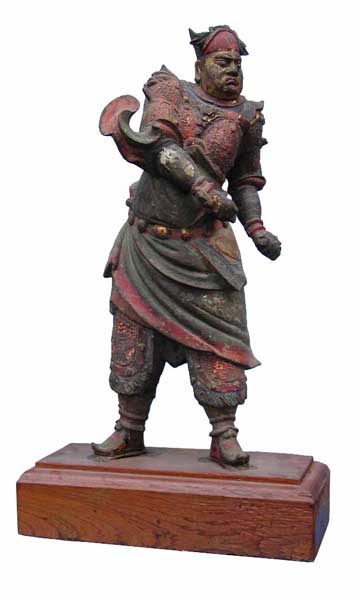
One of the stars of the Big Dipper
2026-04-15 11:51:31
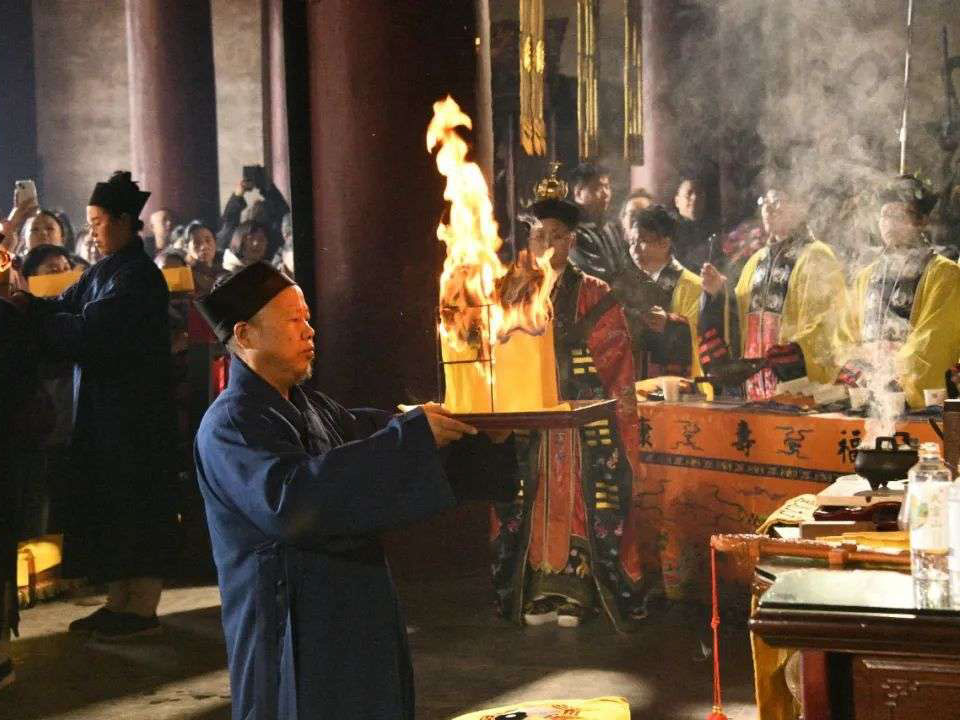
(1) The meaning of the ritual of fasting and Taoist ceremonies
2022-08-20 23:32:13
The original meaning of "zhai" was to be neat, harmonious an...
Yin GUI
2022-08-20 23:32:13
Chapter 27
2022-08-20 23:32:13
Chapter 72
2022-08-20 23:32:13
The couplet of the ancestral hall of the Wudang Mountain Temple
2022-08-20 23:32:13
Chapter 25
2022-08-20 23:32:13