


(4) The Northern Celestial Master Taoism, the Southern Celestial Master Taoism and the Maoshan Sect
2022-08-20 23:32:13
After the Jin Dynasty. During a period of division and governance in Chinese society, the inheritance, continuation, promotion and development of Taoism were also restricted and influenced by this social environment. Given that the internal organization of Taoism was disorganized at that time, the rituals were abandoned and the scriptures were lost. Therefore, some eminent Taoists stepped forward and promoted internal reforms in Taoism, making the inheritance and development of Taoism during the Northern and Southern Dynasties distinctive and vibrant. What is most discussed in the academic circle today is the situation of the activities of the Celestial Masters in the north and South at that time. The Northern Celestial Master Taoism was a new Taoist school that originated in the Northern Wei Dynasty. It was formed by the Taoist priest Kou Qianzhi's reform of the Five Pecks of Rice Taoism. At that time, with the support of Emperor Taiwu of the Northern Wei Dynasty and the assistance of Grand Tutor Cui Hao, Kou Qianzhi built a Celestial Master's temple in the southeast of Pingcheng (now Datong, Shanxi Province), promoting the "New scripture system", which was called the New Celestial Master's Way. Later generations referred to it as the Northern Celestial Master's Way. According to the "Shi Lao Zhi" in the "Book of Wei", the Northern Celestial Master Taoism's adaptation to the Five Bushings of Rice Taoism is described as: "Xuanwu's 'New Science' purifies Taoism, eliminating the three false methods, the tax of rice money, and the art of harmonizing the qi of men and women." The great way is clear and empty; how could there be such a thing? "Take propriety as the top priority and also take and practice in seclusion." One of the specific measures is to introduce Confucianism into Taoism. Taoists should take propriety as the standard and cultivate both Confucianism and Taoism. Admonish the Taoists: "Do not rebel against the monarch", "Do not plot to harm the country", "Be cautious not to seek wealth and honor through poverty and lowliness", be loyal and filial, and oppose the use of the Celestial Master Taoist divination to cause chaos. Second, abolish the private administrative position and hereditary system of the Jijiu Taoist Palace, reform the tradition of the hereditary position of the Celestial master among the three Zhangs, and replace it with "only the virtuous are granted", and establish Taoist officials for Jijiu, and no longer use the title of "Shu Tu Zhai Zhi". Third, abolish the rent, money and tax system of the Three Zhangs period, and Taoists only need to pay thirty sheets of paper, one pen and one ink tablet each year for the purpose of repairing the list and saving people. Fourth, in accordance with Confucian ethical and moral standards, Taoist precepts and fasting rituals were added and revised. Reciting scriptures and precepts, achieving merit and setting up a vegetarian diet, and offering incense and fire are the foundations for eliminating SINS and desires and achieving longevity and long-term vision. It is supplemented by taking food and closing exercises, integrating talismans, incantations, medicine, 卜筮, and divination, and is accompanied by music for reciting scriptures and chanting. Kou Qianzhi's reform of the Celestial Master Taoism received strong support from Emperor Taiwu of the Northern Wei Dynasty. "Thus, he revered the master, promoted the new laws, declared them throughout the land, and the Taoist practice flourished." Kou Qianzhi (365-448), styled Fuzhen, was originally named Qian. His ancestral home was in Changping, Shanggu (now part of Beijing), and later he moved to Wannian, Fengyi (now north of Lintong, Shaanxi Province). He was the younger brother of Kou Zan, the governor of Nanyong Prefecture. At the age of 18, he became fond of Taoism. At first, he learned Zhang Lu's art. Later, he associated with the immortal Cheng Gongxing and practiced Taoism on Mount Hua and Mount Song for seven years successively. It is said that in the second year of the Shenrui era of Emperor Mingyuan of the Northern Wei Dynasty (415), the Supreme Elder Lord personally visited Mount Song and bestowed upon him the position of Celestial Master. He was given the "New Precepts of Chanting in the Clouds", instructing him to use it to "purify Taoism", and was also taught the mnemonic for breath control and guiding. With humility, he was able to fast from food, his energy was abundant, his body was light, and his complexion was exceptionally beautiful. In the eighth year of the Tai Chang era (423), Li Puwen, also known as the great-grandson of the "Supreme Elder Lord", personally imparted the "True Classic of Recording Pictures" and secret methods such as summoning ghosts and gods, and ordered him to assist the "True Lord of Northern Peace" in governing "the affairs of humans and ghosts". So, in the sixth year of Shiguang (424), he humbly went to Pingcheng, the capital of the Northern Wei Dynasty (now Datong, Shanxi Province), to present a letter of enlightenment to Emperor Taiwu. The following year, with the help of Situ Cuihao, a Celestial Master Taoist temple was built in the southeast of Pingcheng to promote the "New Scripture System", which was called the New Celestial Master Taoist. In the sixth year of Taiyan (440), Kou Qianzhi, claiming the title of "Supreme Elder Lord", surrendered again and bestowed upon Emperor Taiwu the title of "Taiping True Lord". Emperor Taiwu, in response, changed the era name to "the first year of Taiping True Lord" and personally went to the 箓 altar to receive the title of 符箓, appointing Kou Qianzhi as the state preceptor. After that, the Northern Celestial Master Taoism was revered by successive emperors of the Northern Wei Dynasty. Kou Qianzhi reformed the Celestial Master Taoism, formulated new laws for musical music and precepts, and collated Taoist classics. He was an important figure in the history of Taoism. This is recorded in historical books such as "Shi Lao Zhi" in the "Book of Wei" and "Biography of Cui Hao" in the "Book of Wei". The Southern Celestial Master Taoism was formed by the transformation of Taoism from the Han, Wei and Jin Dynasties by the Taoist priest Lu Xiujing during the Southern Dynasties. Especially during the period from the Eastern Jin Dynasty to the Southern Song and Qi Dynasties, there were many drawbacks accumulated within Taoism, such as disorganized organization and lax discipline, which caused serious harm to the continuous development of Taoism itself. The greatest hidden concern was the close combination with peasant uprisings. For this reason, Lu Xiujing proposed a series of measures to rectify and reform the situation of Taoism at that time. He believes that the "body, speech and mind" of a person are the sources of evil, because the "mind" can give rise to thoughts of "greed and anger". The mouth can utter harsh words. The "body" is the foundation and condition that sum up all of this. Therefore, the Southern Celestial Master Taoism advocates restricting through "worship", "chanting sutras", and "contemplation" to achieve the state of "purifying the mind and conducting pure deeds". Lu Xiujing advocated fasting because it was the foundation of seeking the truth. He also compiled a variety of precepts and rituals, aiming to start with fasting to sort out the various long-standing problems existing in Taoism during the Southern Song and Qi Dynasties. He advocated that only by fasting could a person's "body", "speech" and "mind" be led into normal "rituals". Reform cannot be carried out without the foundation of our predecessors, which is why Lu Xiujing proposed the idea of "inheriting the three Zhangs and promoting the development of the two Ge." He boldly reformed the outdated institutional contents within the church and sorted out and improved the deficiencies. For instance, it is proposed to rectify the "Twenty-Four Rules" of the past Five Pecs of rice Daoism, improve the "Three Meetings day" system, reform the organization and household registration of Daoists, the place of cultivation and other related "home 箓" systems, require that "all those who follow the daoism register their household registration and each have their own belonging", frequently receive education on "planting the forbidden and the ceremonial", "know the law" and abide by the law, and ensure "peace of the country and the family". For weddings, funerals, and other ceremonies, the addition or reduction of household registration should be declared. Those who follow the Tao must strictly adhere to their duties and must not overstep their bounds. The system of promotion based on merit for Taoist officials was strictly implemented, thereby strengthening and improving the Taoist organization. After Lu Xiujing's reorganization and reform, Taoism enjoyed a high social status during the Southern Song and Qi Dynasties. As a result, the rulers accepted and favored Taoism, and Taoism developed very well during this period. Later, the academic circle referred to the form of Taoism reformed by Lu Xiujing as "Nantian Shuai Dao". Lu Xiujing (406-477) was a renowned Taoist priest and scholar of the Liu family in the Southern Dynasties. He was the seventh-generation master of the Shangqing Family on Maoshan Mountain and the founder of the Southern Celestial Master Taoism. He was from Dongqian, Wuxing (now the east of Wuxing County, Zhejiang Province), with the courtesy name Yuanji. As he came from a noble family, he was involved in marriage and officialdom at an early age. Lu Xiujing was fond of literature in his youth. He first studied Confucianism and later delved into the concepts of Xiang Wei and He Zhi to predict the future. When he was fond of traveling outside, he left his family to study the Tao. First enter Yunmeng Mountain for cultivation, then go south to Hengxiang, jiu嶷, to visit the ruins of nanzhen; Two visits to Mount Emei, seeking the lofty path of purity and emptiness; Extensively search for true secrets and widely cultivate the path of enlightenment. In the first year of the reign of Emperor Wen of the Song Dynasty (453), he was selling medicine in Jiankang, the capital (now Nanjing, Jiangsu Province). Emperor Wen heard of his name and ordered Xu Zhanxuan, the left Censure, to summon him to the palace to preach. In the same year, he fled to avoid the disaster at the beginning of the Great Chu period. Admiring the beautiful scenery of Mount Lu, in the fifth year of the Ming Dynasty (461), he visited the mountain and built a hut at the Waterfall Rock to settle down in seclusion. In the third year of the Qin Shi era (467), Emperor Ming of the Song Dynasty ordered Wang Jingzong, the governor of Jiangzhou, to respectfully invite him to the capital to preach. During this period, Lu Xiujing collected a wide range of Taoist scriptures. He collated the Taoist scriptures he had collected over a long period of time into the school magazine. Distinguish truth from falsehood. It collected 1,228 volumes including scriptures, precepts, medicines, 符箓, etc., and was divided into "three caves", laying the foundation for the Daozang. In the seventh year of Taishi (471), he compiled the "Catalogue of the Three Caves Classics", which was the earliest catalogue of the "Daozang". Lu Xiujing advocated that those who practice Taoism must purify their minds and conduct, and use the methods of worship, chanting sutras and contemplating deities to gradually lead themselves to the great Way. He compiled over 100 volumes of books on Taoist fasting, precepts and rituals. According to the propositions of "Zushu Sanzhang and Hongyan Erge", he organized Taoism and promoted its development. It was later called "The Way of the Southern Celestial Master". The Maoshan School was a Daoist school formed during the Liang and Chen Dynasties of the Southern Dynasties by taking Maoshan as its ancestral home and inheriting the Shangqing School. The founder was Tao Hongjing, the ninth-generation master of the Upper Qing Dynasty. The Maoshan Sect regards the Primordial Heavenly King as the highest branch and compiles the Upper Qing divine genealogy "True Spirit Position and Karma Map", which is jointly listed by humans and deities. This sect adheres to the practice of the "Shangqing Sutra", and also studies the "Lingbao Sutra", "Sanhuang Sutra" and "Zhengyi Sutra". Precepts 箓 : In terms of practice methods, it mainly focuses on contemplating the divine and reciting sutras, combined with various health preservation techniques such as taking medicine, guiding exercises, medicinal erbiums, and internal and external elixirs, advocating the integrated practice of all these techniques to achieve the path to immortality. Although the Maoshan School was the successor of the Shangqing School, its characteristics clearly marked the new pioneering and development of Taoism at that time in several aspects. One of its characteristics is that the High Zhen of the Shangqing School used to practice Taoism in a way that was both official and reclusive. However, in the tenth year of Yongming of the Southern Qi Dynasty (492), Tao Hongjing changed the way his predecessors practiced Taoism. Retiring to seclusion on Maoshan Mountain and calling himself "Huayang Seclusion" is a form of monastic practice. He inherited the "Shangqing Sutra" passed down by his predecessors, carefully collected the original works of the Shangqing Sutra's instructions that were lost by his senior, Gao Zhen, and later compiled over 200 volumes of Taoist scriptures to promote the Shangqing Sutra's teachings. After decades of painstaking efforts by Tao Hongjing, the doctrines and organizational forms of the Shangqing School gradually became complete. Later generations referred to the founding form of the Shangqing School of Taoism during this period as the "Maoshan School". The second characteristic is that during the Qi and Liang dynasties, Tao Hongjing's most distinctive development of the Shangqing School was: absorbing the viewpoints of Confucianism and Buddhism. Advocate the integration of Confucianism, Buddhism and Taoism. Tao Hongjing said; All things in the universe are inseparable from the possession of the two instruments. A hundred methods converge, and none surpasses the realm of the three teachings." He also taught his disciples, saying, "The only way to Revere the teachings is to be good, and there is no bias towards the Dharma." Tao Hongjing also built a green altar in the east and a white pagoda in the west of the Taoist temple on Maoshan Mountain. Every other day, he would pay homage at dusk to demonstrate the dual cultivation of Buddhism and Taoism. The third characteristic is that the Maoshan School attaches great importance to the cultivation of talents. This is because during the continuation of the Shangqing School, there was a talent crisis in the succession of the classics. When Xu Huangmin, the son of Xu Hui, the fourth-generation master of the Shangqing School, was critically ill, he had no choice but to seal the main imperial scriptures with the Taoist brothers Ma Lang and Ma Han. It was only after Lu Xiujing collated and organized them that they were able to be passed down. After Tao Hongjing retired to Maoshan, he drew on the experiences and lessons of his predecessors and attached great importance to the cultivation of talents. There were dozens of outstanding disciples under his seat. In later generations, the Maoshan School also had a continuous stream of high schools. During the Sui and Tang Dynasties, there were figures like Wang Yuanzhi, Pan Shizheng, Sima Chengzhen, and Li Hanguang. In the Song Dynasty, there were high schools such as Liu Hunkang that carried on the tradition. The fourth feature is that the Maoshan School has added the inheritance of the Taoist tokens of the Shangqing School. At the beginning of the Shangqing School's transmission, it was mainly based on the Shangqing classics and strategies. After Tao Hongjing, the Maoshan School produced a large number of talents, and its influence gradually expanded. Even emperors believed in the Maoshan School of Taoism. At that time, the Maoshan Palace was now strict, as the saying goes; The strictness of the Three Maos' worship was never as intense as it was at this time. During the Tang and Song dynasties, the Maoshan school flourished even more, and emperors repeatedly bestowed rare treasures upon it. Therefore, since Liu Hunkang, the tokens of the Maoshan school have not only been passed down through 箓, but also included precious ritual implements such as "seals" and "swords" at that time. The "Four Treasures of the Mountain" currently preserved in Maoshan Taoist Temple refer to the contents of the Maoshan School's transmission and crediting. During the Tang and Song Dynasties, the Maoshan School, which originated from the Shangqing School, had a significant influence in the history of Taoism. Tao Hongjing (456-536) was a high-ranking Taoist during the Qi and Liang Dynasties of the Southern Dynasties. He was a scholar of Taoism, a medical scientist, a pharmacologist, the ninth grandmaster of the Upper Qing Dynasty, and the founder of the Maoshan School of Taoism. From 秼 ling (now nanjing city, Jiangsu province) in Danyang, his courtesy name was Tongming. He also styled himself Huayang Yinyu and was known as Mr. Zhenbai. He was well-versed in Fu Da from a young age. By the age of four or five, he had read good books. At nine, he had recited the six classics extensively. He was good at playing the zither and chess, and skilled in calligraphy and painting. At the age of ten, he obtained Ge Hong's "Biographies of Immortals". After studying it day and night, he developed a strong desire to seek immortals. Tao Hongjing read over ten thousand volumes and felt deeply ashamed of not knowing anything. He became a Doctor of Justice at the age of 11 and had already held the position of attendant to various Kings before the age of 20. Tao Hongjing read extensively in various books, and thus was well-versed in everything from Yin and Yang, the Five Elements, wind angles, astrology, mountains and rivers, prescriptions and materials, medical skills to materia medica. Tao Hongjing was modest and prudent, his words were not troubled, he was young and had no jealousy. After Emperor Wu of Liang ascended the throne, whenever there was an important matter, he would specially send a delegation to the mountains for consultation, showing frequent courtesy. People at that time called him the "Prime Minister of the Mountains". He lived in seclusion in the mountains for over 40 years, practicing fasting and guiding the law, which is why he was over 80 years old but still had a strong appearance. He is fond of writing, cherishes time and becomes more determined as he ages. He was a Taoist figure who further organized Taoist books and made significant contributions after Lu Xiujing. Tao Hongjing wrote a large number of works. His major works include "Zhenhao", "Dengzhen Yinjue", "Yangsheng Longming Lu", "Jijin Dan Huangbai Fang", "Yaozongjue", "Huayang Tao Yinju Ji", "Bencao Jing Jizhu", "Zhenling Weiye Tu", etc.
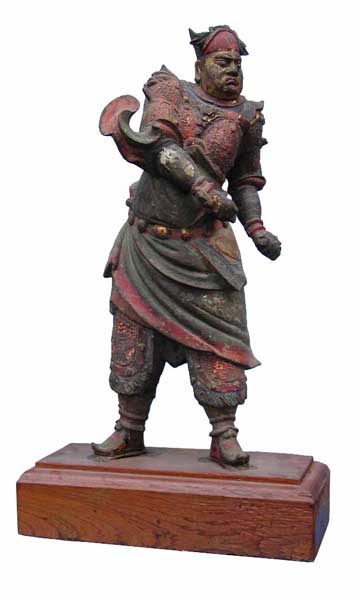
One of the stars of the Big Dipper
2026-04-15 11:51:31
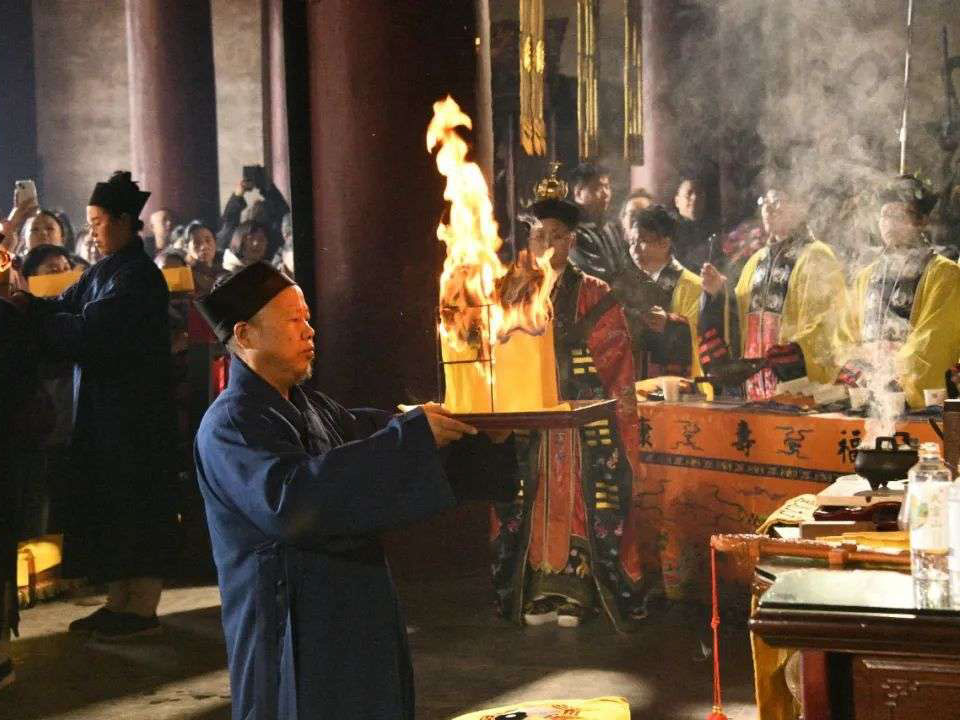
(1) The meaning of the ritual of fasting and Taoist ceremonies
2022-08-20 23:32:13
The original meaning of "zhai" was to be neat, harmonious an...
Yin GUI
2022-08-20 23:32:13
Chapter 27
2022-08-20 23:32:13
Chapter 72
2022-08-20 23:32:13
The couplet of the ancestral hall of the Wudang Mountain Temple
2022-08-20 23:32:13
Chapter 25
2022-08-20 23:32:13