


(3) The Shangqing, Lingbao, and Sanhuang sects
2022-08-20 23:32:13
The Shangqing School is a Taoist sect that reveres the Shangqing sutras. It originated from the Taoists Yang Xi, Xu Mi and Xu Hui of the Eastern Jin Dynasty. This school regards the Primordial Heavenly King and the Supreme Dao Jun as the supreme deities and honors Wei Huacun (Lady Wei of the Southern Music) as the first grandmaster. The representative classics of the Shangqing School include the "Shangqing Dadong Jing" and the "Huangting Jing", etc. The method of Xiu Chuan advocates: eliminating sexual desires, consolidating essence and preserving the spirit, taking breath and swallowing saliva, with particular emphasis on concentrating thoughts and communicating the spirit. It is also accompanied by practices such as tooth tapping and guiding, massage and taking food, praying and wearing talismans, etc. This school holds that all the meridians and orifices of the human body are governed by deities. Through contemplation and cultivation, the deities of heaven and earth can enter the human body, allowing the deities of the human body and the deities of heaven and earth to 炁 blend and merge, thus enabling one to ascend to the pure land and achieve immortality and long-term vision. The Shangqing School claimed that the "Shangqing Jing" originated from the Shangqing Palace in the Great Luo Realm where the Zheners resided, and it was "the way of the ancient and the profound, naturally established". It was praised by the Zhener of Xicheng with its thirty-one volumes. During the reign of Emperor Cheng of Jin (335-342), the Zhener of Qingxu bestowed it upon Wei Huacun, the wife of Liu Wen, the Xiuwu Jianren of Jizhou. When Wei Xiuzhi achieved enlightenment, he was appointed as the Lady of Nan Yue of the Purple Void Primordial Lord. The Zhen Gao states that in the second year of Xingning during the reign of Emperor Ai of Jin (364), Lady Nanyue bestowed the Qing Jing upon Yang Xi, who wrote it in clerical script and passed it on to Xu Mi and Xu Hui. The Shang Qing Jing was thus born. Wei Huacun (252-334), styled Xian 'an, was from Rencheng and was the daughter of Wei Shu, the Grand Tutor of Jin. She was fond of Taoism since childhood, read extensively, and often took flaxseed powder and Fuling pills, exhaled breathing fluids, and maintained health and tranquility. At the age of twenty-four, his parents forced him to marry the grand protector 掾 nanyang Liu Wen (courtesy name Youyan, former magistrate of Xiuwu county), and they had two sons, the eldest named pu and the second named xia. Wei Huacun practiced with great sincerity and was taught the scriptures and instructions by the Immortal Wang Bao of Qingxu. It is said that he saved a total of thirty-one volumes of scriptures, including "Taishang Baowen", "Baisu Yinshu", "Rudong Bin Jing", "Lingshu Ziwen", "Badao Zidu Yan Guang", "Shi Jing Yu Ma", "Shen Zhen Hu Wen", and "Gao Xian Yu Xuan", among which only the "Huangting Neijing Jing" taught by Jinglin Zhenren was included. After Liu Wen's death, war was about to break out in the Jinyuan region. Wei Huacun then took his two sons to the south of the Yangtze River. His eldest son, Pu Hou, rose to the position of governor, while his second son, Xia, rose to the position of Zhonglangjiang. Wei Huacun devoted himself to the cultivation of Taoism with increasing diligence, and his Taoist skills improved day by day. In the ninth year of the Xianhe era of Emperor Cheng of Jin (334), he was granted two doses of elixir by Shenzhen. After taking it for seven days, he held a sword and transformed into a flying form, and was appointed as the Lady of Nanyue by the Shangzhen Office of the Purple Xu Yuanjun. During the Yuanyou period of the Song Dynasty (1086-1094), he was enfeoffed as: Gao Yuan Shen Zhao Zi Xu Zhi Dao Yuan Jun; revered by the Shangqian School of Taoism as the first master of the Upper Qing Dynasty; known as Shangqing Dao Zhu, Nan Ji Zi Zhen Hou Sheng Shang Bao, Tai Wei Yu Chen Sheng Hou, Ling Nan Yue Shang Zhen Si Ming, Gao Yuan Shen Zhao Zi Xu Zhi Dao Yuan Jun. Yang Xi (330-386), styled Xihe, was from Wu during the Eastern Jin Dynasty and later moved to Jurong (now in Jiangsu Province). He was fond of learning at a young age but excelled in calligraphy and painting. He read extensively in the classics and history. He was gentle in nature and quick-witted. He had a close friendship with Xu Mai and Xu Mi. Xu Mi recommended him as the Xiangwang (a title given by Emperor Jianwen of Jin in his domain) and appointed him as a member of the public residence. After Emperor Jianwen ascended the throne, he did not return to the throne. In the fifth year of Shuihe (349), he received the "Tiger and Leopard Talisman of Zhonghuang"; in the sixth year (350), he received the "Five Talismans of Lingbao" from Liu Pu, the eldest son of Wei Huacun; in the second year of Xingning (364), he received the "Shangqing Jing" and was granted a large number of Taoist scriptures and secret books by Shenzhen. He then copied them in clerical script and passed them on to Xu Mi and his son Xu Hui. In the eleventh year of Taiyuan of the Jin Dynasty (386), he was released and was granted the position of the ruler in charge of life in Wuyue. During the Xuanhe period of the Song Dynasty (1119-1125), he was posthumously honored as the Immortal of Dongling Xianhua; in Taoism, Qingyuan was honored as: The second-generation Xuan Shi of the Shangqing School; also known as Shangqing Zhenren, Jinzhu Shangbao Jian Xianming, Donghua Daojun Dongling Xianhua Zhide Zhenjun. After the establishment of the Shangqing School, in its continuous development, there were forty-five generations of Zhenren. The content studied by this school was the most extensive and diverse among all the schools of Taoism, including scriptures and precepts, rituals, 符箓, Taoist rituals, alchemy and cultivation, as well as golden elixirs and medicine, covering everything. Although it belongs to the system of the 符箓 school, it places more emphasis on burning and cultivating the true essence, integrating 符箓 and cultivation into one practice. Because most of the masters of the Shangqing school came from the Jiangle Tu ethnic class and had a relatively high cultural level and social background, the Taoist theory became more mature, and the interpretation of Taoist scriptures was more accomplished. It had a significant influence in society around the Jin Dynasty and played a considerable role in the formation of some Taoist schools in later generations. The Lingbao Sect is a Taoist school formed by the transmission of the "Lingzhai Jing". As it takes the Gezao Mountain in Jiangxi as its transmission center, it is also known as the "Gezao Sect". The sect regards the Primordial Heavenly Lord as its supreme deity, who governs the thirty-two Heavenly Emperors of the ten directions and three realms as well as the gods of Fengdu in the netherworld. Ge Xuan of The Three Kingdoms period is the founding master of the sect. The general origin of the Lingbao School's transmission of the Lingbao Sutra method is that in Wu Chiwu (238-251), Ge Xuan was practicing on Tiantai Mountain. He was moved by the Supreme Master and sent the Three Immortals of Taiji to descend and teach the Lingbao Sutra method and other thirty-three volumes. Among the disciples of Xuan, Zheng Yin and Ge Xiao 'ai were not included. Ge Xiao 'ai gave his son Ge Ti, and Ge Ti gave his son Ge Hong. Later, Ge Hong studied under Zheng Yin and passed on his teachings to his great-grandson Ge Chaofu. At the end of the Long 'an period of Emperor An of Jin (401), Chaofu took office as the successor of Yanqing, Xu Lingqi and others. The "Dao Fa Hui Yuan: Lingbao Yuan Liu" records that after Ge Hong, he also passed on his teachings to Gao Qinzhi, Lu Xiujing and others. This was another system of inheritance besides Ge Hong's transmission to Ge Chaofu. The main figures of this school were: Ge Xuan (164-244), styled Xiaoxian, was from Jurong, Danyang (now in Jiangsu Province). His seventh-generation ancestor, Ge Ai, was enfeoffed by Ge Lu, the commander of the cavalry of the Eastern Han Dynasty. His grandfather, Ge Ju, was the governor of Ping 'an and the commander of Huangmen. His great-grandfather, Ge Mi, was the governor of five prefectures including Yuzhang. His father, Ge Yan, styled Deru, was the governor of the prefecture, the commander of the mountain, the attendant of the Scattered cavalry, and the Grand Secretary. Xuan read the Five Classics thoroughly. Wu Chu received the "Taqing Elixir Classic", "Jiuding Elixir Classic", "Jinye Elixir Classic" and various secrets from Zuo Ci. So he practiced Taoism on the Gezao Mountain in Jiangxi Province, was good at taking erbi, Jue Gu and using talismans, and often treated people. He was highly skilled in medicine. The Great Emperor of Wu once summoned him. It is said that someone was drifting on the sea in a boat and reached a fairy island. He sent someone to send a letter to Ge Xuan of the State of Wu, calling him "Ge Xian Gong". Since then, people have been calling him. On the seventh day of the eighth lunar month in the seventh year of Chiwu of Wu (244), Xuan ascended to heaven in broad sun on Fangshan Mountain. In the Song Dynasty, Ge Li was successively honored as Chongying Zhenren and Chongying Li Xin Zhenjun. Taoist genealogies also have his title, calling him Taiji Zai Xian Gong. Zheng Yin (c. 302), styled Siyuan, was well-versed in the five Classics and various books at a young age. As he grew up, he taught the Book of Documents and the Book of Rites, understood musical music, and was proficient in astronomy, the River and Luo Rivers, divination, divination, the Dragon Palace, and the Three eccentrics. He was of noble character and had a rigorous style. In his later years, he was fond of Taoism and studied under Ge Xuan, receiving teachings such as the Nine Tripod Elixir Classic, the Golden Bo Elixir Classic, the Supreme Purity Elixir Classic, and the Zhengyi Law. It is said that due to his proper way of health preservation, at the age of 80, his white hair turned black and his complexion was rosy. He could draw a strong crossbow, climb mountains with agile steps, walk a hundred li in a day, drink two bushings of alcohol without getting drunk, and could write small characters under a lamp. His eyesight was better than that of a young man. Among his disciples, Ge Hong was the most outstanding. In the first year of Tai 'an (302), feeling the ups and downs of the world, he fled to Mount Huo to practice and his whereabouts are unknown. Ge Hong (283-363), styled Zhichuan and with the pseudonym Baopuzi, was from Juerong, Danyang. He was the great-nephew of Ge Xuan. Since childhood, he was fond of learning and read the complete classics of the Hundred schools of thought, totaling nearly ten thousand volumes. His family was poor but his aspirations were lofty. At the age of 13, he lost his father. In his twenties, he was determined to establish his own school of thought and began to write the Inner and outer chapters of Baopuzi. He was a man of few desires and had no interest in fame and fortune. Whenever he sought books and asked about principles, he was not afraid of traveling a thousand miles. He was particularly fond of the methods of nurturing immortals. He first studied under Zheng Yin and learned the secret art of forging divine elixirs. Later, he learned the methods of Fengjiao, Wangqi, SAN Yuan, Dun Jia, Liu Ren and Tai. He also commanded the governor of Nanhai, Bao Xuan, and inherited his Taoist and magical arts. He married Bao Xuan's daughter. During his official career, he served as the governor of Wuxing and was conscripted as a general's guard. Later, he was promoted to General of Fubo and was awarded the title of Marquis of Guannei for his military achievements. In the first year of Xianhe during the reign of Emperor Cheng of Jin (326), Wang Dao, the Grand Tutor, summoned the Secretary of the State and later selected him as the General Attendant of the Cavalry, in charge of major works. However, Ge Hong firmly declined and, in his old age, wanted to cultivate himself by burning elixirs. When he heard that cinnabar was being produced in Jiaozhi, he requested to be appointed as the order to pass off cinnabar. He went to Guangzhou and was persuaded to stay by the governor Deng Yue. Ge Hong then resided on Luofu Mountain to refine elixirs. Ge Hong was diligent and persistent in his studies. He once made a special trip to Luoyang in search of different books and also stayed in the south for many years. He was a prolific writer throughout his life. His representative work, the Inner and Outer chapters of "Baopuzi", consists of 116 pieces; there are also 100 volumes of steles, 诔, and fu; 30 volumes of reprinted 檄 chapters and tables; 10 volumes each of biographies of immortals, virtuous officials, recluses, and recluses; 310 volumes of copied works on the sayings of the five Classics, history, and the hundred schools of thought of the Han Dynasty, as well as prescriptions, techniques, and miscellaneous matters; 100 volumes of "Jinkui Yaoyao"; and 4 volumes of "Elbow Reserve Emergency Prescriptions", etc. The Lingbao Sect gradually declined during the Yuan Dynasty, but it was still highly valued by the Yuan court. It was once granted the title of "Great Chongzhen Wanshou Palace" by the imperial court upon the Gezao Mountain Taoist Temple. At the end of the Yuan Dynasty, the Gezao Mountain Temple was destroyed by fire and has been unable to be restored to this day. In the early years of the Liu Song Dynasty (420-479), the Lingbao Sutra was expanded to as many as 55 volumes. Lu Xiujing added 35 volumes of the trustworthy ones and established them as rituals, which led to an increasing number of believers in the Lingbao Sutra System. The Lingbao Sutra teachings thus spread widely throughout the country. The Lingbao school referred to its teachings as "Mahayana", and its content often incorporated Buddhist teachings, extensively expounding on cause and effect, sin and fortune. The Lingbao vegetarian ceremony is most known as the complete ritual. Its religious activities mainly consist of Taoist ceremonies, chanting sutras and repentance. It involves burning incense, chanting sutras, praising various deities, setting up vegetarian offerings and making alms. It creates Taoist temples, which can eliminate faults and accumulate merits, even attaining immortality. By calling upon the names of deities, one can receive the protection of the gods. It is particularly skilled in Taoist ceremonies, exorcism and exorcism, and also uses talismans and inscriptions to call for blessings and exorcism. The Lingbao school is one of the main Taoist schools in the 符箓 school in the jiangnan region. The Sanhuang School is the 箓 school of Taoist scriptures that extents the Sanhuang Sutra. The Sanhuang Sutra is also known as the Sanhuang Wen or the Sanhuang Neiwen, which is a collective term for the Tianhuang Wen, Dihuang Wen, and Renhuang Wen. Legend has it that it was first obtained from the stone wall of Xicheng Mountain. There were two different versions of this sutra in ancient times: One is said to be in the "Xiaoyou Tianyu Mansion", known as the "Xiaoyou Sanhuang Wen", also called the "Xiaoyou Jing"; the other is the "Dayou Sanzao Wen", also known as the "Dayou Jing", which was spread by Bao Liang and claimed to be secretly kept in the "Dayou Palace". It is a talisman for summoning ghosts and gods. Today, the Daozang contains three volumes of "Taiqing Que Yuhua Xianshu Baji Shendong Sanhuang Neike Wen" and one volume of "Sanhuang Neiwen Yimi". It is generally believed that this is the "Sanhuang Jing" that has been passed down. In the two chapters, "Xiaolan of Baopuzi" and "Zaying", it is stated that the "Sanhuang Jing" can "ward off evil spirits, warm up epidemic energy, and prevent disasters and calamities"; those who are trapped by demons and on the verge of death can be brought back to life once they have this jing, and so on. If a Taoist priest desires immortality, he enters the mountains with the "Three Sovereigns Sutra", which can avoid the tiger and Wolf mountain spirits, the five poisons and all kinds of evil; it can cross rivers and seas, subdue dragons, and stop storms; even building new houses and tombs to seek good fortune and prosperity cannot do without the protection of this sutra. According to the "Yunji Qiqian Bao Liang Zhenren Biography", the transmission of the "Three Sovereigns Sutra" series is: Liang studied the Ming Jing and the Wei Hou, and was a student of Zuo Yuanfang. He received the essentials of the Central Dharma and the Three Principles, as well as the imperial summoning of the Ten Thousand Mountains. He was capable of commanding ghosts and spirits and subduing mountains and demons. Thus, the "Three Sovereigns Classic" was passed down from Zuo Yuanfang to Bao Liang, and then from Bao Liang to Ge Hong. It was not until it reached Lu Xiujing that it was established as a deity. The Three Sovereigns School had a relatively complete genealogy of gods and ghosts, and the main deities worshipped were: The Emperor, the Earth Emperor, the Great Emperor, the gods of the Five Great Mountains, etc. The main founding and successive figures are: Bo He, Zuo Ci, Bao Liang, Zheng Yin, etc. The "Three Sovereigns Classic" was passed down from the sages of the past. Ge Hong once said: I have heard from Lord Zheng that the most significant in terms of Daoist integrity lies in the "Three Sovereigns' Text" and the "Five Great Mountains' True Form Map". Lu Xiujing compiled the scriptures and divided the Daoist classics into three sections, with the "Three Sovereigns' Text" serving as the "divine" of each section.
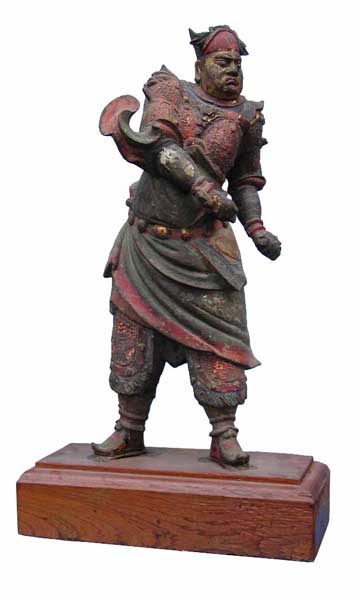
One of the stars of the Big Dipper
2026-04-15 11:51:31
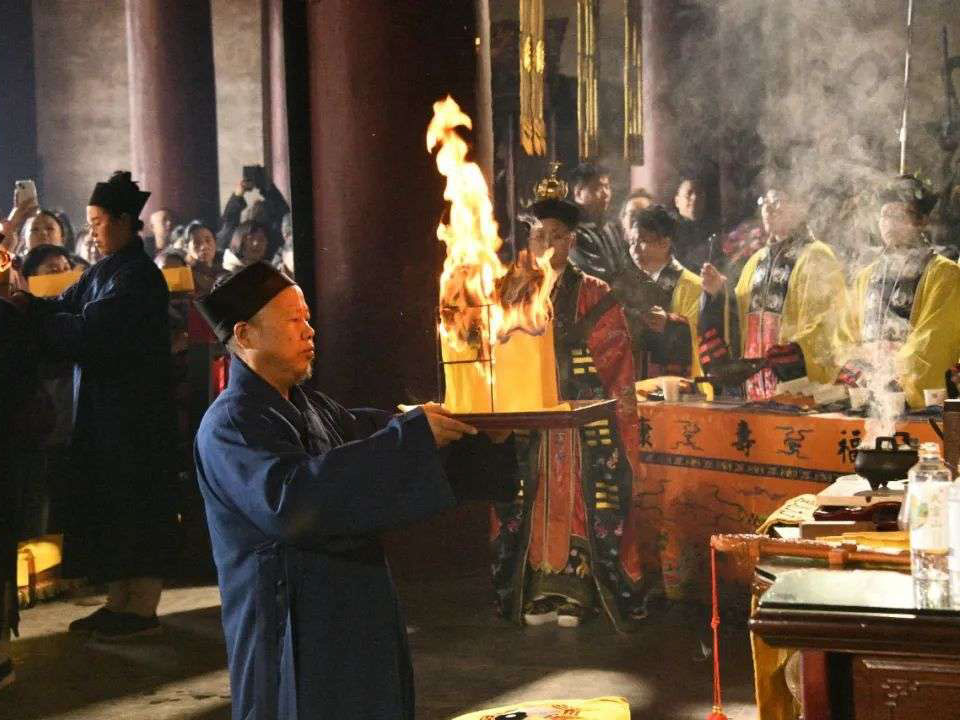
(1) The meaning of the ritual of fasting and Taoist ceremonies
2022-08-20 23:32:13
The original meaning of "zhai" was to be neat, harmonious an...
Yin GUI
2022-08-20 23:32:13
Chapter 27
2022-08-20 23:32:13
Chapter 72
2022-08-20 23:32:13
The couplet of the ancestral hall of the Wudang Mountain Temple
2022-08-20 23:32:13
Chapter 25
2022-08-20 23:32:13