


(2) The Taiping Dao and the Celestial Master Dao
2022-08-20 23:32:13
After the "Ten Thousand Immortals Dao" and the "Huang-Lao Dao", the early Taoist sects "Taiping Dao" and "Tianshi Dao" emerged, and Taoism was thus established. The founder of the Taiping Circuit was Zhang Jiao, a native of Julu (now Pingxiang, Hebei Province) during the reign of Emperor Ling of the Han Dynasty. (184). This sect originated from its service to the "Huang-Lao Sect", and its main period of activity was between 172 and 184 AD. It claims to Revere the Yellow Heaven (Zhonghuang Taiyi), the Yellow Emperor and Laozi, and takes the Taiping Jing as its main classic, thus it is named "Taiping Dao". The methods of preaching are based on the teachings of the good way and the treatment of diseases with talismans and water. After the middle of the Eastern Han Dynasty in China. The government was alternately controlled by the relatives of the empress and eunuchs, who fought against each other, and the politics was dark. The rulers imposed increasingly heavy taxes and levies on the common people, causing farmers to rise up in rebellion. Zhang Jiao took the opportunity to call himself "Great Virtuous Teacher", and his younger brothers Zhang Liang and Zhang Bao each called themselves "Great Doctors". The three brothers all practiced medicine and preached. According to the "Biography of Zhang Lu" in the "Records of The Three Kingdoms", it is quoted from the "Dian Lue" that: "When a teacher uses a nine-section staff as a talisman and teaches a patient to kowtol and reflect on their mistakes, if the patient drinks the talisman water and either recovers on their own, it is said that the person believes in it; if the patient does not recover, it is said that they do not believe." Zhang Yong and his eight disciples were sent to various places. He promoted the propositions of the Taiping Jing, such as "enjoying life", "loving goodness", leading to peace, as well as self-reliance and the right of everyone to enjoy social property, and thus was deeply supported by the vast number of farmers. The "History of the Later Han Dynasty: Biography of Huangfu Song" states: "People from the eight states of Qing, Xu, You, Ji, Jing, Yang, Yan and Yu all responded." It is said that during the more than ten years when Zhang Jiao was preaching, he had hundreds of thousands of disciples and thus organized his followers in units of "fang". The large square had over ten thousand people, while the small square had six to seven thousand eight. They all had their own scripts, and each side had a commander to lead their troops. Zhang Jiao styled himself "Heavenly General" and commanded all the Taoists from all directions. His younger brother Zhang Liang was called "General of the Earth", and Zhang Bao was called "General of the People". They implemented a religious organization system that combined preaching and military service. It is declared: "The heaven is dead, the yellow heaven should rise. In the year of sixty, the world will be blessed." By this time, the nature of the Taiping Circuit had transformed into that of a peasant uprising. Because its troops were marked by the Yellow Turban Rebellion, it is historically known as the "Yellow Turban Rebellion". Later, Zhang Jiao died of illness, Zhang Liang and Zhang Bao were killed in battle, and the Yellow Turban Rebellion failed. His followers scattered and joined other Taoist sects. The Heavenly Master Dao was established in the first year of the Han 'an era (142) during the reign of Emperor Shun of the Han Dynasty. Zhang Daoling, the ancestor of the Heavenly Master, obtained the "Zhengyi Alliance Might Dao" on Heming Mountain and was appointed by the Supreme Ruler to confer the title of "Heavenly Master". Because its religion emphasized 符箓 belief in ghosts and gods, it was called the "ghost Way" in society (often regarded as a contemptuous term within the religion). Also, since Taoists had to offer five pecks of rice as a sign of faith to join the religion, during the Northern and Southern Dynasties, it was often referred to as the "Five pecks of Rice Way". Zhang Daoling, also known as Zhang Ling, Che Fuhan, entered Feng, Pei (now Feng County, Jiangsu Province), and was the eighth-generation descendant of Zhang Liang (courtesy name Fang), a founding hero of the Han Dynasty. He was born on the fifteenth day of the first lunar month in the tenth year of Jianwu in the Eastern Han Dynasty (34) on Tianmu Mountain in the Wu region. By nature, one is eager to learn and develops a fondness for the Tao from a young age. In the second year of Yongping (59), Zeng Zhong was awarded the title of "Direct and Extreme Censant". During the reign of Emperor Ming of Han, he was appointed as the magistrate of Jiangzhou in Ba Commandery. Soon after, he retired to 邙山 zhong in the north (near Luoyang, henan province) to practice the path of immortality. In the fifth year of Jianchu (80), an imperial edict was issued to recommend a virtuous person. However, he failed to do so. He was re-conscripted as a doctor and enfeoffed as the Marquis of Jixian. Three imperial edicts were rejected. Later, he led his disciples to Sichuan and secluded themselves on the Guming Mountain to study the "Five Gan Texts of Laozi" and practice the "Nine Tripods Elixir of the Yellow Emperor" and other divine elixir talismans. In Sichuan, he widely practiced kindness and virtue. He used talisman water to treat people's diseases and spread the teachings of longevity techniques such as guiding the body, promoting the flow of qi, alchemy, feeding, and sexual intercourse. He set up twenty-four administrative centers as places for preaching (most of which were within Sichuan Province, with the Yangping Temple located in present-day Pengzhou City, which was the first administrative center of the central diocesan. The Yangping Temple still exists today). The position of "Jijiu" was established and placed in various administrative regions. It regards the "Five Thousand Texts of Laozi" as its main classic. And spread the "Taiping Jing" followed by the Taiping Dao. The "Laozi Xiang Er Zhu" is the lecture notes he used to teach his disciples based on the "Five Gan Wen of Laozi". There are also twenty-four Taoist scriptures and talismans such as the "Zhengyi Jing" and the "Tianguan Zhangben", all of which were the main classics of the Celestial Master Taoism at that time. At that time, in Sichuan, there were those known as the Eight Ghost Commanders and the Six Demon Kings, who deceived the people and poisoned the local area with the 筮 magic cult. The Ancestral Celestial master then forced them to take the right path with the righteous law, and the Celestial master's way thus flowed freely throughout Sichuan. The Celestial Master Dao takes the Yang Ping Zhi Bu Gong Seal and the Three or Five Evil Slaying Male and Female Swords as the tokens of its leadership and the ritual implements for passing on the legacy. In the third year of Yongshou during the reign of Emperor Huan Dai (157), Zhang Ling flew to the imperial examination, and his son Zhang Heng followed his path. In the first month of the second year of the Guanghe era of Emperor Ling (179), Zhang Heng passed the imperial examination and thus usurped the power of the religion for Zhang Xiu. The revival of the Witch and Ghost path. Later, Zhang Lu, the son of Zhang Heng, with the help of his mother, attacked and killed Zhang Xiu, regaining the power of the religion. Zhang Lu then declared himself in Hanzhong. Unable to resist the power of the Zhang Lu court, he was appointed as the commander of the garrison and the governor of Han Ning. Zhang Lu, by taking advantage of his military and political power, established the "Twenty-Four Rules" in Sichuan and Chongqing under the nature of "the integration of politics and religion". At that time, Zhang Daoling, the Supreme Master of Tianshuai, was regarded as the ancestral Tianshuai, Zhang Heng as the successor master, and Zhang Lu styled himself as the Master. The grand sacrificial wine leads the Taoists, and the Taoists take the "Three Zhangs" as their teachers. In the 20th year of Jian 'an during the reign of Emperor Xian of Han (215), in order to protect the people of the Dao from the harm of war, Zhang Lu, after carefully considering the situation, surrendered to Cao Cao and was appointed as the General of the South and enfeoffed as the Marquis of Langzhong. All his sons were enfeoffed as marquesses. He then led the people to move northward. The following year (216), he was exiled and buried in Ye City. After Zhang Lu's Celestial Master Taoism moved northward, the name of the Celestial Master Taoism began to emerge. After the northward migration of the Celestial Master Taoism, it developed in the Central Plains region. Then it spreads southeastward. During the Jin Dynasty, many prominent families joined the Taoist faith. The formation and development of the Celestial Master Dao. It led to the official establishment of Taoism.
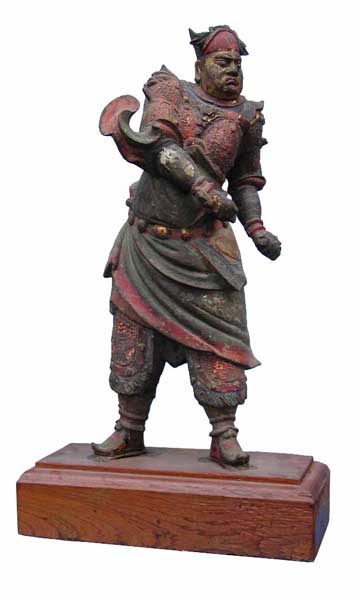
One of the stars of the Big Dipper
2026-04-15 11:51:31
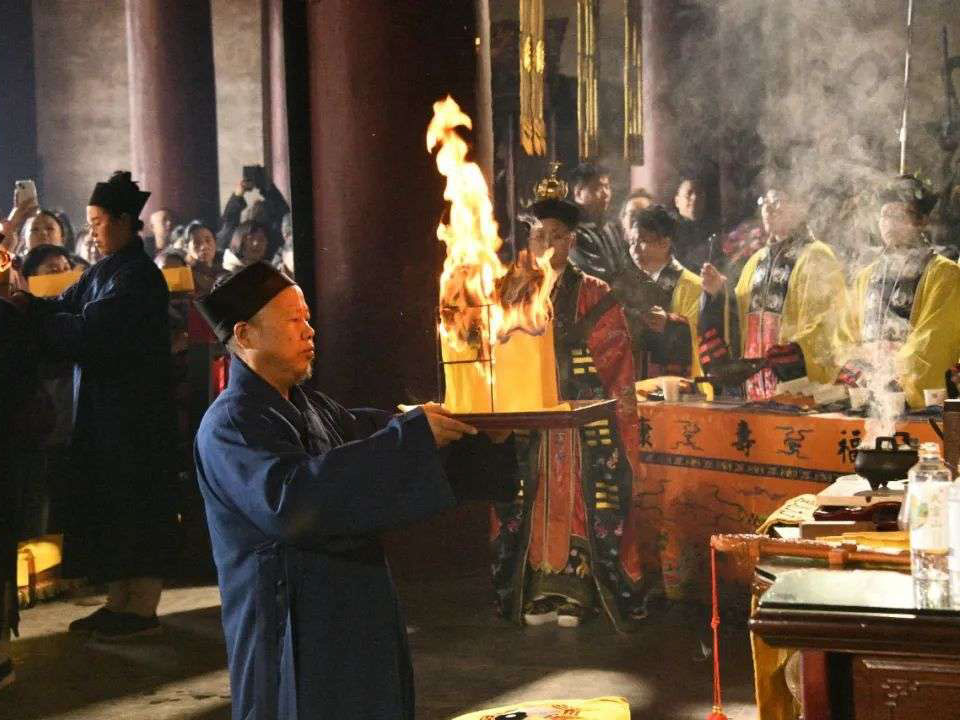
(1) The meaning of the ritual of fasting and Taoist ceremonies
2022-08-20 23:32:13
The original meaning of "zhai" was to be neat, harmonious an...
Yin GUI
2022-08-20 23:32:13
Chapter 27
2022-08-20 23:32:13
Chapter 72
2022-08-20 23:32:13
The couplet of the ancestral hall of the Wudang Mountain Temple
2022-08-20 23:32:13
Chapter 25
2022-08-20 23:32:13