


(1) Fangxian Dao and Huanglao Dao
2022-08-20 23:32:13
The "Fangxian Dao" and "Huanglao Dao" were the predecessors of Taoism. Although they cannot be called Taoism by strict standards, Taoism was indeed developed and formed from them. The "Fang" in Fangxian Dao refers to "Fangshu", and it also refers to those who engage in or are skilled in Fangshu activities - "Fangshi". "Can" refers to the "immortal Family" and "Fangxian Shi" who pursue the realm of immortals, and also includes the "Yin-Yang Family" who master the way of Yin and Yang. The earliest record of Fang Xianshi in historical books was 苌 hong, who lived during the reign of King Yong Ling (571 BC - 545 BC). It is said that he could understand the affairs of ghosts and gods and also studied the theory of Yin and Yang. The "Yiwen Zhi" of the "History of the Han Dynasty" records that among the "Yin-Yang School", there was a ZI school, among which 苌 hong wrote 15 articles. Another influential immortal was 驺 yan from Jixia in the state of Qi. He was also a yin-yang expert. It is said that he was respected by the feudal lords and became prominent for his theory that "Yin and Yang govern the movement, and the five virtues begin and end". The "Biography of King Yuanwang of Chu" in the "History of the Han Dynasty" records that he once passed on the "Prescription for the Continuation of the Dao and the Prolongation of Life". According to the "Book of Fengshan" in the "Records of the Grand Historian", the representative figures of the "Ten Thousand Immortals Way" include Lai Wuji, Zheng Boqiao, Chongshang and Xianmen Zigao. During the reign of Emperor Qin Shi Huang, Xu Fu, Lu Sheng, Han Zhong, Hou Sheng and Shi Sheng were all renowned alchemists. Their goal was to go to the sacred mountains and immortal islands in the sea to search for immortals and seek the elixir of immortality. During the reign of Emperor Wu of the Han Dynasty, the most renowned alchemists were those like Li Shaojun, Shaoweng, Yida and Gongsunqing. Their main tasks were to assist the emperor in performing sacrificial ceremonies, seeking immortals, gathering herbs, exorcism, observing qi and alchemy. The activities of the immortal Fang remained very active until the end of the Eastern Han Dynasty. In the Huang-Lao Dao, "Huang" refers to "Yellow Emperor", representing the ancient ideas of the "Immortal School" and the "Yin-Yang School". "Lao" refers to "Laozi", representing the "Taoist" ideology. The connection between Fangxian thought and Huang-Lao learning is known as the "Huang-Lao Way". The ideas of Taoism and immortals have always shared similarities with those of the Yin-Yang School. This is reflected in many aspects of the works of Laozi and Zhuangzi. Therefore, the doctrines of the Yellow Emperor and Laozi naturally combined to form the Huang-Laozi School. According to the "Biography of Yue Yi" in the "Records of the Grand Historian", the earliest person in China to study the teachings of Huang-Lao was the River Elder. It is said that he, along with Huan Yuan and Zhuang Zhou, were all direct inheritors of Laozi's teachings. Thanks to the support of the Western Han rulers, Cao Can achieved political success with his doctrine of tranquility and non-action, and thus the Huang-Lao School flourished. Although Confucianism was respected and Confucianism was suppressed after the reign of Emperor Wu of the Han Dynasty, there were still famous scholars in the field of elderly care at that time, such as Chen Ping, Tian Shu, Huang Sheng, Deng Zhang, Zheng Shishi, and Sima Tan. Among those who studied Huang Laoshi as alchemists were Sima Jizhu and Yan Junping. During the reign of Emperor Huan of the Eastern Han Dynasty (15-166), he practiced the "Huang-Lao Dao" and began to offer sacrifices to Laozi. At this time, the study of Huang-Lao officially developed into the "Huang-Lao Way". At this time, the "Huang-Lao Dao" had no organizational structure. It only recognized Laozi as the founding father and regarded the works of Laozi and Zhuangzi as classics under the premise of revering Huang-Lao.
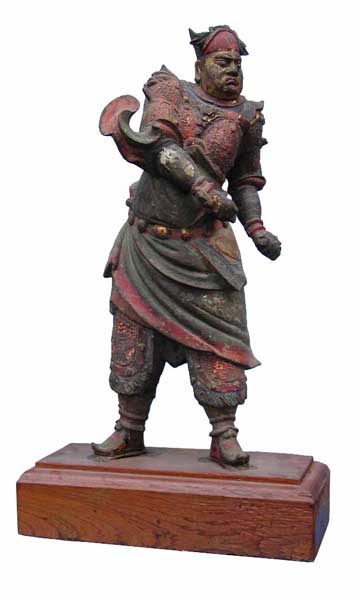
One of the stars of the Big Dipper
2026-04-15 11:51:31
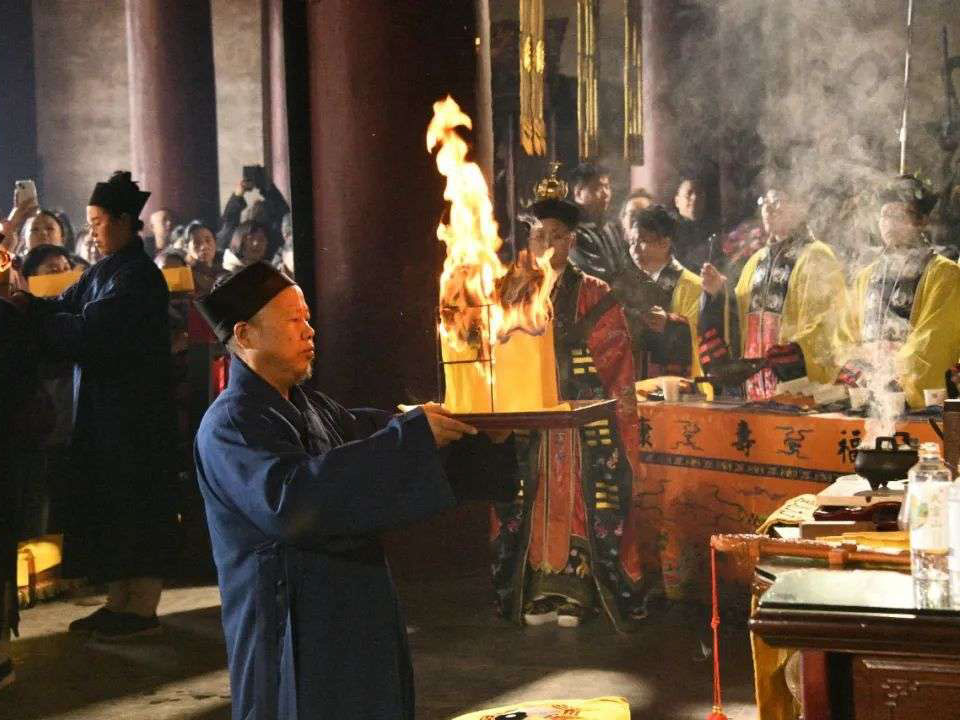
(1) The meaning of the ritual of fasting and Taoist ceremonies
2022-08-20 23:32:13
The original meaning of "zhai" was to be neat, harmonious an...
Yin GUI
2022-08-20 23:32:13
Chapter 27
2022-08-20 23:32:13
Chapter 72
2022-08-20 23:32:13
The couplet of the ancestral hall of the Wudang Mountain Temple
2022-08-20 23:32:13
Chapter 25
2022-08-20 23:32:13