


(4) Classification of Taoist Scriptures
2022-08-20 23:32:13
(1) The first alchemy work is the basic content of Taoism, namely the four aspects of immortals, Taoism, deities and teachings. The integration of immortality and Taoism, with a focus on cultivation, while the integration of the divine and religious, with a focus on rituals, is also known as the "Dan Ding School" and the "Fu Xiang School". The first work of Dan Ding's cultivation, namely "Zhouyi Cantongqi", was written by Wei Boyang of the Eastern Han Dynasty. His book borrows the images of the I Ching to describe the alchemy techniques. Because in ancient times, alchemists were rather secretive and mostly passed down orally from master to apprentice. Therefore, the content of the book is ancient and difficult for ordinary people to understand. Examining ancient cultivation methods, most of them involve both internal and external alchemy practices. Moreover, based on the principles of alchemy and the content of the book, it can be known that the book discusses both internal and external alchemy, making it a comprehensive work on alchemy. (2) The Taoist Scriptures Systematizing the Belief in Immortals: Ji Hong, a Taoist priest of the Eastern Jin Dynasty, authored the book "Baoganzi", which was the first to systematize the belief in immortals in Taoism. And it has sorted out various immortal prescriptions and magic arts that were circulating in the world at that time. The "Baopuzi" is divided into two major parts: the "Inner Chapter" and the "Outer Chapter". The "Inner Chapter" discusses immortal prescriptions and magic, the transformation of ghosts and monsters, health preservation and longevity, and the elimination of diseases and disasters. Belongs to Taoism; The outer chapter discusses gains and losses in human life, as well as the evaluation and criticism of the world, and belongs to Confucianism. The chapter "Xia LAN" in the book records the earliest catalogue of Taoist scriptures in the history of Taoism. Later generations believe that this is the beginning of the compilation of the eastern collection of Taoist scriptures, "Dao Zang". During the Eastern Jin Dynasty, Taoism was prevalent in the Jiangdong area, giving rise to the jing箓 school, which mainly focused on creating Taoist scriptures and imparting Buddhist doctrines. This marked a significant advancement in the development of orthodox Taoism towards the integration of principles and doctrines. The specific representatives are the emergence of the Shangqing, Lingbao and Sanhuang scripture systems. The Shangqing Classic was founded by Wei Huacun, the Lady of Nanyue, and was jointly created by Yang Xi, Xu Mi, Xu Hui and others. Its main scriptures include the "Shangqing Great Cave True Classic" and the "Huangting Classic", etc. The Lingbao Sutra was compiled by Ge Chaofu, and its main scripture is the "Sutra of the Primordial Man without Measure". The Sanxing Jing was passed down by Ge Hong's father-in-law, Bao Liang, as the "Sanxing Wen", and did not come into being until the Eastern Jin Dynasty. These three systems of scripture and Dharma were consolidated into a first-class form by Lu Xiujing during the Southern Dynasties, such as the Song Dynasty, and further developed by Tao Hongjing of the Liang Dynasty, thus forming important scriptures that rationalize the doctrines of Taoism. (4) Admiring the Dao Jing given by Laozi: The Louguantai Taoist Temple in Zhouzhi County, Shaanxi Province, is said to be the place where Yin Xi, a branch of the Hangu Pass, met and observed the qi. It is also said that Laozi imparted the upper and lower chapters of the Tao Te Ching to Yin Xi here. Since then, Lou Guan has become a place for Taoist cultivation. Taoist priests of all dynasties have lived here to cultivate their nature, practice their lives and study the scriptures and treatises. They have always held the "Tao Te Ching" in high regard and promoted Laozi's teachings. There is an important classic in Taoism, the "Xikai Jing", which should be related to this Taoist priest. The Sutra of the Ascent to the West mainly discusses cultivation, with a particular emphasis on purity and unity. The book advocates that "the true way nourishes the spirit, while the false way nourishes the form. It holds that the spirit gives birth to the form and forms the spirit. When the form and the spirit are in harmony, it can last long." At that time, Taoism was transforming Taoist doctrines, tending towards the pursuit of physical immortality techniques. The Xisheng Jing attempts to correct this drawback and advocates focusing on nourishing the spirit. It is believed that nurturing the body is a false way. In fact, "nourishing the spirit" and "nourishing the body" coexist in Taoist cultivation and cannot be separated. (5) Taoist scriptures are classified into "Three Caves";. Lu Xiujing, a Taoist priest of the Liu Song Dynasty in the Southern Dynasties, was ordered to collect a wide range of Taoist scriptures. He received the "Shangqing Sutra" of Xu Mi and Yang cha from Ji Zhen at 殳 in maoshan, jurong, the "Lingbao Sutra" from ge can in Jurong, and the "Sanhuang Sutra". And a series of efforts were made to verify the authenticity of these newly published books since the Wei and Jin Dynasties. For the first time, Taoist scriptures were divided into "Three Caves", namely the Dongzhen, Dongxuan and Dongshen sections. The Dongzhen section mainly consists of the "Shangqing Jing". The Dongxuan Department mainly focuses on the Lingbao Sutra. The Dongshen Department mainly focuses on the "Three Sovereigns Classic". In this way, a large number of Taoist scriptures were systematized, and the "Three-Cave Classification Method" of Taoist books was initiated, laying the foundation for the compilation of the Daozang. The Catalogue of the Three Caves Classics written by Lu Xiujing is the oldest catalogue of the Daozang. (6) After the Sui Dynasty, the Inner Alchemy Taoist scriptures emerged, and the cultivation of inner alchemy has a long history. The term "Neidan" was officially initiated by the Taoist priest Su Xuanlang in the Sui Dynasty, as recorded in the "Luofu Mountain Annals". However, before the Tang Dynasty, the practice of internal alchemy was mostly inherited from the cultivation of Laozi and Zhuangzi and the alchemy techniques of immortals, and had not yet formed a systematic theory and method. During the late Tang and Five Dynasties period, the "Zhong-Lu Chang Golden Elixir Dao" led by Zhongli Quan and Lu Dongbin vigorously advocated the theory of inner elixir and wrote books for publication, eventually establishing a complete and independent system for the theory of inner elixir. After that, the theory of internal alchemy became very popular both inside and outside Taoism, and the center of Taoist cultivation shifted from external alchemy to internal alchemy. The Inner alchemy scriptures keep emerging and remain popular. It is a pity that the terms and expressions in the Inner Elixir Classic were mostly borrowed from the Outer Elixir, thus there are many metaphors, which makes it difficult for ordinary people to read Taoist books.
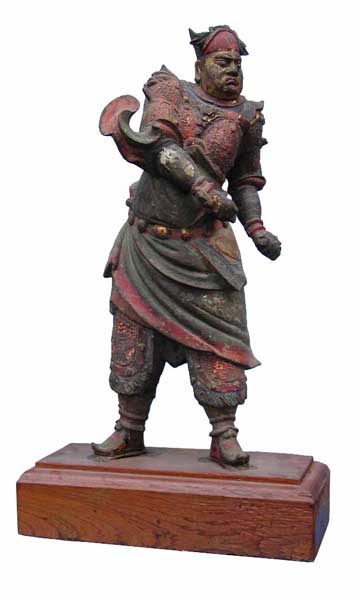
One of the stars of the Big Dipper
2026-04-15 11:51:31
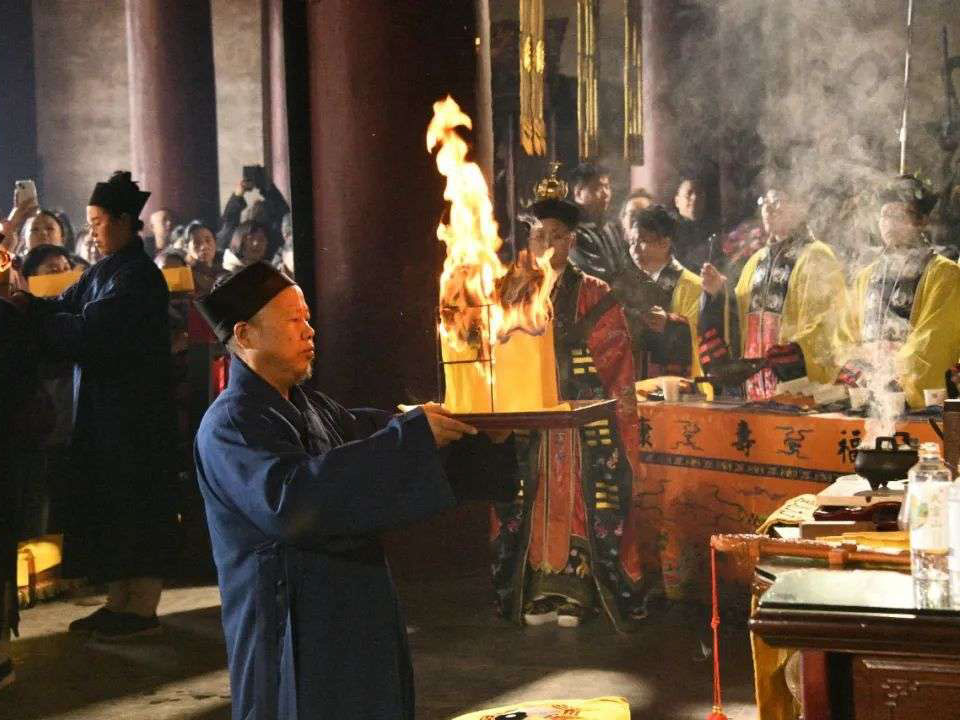
(1) The meaning of the ritual of fasting and Taoist ceremonies
2022-08-20 23:32:13
The original meaning of "zhai" was to be neat, harmonious an...
Yin GUI
2022-08-20 23:32:13
Chapter 37
2022-08-20 23:32:13
Chapter 47
2022-08-20 23:32:13
"Thunderbolt head"
2022-08-20 23:32:13
Chai Daoren
2022-08-20 23:32:13