


(V) Compilation of the Daozang and the Daoist Books outside the Xizang
2022-08-20 23:32:13
(1) The Taoist Canon was officially compiled in the Tang Dynasty. Taoism was regarded as a royal religion in the Tang Dynasty, and the Taoist scriptures were officially compiled at this time. During the reign of Emperor Gaozong of Tang, the Taoist priest Yin Wencao compiled the 7,300-volume "Yuwei Jingmu". Emperor Xuanzong of Tang once ordered various Taoist masters and scholars in the capital to collect Taoist scriptures and sent envoys to conduct extensive searches and personally review them. The compilation of the "SAN Dong Qiong Gang" has several historical records, including 7,300 volumes, 3,744 volumes, and 5,700 volumes. There is also the section of "Yuwei Biemu" which records, commentaries and treatises, with about 2,000 volumes recorded. The "Three Caves Qionggang" and "Yuwei Biemu", known in Taiwan as the "Kaiyuan Daozang", are the first officially integrated Daozang. (2) In the early Song Dynasty, Chen Tuan expounded the Tao through the I Ching. In the early Song Dynasty, there emerged a master of the I Ching in Taoism, and he was Chen Tuan, a high-ranking Taoist who lived in seclusion on Mount Hua. Chen Chuanhao never put down the book of the I Ching and was the first to establish laws based on the illustrated I Ching. It is recorded that he passed on the "Xian Tian Tu" to Zhong Fang, Zhong Fang passed it on to Mu Xiu, Mu Xiu passed it on to Che Zhicai, and Li Zhicai passed it on to Shao Kangjie. Zong Fang passed on the "River Chart" and the "Luo Shu" to Li Gai, and Mu Xiu passed on the "Taiji Diagram" to Zhou Dunyi. All these diagrams originated from the Chen transmission. Most of Chen's works have been lost. The ones that still exist today include "Yin Zhen Jun Huan Dan Ge Zhu", "Long Tu Xu", "Zheng Yi Xin Fa Zhu", as well as "Wu Ji Tu" and "Ji Ji Tu", which have been passed down. (3) Two schools compiled the Daozang after the Northern Song Dynasty was established and society was basically stable. Emperor Taizong of the Song Dynasty sought the scriptures of the Tao and published the books on the correct path. Emperor Zhenzong of the Song Dynasty ordered the collation of Taoist scriptures. Initially, they were compiled into the "Comprehensive Record of Treasures", which was later recompiled by Zhang Junfang into the "Treasures of the Great Song Dynasty's Heavenly Palace", totaling 4,565 volumes. Zhang Junfang condensed the key points and compiled them into "Yunji Qiqian", which was later called "Xiaodao Zang". Emperor Huizong of the Song Dynasty issued an edict to search for the remains of Taoists throughout the land. He then increased the volume of the Daoist Canon to 5,387 and called it the "Great Canon". Later, he added supplements and compiled it into the 5,481 volumes of the "Zhenghe Wanshou Daoist Canon". Emperor Xiaozong of the Song Dynasty rebuilt the Daozang with the title "Qiongzhang Treasure". At the same time, Emperor Zhangzong and Emperor Quanshi of the Jin Dynasty also actively advocated the compilation of the "Taoist Canon", and under the guidance of the Tianchang Temple, Sun Mingdao gathered various Taoist priests to synthesize the "Great Jin Xuandu Treasure", which consists of 602 volumes and 6,455 books. (4) The Compilation and Collection of the Yuan Dynasty and the "Zhiyuan Destruction of the Collection"; by Quanzhen Master Qiu Chuji. Before his death, he had instructed his disciple Song Defang to jointly restore the Daozang. At that time, Prime Minister Hu Tianlu donated a thousand taels of white gold, and Qin Zhi 'an, a member of the Song family, presided over the matter. This revision of the Taoist Canon. For the first time, the Quanzhen Daoist Book was included. It took eight years. It was compiled into over 7,800 volumes of "Xuan Du Bao Zang". As the rulers of the Yuan Dynasty were devout Buddhists, Fo Zeng seized upon the issue of the authenticity of the "Laozi Huahu Jing" to attack Taoism. Emperor Xianzong of the Yuan Dynasty ordered a debate between the monastic and Taoist schools and took the opportunity to issue an edict to burn 45 Taoist scripture printing plates. Then another batch of prayer tablets were burned. During the Zhiyuan period of Emperor Shizu of the Yuan Dynasty, he ordered a debate between the two schools, with the final decision in the hands of the emperor. Eventually, the Daoist school was declared the loser, and an edict was issued to burn all the editions of the Daozang except for the Tao Te Ching. This was the "Zhiyuan Destruction of the Daozang" event that occurred in history, and the Xuandu Treasure was thus burned. This was the most serious man-made destruction in the history of the compilation of the Taoist Canon, causing irreparable and huge losses to the Taoist scripture collection. The Daozang, which originally had over 7,800 volumes, only collected 5,485 volumes during its two compilations in the Ming Dynasty. The difference is over two thousand volumes. Some of the missing and incomplete books can be found in the "Catalogue of Missing Scriptures in the Taoist Canon" of the "Orthodox Taoist Canon". (5) The Compilation of the Daozang in the Ming Dynasty: Emperor Chengzu of the Ming Dynasty once ordered the 43rd Celestial Master Zhang Yuchu to revise the Daozang. Later, he also ordered his younger brother Zhang Yuqing to continue to preside over this matter. Both of them died after completing the task. During the Zhengtong period of Emperor Yingzong, an imperial edict was issued to Shao Yizheng to supervise the proofreading of this matter, and it was only then that the official publication was completed. This "Taoist Canon" is called the "Orthodox Taoist Canon", consisting of 480 volumes and 5,305 books. During the Wanli period of Emperor Shenzong of the Ming Dynasty. It was also ordered that the 50th Celestial Master Zhang Guoyang supplement the Daozang, supplementing it with 32 volumes and 180 books, and named it the Wanli Continuation of the Daozang. The combination of the main and continued editions of the Daozang, which we refer to today as the Ming Dynasty Edition of the Daozang, consists of 512 volumes and 5,485 volumes. [6) The Taoist alchemy scriptures are divided into five schools. Since the establishment of the Zhong, Lu and Jin alchemy schools, they were further divided through the northern and southern schools in the Song and Yuan Dynasties. By the Ming and Qing Dynasties, various schools emerged. Later generations classified them into five schools of alchemy, and all five schools have their classics passed down to this day. Zhang Boduan of the Southern Song Dynasty founded the Southern School of Jin Dan. Authored the "Wuzhen Chapter". Later, it was passed down in the line of Shi Tai, Xue Daoguang, Chen Niwan and Bai Yuchan. Chen Zhixu and Weng Baoguang understood the cultivation of Renyuan. In the Qing Dynasty, Fu Jinquan, a son of Ji, carried on the legacy. The Northern School of alchemy originated from the "Five Spiritual Texts" written by Wang Chongyang of the Jin Dynasty and others. Passed down and continued by his disciples Qiu Chuji, Liu Chuxuan, Tan Chuduan, Ma Danyang, Hao Datong, Wang Chuyi, Sun Bu 'er and others, the Wu Liu School's Dan book "Wu Liu Xianzong" of the late Ming and early Qing Dynasties belongs to the Northern school. At the same time, the Taoist books written by Zhu Yuanyu, Liu Yiming, Liu Mingrui and others in the Qing Dynasty all belonged to the Northern School. During the Ming Dynasty, Lu Xixing initiated the Eastern School of alchemy. Lu claimed to have received personal instruction from Lu Dongbin and wrote "The Outer History of the Square Teapot", proclaiming the way of Ren Yuan. During the Qing Dynasty, the Western School of alchemy emerged. Its founder was Li Hanxu, who claimed to have met Lu Dongbin and Zhang Sanfeng. He authored works such as "Dao Qiao Tan" and "SAN Che Mi Zhi", thus forming his own school of alchemy. The Chinese school of Danfa highly regards Li Daochun of the Yuan Dynasty as a representative figure. Li once wrote the "Zhonghe Ji". Min Yide, a Taoist priest of the Qing Dynasty, wrote "The Collection of Ancient Books in the Hidden Pavilion", advocating the "Middle Yellow Straight and Transparent" method, which also belongs to the Middle School. Huang Yuanji of the late Qing Dynasty, who integrated the core of the northern and southern alchemy methods, wrote "Commentary on the Tao Te Ching" and "Sayings of Le Yu Tang", and was also an important figure of the Chinese School. The figures from each of the five sects have written works on different principles and methods of alchemy, which are respectively included in Taoist scriptures such as the Daozang, Daozang Jiyao, and Daowai Daoshu. (7) The Discovery of the Dunhuang Taoist Scriptures During the reign of Emperor Guangxu of the Qing Dynasty, the Taoist 王圆箓 discovered the books in the Mogao Caves of dunhuang. Youdaoplaceholder0 is located in the Mogao Caves. He is good at writing and debating and is in charge of the local Taoist temple. According to his own account, when the Cave of the Thousand Buddhas was discovered, "the sky cannon went off and suddenly the mountain cracked a crack." Perhaps the cave wall suddenly cracked, allowing him to discover the hidden scriptures within. Since the discovery of the Caves of the Thousand Buddhas, the scriptures and cultural relics have begun to be lost. It was successively plundered by cultural thieves from Britain, France, Russia, Japan and other countries. A large amount has been lost overseas. Among the scriptures in the Dunhuang manuscripts, there are some copies of Taoist scriptures. The period when the scriptures were copied was roughly between the Sui, Tang and Five Dynasties. According to the "Catalogue of Dunhuang Taoist Scriptures", there are a total of 496 items. The discovery of the Dunhuang Taoist Scriptures. In addition to the ancient Taoist scriptures, the Ming Dynasty's Daozang can be supplemented and collated. (8) Publication of the "Collected Essentials of the Daozang"; The "Collected Essentials of the Daozang" is a collection of Daoist scriptures and was initially edited by Jiang Yuanting during the Jiaqing period of Wang Qing. His book is from the Daozang, thus it is named "Jiyao". After that, it was further engraved and included the sutras of the Heretical Canon. By the end of the reign of Emperor Guangxu of the Qing Dynasty, the original version of "Collected Essentials of the Daozang" had become rare. It was then reprinted by He Longxiang and Peng Hanran at Erxian An in Chengdu, Sichuan Province, and became "Re-Published Collected Essentials of the Daozang". The number of Sutras outside the Tibetan scriptures was increased again, expanding the total to 287. The engraved version of "Re-Published Essentials of the Taoist Canon" is now preserved in the Qingyang Palace in Chengdu, which is the copy we see today. (9) Reprinting of the Daozang In October 1923, Tian Wenlie, Li Shengduofeng, Zhao Erxun, Kang Youwei, Zhang Jian, Dong Kang, Zhang Yuanji, Liang Qichao, Qian Nengxun, Xiong Xiling, Jiang Chaozong, Huang Yanpei, Fu Zengxiang and 13 others. Jointly initiated the initiative to reprint the Ming Dynasty edition of the Daozang. At that time, Xu Shichang, the president of the Republic of China, was quite religious and was willing to contribute his salary to support this grand initiative. So, the original version of the Ming Dynasty Daozang kept in the Baiyun Taoist Temple in Beijing was adopted and photocopied by the Hanfen Pavilion in Shanghai, which is called the Hanfen Edition. This edition has been transformed from the original Daozang into a 36-page lithographic thread-bound book, with a total of 350 copies printed. The collection of Taoist scriptures was thus made public and spread from Taoist temples to society. In 1977, the Taiwan Arts and Culture Publishing House compiled and printed the Daozang, which was changed to a 36-page format with a total of 60 volumes. In the same year, Taiwan's Xinwenfeng Publishing Company compiled and printed the "Taoist Canon", which was compiled into a 16-page format with 60 volumes. This edition also included some Taoist books from outside the Canon. In 1986, the Chinese Publishing House of Japan Co., Ltd. reprinted the Daozang in a reduced format and compiled it into a 16-page book with 30 volumes. In 1988, the Cultural Relics Publishing House, Shanghai Bookstore and Tianjin Guhe Publishing House jointly reprinted the Daozang. After downsizing, it was compiled into a 16-page format of 36 volumes. This edition made appropriate supplements and corrections to the Daozang. In this way, the number of copies of the Taoist Canon distributed was considerable. The "Heavenly Palace treasure", which has long been regarded as the "supreme scripture treasure" by Taoism, has finally "descended to the mortal world" and entered the homes of ordinary people. It can be said that the tragedy of the Daozang being repeatedly damaged in history will not be repeated. This is an inevitable result of the continuous progress of human culture. (10) The publication of the Daoist Books Outside the Xizang: As the Ming version of the Daozang only included Daoist scriptures before the Ming Dynasty, and the Daoist scriptures that were not included in the Daozang were frequently discovered, the Daozang was not recompiled after the Ming Dynasty, and a considerable number of new Daoist scriptures were published. Therefore, many people in the academic and Taoist circles feel the need to supplement or recompile the Daozang. Since the Ming and Qing Dynasties, some Taoist series have made certain efforts in this regard. In August 1992, Bashu Publishing House published and distributed a large-scale new series of the "Daozang" - "Daoist Books Beyond the Xizang". The editorial board of this series of books is composed of experts and scholars who study Taoism at home and abroad, and has also joined forces with some Taoist figures and overseas scholars. A total of 36 volumes of the "Daoist Books Beyond the Tibetan Canon" were published, containing 1,016 kinds of books, which made valuable documentary preparations for the continuation or re-compilation of the "Daoist Canon".
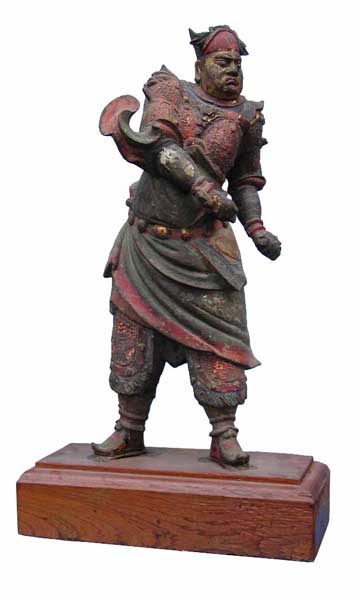
One of the stars of the Big Dipper
2026-04-15 11:51:31
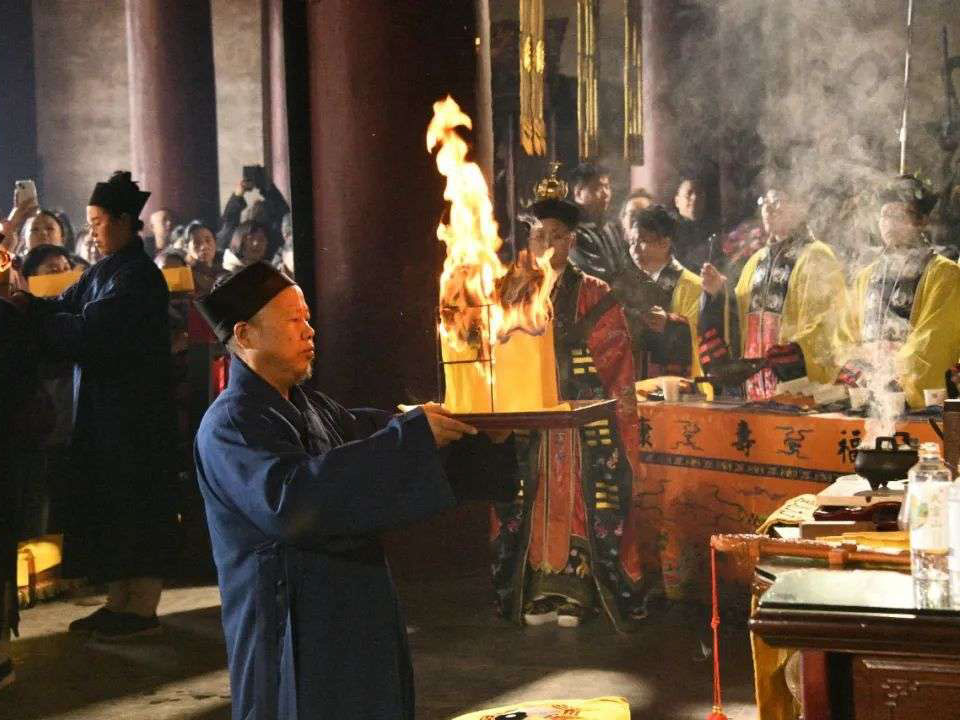
(1) The meaning of the ritual of fasting and Taoist ceremonies
2022-08-20 23:32:13
The original meaning of "zhai" was to be neat, harmonious an...
Yin GUI
2022-08-20 23:32:13
Chapter 27
2022-08-20 23:32:13
Chapter 72
2022-08-20 23:32:13
The couplet of the ancestral hall of the Wudang Mountain Temple
2022-08-20 23:32:13
Chapter 25
2022-08-20 23:32:13