


(1) The origin and Function of the Taoist Scriptures
2022-08-20 23:32:13
Daojing, short for the classics of Taoism. The ancients had many noble names for the Taoist scriptures, such as "Yunji", "Yuji", "Tianshu", "Tianzhang", "Baohan", "Baozhuan", "Shenshu", "Yuce", "Yuwei", "Jinshu", "Xianjing", "Dan Shu", "Daoshu", etc., aiming to indicate that all the Taoist scriptures were passed down by celestial beings and were as precious as gold and jade. From this, one can imagine the seriousness and mystery of the Taoist scriptures, which can easily lead to a sense of awe among ordinary Taoists and the general public towards them. In fact, the Taoist scriptures are vast, and indeed, very few people truly understand them. In recent years, with the favorable situation of reform and opening up, many Taoist temples have been restored one after another. The atmosphere for studying Taoism at home and abroad has been heating up continuously, and the value of Taoist scriptures has been increasingly recognized by people. Therefore, it is necessary to understand and recognize the cultural connotations of Taoist classics. (1) The Position of Taoist Scriptures in Taoism Taoist doctrine refers to "Dao, scriptures, and teachers" as the "Three Treasures". And he said, "The way is passed on without scriptures, and scriptures are not understood without teachers." Among the treasures of the "Way" and the "teacher", it is entirely the treasure of the "scripture" that can be passed down and continued. The "Jing" treasure refers to Taoist scriptures, which are regarded as the "supreme scripture treasure" by the Botao Sect. It can be seen that in Taoism, Taoist scriptures hold a pivotal position. (2) The history of Taoist Scriptures is long and profound. The history of Taoist scriptures predates the emergence of orthodox Taoism. As Taoism takes Taoism as its mother, a large number of Taoist classics have been incorporated into the category of Taoist scriptures. Even after Taoism was officially formed, the Taoist scriptures written by Taoist figures still carried on the ideological traces of ancient Taoism. Therefore, the origin of Taoist scriptures should be traced back to Taoism. If we count from the emergence of Laozi's teachings in Taoism, the existence of the Taoist classics has a history of more than 2,500 years. (3) How many Taoist classics do we know? The number of Taoist scriptures and classics is countless, as vast as the sea and as numerous as the pillars. The Taoist Canon "Xuanbu Zangbao" compiled in the Yuan Dynasty has a total of 7,800 volumes. The Daozang, which was compiled during the Zhengtong and Wanli periods of the Ming Dynasty and has been preserved to this day, consists of 5,485 volumes. If the lost Taoist scriptures in the Ming Dynasty's Daozang and the Taoist books that emerged after the Ming Dynasty are included, many scholars estimate that the volume would be no less than ten thousand volumes. (4) The Content of the Taoist Scriptures The content of the Taoist scriptures can be said to be all-encompassing. Ma Ruilin of the Yuan Dynasty, in his "Comprehensive Examination of Literature", described it as "diverse and multi-faceted", which is the opinion of laymen. If we analyze it from the most fundamental beliefs of Taoism, it is not difficult to distinguish its context. It is broad and flexible, not chaotic. If analyzed from the perspective of the belief in the "Tao", the content of the "Tao Studies" in Taoism can be distinguished. If analyzed from the perspective of the belief in "god", the content of "theology" in Taoism can be distinguished. A wonderful bond that connects Taoism with Daoism and Daoism with theology is "immortal", which is the content of "Immortal studies". He studies the connection between life and the Tao, human beings and deities, and is the supreme treasure of Taoism. Under the banner of immortals, the two sacred beliefs of Taoism, namely "Dao" and "Shen", can be united to form a common form of belief. The "Immortal Dao" and "Immortal" that evolved from this have become the two major groups of Taoism: the "Dan Ding School" and the "Fu Xiang School". The shell that encompasses Taoism, immortals and theology is the religious form of Taoism, such as rituals, precepts, scriptures, taboos, palaces and temples, etc. These contents can be called "teaching". Taoism, immortals, theology and teaching are the four most fundamental academic fields of Taoism. Without any one of them, it cannot be called Taoism. The four academic fields are the inseparable essential connotations of Taoism. The most important content of Daoist classic culture is thus composed of the four major academic disciplines. The Four Great Academic Disciplines are the main trunk of Daoist and classic culture. Other Daoist and classic contents such as medicine, I Ching, military science, good learning, literature, numerology, music, etc., are all the products of the branches and leaves growing on the main trunk and have intricate connections with the Four Great Academic disciplines. Therefore, Taoism is like a thousand-year-old tree. All the contents in the Taoist scriptures can find their corresponding positions on this tree, with distinct branches and clear logic. (5) The Value of the Daoist Scriptures Mr. Chen Yingning commented on the Daoist scriptures, saying: "Those who respect them are called cloud seals and celestial seals, with red characters and purple characters." The "beautiful" is a metaphor for lustrous letters, jade letters, jade plates and gold ropes. For now, let's not argue about whether it is right or wrong. If it can be verified, it should be verifiable. Many lost classics of past dynasties still exist here. It is not only the glory of the Taoist sect but also a legacy of Chinese culture. Mr. Ren Jiyu, in "The Origin of the Former Chinese National Taoist Church", believes that "the status of Taoist classics in the treasure house of Chinese culture is no less than that of Buddhism, and may even be more important." Among the Daoist classics, there are a large number of documents and materials covering ancient Chinese politics, history, science and technology, religion, economy, culture, military affairs, etc., including philosophy, ethics, and medicine. Contents such as inner elixir, outer elixir, health preservation, Yi learning, good learning, aesthetics, astronomy, geography, diet, music, numerology, alchemy, beauty care, architecture, fine arts, calendar calculation, smelting, biology, clothing, folk customs, tourism, social life, mythology, and fairy tales, etc., are related to the political life, social life, family life, personal life and religious beliefs of the ancient Chinese nation. It has had a wide and profound impact. To this day, the influence of Taoist culture can still be found to some extent in ordinary Chinese people, although they may not necessarily believe in or understand Taoism.
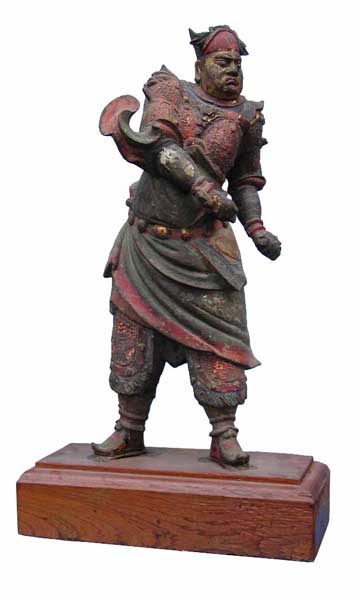
One of the stars of the Big Dipper
2026-04-15 11:51:31
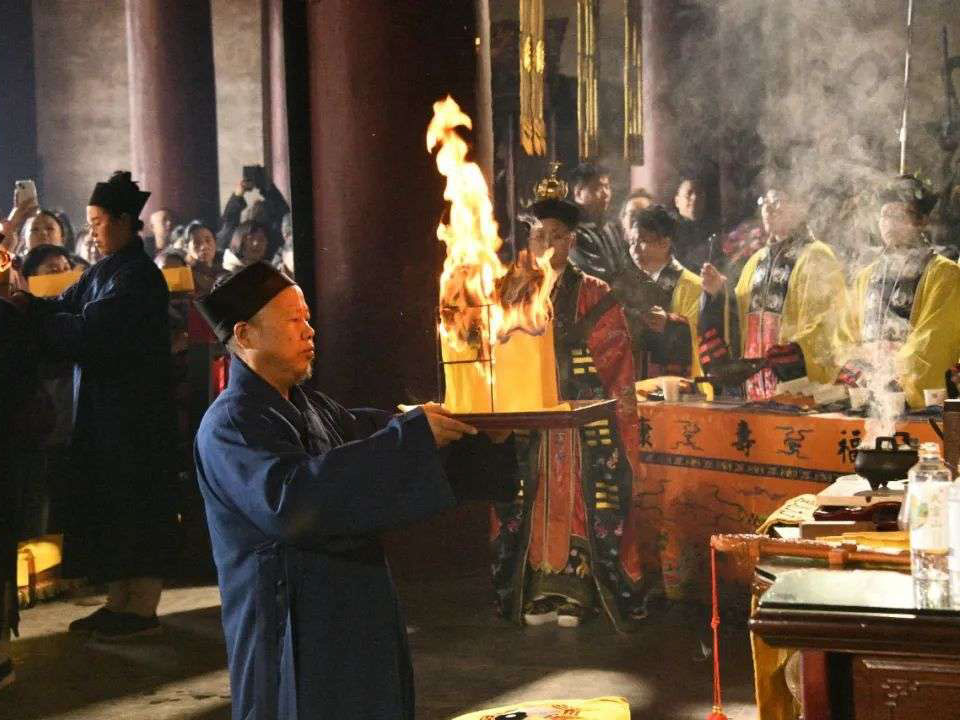
(1) The meaning of the ritual of fasting and Taoist ceremonies
2022-08-20 23:32:13
The original meaning of "zhai" was to be neat, harmonious an...
Yin GUI
2022-08-20 23:32:13
Chapter 27
2022-08-20 23:32:13
Chapter 72
2022-08-20 23:32:13
The couplet of the ancestral hall of the Wudang Mountain Temple
2022-08-20 23:32:13
Chapter 25
2022-08-20 23:32:13