


(II) A Brief Account of the Ways of the Gods
2022-08-20 23:32:13
(1) The Three Pure Ones, the supreme deities in the Celestial Realm, are the highest deities in Taoism, namely the Jade Pure, the Upper Pure, and the Great Pure. Their full names are the Jade Pure Primordial Heavenly Lord (also known as the Primordial Heavenly Lord or the Jade Pure Great Emperor), the Upper Pure Lingbao Heavenly Lord (also known as the Lingbao Heavenly Lord, the Supreme Daoist Lord, and the Upper Pure Great Emperor), and the Great Pure Daoist Heavenly Lord (also known as the Daoist Heavenly Lord, the Supreme Laojun, the Primordial Laojun, the Incarnation Heavenly Lord, and the Great Pure Great Emperor). The Taqing Realm is the abode of the Great Red Heaven and the Divine Treasure Lord. The Upper Qing Realm was the remaining days of Yu Yu, where Lord Lingbao resided. The Jade Clarity Realm is the Qingwei Heaven, where the Heavenly Treasure Lord resides. Above the Three Pure Realms lies the Great Luo Heaven, where the Primordial Heavenly Lord resides. The Three Pure Ones stayed in three fairylands for three days, each being the "Master of the Three Caves". The Three Caves refer to the three major categories of Taoist scriptures: Cave Truth, Cave Mystery, and Cave God. The Primordial Heavenly Lord is in charge of the Cave Truth Department, the Heavenly Lord of Lingbao is in charge of the Cave Mystery Department, and the Heavenly Lord of Morality is in charge of the Cave God Department. Among the Three Pure Ones, the position of the Primordial Heavenly Lord is the highest. The "Comprehensive Mirror of Immortals of All Dynasties" refers to him as the "Ancestor in charge of the Heavenly Realm". Regarding the name of the Primordial Heavenly Lord, the Taoist scriptures state: "There is no supreme doctrine, yet he alone can be the beginning of all things, thus he is called the Primordial." All the ways of the universe are supreme, and the two pure things beyond the constant are beyond the heavens, thus they are called the Heavenly Sovereigns. "Born before the primordial era and endowed with the natural energy..." It was believed that the body of the Celestial Lord would always exist and never perish. Every time the universe was first created... Imparting secret teachings is called opening a calamity to save people... All the immortals they have saved are of the highest rank, including the Supreme Elder Lord, the Supreme Father-in-law, the True Emperor, the Five Heavenly Emperors and all the immortal officials. The Primordial Heavenly Lord is usually enshrined in the center of the Three Pure Ones Hall in Taoism. He is covered with a mysterious round light and holds a red pill in his hand, or he holds it in his left hand and in his right hand, symbolizing the state when "heaven and earth have not yet taken shape and all things have not yet come into being". The Celestial Lord Lingbao is the second most revered deity among the Three Pure Ones. The "Dongzhen Great Cave True Classic" states: The Supreme Daoist Lord is the essence of the Second morning and the purple smoke of the Ninth Festival. He was conceived by the Hong family and developed into a human being. Three thousand seven hundred years later, he was born on the Fuluo Mountain of the Yucha Mountain in the west and thus became a high immortal. All deities paid homage to him, and the ruler of the mysterious was the Jade Capital, with 300,000 golden boys and 300,000 jade girls serving him. In the Three Pure Ones Hall of Taoism, the Celestial Lord Lingbao is often enshrined on the left side of the Celestial Lord Yuanshi, holding a Taiji diagram or a jade ruyi. Among the Three Pure Ones, the belief in the Supreme Lord of Morality is the most widespread. It was first referred to as the Supreme Lord Laozi in the "Book of Wei: The Record of the Venerable Laozi", stating: The origin of the Dao comes from Laozi, who was born before heaven and earth to nourish all beings. Above, he is the king of gods, and below, he is the master of immortals. In the "Yunji Qiqian", it is stated: Laojun's mother was the Jade Lady Yuanmiao. She swallowed the essence of the sun and, after 81 years of pregnancy, gave birth to Laojun from her left armpit. "She was born with white hair, thus she was called Laozi." According to the "Biography of You Long", since the Three Sovereigns and Five Emperors, he has been the teacher of successive emperors. The Taichengzi of the Shennong era, the Guangchengzi of the Xuanyuan era, and the Wuchengzi of the Emperor Yao era, among others, were all incarnations of Laozi. During the reign of King Cheng of Zhou, Laojun was a pillar historian and was given the title of Jingchengzi. During the reign of King Zhao of Zhou, he passed through the Hangu Pass to the west and appointed Yin Xi as the pass commander. During the reign of Emperor Wen of the Western Han Dynasty, he surrendered to the banks of the Shan River and was given the title of River Lord. During the reign of Emperor Cheng of Han, he surrendered to Langya and imparted the "Taiping Jing" to Ji. In the sixth year of the Han 'an era of Emperor Shun of the Han Dynasty, Laojun surrendered to the Heming Mountain in Sichuan and bestowed upon Zhang Daoling the secret strategy of "Zhengyi Mengwei". In the second year of Shenrui of the Northern Wei Dynasty, he descended to Mount Song and conferred upon Taoist Priest Kou Qianzhi the "New Precepts Recited in the Clouds". In the first year of Taiping during the reign of Emperor Taiwu, he also ordered Kou Qianzhi to submit to the title of "Taiping True Lord" and so on. During the Tang and Song dynasties, the respect for Laozi reached its peak. During the Tang Dynasty, Laozi was honored as the ancestral master, and during the reign of Emperor Gaozong, Laozi was posthumously honored as Emperor Taishang Baoyuan. Emperor Xuanzong was also known as the Great Sage Zu Dao Zhi Yuan Emperor and the Great Sage Gao Shang Dao Jin Threshold Xuan Yuan Emperor. During the Dazhong Xiangfu period of Emperor Zhenzong of the Song Dynasty, "Laozi was enshrined in the Taqing Palace and was enfeoffed as the Supreme Elder Lord of the Hunyuan Shangde Emperor." The Lord generally refers to his temple as the Taqing Palace, the Laojun Hall or the Laojun Temple. His image is often that of a man with white hair and a kind smile, holding a Tai Chi divine fan. The full name of the Jade Emperor and the Four Imperial Jade Emperors is the Supreme Jade Emperor of the Golden Gate. He rules over all the gods. The "Collected Sutra of the Supreme Jade Emperor's Conduct" elaborates on the origin and background of the Jade Emperor: Long ago, there was a kingdom called Guangyan Miaole. King Jingde and Queen Baoyue Guang were old and had no children. So they ordered a Taoist priest to pray. Later, they dreamed that the Supreme Taoist Lord was holding a baby and gave birth to the queen. When they woke up, they were pregnant. After a year of pregnancy, she was born at noon on the ninth day of the first lunar month of the year Bingwu in the palace. When the crown prince grew up, he ascended the throne. Soon after, he left his country and went to the Xiangyan Mountain in Puming to practice Taoism. He succeeded and was liberated. It took three thousand kalpas to attain the status of a Golden immortal. After another hundred million kalpas, they began to attack the Jade Emperor. The Jade Emperor resides in the Great Wei Jade Clarity Palace, also known as the Luojie Heavenly Palace or the Tongming Heavenly Palace. He presides over the Heavenly Way and oversees the Three Realms, the Ten Directions, the Four Lives, and the Six Paths. Although the position of the Jade Emperor is not as high as that of the Three Pure Ones, he is worshipped as the supreme deity among the people. There was a folk saying in the Ming and Qing Dynasties: "There is a Jade Emperor in the sky and an emperor on the earth." The Jade Emperor governs the gods of heaven, the deities of the earth, humans and ghosts. In fact, he is the emperor in the heavens. In the seventh year of the Dazhongxiangfu era of Emperor Zhenzong of the Song Dynasty (1014), the Jade Emperor was conferred the title of "The Supreme Deity who opened the Heavens, held the Talisman, and the Imperial Calendar contained the true body of the Jade Emperor". Jade Emperor temples, Jade Emperor Taoist Temples and the like have been built in various places. The Jade Emperor, dressed in the Nine-chapter Dharma robe, wears a beaded crown and a diadem, and holds a jade tablet in his hand. Every year on the ninth day of the first lunar month, the "Jade Emperor's Birthday", the Taoist temple holds a birthday celebration ceremony, chanting sutras and performing penance rituals, praying for favorable weather, national peace and prosperity, and the flourishing of the Dharma. Every year on the 25th day of the twelfth lunar month, the Jade Emperor would descend to the human world to inspect good and evil, and Taoist temples would also serve as places to guide the Dharma. The "Four Sovereigns", also known as the "Four Assistants", are of a status second only to the Three Pure Ones and the Jade Emperor. They are the assistants of the Jade Emperor. Their full names are the Supreme Emperor of the Purple Micro North Pole in the Central Heaven, the Supreme Emperor of the Upper Palace of Gouchen, the Supreme Emperor of the Houtu in Chengtian, and the Supreme Emperor of Longevity in the South Pole. The Purple Emperor of the North Pole is the first deity among the "Four Sovereigns". According to the Taoist scriptures, the Purple Emperor of the North Pole is the incarnation of the Primordial Heavenly Lord and is only under the control of the Jade Emperor. He resides high above the Purple Wall, which is also known as the North Star Palace or the Purple Star Heavenly Palace. He governs the celestial and terrestrial meridians, commands the star gods of the three realms and the gods of mountains and rivers, and is the master of all phenomena. He can summon wind and rain and command thunder, lightning, ghosts and gods. Emperor Ziwei was worshipped by emperors of all dynasties, especially in the Song Dynasty, when he was often worshipped together with the Jade Emperor. Nowadays, in places like Dazu in Sichuan Province, many Taoist deities carved in the Song Dynasty can still be seen, among which is Emperor Ziwei. The Purple Emperor is dressed in imperial attire. His birthday is on the 18th day of the fourth lunar month. The Heavenly Emperor of Gouchen Shanggong, also known as the Heavenly Emperor of Gouchen, ranks second among the Four Emperors. The Emperor and the Great Emperor is located to the left of the North Pole Constellation, with four stars. Their shapes are connected and slightly curved like hooks, which is called "Gou Chen". A major star is located within it, which is the Emperor and the Great Emperor. Reside in the Purple Micro Upper Palace, which is also known as the Gouchen Palace and the Nanji Jiangxiao Palace. The supreme ruler of all the stars, located in the same position as the North Pole but serving as the hub, and the emperor also becomes more refined in accordance with the heavens. Therefore, there should be no 炁 above. Below the three 炁, above all the ten thousand heavens, among the three realms, there is no one who respects these three emperors (referring to the three emperors of the Great heaven, the North Pole, and the Emperor). The "Jade Clarity Supreme Spiritual Treasure Natural Beidou Primordial True Sutra" records: In ancient times, there was a king of the Dragon and Han Dynasties named Zhou Yu, whose virtue was boundless. At that time, people were suffering from 84,000 great calamities. Wang Youyu Fei, wise and kind, is known as Lady Ri Ziguang. She has made a vow in the mundane world that she will give birth to a holy son to assist the universe and benefit the creation. After three thousand kalpas, this king was born. In the early spring when all the flowers were in full bloom, I played in the backyard and went to the Golden Lotus and Jade Pool. I took off my clothes and washed my face. Suddenly, I had a realization. The lotus buds bloomed in time and gave birth to nine sons. The second eldest son became the Emperor Tianhuang and the Emperor Zimi. Hou Tu Huang Di Ji is the third celestial emperor among the "Four Sovereigns" revered deities in Taoism. She is the only goddess among the "Four Sovereigns", paired with the Jade Emperor who governs the celestial realm, and is called "Heavenly Lord and Earthly Mother". She resides in the Palace of the Heavenly Emperor, also known as the Rui Zhu Palace and the Female One Palace. Her function is to control the beauty of Yin and Yang in reproduction, as well as the beauty of all things and the beauty of the earth and mountains. Since the Qin and Han dynasties, emperors of all dynasties have worshipped Hou Tu. On the first day of the ninth lunar month in the sixth year of Zhenghe (ill6) in Beilai, Emperor Huizong of the Song Dynasty personally visited the Yuqing Heyang Palace and bestowed upon Hou Tu the title of "Inheriting the Heaven, emulating the virtuous, and promoting the great Hou Tu as the Earthly Deity". In addition to being worshipped together with the other three emperors, some Taoist temples also have a Houtu Hall, and there is a special Houtu Goddess Shrine dedicated to Houtu. The Great Emperor of Longevity in the South Pole, also known as the God of Longevity in the South Pole, the Immortal Immortal of the South Pole or the Star of Longevity. He is a celestial deity who governs the life and death of the human world. The Records of the Grand Historian states: The Star of the Elderly in the South Pole "predicts the longevity and extension of the life of the ruler (i.e., the emperor)." Its appearance foretells the peace of the world and the longevity of the kingdom. Tao Hongjing's "True Spirit Position Diagram" refers to it as "the elder of the South Pole, the True Deity on the Danling Mausoleum", and it is listed on the left side of Taiji. The image of a longevity person is often an old man with white hair, a high forehead, a very long head, and a long, curved walking stick. It is commonly known among the people as "The Immortal of the South Pole". Often during the New Year, his image is pasted at home to symbolize joy and good fortune. The Queen Mother of the West is the wife of the Jade Emperor and holds an extremely noble status. She is also known as "The Golden Mother of the Nine Lights Turtle Platform in the Void" or "The Golden Mother of the Nine Spirits Turtle Mountain". It is called the Queen Mother of the West in folk terms. In the Taoist scriptures, she is referred to as the daughter of the Primordial Heavenly King and the Primordial Holy Mother, with the title "The True Queen Mother of the West", and is said to have governed countless immortals. It is also said that she is the incarnation of the "most wonderful qi of the West", the essence of the Moon, the master of female immortals, and the opposite of the essence of the sun, the Eastern King of the East, "jointly regulating the two qi, harmonizing the heaven and earth, and shaping all the qualities". All female immortals who have ascended to immortality and achieved enlightenment in the three realms and ten directions are under the jurisdiction of the Queen Mother of the West. All immortals who ascend to heaven in the world must first "meet the Queen Mother of the West and then pay homage to the Duke of the East" before they can enter the Three Pure Realms to pay their respects to the Celestial Venerable Yuanzhan. The Three Official Emperors refer to the first rank of the Upper Yuan, the Heavenly Official Bestowing Blessings, the second rank of the Middle Yuan, the Earthly Official Forgiving SINS, and the third rank of the Lower Yuan, the Water Official Resolving Disasters. The Youdao Sutra states that the Three Officials refer to the three emperors Yao, Shun and Yu, who were transformed by the exhalation of the Primordial Heavenly Lord. The more common view is that the Three Officials were the three sons of Chen Zichuan and the three daughters of the Dragon King, all of whom were extremely powerful and had boundless magical powers. So, the Primordial Heavenly Lord bestowed upon the eldest son the title of the Supreme First Rank Nine-Qi Celestial Official, the Purple Emperor, who resided in the Xuan Du Yuan Yang Seven Treasures Purple Emblem Upper Palace, and was the Supreme ruler of the Heavenly Emperor Divine King, the Supreme Sage Gao Zhen, and the Three Luo Wanxiang Star Lord. The second male is the Zhongyuan Second Rank Seven-Qi Earth Official, Qingxu Great Emperor, residing in the palace window of Dongkong Qingxu in the Wuji World. He is in charge of the Five Great Mountain Emperors, the twenty-four Governing mountains and Rivers, the Nine Earth Emperors, and the Four Dimensions and Eight Poles Divine Emperors. The three men are the third-rank Five-Qi Water Officials of the Lower Yuan, the Great Emperor of Dongyin, residing in the Golden Spirit Changle Palace. They are in charge of the Nine Rivers Water Emperor, the Fourth Reading Divine Lord, and the gods of the Three Rivers and Four Seas. The birthday of the Heavenly Official Emperor is on the 15th day of the first lunar month, that of the Earthly Official Emperor is on the 15th day of the seventh lunar month, and that of the Water Official Emperor is on the 15th day of the tenth lunar month. During the Three Yuan Festival, people go to temples to repent of their SINS and pray for blessings to avoid disasters. Those who believe in the Three officials should have a vegetarian meal on the Three Yuan Day, which is called "Three Officials Vegetarian". Among the three officials, the belief in the Heavenly Official is the most widespread. In folk culture, he is regarded as the "God of Fortune". He often paints New Year pictures, wears a bright red official uniform, a dragon robe and jade belt, holds a ruyi, has a kind face and an elegant and noble appearance. During the Spring Festival, he pastes it on the door, hoping that the Heavenly Official will bestow blessings and prolong life. The Great Emperor Zhenwu, also known as the Supreme Deity of the Xuantian, is respectfully called the Heavenly Emperor of the Celestial Martial Spirit Yinghu in Taoism, abbreviated as "Zhenwu Emperor Jun", and is commonly known as the "Heavenly Lord of the Demon-Slaying" in folk terms. He is an important celestial deity revered in Taoism and is in charge of the northern celestial realm. Ancient Chinese astrologers divided the stars in the sky regions through which the Sun and the Moon passed into 28 groups, namely the 28 mansions. The 28 constellations are further divided into four groups, each named after one of the four spirits: the Azure Dragon in the East, the Vermilion Bird in the South, the White Tiger in the West, and the Black Tortoise in the North. Xuanwu is called turtle or snake. "It is located in the north, so it is called Xuan. Its body is covered with scales and armor, so it is called Wu." The turtle and the snake are worshipped by people as symbols of the seven constellations of the north (Dou, Niu, Nu, Xu, Wei, Shi, Bi) and the Black Tortoise God. The "Yuanshi Tianzun's Interpretation of the Northern True Martial Arts Sutra" records: The True Martial God was originally the crown Prince of the Jingle Kingdom. He was tall and brave, vowing to eliminate all demons and monsters in the world and not to rule the throne. Later, he was taught the Supreme Way of Wuji by a true man and entered Mount Taihe to practice Taoism. When he achieved great success and fulfilled his virtue, the Jade Emperor ordered him to subdue the north and rule over the position of True Martial. He also renamed Mount Taihe as Wudang Mountain, meaning "only Xuanwu is capable of holding this position." The birthday of Emperor Zhenwu is on the third day of the third lunar month. His image is often depicted as having black hair, golden armor and jade belts, brandished a sword with fierce eyes, treading on turtles and snakes, and covered with a round light on his head, looking extremely imposing. The True Lord of the North Star, also known as the True Lord of the North Star, is a celestial deity of the celestial constellations. He governs the life and death, fortune and misfortune of the human world, and can eliminate disasters and bring blessings. The Taoist scriptures record that the Beidou God often travels around with the Three officials (referring to the three great officials of heaven, earth and water), investigating the merits and demerits, good and evil of the human world and the netherworld. If there is anyone who has committed evil, the three officials will report to the Beidou God, and then the offender will be sent to hell and imprisoned forever in the sea of suffering. The Taoist scriptures declare that anyone who wholeheartedly believes in the Big Dipper will be permanently removed from the death register of the netherworld and eventually achieve enlightenment and become an immortal. The ritual of paying homage to the North Star is a particularly important ritual in Taoism. The Seven Stars of the Big Dipper were the sons of Lady Ziguang (also known as Doumu Yuanjun). Doumu, also known as Doumu or Doumu, is respectfully called "Yuanming Dao Mu Tianzun". Doumu is the mother of the stars in the Big Dipper. She was originally a concubine of the King of Zhou during the Longhan period. She was wise and kind, and her name was Lady Ziguang. One spring, while strolling in the imperial garden, I suddenly had an idea and became pregnant, giving birth to nine sons. The eldest is the Emperor, that is, the Emperor of Gouchen Shanggong, one of the Four Emperors. The second one is the Purple Micro Emperor, also known as the Central Heaven Purple Micro North Pole Emperor, one of the Four Emperors. The other seven are Tanlang, Jumen, Lucun and Wenqu respectively. Lianzhen, Wuqu and Pojun, also known as the Seven Stars of the Big Dipper. The Big Dipper governs each of the seven zodiac signs. As long as one devoutly worships the star of their zodiac sign, they can receive the protection of the gods. His image features three eyes, four heads and eight arms, each holding a golden seal, a bow, a halberd, a sun, a moon and a precious bell. In palaces and temples, there are often rooms such as the Doumu Room, Doumu Hall and Doumu Pavilion to pay homage to the Doumu Yuanjun. The Thunder God is the general term for all the gods of the Thunder tribe. The Thunder God can distinguish between good and evil, differentiate the good from the bad, uphold justice on behalf of heaven, and slay the guilty. The Supreme deity of the Nine Heavens Yingyuan Thunder Universal Transformation is the supreme god of the Thunder Division. He commands the thirty-six Thunder God Celestial Lords, each holding a thunder drum. Whenever thunder strikes, the Celestial Lord personally strikes the thunder drum of his division once, and immediately the thunder God emits a rumbling thunder that shakes the heavens. The Supreme Deity of Universal Transformation of the Nine Heavens Yingyuan Thunder "governs the disasters and blessings of heaven, the balance of possessions, governs both things and people, and is in charge of life and death." June 24th of each year is the day when the Celestial Lord of Thunder's Universal Transformation appears. Among the gods of the Thunder Tribe, apart from Lei Sheng Pu Hua Tian and others, the more well-known ones are several Celestial generals such as Deng, Xin, Pang, Liu and Bi. (2) The True Yellow Emperor among the immortals is one of the Five Heavenly Emperors and the most important deity among them. He is located in the central position among the Five Heavenly Emperors of the east, west, south, north and center. The central land, with its emperor, the Yellow Emperor, and its assistant, the Later Land, wields ropes to control the four directions. It is said that the Yellow Emperor's surname was Gongsun and his given name was Xuanyuan. He was the son of Shaodian, the ruler of the Xiong State. According to the "Comprehensive Mirror of the True Immortals of All Ages", the Yellow Emperor's mother once dreamed of a beam of electric light surrounding the Big Dipper star, and thus gave birth to the Yellow Emperor at 24 months of pregnancy. When he was 15 years old, he ascended the throne. He established the Eight Trigrams, the calendar, the crown, the palace and so on, and later replaced the power of Emperor Yan to unify the country. Jiaoyou rebelled, and the Yellow Emperor finally captured and killed Guyou. Later, he traveled extensively to famous mountains and sought the path to immortality from immortals such as Wu Guangzi, Rong Chenggong, and Guang Chengyu. He refined the Nine Tripods Golden Pill on Wangwu Mountain, went to Qingqiu Mountain to pay a visit to Master Zifu and received the Inner Text of the Three Sovereigns. Then, he paid a visit to Zhonghuang Father-in-law on Qingcheng Mountain and secretly passed on the true One Method of immortals. Later, he climbed Yuntai Mountain to meet Master Ningfengzi and received the Longqiao Immortal Classic. On the day of success, a dragon descended from the sky, and the Yellow Emperor rode the dragon to ascend to heaven and become an immortal. The Donghua Emperor's surname was Wang and his given name was Jiaofu. In the Taoist scriptures, he was called the Shaoyang Emperor. The "Comprehensive Mirror of the True Immortal Body Dao" states that he was a native of Shandong during the Han Dynasty, who took Baiyun Shangzhen as his teacher and was known as Huayang Zhenren. Later, he passed on the divine talisman, secret techniques, and the Golden Elixir path to Zhongli Quan. There is another scripture that says that the Emperor was originally a deity transformed from the primordial energy of the Green Yang, residing in the Great Morning Palace, with purple clouds as the roof and blue clouds as the city walls. It is said that he once lived in seclusion in Kunlun Mountain and later moved to Zifu Cave in Wutai Mountain, where he was given the nickname. "Lord Shaoyang of Donghua Purple Mansion" Quanzhen is regarded as the first patriarch of the Five Northern Patriarchs. The "True Record of the Golden Lotus" states that the way of Quanzhen was "passed down from the Supreme Deity to the Golden Mother, then to the Golden Mother, and finally to the Emperor (Wang Xuanfu)." The legend of the birthday of Emperor Donghua is on the sixth day of the second lunar month. The Three MAO Zhenjun were three brothers, MAO Ying, MAO Gu and MAO Zhong, who became immortals through Taoist cultivation in the Han Dynasty. They are the founding masters revered by the Shangqing School of Taoism. According to the Daoist classics, the Three Maos were all from Xianyang, Shaanxi Province. The eldest Maoist was named Ying, with the courtesy name Shushen. He was unconventional in his youth and held the position of Qingxu alone. At the age of 18, he left his family and went to Mount Heng to practice Taoism. He met a king from the Western Regions and became his disciple. He was deeply influenced by the true teachings and began to practice the method of taking food for health preservation. Later, he visited various famous mountains and caves. At Turtle Mountain, he met the Queen Mother of the West and imparted the classic of Taiji Xuanzhen to her. At the age of 49, he resigned from his teacher and returned home. His parents were resentful of his long journey and intended to punish him. MAO Ying used his skills to analyze his stick and thus stopped in admiration. MAO Ying's younger brothers, MAO Gu and MAO Zhong, were originally officials in the imperial court. When they heard that their elder brother had become an immortal through the study of Taoism, they resigned from their positions and returned home, intending to learn Taoism from MAO Ying. MAO Ying sighed and said, "My second brother is old and it is difficult for him to learn the great art of ascending to the heavens. He can only cultivate himself to become an immortal on the earth." So the three MAO brothers resided on Juqu Mountain and practiced diligently for several years. MAO Gu and MAO Zhong also became immortals. Later, the Three Maos ascended to the Heavenly Court to meet the Jade Emperor and were all enfeoffed as "The True Immortal of the Three Maos' Transformation in the Nine Heavens". Therefore, later generations referred to the three immortals of the MAO family as "The True Immortal of the Three Maos" and called Juqu Mountain "The Three Maos Mountain", abbreviated as "MAO Mountain". In the "True Spirit Position Diagram", MAO Ying is listed on the left side of the Upper Qing Dynasty, known as "Taiyuan Zhenren, the Supreme True Minister of the Eastern Mountain", in charge of the life and death of the human world. His younger brother MAO Gu was enfeoffed as Dingcejun, and MAO Zhong was enfeoffed as Baomingjun. Zhang Tianshi, the founder of Taoism, was originally named Zhang Ling. He is also known as the Heavenly Lord of Subduing Demons and Protecting the Dao, the Great Emperor of Gaoming, and the Ancestral Celestial Master. Zhang Ling (34-157), whose courtesy name was Fuhan and pseudonym was Tianshi, was respectfully called Zhang Daoling in Taoism. The "Comprehensive Encyclopedia of Immortals Through the Ages" and the "Biographies of Immortals" record that he was the eighth-generation descendant of Zhang Liang, the Marquis of Liu of Han, from Pei State (now Fengxian County, Jiangsu Province). His father, Zhang Yi, styled Taishun, once lived as a guest in Tianmu Mountain. One night, Lin Shi, the wife of Yi, dreamed that a divine being descended from the Big Dipper and bestowed upon her the herb Hengwei, and she became pregnant. After returning to Pei, he was born in Jianwu (25-26) on the first day of the fifth lunar month (May 18th). When born, yellow clouds enveloped the room, purple mist filled the courtyard, and the sky was as bright as an egg. Zhang Daoling was intelligent and brilliant in his childhood. Even at a young age, he was able to study the Tao Te Ching as well as books on astronomy, geography, and the diagrams of the River and Luo. He once studied in the Imperial College and was well-versed in the five classics. During the reign of Emperor Shun (126-144), he secluded himself in Heming Mountain (also known as Queming Mountain, now within Dayi County, Sichuan Province) to practice Taoism. According to the "Complete Biographies of Immortals", Zhang Ling was skilled at using talisman water to treat diseases, and his skills gradually improved. Later, he claimed that the Supreme Elder Lord "bestowed the three days of the True Dharma and appointed him as the Celestial Master." Thus, he was given the title of "Three Days Master Zhengyi Zhenren", wrote twenty-four Taoist books, and founded the Five Pecking Rice Dao, which was later also known as the Celestial Master Dao or Zhengyi Dao. His descendants inherited the Taoist teachings of the Celestial Master and were honored with titles by the imperial court throughout the ages. Zhang Daoling was the founder of Taoism. Coupled with his profound Taoist teachings, his ability to subdue demons and monsters, and his extensive supernatural powers, he ascended to immortality in broad daylight. Therefore, his status in Taoism was extremely high. Bixia Yuanjun, also known as the Jade Maiden of Mount Tai, is commonly called the Lady of Mount Tai. Her full name is the Celestial Fairy Jade Maiden of Mount Tai, Bixia Yuanjun. There are many legends. Some say she is the daughter of the god of Mount Tai, some say she is the jade Maiden sent by the Yellow Emperor to Mount Tai to welcome the Immortal Xikun, and some say she is the Jade Maiden of Mount Hua. As early as the Han Dynasty, there were legends about the goddess of Mount Tai. People carved stone statues and built the Jade Maiden Pool on the top of Mount Tai for worship. The "Taishan Treasure Scroll" mainly narrates the spiritual traces of the Goddess of Mount Tai and is widely circulated among the people. Emperor Wenchang is an important revered deity among Taoist deities. Also known as the Yangxuan Emperor, he is the unity of the Wenchang God and the Zitong God. The "Comprehensive Mirror of Immortals Through the Ages" states that he "governs the thirty-three celestial records of immortals, the middle one governs longevity, death, fortune and misfortune, and the lower one governs the eighteen hells of reincarnation." In celestial phenomena, near the Big Dipper Kui Star, there are six stars of Wenchang. Among them, the "Si Lu" star governs nobility, rank, and rewards, while the "Si Ming" star governs longevity. Zitong Shen Yuan was originally the guardian deity of Sichuan Province, named Zhang Yazi (or Evil Son). It is said that his ancestral home was in 嶲, yue. To avenge his mother, he moved to Zitong. He once served as a general in the Jin state and died in battle. The people of Shu built a shrine to worship him. During the Tang Dynasty, he appeared many times. The "Qinghe Nei Zhuan" states that he was born at the beginning of the Zhou Dynasty. Up to now, he has passed away 73 times. At the end of the Ding Dynasty of the Western Jin Dynasty, he was born into the family of the elderly in Qinghe, named Zhang Zheng. The Jade Emperor ordered him to govern the Wenchang Prefecture and be in charge of the human official payroll. During the Ming Dynasty, "all the academies in the country established the Wenchang Ci." During the Qing Dynasty, on the third day of the second lunar month, the birthday of Emperor Wenchang, officials from the imperial court would be sent to pay their respects. The image of Emperor Wenchang is mostly of a dignified and intelligent face. He sits on a white donkey and is accompanied by two child prodigies, one deaf and the other mute. The Eight Immortals refer to eight immortals: Zhongli Quan, Li Tieguai, Zhang Guolao, Lu Dongbin, He Xiangu, LAN Laihe, Han Xiangzi and Cao Guojiu. Zhongli Quan, also known as "Han Zhongli", is said to have the surname "Zhongli" and given name Quan, with the courtesy name Yunfang. He was from Xianyang, Jingzhao (now in Shaanxi Province), and some say he was from Yantai. Later, he changed his name to Jue, with the courtesy name Jidao, the Taoist title Zhengyangzi, and also the title Yunfang Xiansheng. Quan Qidao was honored as "Zhengyang Zushi", and was listed as one of the Five Northern Patriarchs in the "Jinlian Zhengshu Ji". The earliest legend about him dates back to the Five Dynasties and the early Song Dynasty. His deeds are all recorded in books such as "Xuanhe Shupu", "Yijian Zhi" and "History of Song". Lu Dongbin is the most widely rumored immortal among the "Eight Immortals". His surname is Lu, his given name is Yan, and his courtesy name is Dongbin. One theory holds that she was a member of the Tang royal family, surnamed Li. During the reign of Wu Zetian, she massacred the descendants of the Tang family, and thus, with her wife, she retired to a place surrounded by clear waters and red mountains, changing her surname to Lu. Because it often lives beneath rocks, it is called Yan. Also, it often burrows in caves, so it is called Dongbin. There is also a legend that he was the grandson of Mu Qing, the vice minister of the Ministry of Rites of the Tang Dynasty. Feeling that his official career was fraught with difficulties, he turned to study Taoism. Later, Taoism and the common people called him "Sword Immortal", "Wine Immortal" and "Poetry Immortal", and he was renowned all over the world. Before Lu Dongbin achieved enlightenment and became an immortal, he had been wandering in the world. In a tavern in Chang 'an, he met Zhongli Quan and asked for his "Yellow millet Dream". Thus, he gained enlightenment and sought his guidance. After passing through Zhongli's ten tests of life, death, wealth and beauty, his heart remained unmoved. As a result, he received the Golden Liquid Great Pill and the Spiritual Treasure Dharma. Later, he met the Fire Dragon True Lord, who taught him the method of paying homage with the sun and the moon. He also inherited the Celestial Swordsmanship of the Fire Dragon Immortal, claiming to "cut off greed and anger, love and desire, and afflictions". There are folk tales such as Lu Dongbin's three drunkards at Yueyang Tower to rescue Li Yue with the Iron Cane and his flying sword slaying the Yellow Dragon. In the Song Dynasty, Lu Dongbin was honored as "Miao Tong Zhen Ren", and in the Yuan Dynasty, he was given the title of "Chun Yang Yan Zheng Jing Hua Dan You Di Jun". In Taoism, he is respectfully called "Lu Zu", and in Quanzhen Taoism, he is regarded as one of the "Five Northern Ancestors". Lu Zu's birthday is on the 14th day of the fourth lunar month. He Xianggu is the only female immortal among the "Eight Immortals". It is said that her original name was He Xiugu, the daughter of He Tai, and she was born during the reign of Empress Wu of Tang. At the age of 15, he dreamed that a deity taught him to eat mica powder. As a result, he became as light as flying, shuttling between mountain peaks to pick and eat mountain fruits, and was very filial to his mother. Later, she met Lu Chunyang and was given a peach. After eating it, she was neither hungry nor thirsty and began to fast. She had a thorough understanding of human affairs and faults, which was quite effective. The villagers regarded her as a deity and specially built a house for her to live in. Wu, however, was not known by his name. When envoys were sent to summon him, they had no idea where to go during the process. The seventh day of the third lunar month is the birthday of He Xianggu. On this day every year, people from all over the country gather at the He Xian Gu Temple in Zengcheng, Guangzhou. Some perform grand operas, some hold religious ceremonies, and celebrate sacrifices. This has become a custom. Li Tieguai, the most senior immortal among the "Eight Immortals", is also known as "Tieguai Li" or "Mr. Tieguai". There are many legends about him. The "Ji Shuo Quan Zhen" quotes that he was a celestial being enlightened by the Queen Mother of the West. He was enfeoffed as the Master of the East Hua Sect, given an iron cane, and went to the capital to enlighten General Zhongli Quan of the Han Dynasty. He was also enfeoffed as the Young Master of the Purple Mansion. In Taoist books, it is often said that he was a hermit who had achieved enlightenment. He was tall and strong. Later, he went to the meeting of Laozi on Mount Hua and left his body at his residence, instructing his disciples to keep watch for seven days. Unexpectedly, on the sixth day, when his disciples wanted to return home to check on his mother's illness, they burned his body with fire. After Li returned, he had no soul to rely on and was reborn with a starving corpse. His appearance was ugly and his feet were broken. During the Yuan and Ming dynasties, it was also rumored among the common people that Li Tieguai was a disciple of Lu Dongbin. According to "Xu Xian Zhuan", LAN Caihe was originally a group of beggar Buddhists. One foot in boots, the other barefoot, wearing a wide belt, holding a large clapper, drunk and singing. Its lyrics say: "Treading on LAN Caihe, how much of the world can there be?" A beauty is like a spring tree, and the years pass like a shuttle. The ancients muddled away, but nowadays, more and more people are coming. Most of them act on impulse, with the intention of immortals emerging from the world, beyond human comprehension. Then he roamed between the moats and the beams, got drunk in a tavern, and passed away on a crane. Yuan Yishan wrote a poem about its image, saying: "The long plank and the high song are not wild at all." Son Cao was busy with his own money. How often do I meet the old man in the blue shirt and dance towards the spring breeze together? Han Shuzi was originally the great-nephew of Han Yu, a renowned literary figure of the Tang Dynasty. He ascended the throne in the third year of the Changqing reign and entered the land, holding the position of the Chief Justice. Yao He wrote in his "Poem in Response to Han Xiang" : "I heard about the spring commotion yesterday. The name is from the Ministry of Personnel." At the age of thirty, one reaches the high school of science, and the future is full of uncertainties. He is a young and successful gentleman. At first, it was not said that Han Xiang had immortal magic. The "Youyang Za 俎" states that Han Youshu learned Taoism from his nephew and became an immortal, capable of creating "誜 touring flowers" and "instant wine". The book does not say that Han's nephew is Han Xiang. Later generations called Han Xiang "Han Xiangzi". The Complete Biography of Han Xiangzi tells the story of how Zhongli Quan and Lu Dongbin enlightened Han Xiangzi to cultivate Taoism and become an immortal. Han Xian is often depicted as a handsome young man holding a flute in one hand. According to historical records, Zhang Guolao was a Taoist priest in the Tang Dynasty, skilled in magic. He often lived in seclusion on Zhongtiao Mountain in Hengzhou and traveled between Fen and Shanxi. It is said that he was several hundred years old. During the reign of Emperor Xuanzong of Tang, people were summoned to the palace to inquire about the affairs of the immortals several times, but all were kept secret and not passed on. Seeing her face aged, Emperor Xuanzong asked the enlightened man why he was like this. He replied, "I was born in the year of Bing Yu during the reign of Emperor Yao," and "I was a Shizhong during the reign of Emperor Yao." Later, Emperor Xuanzong wanted to marry Zhang Guolao as Princess Yuzhen, but he firmly refused to follow the imperial decree. According to folk legend, Zhang Guolao often rode a white donkey, traveling ten thousand miles during the day. At night, he would fold it like paper and place it in a handkerchief box. When riding it, he would fill it with water 噀 and return it to a donkey. Cao Guojiu said that he was the eldest brother of Empress Cao of Emperor Renzong of the Song Dynasty, and his name was Jingxiu. With pure and kind nature, he has no fondness for wealth and honor and is extremely fond of purity and emptiness. Later, his younger brother was arrogant and lawless, causing harm to people's lives. The uncle of the state was deeply ashamed of this. So he fled to the deep mountains to practice Taoism and met Lu Chunyang, who enlightened him and took him as his disciple. It is said that when he became a monk, the emperor bestowed upon him a gold medal. Later, when he crossed the Yellow River without a boat fare, he used the gold medal as a substitute. He met Lu Dongbin and traveled with him, ranking among the Eight Immortals. His image often shows him wearing a gauze hat and a red official robe. The Five Ancestors and Seven Immortals are the seventeen immortals worshipped by Taoism. The Fifth Patriarch has two branches, the Northern and the southern. The Fifth Patriarch of the South is Zhang Boduan, the Immortal of Wuzhen Ziyang, Shi Tai, the Immortal of Xinglin Cuibao, Xue Shi, the Immortal of Daoguang Zixian, Chen Pei, the Immortal of Niwan Cuixu, and Bai Yuchan, the Immortal of Qiongfang Zixu. The Five Emperors of the North were Wang Xuanfu, the Emperor of Donghua, Zhongli Quan, the Emperor of Zhengyang, Lu Dongbin, the Emperor of Chunyang, Liu Haichan, the Emperor of Chunyou, and Wang Chongyang, the Emperor of Fuji. The Seven Immortals are Qiu Chuji of Changchun Immortal, Ma Yu of Wuwei Immortal, Tan Chuduan of Yunde Immortal, Liu Chuxuan of Changsheng Immortal, Wang Chuyi of Yuyang Immortal, Hao Datong of Guangning Immortal and Sun Bu 'er of Qingjing Sanren. For the Zhengyang Emperor, refer to the entry of Zhongli Quan among the "Eight Immortals"; for the Pure Yang Emperor, refer to the entry of Lu Dongbin among the "Eight Immortals". The Wuzhen Ziyang Immortal's surname was Zhang, his given name was Boduan, and his courtesy name was Pingshu. Later, he changed his name to Yongcheng (Cheng) and took the pseudonym "Ziyang Mountain Man", so he was also called Zhang Ziyang by later generations. Born in the first year of the Yongxi reign of Emperor Taizong of the Song Dynasty (984 AD). The "Comprehensive Mirror of Immortals Through the Ages" states: In the year of Jiyou (994), Zhang Boduan stayed at Tianhui Temple and met Master Liu, his father-in-law from Qingcheng, who taught him the secret of the heat control of the golden elixir. He chose to practice in Hanyin, Xing 'an, and was assigned to the Ziyang Cave in Hanzhong. After completing the elixir, he returned to Taizhou. Wandering again in Sichuan, I met the Immortal Qinghua once more and was taught the secret of the Jade Clarity and Golden Chest, the inner Elixir of the Golden treasure... 。 In the eighth year of the Xining era (1075), he wrote the "Wuzhen Chapter", promoting Taoism and Buddhism. The Confucian thought of "though divided into three parts, the Way returns to one", known as the "Three teachings and one principle", ascended to immortality on March 15th, the fifth year of the Yuanfeng era of Emperor Shenzong of the Song Dynasty (1082). He was revered as the first of the five patriarchs of the Quanzhen Southern School. The immortal Xinglin Cuixuan was surnamed Shi and given name Tai. His courtesy name was Dezhi, and he was also known as Xinglin and Zhai Xuanzi. He was born in Changzhou (now Changzhou, Jiangsu Province) in the first year of the Ganxing era of Emperor Zhenzong of the Song Dynasty (1022). Shi Tai was fond of doing good deeds and benefiting the world. He often used medicine to help people without expecting anything in return. He only wished to plant an apricot tree. Over time, it would grow into a forest. Therefore, people called it "Shi Apricot Forest". When apricots are ripe, they can be picked at will, and the person pays for them under the tree. The apricots are taken from the orchard to buy rice at the market. In winter, they are used to help the poor. Zhang Boduan taught them the golden elixir path. He was the author of the "Huan Yuan Pian" (also known as the "Huan Yuan Pian"). On the 15th day of the eighth lunar month in the 28th year of the Shaoxing era of Emperor Gaozong of the Song Dynasty (1158), his body was lifted and he ascended to immortality. Shi Tai's thoughts had a significant influence on later generations. He was honored as the second generation of the "Southern Five Patriarchs" of the Quanzhen School of Taoism and was given the title "Immortal Xinglin". The immortal Daoguang Zixian was surnamed Xue and given name Shi. His courtesy name was Taiyuan and he was also known as Daoyuan (Yuan). He was from Wenzhong (now Jianzhong, Sichuan Province) during the Southern Song Dynasty. One theory holds that it refers to the "Chicken Foot Man" of the Shaanxi Province. He was born in the first year of the Yuanfeng era of Emperor Shenzong of the Song Dynasty (1078). When he first became a monk, his Dharma name was Zi Xian, and his first name was Zen Master PI Ling. Because Ya was fond of "golden elixir cultivation and nurturing", he became a human being and wrote "The Chapter of Restoring the Elixir and Reviving Life" and "The Song of Elixir Marrow" to live in the world. Zi Xian achieved enlightenment and ascended to immortality on the ninth day of the ninth lunar month in the second year of the Shaoxi era of Emperor Guangzong of the Song Dynasty (1191), having lived for 114 years. Xue Daoguang's idea of internal alchemy and cultivation had a considerable influence on later generations. He passed on what he had learned to Chen Nan and made significant contributions to the development of Quanzhen Taoism. As a result, he was honored as the third generation of the "Southern Five Ancestors" of the Quanzhen School of Taoism and was given the title "Purple Immortal". The immortal Niwan Cuixu had the surname Chen, given name Nan, courtesy name Nanmu, and pseudonym Cuixu. He was from Baishuiyan, Boluo County, Huizhou (now east of Huizhou City, Guangdong Province) during the Southern Song Dynasty. He once made a living by coiling 栊 and making buckets. Later, Xue Daoguang taught him the "Taiyi Dao GUI Jin Dan Fa Jue", and the divine man of Li Mu Mountain passed it on to "Jingxiao Dalei Langshu". With diligent practice, he achieved great success in his Taoist cultivation. With the aim of benefiting the world, educating and benefiting people, he often twisted soil to treat people's diseases, and was called "Chen Niwan" by people. During the reign of Emperor Huizong of the Song Dynasty (1111-1118), he was promoted to the position of director of the 箓 college. He is the author of the "Cui Xu Pian". In the sixth year of the Jiading era of Emperor Ningzong of the Song Dynasty (1213) and the fourth year of the Yiyun era (1211), on the fourteenth day of the fourth month, he ascended from the water on Liangshan Mountain in Zhangzhou. Today, Chen Nan's "Cui Xu Pian" exists, including "Zi Ting Jing", "Dan Ji GUI Yi Lun", "Luo Fu Cui Xu Yin", "Jin Dan Shi Jue", etc. All of them discuss the methods of refining qi and concentrating the spirit within the inner elixir. They have had a significant influence in the Quanzhen School and were thus honored as the fourth generation of the "Five Patriarch of the South", with the title "Cui Xu Zhenren". Qiong Guan Zi Qing Zhenren's surname was Ge and his given name was Chang Geng, with the courtesy name Ruhui. As he inherited the Bai family, he also took the surname Bai. His given name is Yu Chan, also known as Bai Sou, and his pseudonym is Hai Qiong Zi. In the second year of the Shao Ding era of Emperor Lai Lizong (1229), he was born in Qiongzhou, Nanhai (now Qiongshan, Hainan Province). Since childhood, he was intelligent and extraordinary. At the age of twelve, he passed the examination for children and was proficient in various classics. He was also skilled in poetry, prose, calligraphy and painting. Later, he was killed by a chivalrous man and died in Wuyi. He transformed himself into a Taoist priest and roamed around the two lakes in Jiangdong, Western Shu, and Fujian. In the middle of the Jiading reign (1208-1224), an imperial edict was issued to summon the troops to the capital. The imperial decree was presented to the emperor, and the Taiyi Palace was ordered to be built. Later, no one knew where it was located, or the body was buried in Haifeng County. He authored works such as "Collected Sayings of Haiqiong", "Quotations of Haiqiong Bai Zhenren", "Collected Works of Mr. Haiqiong", "Collected Works of Yulong", and "Collected Works of Wuyi". Emperor Chunyou was surnamed Liu and given name Cao. His courtesy name was Zongcheng, his pseudonym was Haichanzi, and his courtesy name was Zhaoyuan. He was from Yanshan during the Five Dynasties period. He took the imperial examination in the Liao Dynasty, passed the Zhongjia examination and entered the territory. He served Liu Shouguang, the ruler of the Five Dynasties of Yan, and rose to the position of prime minister. In daily life, I am fond of the study of life and nature and Revere the teachings of Huang-Lao. It is said that one day, a monk came to pay his respects and he suddenly had an Epiphany. He then gave away his family's wealth, resigned from his official position, left his wife and children, and became a monk to travel around, taking the name "Hai Chanzi" and concentrating on his spiritual practice. He often traveled between Mount Hua and Mount Zhongnan and later achieved enlightenment and passed away. Quanzhen Taoism is one of the Five Patriarchs of the North. Emperor Fuji was named Wang Chongyang and was the founder of the Quanzhen School of Taoism. His original name was Zhongfu and his courtesy name was Yunqing. Later, he changed his name to Shixiong and his courtesy name was Decheng. A native of Xianyang (now Xianyang, Shaanxi Province) in the late Song Dynasty and early Jin Dynasty. After Ren Dao, he changed his name to Zhe, his courtesy name to Zhiming, and his pseudonym to Chongyangzi. He calls himself Wang SAN (the third in the family) or SAN Hai Feng. In the first year of the Dading era of Emperor Shizong of the Jin Dynasty (1161), a tomb was built in Nanshi Village. He lived in the tomb for more than two years and called it the tomb of the living dead. In the seventh year of the Dading era of the Jin Dynasty (ill7), he left Shaanxi and went to Shandong to preach and guide people. He successively took Ma Danyang, Tan Chuduan, Liu Chuxuan, Qiu Chuji, Wang Chuyi, Hao Datong and Sun Bu 'er as his disciples. In January of the 10th year of the Dading era of the Jin Dynasty (117 AD), he ascended to immortality in Daliang (now Kaifeng, Henan Province). He authored works such as "Collected Teachings on Chongyang" and "Fifteen Treatises on Establishing Teachings on Chongyang". Taoism reveres Wang Chongyang as the fifth ancestor of the "Five Northern Ancestors". The Seven Immortals refer to Qiu Chuji of Changchun, Ma Danyang of Wuwei, Tan Chuduan of Yunde, Liu Chuxuan of Changsheng, Wang Chuyi of Yuyang, Hao Datong of Guangning, and Sun Bu 'er of Qingjing Sanren. They are seven famous disciples of Wang Chongyang, all from Shandong Province, mostly from noble families, and have a high cultural quality. It is known as the "Seven Immortals of the North". The Northern Seven Immortals are divided into seven sects: Chuang Longmen, Yu Xian, Nan Wu, Sui Shan, Xiao Shan, Hua Shan and Qing Jing. Later, each of them cultivated themselves to become immortals. The Seven Immortals greatly promoted the Quanzhen School and had an extremely profound influence on the history of Taoism. They all have certain collections of scriptures that are in circulation throughout the world. Mazu is also known as Tianfei, Tianhou and Heavenly Mother. The guardian deity of navigation, Tianfei, was born as the Jade Maiden of Miao Xing. March 23rd is her birthday. She was the sixth daughter of Lin Yuan, the inspector of the capital of Min during the Five Dynasties period. Her name was Lin Mo Niang. She was born in the first year of Jianlong of the Song Dynasty (950 AD). As she grew up, she mastered the Xuantong Method to ward off evil spirits and save the world. She traveled the sea and was dedicated to rescuing fishermen and seafarers from danger. After her immortality, the elders, moved by her virtue, paid their respects to her for the construction of the Tongxian Ling Temple. Since the Song Dynasty, there have been enfeoffes in every dynasty. Initially, she was bestowed the title of "Lady Linghui Zhaoying Chongfu". During the reign of Emperor Guangzong, when she prayed for rain due to drought, she was immediately granted the title of "Lady Linghui". During the Yuan Dynasty, for her effective protection of the canal transportation, she was bestowed the title of "Mingzhu Tianfei for Safeguarding the Country and Protecting the People". During the Hongwu period of the Ming Dynasty, she was honored with the title of "Filial and Obedient Pure Heaven Fu Ji Yin Sheng Fei" for her meritorious service in protecting the sea and shipping. In the Chongzhen period, she was conferred the title of "Heavenly Immortal Holy Mother Qing Ling Pu Hua Bi Xia Yuan Jun". In the Qing Dynasty, she was also honored as the "Benevolent Empress of Zhaoling Xianying". There are many temples dedicated to Mazu in various places, such as the "Lin Fu Ren Temple" and the "Fu Xi Fei Shrine". During the Ming and Qing Dynasties, "Tian Fei Temples" and "Tian Hou Palaces" were widely built along the southeast coast.
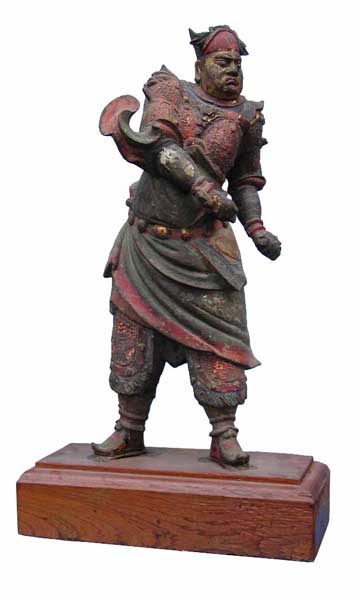
One of the stars of the Big Dipper
2026-04-15 11:51:31
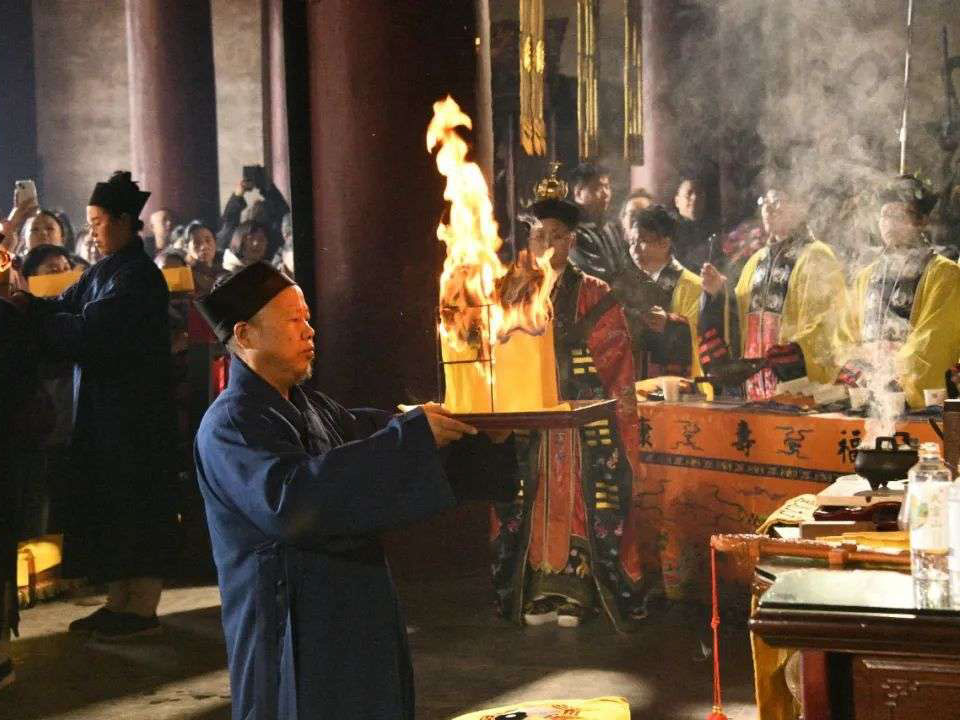
(1) The meaning of the ritual of fasting and Taoist ceremonies
2022-08-20 23:32:13
The original meaning of "zhai" was to be neat, harmonious an...
Yin GUI
2022-08-20 23:32:13
Chapter 27
2022-08-20 23:32:13
Chapter 72
2022-08-20 23:32:13
The couplet of the ancestral hall of the Wudang Mountain Temple
2022-08-20 23:32:13
Chapter 25
2022-08-20 23:32:13