


(1) Overview of Immortals
2022-08-20 23:32:13
(1) The meaning of immortals and the Difference between gods and immortals: "Immortals" generally refer to those who have achieved enlightenment through cultivation, possess extraordinary powers, are unpredictable in their changes, and are immortal. That is, "Immortals are those who preserve the truth of life and seek outwardly." The term "immortal" is also known as "immortal person" or "true person", and is collectively referred to as "immortal True". In fact, there is a distinction between gods and immortals. Gods are the innate natural deities, emerging before the division of heaven and earth, also known as the innate sages. They are the true sages that exist from birth. According to the "Bao Pu Yu", they belong to the category of deities and are "not something to be learned". For instance, celestial deities such as the Three Pure Ones, the Jade Emperor, and the Southern Pole Immortal are not something that ordinary people in the world can achieve through cultivation. An immortal is a person who has achieved enlightenment through cultivation in the mundane world after birth. They are also known as immortals who have achieved enlightenment after birth. Anyone who, through long-term cultivation, eventually reaches immortality is called an immortal. The character "shen" in ancient Chinese books is rich in connotation. It not only includes "supernatural forces", but also those that are difficult for people to predict and control are called "shen", as the "I Ching" states: "The unpredictability of Yin and Yang is called shen", and also: "Only shen can be swift without haste and reach without effort." There are also essence and qi, which are called the spirit. For instance, "Confucius said, 'Qi is the abundance of the spirit, and the spirit is the prosperity of the ghost.'" There is also the saying, "The essence and energy of the sage are called the spirit, while those of the wise and virtuous are called the ghost." There is also the saying that those who live forever are called gods, as stated in "Family Sayings" : "Those who do not eat and die are called gods." It can be seen that "god" encompasses not only innate deities but also those with essence and energy, as well as the desire for immortality. In Taoism, it is said that an old man who does not die is called an immortal. The book "Shiming" written by Liu Xi at the end of the Han Dynasty explains: "Xian" means to move. It was moved into a mountain, so the character creator wrote "mountain" beside it. Ge Hong said: "If a celestial being nourishes his body with medicine and prolongs his life with divination, guilt will not arise and external troubles will not invade. Even if he looks at it for a long time, he will not die and his old body will not change." If one follows the right path, there is no difficulty. Zhong and Lu believed that the distinction between immortals and humans lies in the different conditions of Yin and Yang. Those who are purely Yang without Yin are immortals. A person is one where Yin and Yang are intermingled. To be human is to embrace Yang and hold Yin. (2) The Image and Characteristics of Immortals Legends about immortals have been widely spread in China since the Pre-Qin period. In the "Free and Easy Wandering" chapter of Zhuangzi, it is said: "On the mountain of Miao Gu She, a deity resides there. His skin is as white as ice and snow, and he is as graceful as a virgin. He does not eat grains, breathes the wind and drinks the dew, rides on the clouds, and rides the flying dragons, roaming beyond the four seas." In the coastal area of Yan and Qi, it is said that there are three sacred mountains: Penglai, Fangzhang and Liuzhou. On these mountains, there are immortals and elixirs of immortality. All the beasts are white and the palaces where they live are made of gold and silver. In "The Biographies of Immortals", there are also many vivid descriptions of immortals: or soaring into the clouds. Fly without wings; Or ride the dragon and the clouds, and ascend to the celestial steps; Or transform into birds or beasts and float in the blue clouds; Or wander through rivers and seas, and soar through famous mountains; Or one can inhale air and refrain from eating vegetarian food. Either they enter and exit the world without being recognized by others, or they hide themselves and cannot be seen. Immortals can ascend to the heavens and descend to the earth, can hide in rivers and become invisible, possess extraordinary powers and can do anything. (3) The Classification of Immortals In the earliest classic of Taoism, the Taiping Jing, the system of immortals is divided into six grades: "The first is the divine person, the second is the true person, the third is the immortal person, the fourth is the Taoist person, the fifth is the sage person, and the sixth is the virtuous person. All of these assist in the governance of heaven." The gods govern the heavens, the true men govern the earth, the immortals govern the wind and rain, the Taoists teach the transformation of good and bad fortune, the sages govern the people, and the virtuous men assist the sages, managing the records of all the people and helping to make up for the deficiencies of the six realms. In the "Baopuzi" by Ge Hong of the Jin Dynasty, immortals were classified into three grades: "Those who ascend to immortality are called 'Yao Xian'." Wandering among the famous mountains in the Central land, one is called a celestial being of the land. When a corporal dies first and then takes off his body, it is called "the corpse decomposes immortal". In "Tian Yin Yu", immortals are further classified into five categories. In the heavens, they are called human immortals; in the sky, they are called celestial immortals; on the earth, they are called earth immortals; in the water, they are called water immortals. Those who can transform with supernatural powers are called immortals. In the "Taizhen Ke", it is further divided into nine grades: "Upper Immortal, High Immortal, Great Immortal, Immortal, Mystic Immortal, True Immortal, Spiritual Immortal, and Supreme Immortal". (4) The celestial realms and blessed Lands under the jurisdiction of Immortals According to the "Yunji Qiqian", Taoism has a theory of thirty-six heavens (four days in the Sacred Realm, four Brahma Heavens, and twenty-eight days in the Three Realms), and all thirty-six heavens are governed by the Three Precious Deities. The realm of desire is characterized by "color and desire", "the junction of Yin and Yang, and the birth of the people". Above the realm of desire lies the realm of form and the realm of no form. "Human beings have a long lifespan", but they have not ended the cycle of birth and death. The Four Brahmas, also known as the Seed People's Heaven or the Holy Disciple's Heaven, is "beyond the reach of the three calamities to sever life and death." The Three Pure Realms are the abode of the Nine Sages, the Nine Immortals and the Nine Immortals. The Taoist scriptures record: In the vast sea of the eight directions, there are ten continents and three islands, all of which are rarely visited by humans and are places where immortals rest. There are immortal herbs that can kill. The ten continents are Zu Continent, Ying Continent, Xuan Continent, Yan Continent, Chang Continent, Yuan Continent, Liu Continent, Sheng Continent, Feng Lin Continent and Ju Ku Continent. The Three Islands refer to Kunlun, Fangzhang and Pengqiu. Among the various famous mountains on earth, there are ten Great Caverns, thirty-six minor caverns and seventy-two blessed Lands ruled by immortals and immortals. Among them, the Ten Great Caverns and the thirty-Six Small Caverns are the places where the heavens sent a group of immortals to rule. The seventy-two blessed lands are located between famous mountains and great rivers. God has commanded true people to govern them, and they are places where many people can attain enlightenment. (5) Immortals are real and can be Learned. Taoism holds that immortals are real. A large number of Taoist records, stories and legends about immortals all use vivid examples to prove the existence of immortals. In Ge Hong's "Inner Chapters of Baopuzi", the two chapters "On Immortals" and "On the Mundane" refute various viewpoints that doubt the existence of immortals and prove that immortals do exist. Some people believe that what exists must perish and what is born must die. This is the common sense of human beings. "I have never heard of anything that lasts longer than the spring of ten thousand years and never fades away." The Baopuzi says: "The beginning and end of life and death are the general principles. Their similarities and differences are mixed, and they may or may not be. They change in all kinds of ways, are strange and unpredictable. Things are right and things are wrong. The essence has not been adhered to, and they cannot be unified." It is believed that the universe is boundless and the crane will live forever, so not all people and things follow the law of life and death. Some people, starting from the fact that everyone is born of qi and that "all qi experiences have a certain limit", conclude that all people are "ordained by heaven and have no one else", and all have life and death. The Baopuzi points out that people are different and things change, and thus there exist special people who can become immortals. Most ordinary people do not "know", do not "follow the way", do not believe in immortals, and are obsessed with fame and fortune. Naturally, they cannot become immortals or see them. The chapter "Opposing the Mundane" continues to argue that immortals do exist. Some people say, "Turtles can sting in the soil and cranes can fly to the sky. They can make people sting for a moment and fly for an instant, but still cannot. How can their longevity be learned?" The Baopuzi points out that although humans cannot "hibernate in the earth" or "fly to the sky", among all things, humans are the most intelligent and have their own superior qualities over animals. "True men only learn the Dao to prolong their lives and follow the method of eating qi to cut off food, without learning to hibernate in the earth or fly to the sky." This does not prevent them from cultivating immortality. Taoism holds that everyone possesses the nature of the Tao. "My life lies in myself, not in heaven," and all can cultivate the Tao and become immortals. First of all, the Dao gives birth to all things, and the Dao is contained within all things. However, the Dao is eternal. "The Dao is invisible; it is made clear by birth" (see the "Inner Contemplation Sutra of the Supreme Elder Lord"), "Birth is the other form of the Dao" (see the "Commentary on Laozi's Thoughts"). Therefore, if "students" adhere to the Dao, they can be as eternal as the Dao. "Deep roots and solid roots" can lead to "longevity and long-term vision". The Inner Chapter of Baopuzi, "Zhi Li", states: "The wife is in the qi, and the qi is in the human. From heaven and earth to all things, everything follows the qi to thrive." Therefore, as long as one accepts the qi, adheres to the one, returns to simplicity and roots, one can achieve immortality and become an immortal. Secondly, by applying the theory of the relationship between form and spirit, it is demonstrated that one can cultivate the Tao and become an immortal. By analyzing the changes in things and the effects of medicine and the like, we can infer that immortals can be achieved, immortals truly exist, and immortals can be learned. For this reason, Taoism has developed a complete set of theories on immortals and cultivation techniques.
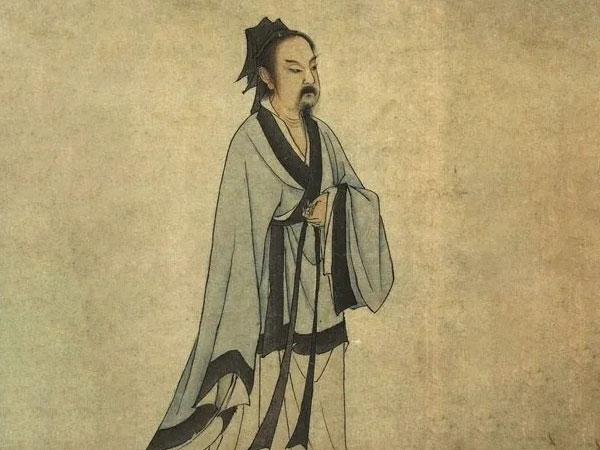
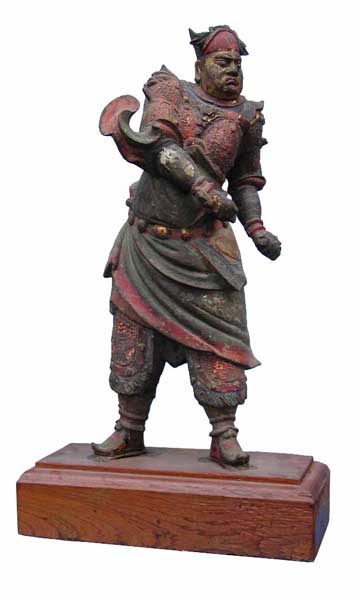
One of the stars of the Big Dipper
2026-04-15 11:51:31
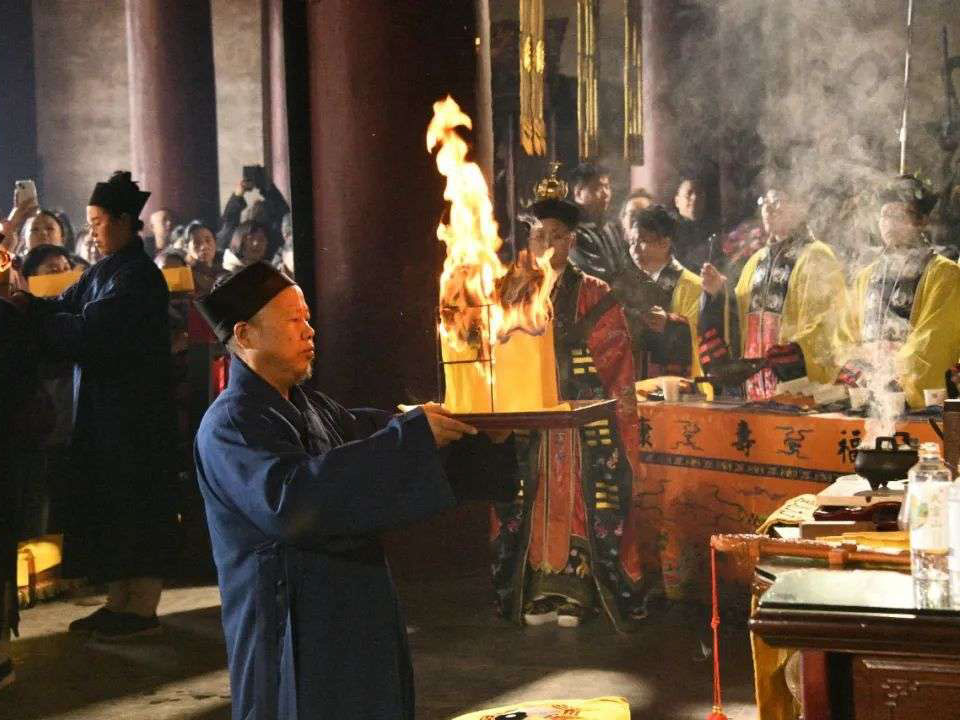
(1) The meaning of the ritual of fasting and Taoist ceremonies
2022-08-20 23:32:13
The original meaning of "zhai" was to be neat, harmonious an...
Yin GUI
2022-08-20 23:32:13
Chapter 27
2022-08-20 23:32:13
Chapter 72
2022-08-20 23:32:13
The couplet of the ancestral hall of the Wudang Mountain Temple
2022-08-20 23:32:13
Chapter 25
2022-08-20 23:32:13