


(II) Doctrinal Interpretation
2022-08-20 23:32:13
(1) Respecting the Tao and Valuing Virtue In Taoism, what people most Revere are the Tao and virtue, and they are still the most frequently mentioned. Taoist scriptures also place particular emphasis on the exposition of the Tao and virtue. The "Yunji Qiqian" takes the "Tao Te Section" as its first part, the "Tao Te Doctrine Shu" regards the "Tao Te Yi" as the first principle of Emperor Mingzong, and the "Xuan Gang Lun" takes "Tao Te" as the outline of Taoism. In fact, Taoism's high regard for morality was established as early as the time when the Supreme Ruler manifested himself. Laozi, the Supreme ruler, passed on his teachings through the two chapters on morality. The doctrine of respecting the Tao and valuing virtue also originates from the discussion in the Tao Te Ching that the Tao gives rise to moral education, and it states: "Therefore, all things respect the Tao and value virtue." Taoism respects the Tao because "Tao" is the main body of the faith of Taoists. All the beliefs and practices of Taoism are centered around "Tao". In summary, there are mainly four aspects: First, "Tao" is the original driving force that gives birth to all things in the universe and the root of creation. Secondly, the "Dao" is the foundation of the divine, which is transformed from the qi of the three elements into the Three Pure Ones and converges to form the Supreme Elder Lord. Thirdly, the "Tao" possesses the greatest virtue. It takes nothingness as its essence, tranquility as its foundation, and softness as its application, engaging in neither action nor contention. Fourthly, the "Tao" is truly eternal and unchanging, neither born nor perishing. It is present at all times and in all places, enduring in the universe. The greatness and sanctity of the "Tao" can be said to be reflected everywhere. Since it has already been described in the previous "Overview of Catechism", it will not be elaborated further. In conclusion, due to the greatness and sanctity of the "Tao", Taoism regards the Tao as the highest faith and teaches people to study, cultivate, follow and promote the Tao. The highest manifestation of the nobility and greatness of the Dao is "virtue". The Dao creates all things nourished by virtue, and the deities are respectable because they possess the noblest virtues. Therefore, Taoism respects the Tao and values virtue. In terms of the interpretation of Dao and De, the "Daoist Doctrine: Moral Righteousness" states: "Morality is one, yet it has two meanings, one yet not two, and two yet not uniform." That is to say, the Dao and Virtue are originally an integrated whole, because the Dao is manifested by Virtue, and there are differences in principle and meaning. They can be separated yet cannot, but they cannot be combined to be called the Dao. For virtue is not the root of creation or the foundation of the divine. However, when people believe in and cultivate the Tao, they must take "virtue" as the foundation to verify and achieve the Tao. From the above elaboration, we can understand that those who follow the Tao must possess noble virtue, and only with noble virtue can one attain the Tao. Therefore, the cultivation of the Tao should be based on virtue. For the vast number of believers and practitioners of the Tao, the prerequisite for cultivating the Tao is to establish virtue. To establish virtue, one must constantly accumulate merit in daily life. The key lies in enhancing self-cultivation and having good moral character. Strive to act in accordance with the laws of the "Tao" in both inner cultivation and external behavior. Quiet and desireless, gentle and uncompetitive, with a broad mind. Not seeking fame, not seeking profit, not being self-important, not being self-praising, not being jealous, not lying, and not indulging in the beauty of music and delicious food. Rejoice in others' good fortune, have compassion for their suffering, help them in urgent need, and relieve their poverty. Bestow kindness without expecting anything in return, do not kill for self-entertainment, benefit the world and others, have a kind heart towards all things, and be upright and honest. Be in harmony with the great Way. If one practices in this way, virtue will accumulate and the foundation will be established. Once the foundation is established, one can cultivate the Tao and achieve enlightenment, and attain the Tao and become an immortal. (2) The doctrine of "Valuing life in the Way of Immortals" is the core tenet of Taoist beliefs and reflects the multi-faceted characteristics of Taoism. The so-called "Immortal Way" refers to the pursuit of becoming an immortal and attaining enlightenment in Taoism. Taoism believes in the learnability and reality of immortals. The lives of immortals are carefree and unobstructed, and they will never perish. They are all true immortals who have achieved enlightenment. It is the personality image of those who study and practice the Tao and believe in it. An important aspect of attaining immortality and enlightenment is to achieve longevity and long-term vision through self-cultivation. Therefore, Taoism teaches people to value life, to be reborn, and to enjoy life, to improve the quality of life to the level of immortals, and to achieve the goal of the unity of life and Taoism, which is to attain the Tao. The Classic of Saving People once summarized this key point as: "The path of immortality values life; there is no measure for human beings." The Taoist doctrine of "valuing life and immortality" mainly stems from two aspects. One is the belief in immortals during the Qin and Han dynasties. The Nanhua Jing states that on Mount Miao Gu She, a deity lived there. When one is in the divine state, they can refrain from eating grains and only inhale wind and drink dew. One can ride the clouds and ride the dragon, traveling far and wide across the four seas. It is also said that there is a kind of person who, in his old age, is tired of the world and eventually ascends to immortality. The "Yiwen Zhi" of the "History of the Han Dynasty" generally defines immortals as those who preserve the truth of life and are in the realm of sharing life and death. The second is the principle and meaning of the way of eternal life and long-term vision as expounded in the Supreme Tao Te Ching. When Zhang Daoling, the founding Celestial master, established the religion, he integrated the belief in immortals with the principles of the common Way, thus completing the system of Taoist faith. In his "Commentary on Laozi Xiang Er", he said, "Life is a different form of the Dao." It is also said that "The Dao's intention is to despise the death of immortals." The purpose of practicing Taoism is to "wish for eternal life only". This thus constitutes the important doctrine that "immortality values life". The True religion believes that through cultivation, people's material life can be prolonged and their spiritual life can be elevated, ultimately achieving immortality and enlightenment. For this reason, throughout the ages, in the pursuit of faith in other paths, the high Sages have actively explored the ways of life cultivation and summarized rich theories of self-cultivation and cultivation methods. Driven by the spirit of "My life is in my own hands, not belonging to heaven and earth", I am determined to "save myself and others", which reflects the Taoist attitude of valuing life, enjoying life and caring for the world. Cultivating the Tao to achieve immortality and becoming an immortal requires people to live with a positive and detached attitude towards life. Human life is born from the spiritual essence of the Tao and the universe. It is hard-won and should be cherished all the more. The requirements for its cultivation mainly lie in two aspects: the refinement of one's character and moral character, and the cultivation of one's physical form and life. Taoism refers to it as "cultivating both life and nature", so that one can possess both spirit and form. The cultivation and improvement of one's character and moral character are the foundation for the refinement of material life. The standard for cultivating one's character and moral character is to study and practice the same virtue as the "Tao", being quiet and having few desires, being weak and not competing. Eliminate all selfishness and desires, be indifferent to fame and fortune, and let the spirit not be burdened by external things, so that life can be nourished. At the same time, one should also widely perform good deeds, benefit others and accumulate merit and virtue. The cultivation of life is based on moral cultivation, nourishing the essence, energy and spirit. It promotes the health and longevity of life through cultivation methods such as eye-feeding guidance, concentration and concentration, sitting and forgetting the fetal breath, essence and qi refinement, and static and dynamic exercises. Ultimately, one reaches the contract of the divine form and becomes an immortal, attaining enlightenment. (3) The origin of the Three Caves: The origin of Taoism lies in the Three Caves, which are regarded as the Three Elements. The fundamental beliefs and the religious system of Taoism all originate from here, making it the fundamental origin of Taoism. The Three Caves Sect takes the "Three Elements" as the beginning of the universe's unification. It is said that "the three elements are divided into three, the three elements change into three qi, the three qi change into three talents, and when the three talents are nourished, all things are thus ready." However, "The essence of the three caves is the same Dao Qi. Once the Dao qi is pushed, its application is divided into three." This is the basic discussion of the Three Caves Sect Yuan in "Yunjie Qiqian". In summary, the "Dao" qi evolved into the three elements, which are respectively: the first mixed cave, Tai Wuyuan; The second red Mixed is too boundless. The third is the Mysterious and Silent Xuan Tong Yuan. From the three elements, it transforms into the three qi, which are the primordial, the original and the mysterious qi. Then, from the three qi, all things are born. The process of its creation and opening up is the beginning of the primordial energy before the mixing. When the vital energy flows, then the universe stands firm. Then, all things are born from the qi of the primordial, the primordial and the mysterious. In the Tao Te Ching, it is said: "The Tao gives birth to One; one gives birth to two; two gives birth to three; Three gives birth to all things." As the faith origin of the "Tao" transforming all things, the Three Caves Complete Yuan has an even more important aspect, which is the Three Yuan, namely the Three Treasure Lords. On the first day, Baojun was reborn from the primordial void of the Mixed Cave. The second Lingbao Lord was reborn from the primordial void of the Crimson Crimson. The third Divine Treasure Lord was born from the primordial transformation of the Mingji Xuantong. The Three Jewels are respectively governed in the Three Pure Realms, so the Three Jewels are also called the Three Pure Realms. Lord Tianbao was ruled in the Yuqing Realm, that is, the Qingwei Sky, whose energy began to turn green. Lord Lingbao was ruled in the Upper Qing Realm, that is, the Yu Yu Heaven, whose energy was primordial yellow. Lord Shenbao was ruled in the Taiqing Realm, also known as the Great Red Heaven, whose aura was mysterious and white. The Three Elements all share the same spiritual essence. Therefore, although the names of the Three Precious Deities are different, they are essentially the same. The Three Treasures, also known as the Three Pure Ones, are officially called the Jade Purity Primordial Heavenly Lord, the Upper Purity Lingbao Heavenly Lord, and the Supreme Purity Morality Heavenly Lord (The Supreme Elder Lord) in Taoism. He is the supreme deity in Taoism, the patriarch of deities and the ancestor of creation. He was also the leader of the Taoist scriptures and passed down the thirty-six true scriptures of the Three Caves for Taoism. The "Three Caves Sect Origin of Taoism" states: Lord Tianbao expounds the twelve scriptures and is the true leader of the cave sect. Lord Lingbao expounded the Twelve Classics and was the leader of the Dongxuan Sect. Shenbao Jun expounded the Twelve scriptures and was the leader of the Cave God sect. The three caves combine to form thirty-six supreme sutras. The Three Cave Classics each have their own objects of instruction, in line with the levels of learning and practicing the Tao. For those who start their humanistic cultivation, they first enter the immortal stage and reach the realm of no burden. Therefore, the initial teaching is the Divine Treasure Sutra of the Cave God. Secondly, as wisdom gradually becomes more refined and proficient, one enters the middle realm. Therefore, the Chinese teachings are based on the esoteric and Spiritual Treasure Sutra. Finally, one ascends to the realm where wisdom is applied without any hindrance. Therefore, one is taught the Dongzhen Tianbao Sutra. The aim of all these is to guide the common people to cultivate immortality through the culture of scriptures and teachings, and to achieve enlightenment from the ordinary. (4) Quietness and few Desires: Chapter 45 of the Tao Te Ching states, "Quietness is the uprightness of the world." In "Laozi's Commentary on Xiang Er", it is explained that "The Tao is always free from desires and enjoys tranquility, thus keeping heaven and earth always upright." Thus, it clearly and unmistakably tells people that when learning and practicing the Tao, one should have no private desires of one's own and enjoy tranquility. Only in this way can one conform to the nature of the "Tao". The Tao, with its pure and serene nature, generates and nurtures all things. It never considers what it should receive in return or what it desires, and waits for all things without any desire. If human society also adheres to the idea of "tranquility" in governing the world and cultivating oneself, the world will be harmonious and peaceful, people will enjoy better rest and recuperation, and their lives will be elevated. Therefore, those who study and believe in the Tao must first learn to understand tranquility and take constant tranquility as the behavioral standard, so as to achieve the pursuit of attaining enlightenment through cultivation. For this reason, the "Classic of Purity and Tranquility" summarizes the essence of purity and tranquility by saying: "If a person can always be pure and quiet, both heaven and earth will return." The doctrine of tranquility has been elevated to a very important level. The doctrine of tranquility in Taoism interacts and corresponds with turbidity and movement. The Classic of Purity and Tranquility states: "Clarity is the source of impurity, and movement is the foundation of stillness." It means that clarity is the source of turbidity, and movement indicates the condition of stillness. And the cultivation of the Tao is to return from impurity to purity and from stillness to vitality through practice. It makes the heart clear and peaceful, and wisdom arises from stillness. The original driving force of life is nourished and enriched, and the quality of life is improved. This relationship and manifestation of the mutual generation and transformation of clarity and turbidity, movement and stillness, is precisely the complete embodiment of the purity and tranquility of the "Tao". The "Sutra of Purity and Tranquility" states: "The Tao has both clarity and turbidity, both movement and stillness." When one cultivates the great way and practices the principle of the mutual generation and transformation of clarity and turbidity, movement and stillness, it is in line with the essence of the pure and quiet way. A dogmatic understanding of tranquility or regarding the dead stillness and stillness as the artistic conception of tranquility cannot fully conform to the meaning of the "Tao". So, what kind of spiritual practice can lead to the true state of tranquility? In the "Seven Signs of Yunji", it is said: "To concentrate and accumulate one's spirit, not to be mixed with external things, is called clarity." To defy the spirit and remain calm and still is called stillness. In the "True Immortal Direct Pointing Aphorisms", it is also stated: "Clarity means purifying the source of one's heart, and stillness means calming the sea of qi." When the source of the mind is clear, external things cannot interfere; when the nature is stable, the mind will be clear. When the sea of qi is calm, evil desires cannot arise; the essence is complete and the abdomen is full. The core principle is to think less and desire less. However, in this life, fame, fortune, and sensual pleasures constantly stimulate people's desires and keep them restless. However, as those who cultivate and devote themselves to the Tao, they cannot be exactly the same as ordinary people in the mundane world. Instead, they should truly think and aspire to the Tao, and strive to have few thoughts and desires. The Tao Te Ching says, "Nothing is more harmful than the desire to gain." It means that the main cause of disasters is lust. So one should "go to extremes, to extravagance and to extravagance." That is to say, one should have "few desires". The so-called "few desires" means that people should have a correct attitude towards the pursuit of fame, fortune, sound and color, and wealth in the mundane world. They should not resort to extreme behaviors to seek them, nor should they have improper thoughts or excessive expectations. Excessive desires not only harm one's physical and mental health but also complicate interpersonal relationships and become the root cause of social evil. One should take the principle of having few desires as the behavioral guideline and ultimately reach the highest realm of "the way is always free from desires and brings joy and tranquility". (5) The Way of Nature and non-action takes nature as its law and conducts oneself in the world and dealing with things through non-action, thus achieving success in all things and also in oneself. Its meaning is simple yet so profound. Nature and non-action are two doctrinal terms that are both distinct and closely related. As for nature, the Tao Te Ching states: "Man follows the earth, the earth follows heaven, heaven follows the Tao, and the Tao follows nature." The True man on the River commented: "The nature of the Dao is natural and there is no way to follow it." It is explained that the nature of the "Tao" is natural, and the natural laws of the Tao are emulated by both heaven and earth. Human beings live in the universe, and the highest law of their actions should also follow the laws of nature that created them. Nature has no fixed pattern. The Dao gives birth to all things, and all things grow naturally according to their own natures, without holding or waiting, without any imposed factors, thus ensuring the harmony of nature. When people cultivate the true way, they should follow the natural nature of the Way, conform to the laws of natural changes in heaven and earth, respect the characteristics of all life in nature, and strive to maintain the harmony of nature. For all things in the world, don't force them; instead, follow the natural laws of their occurrence and development. One should be content, know when to stop and when to be constant, so as to keep the mind peaceful and elevate the spirit. However, to truly enter or reach the realm of "nature", one must practice the approach of "non-action" in dealing with the world. The Tao Te Ching says, "The sage does nothing and teaches without words." It is also said: "The Dao always does nothing but does everything." Tell people that the "Tao" is the practice of non-action and through the function of non-action, all things are accomplished, embodying the great nature of the "Tao". Therefore, the so-called non-action does not mean being passive and not doing anything. Instead, it means opposing "action", following the laws of nature, and not forcing or forcibly interfering with the natural occurrence and development of things. Only when things are natural and natural can they be perfect. For this reason, Wang Jingyang wrote in his "Mingdao Chapter" : "The way of nature is originally non-action; if one adheres to non-action, then action will follow." Admonish those who practice Taoism to follow the true path of natural non-action and not to have any attachments. Therefore, in the early days of Taoism, "non-action" was regarded as the fundamental doctrine that conforms to the will of the Tao, follows the will of Heaven, and leads to peace. It is also pointed out that if one can practice the Dharma and the way of non-action, governing the body will be beneficial to the spirit, and governing the state will be beneficial to people. It reflects Taoism's fundamental attitude towards social politics and self-cultivation in dealing with the world. But in this world, people always have desires for fame, honor, fine clothes, delicious food, treasures, spacious rooms, and sound, color, and wealth. However, when these desires exceed the natural law of non-action, various harms of action will arise, transforming into greed. In addition to adhering to the doctrine of tranquility and few desires, monks should also maintain a simple and non-actional attitude towards life. Eliminate greed, be indifferent to fame and fortune to clarify one's aspirations, do not force oneself to act, and the basic aspiration should not be divorced from social reality. Take the cultivation of the whole body as the goal, avoid danger and misfortune, and ultimately reach the state of forgetting one's form, having no attachment, and naturally doing nothing. In this regard, the "Yunji Qiqian" also explains from two aspects: First, one should avoid harm. Stay away from suspicion, from villains, from respect, and from conduct. Be cautious when eating, when the tongue is sharp, when causing trouble, and when engaging in physical exertion. Always reflect on your mistakes and correct them to do good. Second, one must be well-versed in astronomy, geography, human affairs, ghosts and gods, and timing. On the basis of actively understanding nature, society and interpersonal relationships, one can better learn and practice the Tao. (6) Gentleness and non-contention Gentleness and non-contention are the doctrines of Taoism for self-cultivation and life in the world. Laozi, through his observations, thoughts and analyses of nature, profoundly expounded the principles that "softness overcomes hardness and weakness overcomes strength" and "Man is gentle in life but strong in death." Therefore, the "Tao" employs softness and weakness. It is extremely necessary for Taoists to believe in and study the Tao, and to regulate and cultivate themselves with the teachings and thoughts of softness and weakness. The word "weakness" seems to imply fragility and lack of spirit on the surface, but in Taoist doctrines and thought, it is not merely the literal meaning. Its essence is mainly reflected in two aspects. First, the essence of life's existence and continuation lies within its fragility. All kinds of creatures in nature can display their own different kinds of flexibility because they have life. This is even more so for human beings. Without life, people and things show a strong and rigid nature. Therefore, the Tao Te Ching says: A person is weak in life but strong in death. Teach people to cultivate the Tao, maintain the flexibility of life, and strive for longevity and long-term vision. In inheriting and expelling this doctrine, Taoism requires people to attach importance to the cultivation of softness and always adhere to the principle of "concentrating energy to achieve softness". Achieve "moderate breathing, smooth and subtle." Act in accordance with the circumstances, maintain the peace and tranquility of the body and spirit, weaken the qi, and nourish the body and spirit. Second, gentleness contains a positive philosophy of life. Taoism values softness and weakness, advocating that all actions should not be too rigid. The rigid are prone to being crushed first, while the strong are likely to be defeated first. In spiritual practice, one should wait for action in stillness, remain gentle and not act rashly, thereby broadening one's mind of tolerance. Learn the spirit of water, which is gentle yet capable of overcoming difficulties, and with a positive attitude towards life, deal with the world and things, and nourish the body and mind. The Taoist doctrine of "non-contention" is interrelated with the idea of "weakness". The so-called "non-contention" is stated in the "Suide Jing" : The way of heaven is to benefit without causing harm. The way of a sage is to act without contention. That is to say, the operation of all things in heaven and earth and human behavior should follow nature and not be forced, which is very similar to the doctrine of natural non-action. Therefore, there is also the saying of "non-action and non-contention". The spirit of the doctrine of non-contention is profoundly expounded in the Tao Te Ching through its discussion of "ice". The Sutra of Virtue states: The highest good is like water; water benefits all things without contention. Water, with its unique gentle and uncompetitive nature, flows wherever it is low, square or round, selflessly nourishing all things for people's use, bringing blessings to both people and the growth of all living things. There has never been any behavior of self-reliance, self-righteousness, self-centeredness or self-conceit. It can be said to be the ultimate perfection. For this reason, at the very beginning of establishing the religion, the Ancestral Celestial Master Zhang Daoling particularly advocated the doctrine of the Supreme non-contention, taking non-contention as an important principle for the cultivation of Taoists. In the "Commentary on Laozi Xiang Er", it is said: "The sage does not contend with the common people. If he does contend, he will avoid it and pass away." Those who cultivate the Tao and seek immortality should also adhere to the principle of "not expending painstaking thoughts to seek wealth for health preservation, not robbing the emperor for a salary to glorify oneself without merit, not indulging in the five flavors to indulge in indulgence, not wearing clothes and shoes, and not competing with the common people." Later on, successive Taoist masters, who sought refuge from the world for personal gain and fame, were willing to retreat to the deep mountains to practice frugally and cultivate themselves, and developed a kind heart to help the world and others. This is the embodiment of the doctrine of "not contending". Therefore, for a true learner and cultivator of the Tao, one should practice the doctrine of gentleness and non-contention, cultivate oneself through gentleness and non-contention, not compete with others for fame, fortune, and glory, be content, know when to stop, have few desires, not rely on oneself, not be self-evident, not be self-righteous, not self-deprecating, and not self-conceited. Reward oneself for doing good deeds and always keep a heart to help the world and benefit others. Thus, one can overcome and improve oneself, which is conducive to the peace and development of society. (7) In Taoism, the purpose of teaching and practicing Taoism is to restore life to its original state through one's own cultivation and refinement. Taoism refers to this as "returning to simplicity and nature". Taoism holds that the original nature of human beings is simple and innocent, close to the nature of the "Tao". So people often say that children are innocent. However, as one grows older, thoughts and desires keep emerging. Coupled with the influence of different social environments and the temptation of erotic and material possessions, one's original life essence is constantly consumed, and one's original simple nature is also obscured. If one further indulges in endless desires, it will seriously damage one's character and health, and one will go in the opposite direction from then on. The purpose of learning and practicing the Tao is to bring one's nature and life back to a simple and innocent state. Here, "Pu" refers to the true self, which is extended to mean the simple and unadorned state of the "Way", referring to the original nature of the true and constant Way. However, to return to simplicity, one must embrace it. The Tao Te Ching says, "When seeing simplicity, embrace simplicity; have few selfish desires." That is to say, one should embrace the true essence of adhering to the truth and nurturing life, so as not to be lured by material desires and not to be troubled by selfish thoughts and distractions. The most important thing here is to try to have as little selfishness and desire as possible. One should be kind and honest in life, abide by public morality in actions, and live frugally, so as to gradually return one's nature to a simple state and be in harmony with the Dao. And in the process of life cultivation. One should, on the basis of a good mental foundation, restore the dissipated vital energy of life through cultivation to maintain good health. Then, through internal cultivation techniques such as refining essence into qi, refining qi into spirit, and refining spirit back to emptiness, one's life returns to the state of the true path and achieves immortality and enlightenment. On the path of returning to simplicity and nature in spiritual practice, the actions of many highly accomplished and virtuous people have set an example for later generations of those who study and cultivate the Tao. At the end of the Han Dynasty, Wei Boyang, the immortal, "held a simple heart and was not content with power and honor", but devoted himself to cultivation. Immortal Ge Hong did not follow the changes of the world. His words were straightforward and honest, and he avoided mocking jokes. He remained silent all day long and was affectionately called a man of simplicity by the people of his country. And it was proposed that one should "adhere to the simplicity of all major principles and preserve the true source." Ji Kang of the Jin Dynasty was fond of Taoism and also took "valuing the body over material possessions, aiming to maintain simplicity and cultivate a pure and true nature" as his guiding principle for cultivation. Today, why can't those who study and practice Taoism further promote the doctrine of upholding simplicity and truthfulness, and leave behind a sense of simplicity and truthfulness for future generations? (8) The purpose of the Taoist teachings carried by the Heavenly Way is to purify people's hearts, calm their minds, encourage them to be kind-hearted and generous, and help the world and others, thereby playing a positive role in the harmonious coexistence of society and people. Therefore, from its own perspective, Taoism has formed a doctrine that suits its own characteristics in the concept of retribution for good and evil. This doctrine is the theory of the bearing of the Heavenly Way. That is to believe that there is a cycle in the way of heaven and that good and evil have a bearing. Its core subject still revolves around the issue of life and death, inheriting the doctrination thought in "Laozi Xiang Er's Commentary" that "the Tao sets up life to reward the good and death to punish the evil." The concept of "bearing and carrying" in Taoism originated from "Taiping Ji", meaning that if ancestors accumulate virtue and do good deeds, it will benefit their descendants. If the ancestors repeatedly commit evil deeds, the descendants will suffer innocent disasters. That is what people often say, "The previous generation plants trees, and the next generation enjoys the shade." If disaster strikes in the past, misfortune will befall the future. Its characteristic is that seniors and juniors pass on responsibility to each other. However, there are two interpretations of the discussion on "bearing and bearing" in the Taiping Jing. The first one is that "the successor is the front and the negator is the back." The term "inheriting" means that our ancestors acted in accordance with the will of heaven. They made minor mistakes without realizing it. Over time, these mistakes accumulated and became numerous. In the future, people will be innocently deceived by their faults and suffer from their disasters one after another. It is the ancestors who have wronged the descendants. The second point is that "the three elements coexist and nourish all things, which are called wealth. Wealth coexists with desire, desire coexists with evil, evil coexists with good, good coexists with cunning, cunning coexists with harm. If they do not cease, there will be chaos and defeat. If defeat does not cease, it cannot be controlled again. Because when it is traced back to its root, it is called bearing and bearing." This means that the three unities of heaven, earth and man coexist and nourish wealth. When desires are excessive, evil will arise, to the extent that it cannot be restored. Only when wealth is exhausted will one realize that they have returned to the source of nothingness. One is about the inheritance of good and evil, and the other is about the cycle of the way of heaven. From this, it can be seen that the cycle of retribution in the way of heaven is caused by people's evil deeds and desires, and brings great harm to future generations and the natural world (including society). To prevent people from suffering harm and disasters, they should study the Tao, believe in it and practice it to get rid of the misfortune of "bearing burdens". Cultivating faith and practicing the Tao requires people to follow the behavioral norms of the Tao, perform external deeds in accordance with the will of the Tao, accumulate merit, and be kind and beneficial to others. In the theory of bearing and bearing, Taoism also particularly attaches great importance to and believes in the retribution of good and evil in this life. The Taiping Jing also states: Good things arise on their own, evil things fall ill on their own. Both good and bad events originate from within oneself. In the "Commentary on Laozi's Thoughts", it is said: The Tao sets up life to reward the good and death to intimidate the evil. When doing good, the Tao follows. When one does evil, harm follows. It is believed that good or bad fortune, misfortune, life and death are all punished according to one's good or evil deeds. Therefore, those who believe in and cultivate the Tao should do good deeds and accumulate virtue, so that their spirits can communicate with heaven, and only then can they achieve immortality and become immortals. The Taoist doctrines of the inheritance of good and evil and the retribution for the present life have had a very significant influence on later generations. In the "Chapter of Response and Retribution", it is said: "Fortune and misfortune have no door; they are only summoned by oneself." The retribution of good and evil follows closely like a shadow. In the universe, there is a god in charge of faults. Doing good deeds and accumulating virtue can prolong one's life and bring good fortune, and even lead to immortality. Those who have committed evil deeds shall be punished with a reduction in their life expectancy depending on the severity of the offense. Encourage people to pursue a positive outlook on life. At the same time, it also integrates the theory of reincarnation and retribution. Those who practice Taoism and do good deeds can ascend to the immortal realm, while those who commit evil deeds will be punished in hell. After a mortal's death, his family members should believe in the faith and do good deeds, recite scriptures and pray to the Heavenly Lord of Salvation for his salvation. The above-mentioned are the most fundamental doctrines of Taoism. Although, all the doctrines of Taoism, such as the complete reverence for the Yellow Emperor and the Old Man, the unity of life and Taoism, the true one and the mysterious way, the unity of form and spirit, and the creation of form and sitting in oblivion, have not been fully expounded and explained. However, through these core and fundamental doctrinal ideas, it is believed that it can help everyone truly understand and know Taoism.
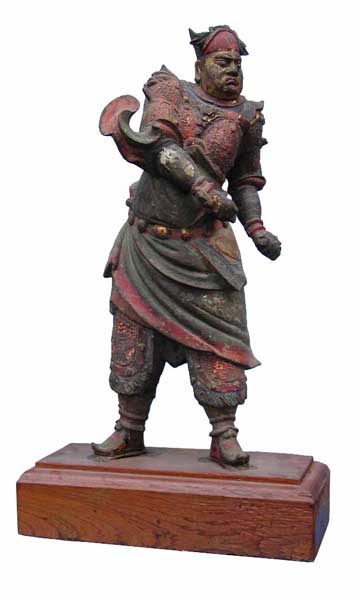
One of the stars of the Big Dipper
2026-04-15 11:51:31
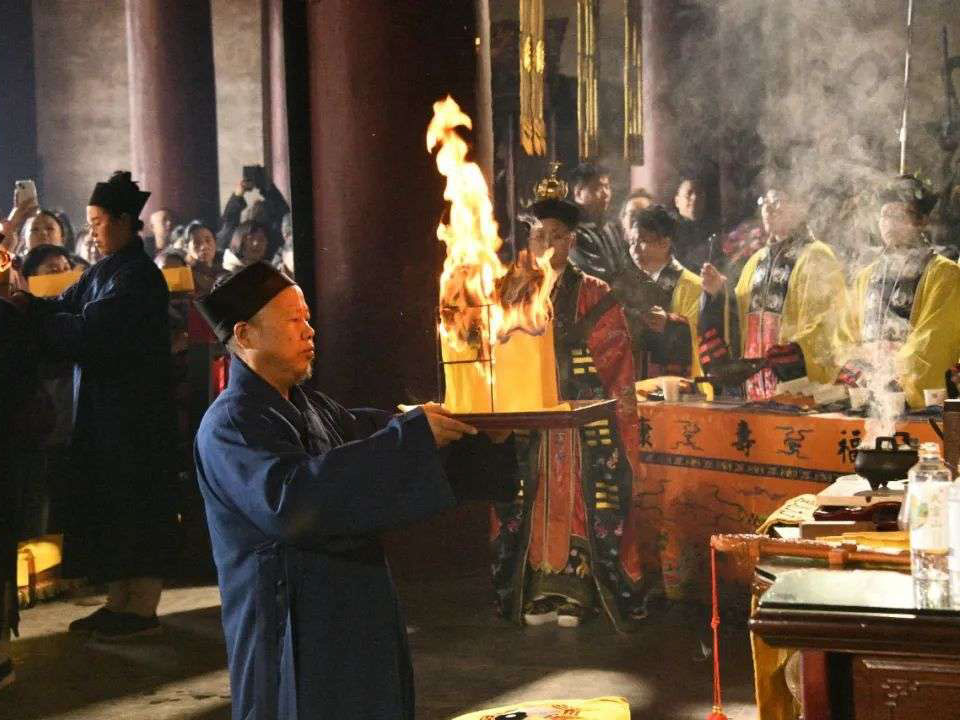
(1) The meaning of the ritual of fasting and Taoist ceremonies
2022-08-20 23:32:13
The original meaning of "zhai" was to be neat, harmonious an...
Yin GUI
2022-08-20 23:32:13
Chapter 37
2022-08-20 23:32:13
Chapter 47
2022-08-20 23:32:13
"Thunderbolt head"
2022-08-20 23:32:13
Chai Daoren
2022-08-20 23:32:13