


(1) Overview of the Doctrine
2022-08-20 23:32:13
(1) Doctrines are the fundamental principles of faith and practice. The ideological and cultural aspects of Taoism encompass a wide range of aspects, including Taoist history, classics, methods of practice, temple architecture, writings of figures, immortals' magic, and religious precepts and rituals. However, as a religion, Taoism is not only a culture but also has its unique ideological system and comprehensive philosophical doctrines. It has established its own beliefs on this rich ideological system, thus providing a goal for faith and practice for the vast number of those who follow and devote themselves to Taoism. That is to say, the ideological culture has a certain broad sense, encompassing all aspects of Taoism. Within this broad ideological culture, there is a consistent core meaning, that is, the essence or consistent spirit contained in the ideological culture of Taoism, which has considerable stability and continuity in the belief of Taoism. This is the doctrine of Taoism. Just like a towering tree with a well-developed root system and luxuriant branches and leaves, the roots and trunk are the main body that sustains the tree and enables its life to continue and thrive. The doctrines of Taoism are the main body for the continuation and development of its lifeblood. In the spiritual practice of Taoism, all methods and rituals must not deviate from the fundamental principle of religious doctrines. If our faith and practice deviate from this fundamental principle, we will be accused by the insightful people of sacrificing the true for the false and forgetting the root for the branch, thus leading our faith and practice astray. (2) Differentiation of Doctrines and Doctrines The doctrines and doctrines of Taoism form an organic whole. Fundamentally speaking, it is not appropriate to make distinctions based on words. The spiritual essence of religious doctrines is to teach people what to believe in, what the highest realm of faith is, what rules to follow for cultivation, how to restrain and regulate behavior, and ultimately make cultivation and faith conform to the requirements of religious doctrines and not deviate from the purpose of the doctrines. In the "Yunji Qiqian: The Origin of Daoism", it was once said: "Teaching is to inform, to speak with reason and righteousness." In his writings, Mr. Chen Yingning stated that for every religion, there must be a kind of belief. Where there is a belief, there must be a reason for it. To explain this reason in language and words so that people can understand and easily get started, this is what religious scholars call "doctrine". A certain religion, based on its classic works, concisely and generally puts forward several words or sentences as the guidelines for believers' daily thoughts and actions, and these can be in line with all the "doctrines" without obvious conflicts. This is what religious scholars call "doctrine". Mr. Chen Yingning's distinction will be conducive to helping us understand the doctrines and teachings. From the perspective of the history of Taoism, the doctrines as the fundamental essence of Taoism remain unchanged. However, the doctrines and ideas have been constantly enriched and developed along with the progress of society. This is because the purpose of religious education is to save people, and to save people, religions should be established according to the people and The Times. It is necessary to continuously enrich and develop the doctrines and ideas without violating the doctrines and play an active role in social development. (3) The Tao Te Ching is the sacred scripture of Taoist faith and practice. The fundamental doctrines of Taoism, such as the principles of moral education, naturalness and non-action, tranquility and few desires, weakness and non-contention, and longevity and long-term vision, all originate from the Supreme Tao Te Ching. When the Primordial Celestial Master Zhang Daoling established the Taoist religious order, he took the five thousand texts (the Tao Te Ching) as the sacred scripture and composed the "Commentary on Laozi's Thoughts", expounding the doctrines and principles of practice, and initially established the ideological system of Taoist doctrines. He used the name "Zhengyi" to indicate that the doctrines he advocated were the true and undivided orthodox teachings of the supreme. Moreover, the classics of Taoism and the writings of many eminent Taoist immortals have all been fully developed or necessary interpreted based on the sacred scripture, the Tao Te Ching. The "Nanhua True Classic" and "Chongxu True Classic" revered by Taoism carry forward the ideas of the Supreme "Tao Te True Classic", enriching and elaborating on Taoist thoughts such as the cultivation of the body, spiritual freedom, sitting and forgetting for health preservation, and the transformation of immortals. Under the inheritance and elaboration of later high Taoists, the Taoist doctrine that emphasized rationality was transformed into the doctrines of Taoism, and they became one with each other. The Taiping Jing is based on religious education and provides a thorough explanation of the creation theory in the Tao Te Ching that "Tao" gives birth to all things in heaven and earth, as well as the doctrine in the Tao Te Ching that "the Way of heaven depletes the excess and supplements the deficiency." Immortal Ge Hong expounded the art of immortals in a profound and profound way, which also belongs to the system of the Supreme Taoist School. The "Treatise on Saving People" takes "The immortal path values life and there is no measure for human beings" as its main theme, which precisely embodies the fundamental meaning of the "True Classic of Morality". In conclusion, all the doctrines and ideas of Taoism are fundamentally based on the "Tao Te Ching", and thus Taoism regards the "Tao Te Ching" as a sacred scripture. (4) Taoism takes "Dao" as its core doctrine. The "Dao" summarized in the Supreme Master's "Tao Te Ching" is the core doctrine of Taoism. The reason why Taoism is called "Taoism" is that the "Yunji Qiqian" takes "Morality" as the second category, and the "Daoist Doctrine Shu" also takes "Morality and Righteousness" as the first principle of the opening statement, all because Taoists take "Dao" as the core doctrine and the highest belief. Therefore, the "Treatise on the Dao" states that a Taoist should take the "Dao" as his work. The Supreme Way, in the belief of Taoism, is formless, colorless, devoid of people and sound, emotionless and untrustworthy. It exists from the primordial earth, is omnipresent in all times and everywhere, and is the origin that gives birth to all things in heaven and earth and all their forms. Originally, it could not be expressed in tangible words, but for the convenience of people's recording, it was given a strong name and called "Dao". The Dao gives birth to all things in heaven and earth, which is achieved through the intangible primordial ancestral energy and the differentiation of the primordial ancestral energy into the Yin and Yang energies. All things take on their own shapes and grow naturally according to the qualities they are endowed with. After the emergence of human life, the Dao gathered its energy to become a deity, educating people to understand the ultimate meaning of the Dao and cherish life. Establish a outlook on life that conforms to the nature of the "Tao". Before the universe was created, the "Tao" had transformed into the Primordial Heavenly Lord. After the universe was created and heaven and earth were established, he transformed into the Celestial Venerable Lingbao. In the process of achieving all things in the universe, he was reborn as the Supreme Elder Laozi, the Moral Celestial Lord. After that, the Supreme Ruler was reborn in successive generations and expounded the ultimate meaning of the "Tao", thus being revered as his teacher. By the time of Wu Ding of the Yin Dynasty, he had transformed into Laozi and authored the "Tao Te Ching", initiating the origin of the immortal Way. Therefore, after its establishment, Taoism revered the Primordial Heavenly Lord, the Heavenly Lord Lingbao, and the Supreme Elder Lord as the most revered deities and believed in and worshipped them. Visualize and personify the belief in the "Tao". Its core belief is precisely the "Tao". In the practice of cultivation, the fundamental principles of the supreme Way are taken as the foundation. Because the supreme "Tao" is not only the Creator and the most sacred, but also possesses the most worthy of people's reverence and comprehension of noble morality, which is beneficial for people to cultivate themselves and those who believe in the Great Tao to establish a good outlook on life. The Dao gives birth to all things, adhering to the principle of natural non-action, allowing all things to grow naturally, and never takes credit for being the master of the creation of all things. Not asking for any return, having no selfish desires at all, one should always maintain tranquility as the foundation and weakness as the application. And like water, it benefits all things, and has the broad-mindedness of rivers and seas, being as humble as a valley. With noble virtues that are hard to describe in words, one achieves and nurtures all things, enabling oneself to exist eternally, neither born nor perishing. So. Taoism takes "Dao" as its fundamental doctrine and instructs people to cultivate virtues similar to "Dao" to save themselves and others. All the immortals and immortals worshipped in Taoism, such as the Celestial Lord of Salvation and the Ancestral Celestial Master, have become another personality image of the "Tao" because they possess the same virtue as the "Tao" or have achieved the Tao through their own cultivation, and are revered by the world. (5) The faith in the "Tao" should be clear in essence to achieve the application of the principles and meanings of the Supreme Tao, being concise and thorough. However, its fundamental essence lies in advocating the way of heaven to enlighten the way of human beings, that is, through the exploration of the true and natural way, Zhang Ming is the framework of human civilization. Its ideological and cultural system is actually the theory of heaven and man in traditional Chinese culture. Here, the supreme Way is the true and eternal heavenly way, that is, the essence of nature. Human relations are human relationships. Human relationships should conform to the way of heaven, that is, to the essence of the supreme Way. It is from heaven to man, that is, taking the principles of nature as the foundation of the cultural system, so that the doctrines, regulations and humanistic construction do not violate the way of heaven and nature. Thus, the philosophical conception of the unity of heaven and man is realized, and the goal of understanding the essence to apply it is achieved. The relationship between substance and function, as mentioned in the Ether, is the relationship between the "constant Dao" and the "Dao that can be Dao". The "Constant Dao" is the natural way that gives birth to all things and remains eternal. It is the highest belief in Taoism, and the Supreme Daoist Ancestor is the personality image of the "Constant Dao". The term "reversible" refers to the deeds and teachings of successive masters through their words and deeds, as well as their teachings on precepts, rituals, scriptures, doctrines, and all other theories of cultivation and practice. However, all of these do not contravene the "constant way" or are derived from it. Those who are dedicated to the cultivation of the Tao should, through their understanding of the "constant Tao", grasp its true essence and implement it in their own practice and cultivation. Or one should persistently practice in accordance with the teachings of the "Tao", accumulate true skills, return to the realm of the "constant Tao", and achieve enlightenment and realization. (6) All Doctrines Return to the Root. The term "All doctrines return to the root" here refers to the fact that all the doctrines of Taoism, including scriptures, science, sects, precepts, and cultivation methods, should all be attributed to the practice of Taoism, with true thoughts and aspirations for the Tao. All those who study and devote themselves to the Tao, regardless of which school they belong to or which kind of education they receive (such as verbal instruction, personal example, scientific education, etc.), their faith pursuit and fundamental doctrines should be consistent. In terms of Taoist sects, there are two major schools: the Zhengyi and Quanzhen. However, the belief systems and scripture teaching systems of the two schools are consistent. Both take the supreme True and eternal Way as their highest belief, Revere the Three Pure Ones, and take the Three Caves and Four Auxiliary True scriptures as the foundation of their scriptures and teachings. The essence of "Zhengyi" lies in the non-duality of "Zhengyi" and the elimination of evil and falsehood. "Quanzhen" is about accumulating true efforts and practicing true actions to be the original truth. What it aims to embody and advocate is the supreme true path. And there are two types of cultivation: Dan ding 符箓. But the core content is all about saving oneself and others. For a Taoist priest, whether it is the unity of truth or the perfection of truth, the mind and body should be cultivated together with the Taoist Dharma, and neither should be neglected. Zhang Jixian, the thirtieth generation Celestial Master, once said: "This body is inherently unable to exist externally." That is to say, in the practice of Daoist arts, one must first cultivate the mind and body, accumulate Daoist skills, and refine the spirit to understand the Dao, so as to achieve the goal of saving oneself (cultivating the mind and body to attain the true Dao) and saving others (using one's own Daoist skills to help others). Education and discipline. The precepts are designed to regulate the words and deeds of those who study and practice the Tao to meet the requirements of cultivation. For instance, the Three Refuges and the Five Precepts: The Three Refuges require Taoists to take refuge in the Tao, the scriptures, the teacher, and the Three Jewels to clarify their faith. The Five precepts, namely, refraining from killing for self-entertainment, refraining from sexual misconduct, refraining from stealing, refraining from lying, and refraining from excessive drinking, are all aimed at enhancing moral cultivation. The purpose of science and education is to purify the mind through chanting sutras and holding religious ceremonies, so that one's mind can be in harmony with the deities and attain the true truth of the Tao. At the same time, it is also an important form for promoting Taoist doctrines and conducting religious rituals. In conclusion, the teachings and forms practiced by Taoism are all centered around the "Tao" as their core tenet. As a Taoist priest, one should take morality as the top priority. In the ancestral temple of Longhu Mountain, the Celestial Master's Mansion, there was once a couplet: "When the Tao is high, even dragons and tigers are subdued; when virtue is heavy, even ghosts and gods are respected."
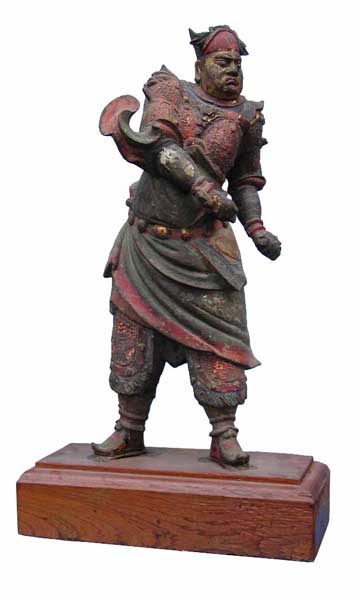
One of the stars of the Big Dipper
2026-04-15 11:51:31
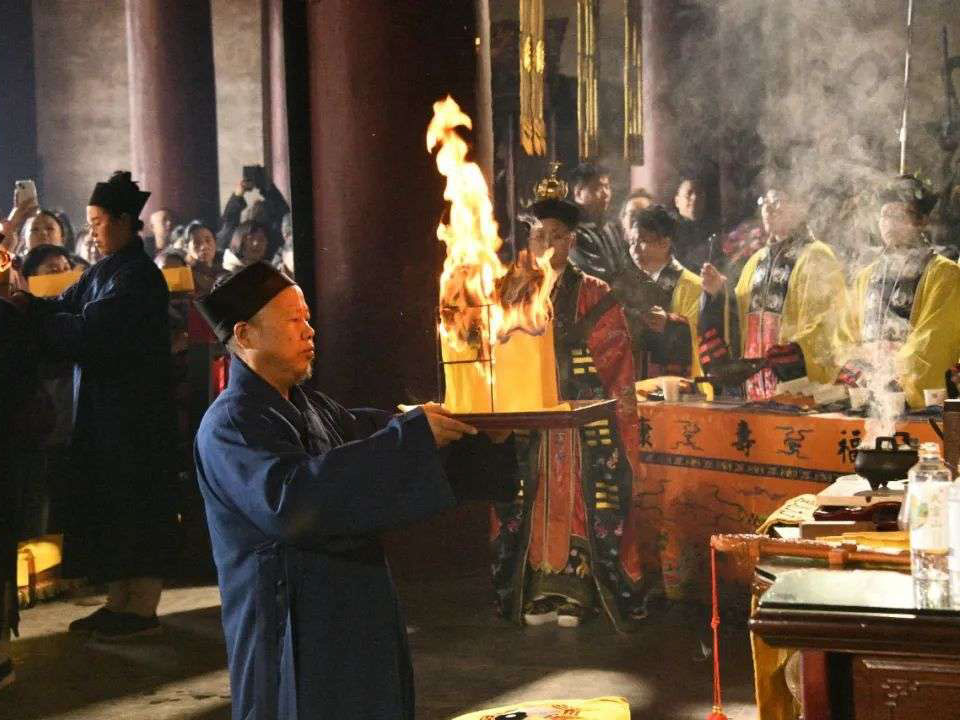
(1) The meaning of the ritual of fasting and Taoist ceremonies
2022-08-20 23:32:13
The original meaning of "zhai" was to be neat, harmonious an...
Yin GUI
2022-08-20 23:32:13
Chapter 27
2022-08-20 23:32:13
Chapter 72
2022-08-20 23:32:13
The couplet of the ancestral hall of the Wudang Mountain Temple
2022-08-20 23:32:13
Chapter 25
2022-08-20 23:32:13