


(6) Taoism in the Ming, Qing Dynasties and modern times
2022-08-20 23:32:13
By the Ming and Qing dynasties, China's feudal society gradually declined and eventually disintegrated. Along with the evolution of the entire society, Taoism also gradually declined from stagnation. (1) Taoism in the Ming Dynasty After the establishment of the Ming Dynasty, in view of the influence of the descendants of Zhang Ling who had lived in Longhu Mountain on Taoism, on the one hand, the status of Zhang Tianshi as the leader of the Zhengyi Sect in the Yuan Dynasty was affirmed, but on the other hand, the title of "Tianshi" was abolished and he was instead appointed as the successor of the Zhengyi Sect. Among the emperors of the Ming Dynasty, the one who particularly revered Taoism was Emperor Shizong of the Ming Dynasty (reigned Zhu Houxi from 1522 to 1566), who styled himself "Emperor of Longevity in Xuandu Realm", personally paid homage to Taoism, and many Taoists were awarded official titles such as "Shao Bao" and "Li Bu Shang Shu", and participated in state affairs. During the Ming Dynasty, the Bureau of Taoist Affairs was established in the capital, the Bureau of Taoist Affairs was set up in each prefecture, and the Bureau of Taoist Associations was established in each county, bringing Taoist affairs within the scope of administrative management of the imperial court. The most famous Taoist priest in the Ming Dynasty was Zhang Sanfeng. The exact dates of his birth and death are unknown. He once practiced Taoism on Wudang Mountain (also known as Taihe Mountain) in Hubei Province and later retired from Wudang Mountain. Both Emperor Taizu and Emperor Chengzu sent envoys to search for them but failed. They then built the Wudang Temple. Taoism thus gave rise to the southern school of Wudang Taoism. According to the "Compendium of All True Sects", the Wudang Taoist school includes the Natural Nature School, the Sanfeng School, and others, which have been passed down in modern times. In the third year of the Tianshun reign of Emperor Yingzong of the Ming Dynasty (1459), Zhang Sanfeng was enfeoffed as "Tongwei Xianhua Zhenren". In the Ming Dynasty, it is also worth mentioning that in the fourth year of Yongle (1406), Emperor Chengzu ordered the 43rd Celestial Master Zhang Yuchu to compile the Daozang. In the ninth year of the Zhengtong era (I444), Emperor Yingzong, following in the footsteps of Emperor Chengzu, issued an edict to Master Tongmiao, Shao Yizheng, to supervise the collation of the Daozang. The following year (1445), the Zhengtong Daozang was compiled into 5,305 volumes, totaling 480 cases. By the 35th year of the Wanli reign (1607), Zhang Guoxiang, the 50th Celestial Master, was ordered to continue and supplement the Daozang, which consisted of 32 volumes and 180 books, and was named the Wanli Continuation of the Daozang. Together with the Orthodox Daozang, it totals 5,485 volumes and 512 cases, which is the existing Ming Dynasty version of the Daozang. It became the most complete and important collection of scriptures in the history of Taoism. (2) Since the middle of the Ming Dynasty, the decline of Taoism has become quite obvious. In the Qing Dynasty, the court and the common people valued Buddhism over Taoism. During the Qianlong period (1736-1795), the Yellow Sect was declared the state religion and Taoism the religion of the Han people. Restrict the authority of the Celestial Master, revoke his position as the leader of Taoism, demote him from the second rank to the fifth rank, and prohibit him from sending Dharma members to transmit the teachings. By the Daoguang era (lg2l - 1850), the traditional ritual of Zhang Tianshi's pilgrimage was abolished. Taoism lost its connection with the imperial court and its status gradually declined. The most renowned Taoist priest in the Qing Dynasty was Wang Changyue, the seventh-generation lawyer of the Quanzhen Longmen School. In 1680, born in the chaotic times of the Ming Dynasty, he resolutely became a monk and studied under Zhao Fuyang, the sixth Patriarch of Quanzhen Longmen. In the thirteenth year of the Shunzhi reign of the Qing Dynasty (1656), he was appointed to preach at the Baiyun Taoist Temple in Beijing and was awarded the purple robe three times. And in Jiangsu, Zhejiang and Wudang Mountain in Hubei Province, the "First True", "Middle Extreme" and "Heavenly Immortal" Great Precepts, namely the "Three Great Precepts", were passed down. The "Three Great Precepts" formulated by Lawyer Wang Changyue have been in use up to now. The Normal month once enabled the Quanzhen Longmen Sect to thrive for a time, and thus it was hailed as the "Ancestor of Revival". (3) The Opium War in modern times led China into a semi-feudal and semi-colonial society. Taoism was not only suppressed by the Qing rulers but also influenced by the imperialist invading forces in China, presenting a rather complex situation. The warlord wars and local separatism further popularized Taoism, which already had numerous factions, and the number of sects increased even more. In 1929, there were over 80 official Taoist sects included in the Baiyun Taoist Temple in Beijing, as well as many folk religious organizations that were neither Taoist nor Buddhist but were both. Taoism has been greatly impacted by modern cultural ideas from abroad, accelerating its integration with various other ideas. However, in the folk culture of our country, Taoist thought and belief still retain a deeply rooted influence. During the periods of anti-imperialism, anti-enfeoffment and the War of Resistance against Japanese Aggression, many Taoists in Taoism joined the people of the whole country in the struggle against imperialism and anti-enfeoffment. The Taoist priests on Wudang Mountain provided protection for the Red Third Army and treated the wounded and sick soldiers of the Red Army. The Taoists in Maoshan, Jiangsu Province and Luofu Mountain, Guangdong Province actively supported the New Fourth Army and the People's Liberation Army in their fight against the Japanese invaders and the reactionaries of the Kuomintang. Many of them also joined the revolutionary ranks. In 1949, the People's Republic of China was founded, and China entered the period of socialist construction. Taoism also underwent tremendous changes. The people's government implements a policy of freedom of religious belief, and the beliefs of Taoists are respected and protected. The old feudal regulations in the palaces and temples were abolished and democratic management institutions were established. Taoists also became self-reliant laborers. In 1957, after a year of preparation, the China Taoist Association was officially established at Baiyun Taoist Temple in Beijing, with Yue Chongdai as its first president. In 1961, the China Taoist Association held the second National Representative Conference of Taoism in Beijing and elected Chen Yingning as its president. Under the leadership of President Chen, the China Taoist Association established a research office, launched and published the "Taoist Association Journal", and opened a Taoist knowledge study class. During the Cultural Revolution, Taoism, like all other industries across the country, was severely impacted by the extreme left line. Taoist temples were closed, Taoist activities were halted, and the China Taoist Association was also forced to cease its work. After the Third Plenary Session of the Eleventh Central Committee of the Communist Party of China, the policy of freedom of religious belief was re-implemented and the China Taoist Association resumed its work. In 1980, 1986 and 1992, the third, fourth and fifth representative conferences were held successively. The major Taoist temples across the country have also been gradually restored and reopened. Among them, the temples with larger power seats were approved by The State Council as key national temples in 1982. In 1987, the magazine "Chinese Taoism" was founded. Subsequently, dozens of books and periodicals such as "Taoist Manual", "Taoist Culture Series", "Taoist Dictionary", and "Collection of Taoist Immortal Paintings" were edited and published. In 1990, the China Taoist College was established. Before that, the China Taoist Association had successively held many training courses, making active efforts to cultivate successors of Taoism. In 1989, the Quanzhen School's ordination ceremony, which had been suspended for decades, resumed. The first ordination ceremony was held at the Baiyun Taoist Temple in Beijing. In 1995, the Zhengyipai 箓 activity, which had been suspended for many years, resumed in longhu mountain, jiangxi. At present, Taoism in China has entered its most prosperous period in nearly 200 years. The vast number of Taoists across the country are actively participating in the socialist construction of the motherland together with the people of the whole country on the path of loving the country and the religion.
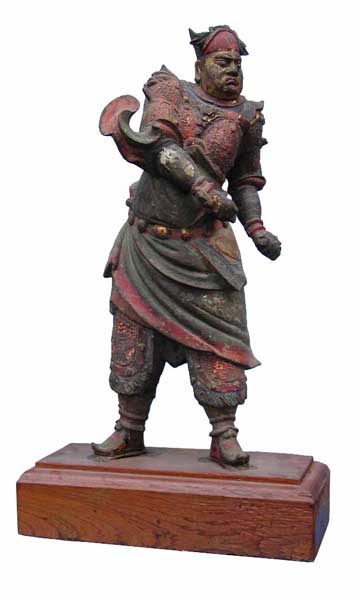
One of the stars of the Big Dipper
2026-04-15 11:51:31
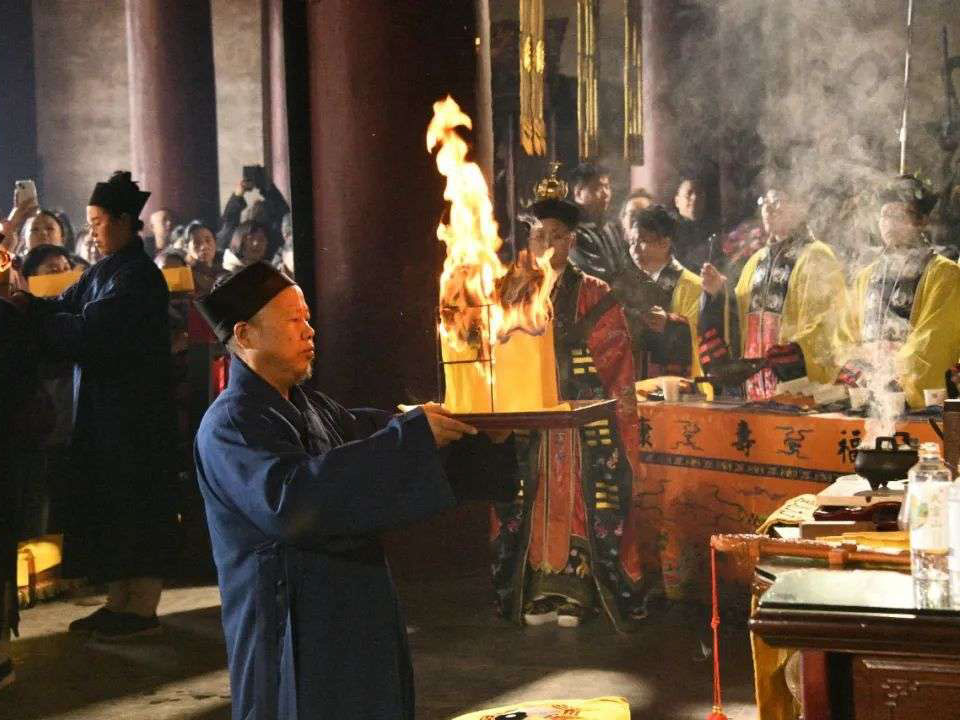
(1) The meaning of the ritual of fasting and Taoist ceremonies
2022-08-20 23:32:13
The original meaning of "zhai" was to be neat, harmonious an...
Yin GUI
2022-08-20 23:32:13
Chapter 27
2022-08-20 23:32:13
Chapter 72
2022-08-20 23:32:13
The couplet of the ancestral hall of the Wudang Mountain Temple
2022-08-20 23:32:13
Chapter 25
2022-08-20 23:32:13