


(4) Taoism during the Tang and Five Dynasties periods
2022-08-20 23:32:13
Taoism in the Sui, Tang and Five Dynasties periods was a continuation and development of Taoism in the Northern and Southern Dynasties. Especially in the Tang Dynasty, Taoism entered a prosperous period of all-round development. (1) The Rise of Taoism and Neidan Taoism in the Sui Dynasty The Sui Dynasty (581-618) implemented a policy of integrating Buddhism and Taoism. Although it mainly revered Buddhism, it also attached great importance to Taoism. Emperor Wen of Sui named his founding year "Kaihuang", a title derived from the Dao Jing. Emperor Wen also built Taoist temples and crossed Taoist lands to support the development of Taoism. Emperor Yang of the Sui Dynasty was even more devoted to Taoism. During his reign, he built ten Taoist temples in Chang 'an for Taoism. In the seventh year of Daye (611), he personally summoned Wang Yuanzhi, the master of the Maoshan School, and with the dignity of an emperor, "personally performing the rites of a disciple", he ordered the construction of a jade altar in the capital (Chang 'an) to address him. During the Sui Dynasty, the number of palaces, temples and Taoist lands in Taoism all developed. During this period, the Shangqing Sutra methods that the Maoshan School had spread to the north had been incorporated into the Lingbao, Sanhuang and other sutra systems, and had been integrated with the Louguan Dao in the north. In terms of the cultivation of alchemy methods, the most prominent development is the rise of "internal alchemy". According to the "Luofu Mountain Annals", the Taoist priest Su Xuanlang once lived in seclusion on Juqu Mountain (now Maoshan, Jiangsu Province) to study Taoism and obtained the true secret of divination. During the Kaihuang period (581-604), he went to the Qingxia Valley of Luofu Mountain to practice the Great Elixir and styled himself Qingxiazi. Composed works such as "Record of the Stone Wall of Taqing". Later, he wrote the "Zhi Dao Chapter", clarifying the methods of internal alchemy cultivation. From then on, Taoism began to know about inner alchemy. Given that the three books, "Guwen Longhu Jing", "Zhouyi Cantongqi", and "Jinbi Qian Tong Mi", are complex in text and obscure in meaning, "Longhu Jinye Huan Dan Tong Yuan Lun" was compiled to return the divine elixir to Xinlian. Su Xuanlang (Yuen Long) used the term "external elixir" to explain internal elixir, advocating "dual cultivation of life and nature", which he regarded as the core of internal elixir practice. After nine years of internal vision, Su Shi achieved enlightenment and ascended to immortality. Judging from his words and deeds, it can be said that he is a theorist, practitioner and propagandist of Neidan. During the Sui Dynasty, Su Xuanlang advocated the way of internal alchemy. By the Tang Dynasty, it had developed rapidly, become a prevailing trend and had a profound influence. (2) The Emperors of the Tang Dynasty and Taoism The emperors of the Tang Dynasty, because the Laozi revered by Taoism was surnamed Li and the Tang imperial family also had the surname Li, thus honored Laozi as the founding ancestor and claimed to be a descendant of Laozi, particularly reverting to Taoism. In the third year of Wude (620), Emperor Gaozu of Tang issued an edict to change the name of Yangjiao Mountain to Longjiao Mountain and build a temple dedicated to Laozi. In the seventh year (624), he personally went to Zhongnan Mountain to pay homage to the Laozi Temple. In the eighth year (625), an edict was issued to list the order of the three religions, with Taoism taking the lead, Confucianism second, and Buddhism last. In the 11th year of the Zhenguan era (637), Emperor Taizong of Tang issued an edict titled "The Title of a Taoist Nun Should be Placed Above that of a monk and a Nun", stating, "My lineage originated from the pillar (i.e., Laozi)." From now on, the title of a Taoist nun should be placed before that of a monk and a nun, and the order of Taoism and Buddhism should be established. In the first year of Ganfeng (666), Emperor Gaozong of Tang honored Laozi with the title of "Emperor Taishang Xuanyuan". Later, Emperor Xuanzong of Tang held Taoism in even greater reverence and support. In the ninth year of Kaiyuan (721), he invited Sima Chengzhen to the capital and personally received the law 箓. Become an emperor who has obtained the qualification of Dao Tu; In the 19th year of Kaiyuan (731), it was ordered that temples dedicated to Laojun be established on each of the five Great Mountains. In the 21st year of Kaiyuan (733), Emperor Xuanzong personally annotated the "Tao Te Ching", ordered scholars and commoners to keep a copy of the "Tao Te Ching", and included the "Tao Te Ching" in the scope of the imperial examination. In the 25th year of Kaiyuan (737), Taoists and female crown priests were placed under the jurisdiction of the Zongzheng Temple, and Taoists were regarded as members of the royal family. In the 29th year of Kaiyuan (741), an edict was issued to each of the two capitals (Chang 'an and Luoyang) and various states to establish the Chongxuan School, stipulating that students should study the Laozi, Zhuangzi, Lieyu and Wenzi. In the first year of the Tianbao era (742), Emperor Xuanzong bestowed upon Zhuangzi the title of Nanhua Zhenren, Wenzi the title of Tongxuan Zhenren, Liezi the title of Chongxu Zhenren, and Gengsangzi the title of Dongxu Zhenren. The books written by these four sons were renamed Zhenjing. In the eighth year of the Tianbao era (749), Emperor Xuan Yuan was posthumously awarded the title of "Emperor Xuan Yuan of the Holy Ancestor's Great Way", and later promoted to "Emperor Xuan Yuan of the Great Holy Ancestor's High Ascent to the Golden Gate of the Great Way". After Emperor Xuanzong, many emperors of Tang, such as Emperor Suzong, Emperor Daizong, Emperor Xianzong, Emperor Muzong, Emperor Wuzong and Emperor Xuanzong, continued to Revere and support Taoism. Among them, Emperor Wuzong of Tang was a typical example. In the fifth year of Kai Cheng (840), Emperor Wuzong personally received the edict 箓. In the first year of hui chang (841), he issued an imperial edict to accept Liu Xuanjing, a Taoist priest from Mount Heng, as a silver and blue Guanglu doctor, appointed him as a scholar of Chongxuan Academy, and bestowed upon him the title of Guangcheng Master. In the fourth year of Huichang (844), the Taoist priest Zhao Guizhen was appointed as the teacher of the Left and Right Street School. In summary, during the nearly 300 years of the Tang Dynasty, the emperors of the Tang Dynasty regarded Taoism as the "family religion of the dynasty" (or the "religion of the imperial family"), and always supported and revered Taoism. As a result, Taoism made considerable progress in terms of its doctrines, teachings, and dipping rituals. (3) The Development of Taoism in the Tang Dynasty The development of Taoism in the Tang Dynasty was mainly manifested in the following aspects: (1) There was a significant development in the construction of Taoist theory. During the Tang Dynasty, many Taoist scholars emerged, such as Sun Simiao, Cheng Xuanying, Li Rong, Wang Xuanlan, Sima Chengzhen, Wu Yun, Li Qian, Zhang Wanfu, Shi Jianwu, Du Guangting, etc. They made comprehensive developments in the doctrines, teachings and cultivation techniques of Taoism. Due to the vigorous promotion of the Tang royal family, the study of Laozi and Zhuangzi's thoughts became a prevailing trend in the Tang Dynasty. At that time, nobles, ministers, Confucian scholars, Taoists and others all studied and annotated the "Tao Te Ching" and the "Zhuangzi". According to incomplete statistics, there were nearly 30 commentaries and interpretations of the "Tao Te Ching" during the Sui and Tang Dynasties. There are also many other theoretical works influenced by the thoughts of Laozi and Zhuangzi, such as Mr. Tongxuan's "On the Retreat of the Dao" and Sima Chengzhen's "On Sitting in Oblivion", etc. Especially the Xuanxuan School represented by Cheng Xuanying and Li Rong had a significant impact on the development of Taoist theory at that time and later. (2) The number of Taoist books increased, and they were compiled into a collection and officially published. During the Tang Dynasty, Taoist scriptures continued to be collected and sorted out. In the Kaiyuan period (713-741), they were compiled into a collection, titled "Three Caves Qiong Gang", totaling 374 volumes (some say 5,700 volumes). In the seventh year of the Tianbao era (748), an imperial edict was issued to circulate and write it for wide dissemination, naming it "Kaiyuan Daozang". This is the first Taoist Canon in Chinese history. (3) Taoist rituals developed systematically in the Tang Dynasty. Taoist rituals had already taken shape in the Southern Dynasties during Lu Xiujing's reign, and in the Tang Dynasty, Taoist priest Zhang Wanfu. Zhang Chengxian and Du Guangting of the late Tang and Five Dynasties period systematically sorted out and added to the transmission of Taoist rituals, scriptures and precepts 箓, making it more rich and complete. In particular, Du Guangting (850-933) of the late Tang and Five Dynasties period wrote the "Complete Collection of Taoist Rituals" (87 volumes), which unified and standardized the Taoist ritual rituals of the main Taoist sects, integrating the Taoist ritual rituals of the Tang Dynasty. The Taoist norms he formulated are still in use by Taoism to this day. (4) The inner alchemy of Taoism developed significantly in the Tang Dynasty. Although the Golden Elixir technique was still in its heyday during the Tang Dynasty, it was already showing signs of decline. Because taking the golden elixir had side effects, it prompted the Golden Elixir technique to shift from external elixir to internal elixir. The art of Inner alchemy can be traced back to the ancient immortal alchemy techniques. During the Tang Dynasty, the Inner Alchemy had already gained considerable influence, and such Taoist books emerged one after another. Such as Cui Xifan's "Medicinal Mirror", Wu Yun's "Nine Chapters on the Inner Elixir of the Great Lord of the Southern Tong", Tao Zhi's "Tao Zhenren's Inner Elixir Fu", and so on. By the end of the Tang Dynasty and the Five Dynasties period, Taoist internal alchemy had become very popular. During this period, the renowned advocates of the Inner Alchemy were Zhongli Quan and Lu Dongbin. Therefore, the inner elixir cultivation technique he advocated was called the Zhonglu Golden Elixir Way. In later times, the Quanzhen School of Taoism revered Zhong and Lu as its founding masters. (5) Taoist temples are not only scattered all over the country, but also their scale is growing increasingly large. Since the formation of the Taoist temple system in the Southern Dynasties, the number of Taoist temples has gradually increased. By the Tang Dynasty, Taoist temples were almost everywhere in famous mountains and cities. According to the records on the 15th day of the twelfth lunar month in the fourth year of Zhonghe (884) by Du Guangting, since the founding of the Tang Dynasty, "about 1,900 palaces and temples were built, and more than 15,000 Taoists were trained. The number of palaces and temples built by princes, nobles, local officials, commoners or their own residences and villages was not included." Among them, the main Taoist temples dedicated to Laozi, such as the Taqing Palace, Taiwei Palace and Ziwei Palace, were comparable in scale to the imperial halls and had a direct impact on the architectural scale and art of Taoist temples in the future. During the Tang Dynasty, the major Daoist school was the Maoshan School, followed by the Louguan School. In addition, there was the resurgence of the Zhang Tianshi School. In the seventh year of the Tianbao era of the Tang Dynasty (748), Emperor Xuanzong ordered relevant departments to approve the descendants of Zhang Tianshi. They would be enfeoffed and planted as the true successor, and the ancestral Tianshi Zhang Ling would be registered as the Grand Tutor. By the middle and late Tang Dynasty, the Longhu Mountain Celestial Master Sect, also known as the Longhu Sect, gradually took shape. This sect grew rapidly under the support of the emperor, laying the foundation for the prosperity of the Celestial Master Taoism on Longhu Mountain after the Song and Yuan Dynasties. During the 53 years of the Five Dynasties period (907-960), the five surnames and thirteen monarchs were changed. Among them, many local dynasties still revered Taoism. They respected and favored Taoists, built palaces and temples, collected lost Taoist books, and ordered Taoists to preach Taoist scriptures, etc. This played a certain promoting role in the maintenance and development of Taoism. During this period, renowned Taoists included Li Hao, Tan Qiao, Peng Xiao, Tan Zixia, etc. They devoted themselves to the research and development of Taoist theory and alchemy, enabling Taoism in the Five Dynasties period, which was in a slump, to still move forward.
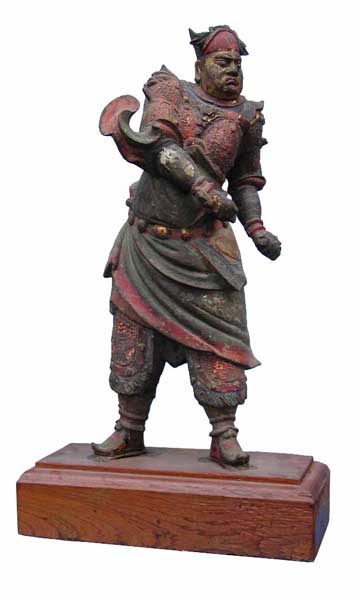
One of the stars of the Big Dipper
2026-04-15 11:51:31
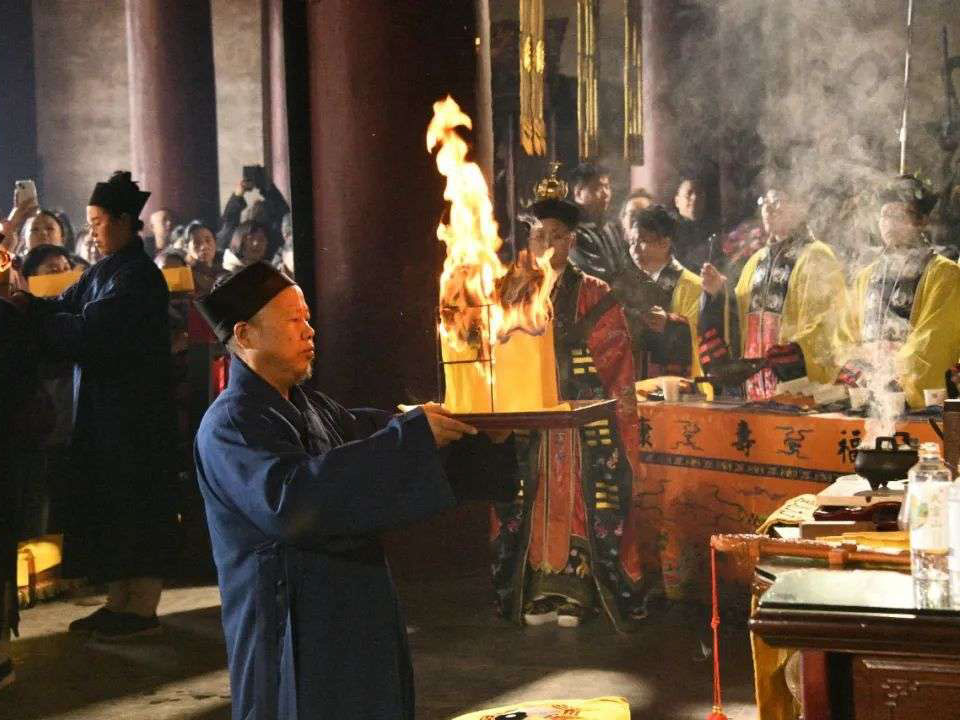
(1) The meaning of the ritual of fasting and Taoist ceremonies
2022-08-20 23:32:13
The original meaning of "zhai" was to be neat, harmonious an...
Yin GUI
2022-08-20 23:32:13
Chapter 27
2022-08-20 23:32:13
Chapter 72
2022-08-20 23:32:13
The couplet of the ancestral hall of the Wudang Mountain Temple
2022-08-20 23:32:13
Chapter 25
2022-08-20 23:32:13