


(3) Taoism during the Wei, Jin, Northern and Southern Dynasties
2022-08-20 23:32:13
The Wei, Jin, Northern and Southern Dynasties (220-589) was an important period for the development of Taoism, a time when Taoism gradually matured and took shape. During this period, Taoism underwent differentiation and reform, evolving from its relatively primitive state in the early days to a mature religion with relatively complete classics, doctrines, precepts, rituals and church organizations. It gradually transformed from an early folk religious group into an officially recognized orthodox religion. When Taoism spread northward and split into the Cao Wei State, the Taiping Taoist Sect had already declined due to the suppression of the Yellow Turban Rebellion. The Wudoumi Taoist Sect, along with its tutor Zhang Lu's submission to Cao Cao and the northward migration of immigrants, reached the Cao Wei homeland, which is now the area of Henan and Hebei. Cao Cao and Cao PI, in view of the Yellow Turban Rebellion, were afraid that the peasant rebels would use religious organizations to carry out revolutions. Therefore, they adopted a two-pronged policy towards early Taoism. On the one hand, they restricted or suppressed it; on the other hand, they utilized or transformed it. Cao Cao gathered some influential immortals and alchemists in society, such as Zuo Ci, Gan Shi and Xi Jian, around him. This was not only to seek health preservation methods to prolong life, but also to prevent them from inciting the common people to rebel. Therefore, at this time, many noble families joined Taoism, which thus led to the division of Taoism. Since the Cao Wei period, Taoism has gradually differentiated into two major levels: upper-level Taoist deities and lower-level folk Taoism. As the Five Pecks of Rice Dao gradually spread among the aristocratic families, its status rose day by day. Therefore, people gradually changed the term "Five Pecks of Rice Dao" to "Heavenly Master Dao". During the Wei and Jin Dynasties, the Celestial Master Taoism still retained some religious elements of the early Five-busch Rice Taoism, but certain changes occurred and a chaotic situation emerged. For instance, as the original organizational system was dissolved with the northward migration, the sacrificial priests acted independently, each claiming their own religion and adhering to different laws. The sacrificial priests' offices were also set up separately, leading to chaos in the official establishment system. Many sacrificial priests and Taoists did not abide by the religious precepts, and so on. (2) The Establishment of Ge Hong's Jin Dan Dao Immortal Theory System By the time Taoism developed to the Western Jin Dynasty, although there were many scriptures, there was still no work that could unify the doctrines and techniques of the Dan Ding and 符箓 schools into a complete theoretical system. In other words, by the Western Jin Dynasty, Taoism had not yet established a more theoretical system of immortals with strong theoretical and rational principles. It was not until the Eastern Jin Dynasty that it was completed by Ge Hong, a theorist and practitioner who advocated Taoism and immortals. Ge Hong (283-363), styled Zhichuan and with the pseudonym Baopuzi, was from Jurong, Danyang (now in Jiangsu Province). He was a renowned Taoist theorist, alchemist and medical scientist in the Eastern Jin Dynasty. He devoted his entire life to writing, practicing health and Taoism, and spent the rest of his life in the alchemy cauldron. Ge Hong's most representative work is the book "Baopuzi". The entire book is divided into the "Inner Chapter" and the "Outer Chapter". The Inner Chapters discuss immortal prescriptions and medicines, the transformation of ghosts and monsters, health preservation and longevity, as well as warding off evil spirits and disasters. They belong to the Taoist school. The Outer Chapters discuss gains and losses in the human world and the judgment and criticism of the affairs of the world, and belong to Confucianism. Ge Hong's "Inner Chapters of Baopuzi" summarized the theories of immortals since the Warring States Period. It also inherited Wei Boyang's alchemy theory and integrated the alchemy techniques of the Wei and Jin Dynasties, presenting as many as 282 kinds of immortal scriptures and divine talismans. Overall, "The Inner Chapters of Baopuzi" is an important and comprehensive work in the history of Taoism, featuring a relatively complete theory and a variety of techniques." It enriched and developed the doctrine of immortal Taoism, promoting Taoism to shift towards the ultimate goal of pursuing immortality and becoming an immortal. It holds an important position in the history of the development of Taoist thought and doctrine. (Wang Ming: Preface to the Inner Chapter of Baopuzi) The publication of the "Inner Chapters" of Baopuzi marked the establishment of the theoretical system of Taoist immortals in Jindan Taoism, and at the same time, it also marked the beginning of the rise of upper-level Taoist immortals. (3) The emergence of the Shangqing, Lingbao and Sanhuang scriptures and doctrines was precisely due to Ge Hong's advocacy and influence. During the reign of Emperor Ai of the Eastern Jin Dynasty (363-365), the Jiangdong Celestial Master Taoism was prevalent, and a Taoist scripture and seal script school emerged, with the compilation of Taoist books and the dissemination of scriptures and doctrines as its top priority. This was a significant development in the evolution of the Celestial Master's Way towards the transformation of principles and doctrines, and its specific manifestation was the emergence of the Shangqing, Lingbao, and Sanhuang Scriptures and methods. The Shangqing Jing was founded by Wei Huacun (252-334) and authored by Yang Xi (330-387) and Xu Mi. It was jointly completed by -376) and Xu Hui (341-370), and its main scriptures include the "Shangqing Daodong True Classic" and the "Huangting Classic", etc. The Lingbao Sutra was written by Ge Chaofu (a descendant of Ge Hong), and its main scripture is the "Sutra of the Primordial Man Without Measure". The "Three Sovereigns Classic" was introduced to the world by Bao Liang of the Western Jin Dynasty when he passed on the "Three Sovereigns Text" to the Eastern Jin Dynasty. The emergence of the "Shangqing Jing" series was another reform and development of Taoism by Yang Xi, Xu Mi and Xu Hui following Ge Hong. It laid the foundation for the formation of the Maoshan School of Taoism. The Shangqing School's theory of cultivation holds that every part of the human body is guarded by a true deity. Cultivators think of the spirit, hold their breath, clench their teeth, swallow saliva, consolidate their essence and calm their mind. By reciting sutras and mantras, they can protect their internal organs, ward off disasters and evil spirits, and ascend to immortality. The Lingbao School attaches great importance to the science and education of 符箓 and the ritual of fasting, emphasizing the encouragement of goodness and the salvation of people, and proclaims that "all people are saved." In terms of cultivation methods and other aspects, the Lingbao School absorbed the strengths of the Celestial Master Taoism and the Shangqing School, making its religious activities more attractive to the masses and becoming a highly influential Daoist school in the late Jin and early Song Dynasties. It later evolved into the Ge Zao Sect. During the Wei and Jin Dynasties, apart from the aforementioned Ge Hong Jindan School of Immortal Taoism, the Shangqing School and the Lingbao School, there were also influential Taoist schools such as the Li Family Taoism, the Bo Family Taoism and the Yu Jun Taoism. In addition, there are later schools such as the Louguan School, the Longhu School, and the Jingming School, all of which can be traced back to the Wei and Jin Dynasties. (4) The Reform of Taoism by Kou Qianzhi and Lu Xiujing The Northern and Southern Dynasties period (420-589) was an era when Taoism was further enriched and improved, and it was a time when Taoism reached maturity. Many Taoist reformers and theorists emerged, and their activities had a significant influence on Taoism in later generations. The representative figure who reformed the Northern Celestial Master Taoism (Five-Dou Rice Taoism) was Kou Qianzhi (365-448), a renowned Taoist priest of the Northern Wei Dynasty. According to the "Shi Lao Zhi" in the "Book of Wei", Kou Qianzhi "practiced Zhang Lu's skills at a young age" and was a Taoist with Five pecks of rice. Later, he became a disciple of Cheng Gongxing and followed him to Mount Song for cultivation. He lived in seclusion in a stone room and gathered food and herbs. In the second year of Zhishenrui (415), Gan Tai Shang descended to the summit, conferred the position of Celestial Master, and bestowed upon him the "Admonition of the New School in the Clouds" in 20 volumes, instructing him to "proclaim our new school and rectify Taoism." Kou Qianzhi's main measures for reforming Taoism were to "eliminate the three false laws, rent rice, money and taxes, and the practice of harmonizing the qi between men and women", making Taoism "prioritize rituals and etiquette, and also add the practice of taking food and closed cultivation". At that time, when reciting the Taoist scriptures, the term "direct recitation" was changed to "musical recitation", meaning that music was used to accompany the recitation. After the reform by Kou Qianzhi, the Northern Celestial Master Taoism was called the New Celestial Master Taoism or the Northern Celestial Master Taoism. It spread widely and once became the state religion of the Northern Dynasties. Following Kou Qianzhi, during the Liu Song Dynasty of the Southern Dynasties, there was Lu Xiujing (406-477), a Taoist priest from Mount Lu, who reformed the Celestial Master Taoism in the south. Lu Xiujing studied Confucianism since childhood and was fond of poetry and prose. When he was old, he left his family and went to Yunmeng Mountain to live in seclusion and practice Taoism. During the reign of Emperor Ming of the Song Dynasty (465-472), he sorted and discriminated the collected Taoist books (including the classics of the Shangqing, Lingbao, and the Three Sovereigns schools), and identified 1,228 volumes of scriptures, precepts, prescriptions, and symbols, dividing them into "Three Caves" (i.e., Cave Truth, Cave Mystery, and Cave Spirit). In the seventh year of the Taishi era (471), the "Catalogue of the Three Caves Classics" was also compiled, which became the earliest general catalogue of Taoist scriptures in China and laid the foundation for the later compilation of the "Taoist Canon". On the basis of summarizing the various vegetarian rituals that had existed since the Celestial Master Taoism, he further improved the Taoist ritual norms to meet the needs of the development of Taoism. Lu Xiujing compiled over 100 volumes of works on ritual ceremonies and rituals, basically completing the rituals of Taoism. In the work, it inherits the early ritual of worshipping the three officials (Heavenly Officials, Earthly officials, and water officials) on the Three Yuan Day of the Celestial Master Taoism (Five-busch Rice Taoism), and makes clear descriptions and regulations on the ritual systems of the Shangqing School, Celestial Master Taoism and other Taoist schools, unifying the incense offering, announcement of the opening, invitation of the ceremony, expression of gratitude, and vow recitation in these rituals. In addition, Lu Xiujing also proposed a relatively complete plan for the Celestial Master Dao in terms of organizational systems, such as: further improving the "Three Meetings Day" system; Establish and improve the system of awarding 箓 to Taoist officials and promoting them by rank based on merit. Initiated the dress code, etc. After the reform by Lu Xiujing, the Southern Celestial Master Taoism was called the Southern Celestial Master Taoism. (5) Tao Hongjing and the Maoshan School Later than Lu Xiujing, the Southern Dynasties produced another erudite Taoist scholar, Tao Hongjing. He further summarized, enriched and reformed the Ge Hong Golden Pill Taoism, Yang Xi 'Shangqing Jing 箓 Taoism and Lu Xiujing' Nan Tianshi Taoism that were previously popular in the south, and thus founded the Maoshan School. Tao Hongjing (456-536) was a Taoist scholar, alchemist and medical scientist during the Qi and Liang dynasties of the Southern Dynasties. His courtesy name was Tongming. He styled himself as Huayang Yinyu and was posthumously honored as Mr. Zhenbai. From Moling, Danyang (now Nanjing, Jiangsu Province). He was a disciple of Sun Youyue, a disciple of Lu Xiujing. In his middle age, he retired to practice Taoism on Maoshan Mountain and began to promote the teachings of the Shangqing Sutra. Besides extensively collecting and organizing the Shangqing Sutra, he also wrote the "True Edict" with a historical nature of the sect and authored important Taoist books such as "The Secret to Ascending the True" and "The Map of the True Spirit's Position". A relatively systematic and complete system of belief in immortals has been established. Since the Jin Dynasty and the Liu Song Dynasty, many people have come to Maoshan to practice Taoism, but Maoshan has not been developed into a base of the Shangqing School. After Tao Hongjing settled on Maoshan, he opened a Taoist academy, recruited disciples, and promoted the teachings of the Shangqing School, making Maoshan a base for the dissemination of the Shangqing School and thus forming the Maoshan School. The characteristic of this school is that it mainly focuses on the Qing Dynasty scriptures 箓 and also incorporates the ideas of various schools of Taoism and Confucianism and Buddhism. The Maoshan School founded by Tao Hongjing had a profound influence on the development of Taoism in later generations.
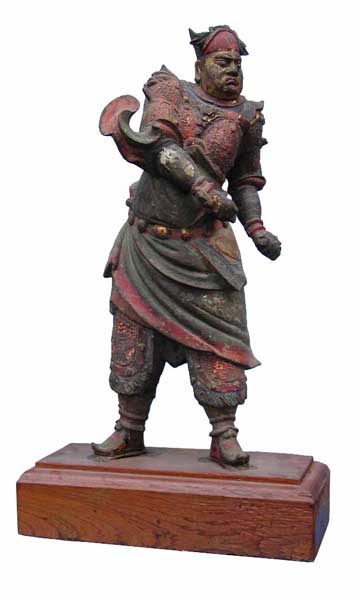
One of the stars of the Big Dipper
2026-04-15 11:51:31
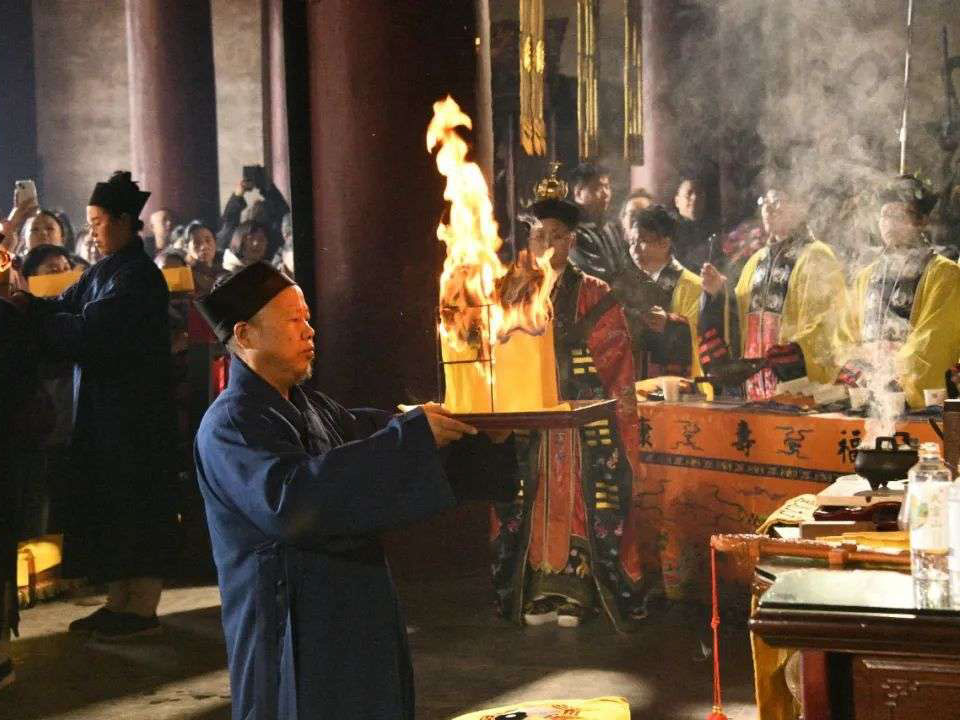
(1) The meaning of the ritual of fasting and Taoist ceremonies
2022-08-20 23:32:13
The original meaning of "zhai" was to be neat, harmonious an...
Yin GUI
2022-08-20 23:32:13
Chapter 37
2022-08-20 23:32:13
Chapter 47
2022-08-20 23:32:13
"Thunderbolt head"
2022-08-20 23:32:13
Chai Daoren
2022-08-20 23:32:13