


(II) The Formation of Taoism
2022-08-20 23:32:13
(1) Zhang Ling initiated the Five Pecks of Rice Path
During the reign of Emperor Shun of the Eastern Han Dynasty (126-144), Zhang Ling established the Five Bushels of Rice Dao (known within the sect as the Zhengyi Mengwei Dao) on Heming Mountain in Shu Commandery (now within Dayi County, Sichuan Province). Zhang Ling, styled Fuhan, was from Fengyi, Pei State (now Fengxian County, Jiangsu Province). According to the Daoist book: Originally a student of the Imperial College, he extensively studied the Five Classics and was fond of supernatural affairs. In his early years, he was awarded the title of "Virtuous, Upright, Outspoken and Extreme Censure" and served as the magistrate of Jiangzhou (now Chongqing) in Sichuan and Chongqing. Later, realizing that the ups and downs of his official career were not beneficial to his youth, he resigned and retired to 邙山 (now north of luoyang, henan province) to learn the way of life. The imperial court repeatedly summoned him to take up an official position, but he refused to comply. During the reign of Emperor Shun of the Eastern Han Dynasty (126-144 AD), upon learning that there were many famous mountains in Sichuan and that the people there were kind and honest and easy to educate, he brought his disciples to Sichuan and settled in Heming Mountain (also known as Guming Mountain) to practice Taoism. After years of deep thought and refinement, he composed twenty-four treatises on the Tao. The Supreme Master personally descended and bestowed upon him the "Three Days of the True Dharma", "The Essential Dharma of the True One Discipline", "The True One Alliance of the Wondrous Sutra", and "The Secret of the Three Professions and Six Skills", and appointed him as the Celestial Master. So, Zhangling established twenty-four administrative centers (i.e., the center of the diocese) with Heming Mountain as the center, passed on the Supreme Authority of the Supreme Alliance, revered Laozi as the founding father, and respectfully addressed him as the Supreme Elder Lord. Taking the five thousand chapters of the Laozi as the main classic, he founded Taoism. Because it was stipulated that all those who entered the path had to take five dou of rice, it was called the "Five-Dou Rice Path". The Five Pecks of Rice Dao, initiated by Zhang Ling, has major classics such as "The Five Thousand Texts of Laozi" and "The Supreme Classic of Taiping Cave". Its main religious activities are: (1) reciting and studying the "Five Thousand Texts"; (2) Guilty first offense; (3) Treating diseases with Fu Water; (4) Make vows with ghosts and gods by using seals and tables. The main method of its cultivation is to practice the technique of yellow and red (that is, the art of combining the qi of men and women). Its organizational system mainly consists of; Each prefecture appointed a sacrificial wine to lead the people. And it is stipulated that the "Tian Cang" and the "three Meetings" should be held on time. The "Fu Tian Cang" refers to the five dou of rice that believers pay to the Celestial master and the sacrificial wine on the first day of the tenth lunar month. The "Three Assemblies" refer to the three times a year (on the seventh day of the first lunar month, the seventh day of the seventh lunar month, and the fifth day of the tenth lunar month) when those who follow the Tao attend the assembly to the Celestial Master for governance.
(2) Zhang Jiao and Taiping Dao
During the reign of Emperor Ling of the Eastern Han Dynasty (168-189), the Taiping Circuit rose again in Julu, Hebei Province. Its organizer was Zhang Jiao, a native of Julu (now southwest of Pingxiang, Hebei Province). -184). Zhang Jiao organized the Taiping Dao, and its basic ideas originated from the Taiping Jing. This scripture is related to Gan Zhongke and Yu Ji. During the reign of Emperor Cheng of the Western Han Dynasty (32 BC - 7 BC), Gan Zhongke, a native of Qi in Fangtu, combined the then popular Huang-Lao Taoism with the specific content of the Confucian theory of divination and numerology, and wrote the 12-volume "Tianguan Li Baoyuan Taiping Jing", "to say that when the Han people faced the great end of heaven and earth, they should be more entrusted with the mandate of heaven." The Heavenly Emperor sent a true man with red sperm to teach me this way "(see Volume 75 of the" History of the Han Dynasty ", "Biography of Li Xun"). "Red sperm" refers to the immortals worshipped by the immortal family. The so-called "teaching" of the red sperm is the "peaceful" way that the alchemists promoted to bring peace to the country. At that time, court officials such as Li Xun, Xia He Liang, Ding Guangshi, and Xie Guang all believed in this way. Later, as Gan Zhongke and Xia Heliang were both executed for "left governance", their followers in the wild secretly spread the scriptures among the common people. Over time, the disseminators of the scriptures each expounded and interpreted them, gradually expanding the volume and increasing the number. By the time of Emperor Shun of the Eastern Han Dynasty (126-144), Yu Ji's (Taiping Qingling Book) (170 volumes) had been formed. At that time, Gong Chong, a disciple of Yu Ji, presented the "Taiping Qingling Book" to Emperor Shun of Han. "There was a master who reported that the demons and delanges were not treated, so he kept it. Later, Zhang Jiao wrote quite a copy of it" (see "The History of the Later Han Dynasty: The Biography of Xiang Kai"). Therefore, the Taiping Dao that emerged during the reign of Emperor Ling of Han, led by Zhang Jiao, was a Daoist school that believed in the "Taiping Qingling Book". Zhang Jiao was the leader of the Taiping Dao after Yu Ji. After Zhang Jiao obtained the "Taiping Jing", he utilized the religious and political ideas within it to widely spread the Taiping Dao again. Zhang Jiao called himself a "Great virtuous Teacher" and served the Wong Lao Dao. He adopted disciples, held a nine-section staff, and treated people with talismans and water incantations. He also taught people to kowtol and reflect on their faults. Sometimes, when they recovered from illness, the common people would worship him. Zhang Jiao also sent eight disciples to preach in various places. Over the course of more than ten years, the number of his followers grew to hundreds of thousands, covering eight prefectures including Qing, Xu, You, Ji, Jing, Yang, Yan and Yu, forming a widely influential, numerous and powerful folk religious group. Due to the extremely corrupt government at that time and the heavy burden on the people, Zhang Jiao moved around and secretly prepared to organize a peasant uprising. So, Zhang Jiao organized the Taiping Taoists by region using military organization methods, dividing them into 36 groups. The large group had over ten thousand people, while the small group had six or seven thousand. Each group was commanded by a "Canal Commander". Zhang Jiao styled himself as the Heavenly General, and his younger brothers Zhang Bao and Zhang Liang were respectively called the Earthly General and the Human General. On the fifth day of the third month of the first year of the Zhongping era of Emperor Ling (184), they launched a simultaneous uprising across the country and put forward the slogan, "The sky is dead, the yellow sky should stand, the year is Jiazi, and the world will be prosperous." When Zhang Jiao led his troops in the uprising, they all wore yellow scarves as a symbol, and thus they were called the Yellow Turban Army. The Yellow Turban Army killed officials, burned government offices and attacked the farmlands of powerful landlords in various places. The scale was so huge that it caused a stir in the capital. Later, it was suppressed. After the failure of the Yellow Turban Rebellion, the Taiping Dao was banned by the rulers, and some believers of the Taiping Dao later joined the Wupu Mi Dao.
(3) Zhang Lulong's Five Pecks of Rice Road
After Zhang Ling (34-156), the founder of the Five Pecks of Rice Way, passed away, his son Zhang Heng. Sun Zhanglu successively inherited his way. By the time of Emperor Xian of Han (190-220), Zhang Luxiong resided in Hanzhong for over 20 years (191-215), vigorously promoting the Way of Five Pecks of rice and strengthening the religious organization. Zhang Lu styled himself "Shi Jun" and carried out some reforms in the Five Busches of Rice Dao, stipulating several new measures: in terms of organization, he established the "Ji Jiu" and "Zhi Tou Da Ji Jiu" to manage the "ghost soldiers" who had just entered the Dao. The sacrificial chief was both a religious backbone and an administrative official. No additional officials were appointed, and the integration of politics and religion was implemented. Morally, believers are required to "be honest and not listen to falsehood", and to reflect on their own mistakes when they are ill. According to the precepts, killing is prohibited in spring and summer, and believers are forbidden to drink alcohol. There are also regulations regarding punishment. For those with minor faults, they can be allowed to hide their mistakes. As long as they build a hundred steps of road, they can make up for their faults. For lawbreakers, they can be forgiven three times. If they still do not repent after the three remorseful acts, they will be punished with criminal penalties. In addition, Zhang Lu also placed free rice and meat at key transportation points to provide free accommodation and meals for refugees and travelers. In terms of religious activities, Zhang Lu continued the method of Zhang Xiu, the "Five-bushel Rice Master" of Berkshire. Teach the patient to kowtol and reflect on their faults, drink the talisman water, and add a meditation room so that the patient can reflect on their faults in the meditation room. He also ordered people to offer sacrifices and give lectures on the Five main Texts of Laozi, so that all the Taoists would recite and study them. He also appointed people as ghost officials to pray for the sick. The way to pray is to write the patient's name to express the intention of confession. Three copies were written in total. One was placed on the mountain, one was buried underground, and one was submerged in water. This is called "Three Officials' Handwritten Works". Zhang Lu implemented the system of integrating politics and religion in Hanzhong and held his power there for nearly 30 years. The people of Hanzhong believed in him. In the 20th year of Jian 'an (215), Cao Cao led his troops to attack Hanzhong. Zhang Lu submitted to Cao Cao and was appointed as the General of the Southern Garrison and enfeoffed as the Marquis of Langzhong. Therefore, the Five-Peck Rice Path gained legal status and was able to be publicly disseminated. It was spread to the northern regions along with the northward migration of immigrants and became the orthodox Taoist school of later generations.
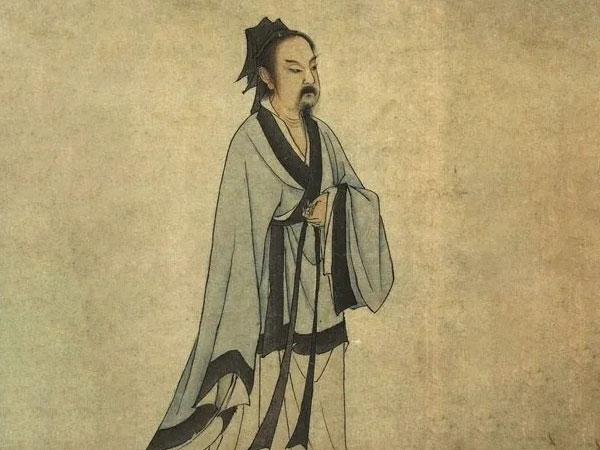
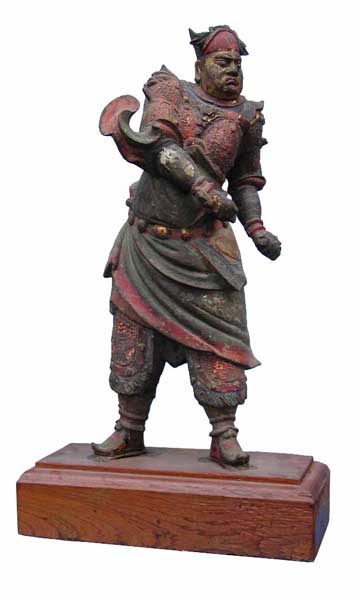
One of the stars of the Big Dipper
2026-04-15 11:51:31
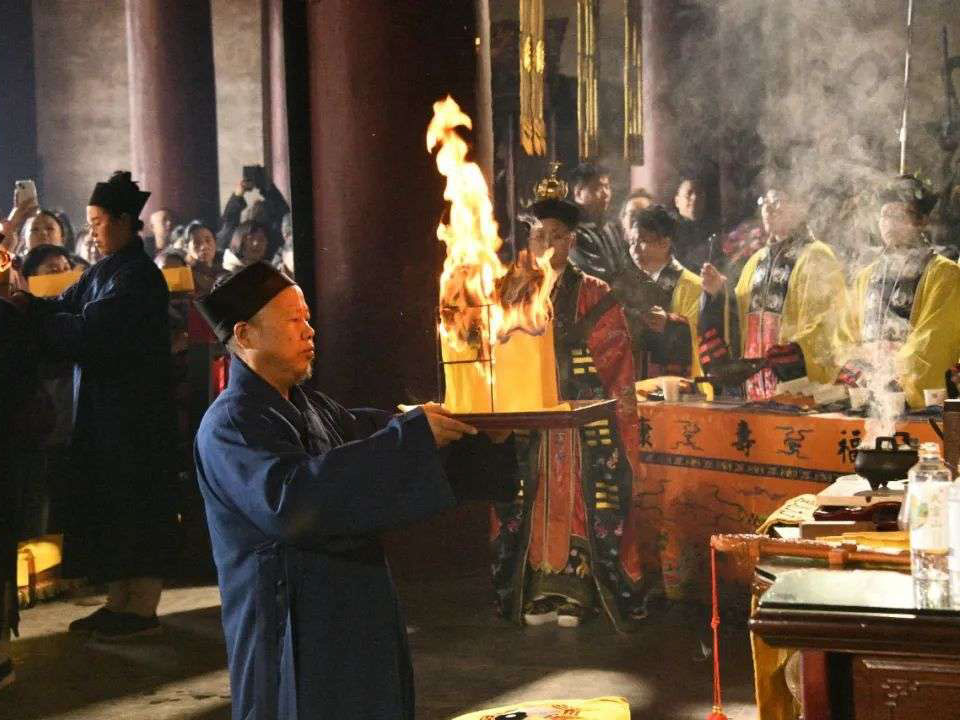
(1) The meaning of the ritual of fasting and Taoist ceremonies
2022-08-20 23:32:13
The original meaning of "zhai" was to be neat, harmonious an...
Yin GUI
2022-08-20 23:32:13
Chapter 27
2022-08-20 23:32:13
Chapter 72
2022-08-20 23:32:13
The couplet of the ancestral hall of the Wudang Mountain Temple
2022-08-20 23:32:13
Chapter 25
2022-08-20 23:32:13