


(V) An introduction to the commonly used Taoist rituals and ceremonies at present
2022-08-20 23:32:13
There are many commonly used Taoist rituals and ceremonies at present, roughly including: morning and evening altar services, welcoming the deceased, birthday celebrations, entering the altar, and spiritual cultivation, etc. The key points are described as follows. (1) Morning and Evening Altar Services: The daily morning and evening rituals of Taoist abbots. It originated approximately after the Northern and Southern Dynasties. According to the "Preface to the Morning and Evening Services Sutra", "Services refer to the practice of making lessons." To learn one's own merits and cultivate one's own path relies on the teachings of the sages of the past. By reciting the golden books and jade edicts of the sages, one can clarify one's true nature and heart. Only through science and education can the great way be promoted, and only through chanting and recitation can the original harmony be maintained. It is the gateway to humanity and the path to cultivate one's nature. Every day at the hours of MAO and You in Guandao Tu, one goes to the hall to perform religious practices. In the morning, one recites incense and praise, the opening sutra, the mantra for purifying the mind, the mantra for purifying the mouth, the mantra for purifying the body, as well as the Sutra of Tranquility and the Sutra of the Jade Emperor's Heart Seal, etc. In the evening, recite the "Bu Xu", "Kai Jing Ye", "Xuan Yun Mantra", "The Wonderful Sutra of the Supreme Cave Xuan Ling Bao for Saving Suffering and Eliminating SINS", "The True Sutra of the Primordial Heavenly Lord on Attaining Enlightenment in Heaven", etc. Singing praises and worshipping, reciting celestial scriptures, for the first purpose is to cultivate one's true nature and refine one's character; for the second, to pray for good fortune; for the third, to strengthen one's resolve in the Tao; for the fourth, to save the souls of the deceased; and for the fifth, to demonstrate the management of the Taoist atmosphere in the temple. (2) Zhu Jiang is a kind of ritual often used in the morning altar service of Taoism. "Zhu" means to respectfully invite and will be true to the divine. Zhu Jiang is to respectfully welcome the true God to the altar. After the morning ritual of transforming heaven and earth and distributing texts, through the manifestation of high power, the mighty spirit of the celestial deity is manifested, worship is offered, incense is offered, a declaration is made, and mantras (spiritual official mantras) are recited (sang) to show the resounding and powerful spirit of the patriarch. They descend upon the altar to protect the scriptures, the Dharma, and the altar, achieving a state of constant tranquility in the Taoist path. (3) The ritual of worshipping the Orphan is often used in the ritual of leaving the altar during the evening service of Taoism. "Ji" means to offer sacrifices or to liberate the deceased. I am a lonely soul. To offer sacrifices to the souls of the deceased is to honor the spirits of the deceased and provide them with solace. After the evening service was completed, the deacons followed the proper procedures and rituals. They expressed their love through high practice, lifted the Supreme Deity of Salvation, paid homage, offered incense, sprinkled clean water, made a declaration of love, and performed high practice by walking the celestial constellations and scattering food, hoping that the nectar would open the gates of hell and elevate the souls of the deceased to the celestial realm. (4) Birthday Celebration Rituals: The rituals used in Taoism for the birthday of the ancestors. "Zhu" means to celebrate, and "shou" means a birthday. "Zhu shou" means to celebrate the birthday of the ancestors. For instance, the 9th, 15th and 19th days of the first lunar month are respectively the birthdays of the Jade Emperor, the Celestial Official and the Qiu Ancestor. This ritual is performed at midnight on those days to celebrate the birthdays of the patriarchs. The procedure is as follows: Each deacon should act with dignity and propriety, perform high meritorious deeds and express their love. They should jointly raise the Celestial Lord of Longevity of the Esoteric teachings, offer incense and pay homage, raise the Celestial Lord of the Sacred Scriptures, recite the "Three Treasures Incense" melody, raise incense, raise the Celestial Lord of Cloud and Faith, declare the name of the Patriarch, recite the name of the Patriarch on the birthday of a certain patriarch, burn the name, and leave the class. (5) The celebration ceremony is also a ritual performed by Taoism on the birthday of the ancestors. "Qing" means to celebrate. "He he" means to celebrate the birthday of the patriarch. It is usually held during the daytime on the birthday of the patriarch. The procedure is as follows: Each deacon, as scheduled, offers incense and pays homage. Raise the Three Pure One Bodhisattva of Transformation, raise the Bodhisattva of the Dharma Master Treasure, raise the Bodhisattva of Incense Cloud and Faith, cast the incense Blessing mantra, cast the Power Spirit Mantra, declare the memorial, express the declaration, recite the edict (recite the edict of a certain ancestor on the birthday of a certain ancestor), burn the memorial, and leave the class. Through this ritual, we respectfully face the altar to celebrate the birthday of the ancestral master. (6) The Welcoming Ceremony: A ritual specifically used in Taoism for the morning of the Jade Emperor's sky tour. "Jie" means to welcome. "Jia" is the sacred chariot, referring to the Jade Emperor. The "Welcoming the Emperor" ritual refers to the court ceremony performed when welcoming the Jade Emperor. It is now holding the grand ceremony to welcome the Jade Emperor's sacred carriage at midnight on the 25th day of the 12th lunar month, which is also known as the "Welcoming the Imperial Procession". The procedure was as follows: After reciting the "True Sutra for Eliminating Disasters and Calamities" from the "Morning Service", the high priest knelt down to start the rhyme and the "Little Praise Rhyme", the supervisor offered incense and pressed the board, the high priest spoke the text, the high priest began the empty rhyme, the high priest held up the Three Jewels of the Great Luo, the high priest hung the hanging, the high priest outline and expressed his thoughts, the high priest spoke the text and raised the board of the Heavenly Lord. All the people chanted the coming Heavenly Lord of the Crane, and then left the hall to the Temple of Heaven and dismissed the service. Through this ceremony, we respectfully pay homage to the Yao Altar and invite the Jade Emperor to descend to the human world to bestow blessings, ward off disasters and prolong life. (7) The Great Dedication Ritual is often used during the completion of a Dharma assembly and is a general confession made for the completion of the assembly. The procedure is as follows: Gao Gong offers incense and speaks the text, Ti Ke begins the text, Gao Gong raises the Three Jewels of the Great Luo, Gao Gong lifts the hanging, Ti Ke raises "Respectfully facing the path", confesses and follows "Dedicating in accordance with the Dharma", Gao Gong recites the dedication text aloud, everyone recites the "Mi Luo Bao Gao" and "Dong Xuan Ling Bao Gao Shang Yu Huang's Original Practice Collection Sutra", Gao Gong begins to send flowers and praise, and leaves the class. Through this ritual, relying on the power of the Dharma, may SINS be eliminated, may the Dharma wheel be constantly turned, and may all beings be saved. (8) The Ritual of Entering the Altar Entering the altar, also known as ";Huabiao" or "Fenshu", is a very important ritual in Taoist Taoist rituals and is widely used in various large-scale Taoist ritual activities. For example, 金箓, 箓, 黄箓, or at large Taoist ceremonies, this ritual is held. The "Jinbiao" originated from the ancient Chinese prayer ceremony. Through the development of the Han, Northern and Southern Dynasties, and the Sui and Tang Dynasties, it gradually became more complex and unified until after the Song and Yuan Dynasties. However, due to the different systems of Taoist and Taoist inheritance, as well as the economic and cultural differences of the regions where they were disseminated, and even the variations in language and customs, there were significant differences in the exercises conducted in various places. For instance, the current "Jinbiao" ritual of Taoism in Shanghai is generally carried out in three steps. The first step is to open the altar: The master and the local Taoists offer incense at the altar, kneel to make a declaration, and the altar is transformed into a fairyland of the Yao Altar. They light all the lamps in the altar using the method of dividing the lamps, and then strike the gold and jade. After that, they rinse with water. Sprinkle the altar thoroughly. The second step is to invite the deities: pay homage to the five deities, invite the deities, and descend the deities. The third step is to pay homage to the altar: The monk and the Taoists, with the assistance of the three masters, descend to the altar. They silently recite the "Incense Burning Mantra" with great skill and perform the ritual before the official in charge of the altar. The official delivers the altar text to the Heavenly Court and then seals it. The monk draws a talisman on the altar to indicate the seal. Perform the ritual of presenting a watch, burn the watch and transform the procession. Gao Gong stepped on the celestial pole and the celestial pole to show that his primordial spirit had ascended to the Heavenly Court. He silently recited the memorial and declared to the heavens. After stepping on the memorial, Gao Gong gathered his primordial spirit. The monks and deacons thanked the gods and made offerings. After the memorial was completed, they left the hall. This is the core content of the instrument. Through this ritual, the Taoist priest presents the written prayers of the believers to the Heavenly Court to offer sacrifices to the heavens. All the saints descended upon the altar, bestowing blessings and prolonging one's age, while those who failed were saved. (9) Water and Fire Ritual is a commonly used ritual in Taoist rituals. "Water and fire" means true water and true fire. "Water and Fire Refinement" refers to using true water and true fire to refine the spirits of the deceased and liberate the souls of the deceased. It includes three types: Nine Refinements of the Corpse, Lingbao Refinements, and Nanchang Refinements. When the ceremony is held, a pool and a fire pit should be set up on the altar. The pool should be filled with real water and the fire pit with real fire. Among them, the true water is drawn into the pool at dawn, "in the east well, where no one has drawn water yet" (the "Great Dharma of the Supreme Purity and Spiritual Treasure"). After burning the water talisman, water is drawn into the pool by candlelight. The true fire occurs at noon on the sun. "Face, cut bamboo to get fire, and light it with a seal incense" (same as above). After the fire is lit, burn the fire talisman and light the charcoal in the marsh. The procedure is as follows: Offer incense, summon God, and burn down the true edict and divine generals. Gao Gong took his seat and summoned the generals. When the generals arrived, he first recited the true names of the five emperors. Summon the souls of the deceased, and let them be tempered by fire and water. Burn the nine talismans to bring vitality to the internal organs of the deceased. "Say precepts; "Judao Jingshi Bao" The Ten Precepts for Ghosts and Gods The Nine True and Wonderful Precepts Praise of the precepts and ordination; Read the talisman ultimatum; Gao Gong descends from his seat, sending his soul across the bridge. "Fanliao, ju Sanqing Le;" Drop out of class. The core of it is to summon the souls of the deceased and engage in a fierce battle between water and fire. Through this ritual, water and fire are refined together, and the transcendent state is destroyed. (10) The lantern ritual is a commonly used ritual in Taoist ceremonies. It refers to a kind of ritual with lamps as the main ritual implements, mostly held after sunset. Including: The Nine Netherworlds Lantern Instrument, the Beidou Lantern Instrument, the Zodiac Lantern, the Blood Lake Lantern Instrument, etc. The lantern ritual originated from the ancient Chinese sacrificial rituals. By the Northern and Southern Dynasties, there was already a position called "waiting for the lantern" among the altar attendants. By the end of the Tang Dynasty and the Five Dynasties period, a complete lantern ritual had been established in Taoist sacrificial ceremonies. During the Yuan Dynasty, lamp rituals were widely used in 于金箓 and jade 箓 monasteries. After development, they are generally divided into two major categories: the golden flute and 黄箓. The procedures of the 金箓 type of lamp ceremony are: entering the altar, enlightenment (understanding the meaning), taking refuge and praising, criticizing the scriptures, expounding explanations, and making dedications. The procedure of the 黄箓 type of lamp ceremony is: entering the altar, revealing the meaning, raising the name of the celestial venerable and praising, criticizing the sutra, expounding the explanation, and dedicating the merit. It can be seen that different lamp ceremonies have differences in the parts of raising the title of the Heavenly Lord and praising. This is related to breaking through prison and saving the deceased. The source of the fire in the lamp ritual is to obtain the fire source from the midday sunlight, and then light the lamps of the altar in the lamp distribution ritual. Through this ritual, the heavens are illuminated, continuing the light and breaking the darkness, reaching down to the Nine netherworlds of hell, and illuminating the Hall of No Blessings.
One of the stars of the Big Dipper
2026-04-15 11:51:31
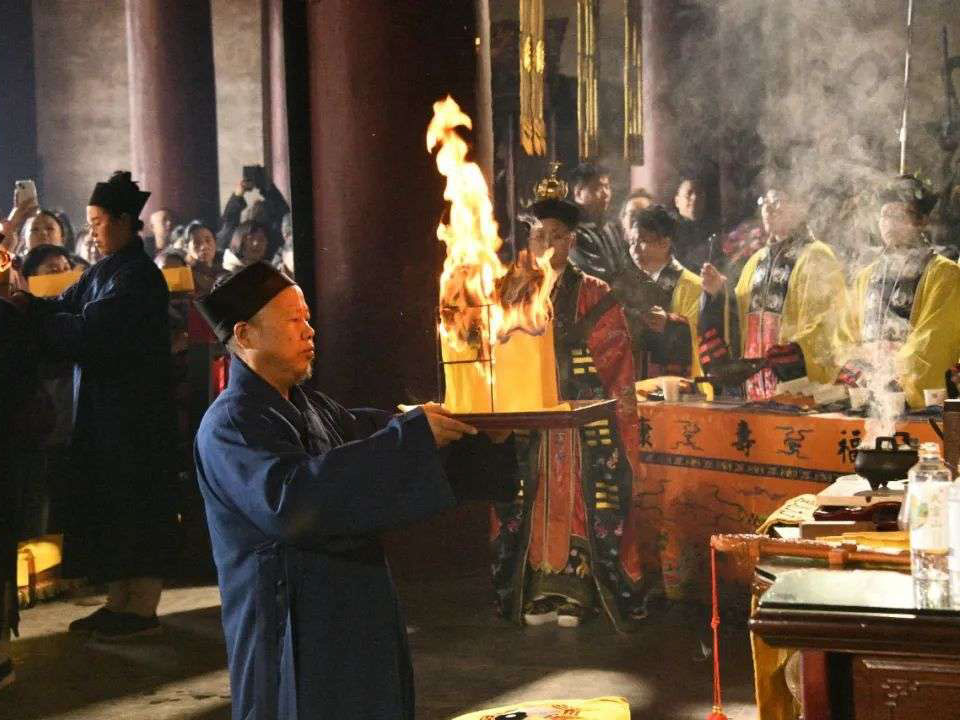
(1) The meaning of the ritual of fasting and Taoist ceremonies
2022-08-20 23:32:13
The original meaning of "zhai" was to be neat, harmonious an...
Yin GUI
2022-08-20 23:32:13
Chapter 37
2022-08-20 23:32:13
Chapter 47
2022-08-20 23:32:13
"Thunderbolt head"
2022-08-20 23:32:13
Chai Daoren
2022-08-20 23:32:13