


(V) Taoism during the Song, Liao, Jin and Yuan Dynasties
2022-08-20 23:32:13
During the more than 400 years of the Song, Liao, Jin and Yuan Dynasties (960-1368), various social contradictions were quite acute, and ethnic contradictions were particularly prominent. Under this special historical background, Taoism entered a stage of continuous reproduction and innovation. After a brief period of unrest and division during the Five Dynasties and Ten Kingdoms, the Northern Song Dynasty was established and the country was once again unified. The emperors of the Northern Song Dynasty inherited the policy of integrating Taoism, Confucianism and Buddhism from the Tang Dynasty and the policy of respecting and supporting Taoism. Among them, Emperor Zhenzong and Emperor Huizong were particularly renowned for their reverence for Taoism. In the fifth year of the Dazhong Xiangfu era (1012), Emperor Zhenzong of the Song Dynasty claimed that Zhao Xuanlang, the founding ancestor of the Zhao family and the "Heavenly Lord of Nine Heavens in Charge of Life Preservation", descended to the Yan 'en Hall. Thus, he was enfeoffed as the "Heavenly Emperor of the Nine Heavens of the Supreme Deity of the Holy Ancestors". The following year (1013), he devoutly bestowed upon Laozi the title of "Supreme Elder Lord of the Yuan Dynasty" and visited the Taqing Palace in Haozhou to pay homage to the statue of Laozi. During the reign of Emperor Zhenzong, he also built a large number of Taoist temples, summoned famous Taoist priests, and ordered Wang Qinruo, Zhang Junfang and others to edit the Taoist Canon. Emperor Huizong of the Song Dynasty held Taoism in even greater reverence. He called himself "the Taoist Lord and Emperor" and personally annotated Taoist classics. In the Imperial College and the Piyong School, the "Tao Te Ching", "Zhuangzi" and "Liezi" scholars were established. Adopting CAI Jing's words, this book records the events of Taoism throughout history. Zhi, named "History of the Dao"; He also changed the titles of monks and nuns to virtuous ones, ordered them to wear Taoist robes and join Taoism. (2) The development of the theory of alchemy by Chen Tuan and Zhang Boduan: After the brewing and accumulation during the Sui, Tang and Five Dynasties periods, the study of alchemy had already spread widely within the Northern Song Dynasty. Famous Taoists such as Chen Tuanchuan in the early Song Dynasty and Zhang Boduan during the reign of Emperor Shenzong inherited the cultivation theory of "cultivating elixirs and following the same path as the creation of heaven and earth" from Wei Boyang's "Zhouyi Cantongqi", and recently carried on the inner elixir cultivation techniques of Liu Guzhi, Cui Xifan, Zhongli Quan, Lu Dongbin, Shi Jianwu and Peng Xiao. They further "deduced the way of heaven to clarify human affairs", expounding and promoting the cultivation theory and inner elixir way of Taoism. Chen Tuan was a renowned Taoist priest at the end of the Five Dynasties and the beginning of the Northern Song Dynasty. He practiced Taoism on Mount Hua and was given the title "Mr. Xi Yi" by Emperor Taizong of the Song Dynasty. He devoted his entire life to the art of health preservation and authored the "Wuji Tu" (engraved on the stone wall of Mount Hua) and the "Xian Tian Tu". He also wrote the "Zhili Pian" (81 chapters), which discussed Taoist cultivation. Chen Tuan's systematic summary of the five stages of internal alchemy cultivation (namely, attaining the insight, self-cultivation, harmony, obtaining the medicine, and transforming the body to restore deficiency) and the four stages of practice (namely, establishing the foundation, refining essence into qi, refining qi into spirit, and refining spirit to restore deficiency) had a profound influence on the later Northern and Southern schools. After Chen Tuan, during the Northern Song Dynasty, Zhang Boduan played a pivotal role in the cultivation and theoretical aspects of Taoism, bridging the past and the future. Zhang Boduan (984-1082), also known as Yuping Shu, styled Ziyang Mountain Man, was the grand master of internal alchemy theory during the Northern Song Dynasty. He authored works on internal alchemy such as "Wuzhen Pian", "Yuqing Jinsi Qinghua Miwen Jinbao Nei Yidan Jue", and "Four Hundred Characters of Jin Dan". His representative work, "Wuzhen Chapter", made a significant contribution to the development of the theory and methods of alchemy. Zhang Boduan believed that although Taoism, Confucianism and Buddhism are divided into three, Taoism is unified. He advocated that the golden elixir was the ultimate way to cultivate immortality and emphasized that "life" should come first and then "nature". The "Suzhen Chapter" states: "To study immortals, one must study celestial immortals; only the golden elixir is the most auspicious." It also holds that "if one does not recognize the true lead and correct the ancestors, all efforts will be in vain." Reject cultivation methods and techniques that are different from the Golden Elixir. The "Wuzhen Chapter" is as renowned as the "Zhouyi Cantongqi" and is regarded by Taoism as the orthodox of internal alchemy. After the Northern Song Dynasty, all the masters of internal alchemy in Taoism had their ancestors recite the "Wuzhen Chapter". Under the influence of his theory of internal alchemy, his fourth disciple Bai Yu Zhan (1194 -?) At that time, what was called the "Southern Branch of the Jindan School" (in contrast to the Northern Branch of the Quanzhen School) was formed. Zhang Boduan's thoughts had a significant influence on Taoism in later generations. He was revered as the founding master of the Southern School of the Neidan Sect in Taoism and was respectfully called "Ziyang Zhenren". (3) The Emergence of the New Taoist School and the Evolution of the old jing箓 school of Taoism after the Song Dynasty's southward migration, a situation was formed where the southern Song was in confrontation with the jin and Yuan in the north and south. At that time, various sects emerged within Taoism. During the Jin and Yuan Dynasties, new Taoist schools such as Taiyi Dao, Zhen Dao, and Quanzhen Dao successively appeared in the north. Tai Yi Dao was Xiao Baozhen of Weizhou (now Jixian County, Henan Province). -1166) was founded in the early Jin Dynasty. This school attaches great importance to the 符箓 ritual, stipulating that taoists must become monks. After the seventh tradition, it gradually merged with the Zhengyi school. The True Way was also founded in the early Jin Dynasty, with Liu Deren (1120-1180), a native of Leling, Cangzhou, as its founder. This school takes the Tao Te Ching as its guiding principle. It does not advocate the practice of alchemy and immortality, but rather attaches great importance to silent prayer, summoning and healing people, and advocates monastic life and asceticism. After the Yuan Dynasty, it gradually declined and vanished, or had merged into the Quanzhen School. Quanzhen Taoism was the largest and most important of the three new Taoist sects that emerged in the north during the Jin Dynasty. It was founded during the Dading period of the Jin Dynasty (1161-1189) by Wang Chongyang. This school advocated the unity of the three religions. In terms of cultivation methods, it emphasized the cultivation of inner alchemy and did not favor talismans and the arts of yellow and white. It stipulated that Taoists must live in palaces and temples, not have wives, and follow a vegetarian diet. It also established strict rules and regulations. Wang Chongyang, the founder of Quanzhen Taoism, had seven disciples, known as the "Seven Sons of Quanzhen". All of them made significant contributions to the spread and development of Quanzhen Taoism in the north. Among them, Qiu Chuji stands out the most. Qiu Chuji (1148-1227), styled Tongmi and with the pseudonym Changchunzi, was from Qixia, Dengzhou, Shandong Province. At the age of 19, he became a monk and entered Taoism. The following year, he became a disciple of Wang Chongyang at the Quanzhen Hall in Ninghai, Shandong Province. When Qiu Chuji took over the teaching, it was the time of the Jin and Yuan dynasties. In the third year of Xingding of the Jin Dynasty (1219), Emperor Ningzong of the Song Dynasty sent envoys to summon him, but he did not respond. When Emperor Taizu of the Yuan Dynasty heard of his name, he sent officials from Naiman (now within the territory of Mongolia) with an imperial edict to summon him. Qiu Chuji, at the age of 71, led his eighteen disciples and set out from Laizhou, traveling thousands of miles and enduring numerous hardships. It took them more than two years to reach the Great Snow-capped Mountains in the Western Regions to meet Genghis Khan. During the reign of Emperor Taizu, he was on a westward campaign. Every day, he was engaged in battles and every word he spoke. If he wanted to descend, he must care not to be fond of killing. When it comes to governance, the fundamental principle is to Revere heaven and love the people. When asked about the way to longevity and long-term vision, he was told that it was essential to have a clear mind and few desires. (See "The History of the Yuan Dynasty: The Biography of Qiu Chuji") Emperor Taizu deeply agreed with his words and treated him with great respect, treating him as a deity and appointing him to govern all the monks in the world. He also ordered the exemption of taxes from the Quanzhen Taoist Land. This laid the foundation for the prosperity of Quanzhen Taoism. In 1224, Qiu Chuji returned to Dadu (now Beijing) and stayed at Changchun Palace (now Baiyun Taoist Temple in Beijing), which then became the activity center of the Quanzhen School. Qiu Chuji taught here and established the school of Longmen. Under his efforts, the number of temples and the number of Taoists in Quanzhen Taoism expanded rapidly, and Quanzhen Taoism entered its heyday. Since the rise of Quanzhen Taoism, there has been a division between the "Northern School" and the "Southern School" in Taoism. The Southern Sect refers to the school of thought passed down by Zhang Boduan of the Northern Song Dynasty, which was mainly active during the Southern Song period. By the middle and late Yuan Dynasty, Chen Zhixu (1289-?) had a teacher-student relationship with both the Northern and Southern schools. Under the efforts of Wang Chongyang, the Ziyang School also returned to Quanzhen and was called the "Southern School", while the Wang Chongyang School was called the "Northern School". At the same time as the rise of the Three Great Schools in the north, in the south, apart from the old Three Mountain Talisman schools such as the Dragon and Tiger Celestial Master, Maoshan Shangqing, and Gezao Lingbao, there were many people who claimed to have received unique teachings and established their own schools. The main ones were the Shenxiao School, which evolved from the Celestial Master School; the Qinghui School, which evolved from the Shangqing School; and the Donghua School and Jingming School, which diverged from the Lingbao School. Among them, the Jingming Dao is particularly worth mentioning. This sect claims that its founding ancestor is Xu Xun, a Taoist priest of the Eastern Jin Dynasty. However, the actual brewing stage was in the early Southern Song Dynasty. According to legend, Xu Xun descended upon He Zhen Gong and imparted the pure and clear classics expounding the "laws of loyalty and filial piety". By the early Yuan Dynasty, Liu Yu, the son of Yuzhenzi, took Xishan in Jiangxi Province as the center of his activities and officially formed the Jingming Dao. Its mission was to take loyalty and filial piety as the foundation, to Revere heaven and the Tao, and to save life and save death. After the Yuan Dynasty, it was merged into the Zhengyi School. After the Yuan Dynasty unified the country, the Tianshi Dao spread rapidly in the north, while the Quanzhen Dao developed significantly in the south. The other relatively weaker sects gradually merged with the Celestial Master Dao and the Quanqi Dao. After the symbolic sects (such as the Maoshan Sect, the Gezao Sect, etc.) merged with the Celestial Master Dao (the Dragon and Tiger Sect), they were collectively referred to as the Zhengyi Dao, thus forming the Zhengyi and Quanzhen Dao sects. It has been passed down through the Yuan, Ming and Qing dynasties to the present day. Zheng Yi did not become a monk but mostly engaged in 符箓 Taoist rituals to pray for blessings and ward off disasters. The Quanzhen School advocates "refining the qi with the whole spirit and becoming a monk to cultivate the true self", and has established the precepts system and the monastic system.
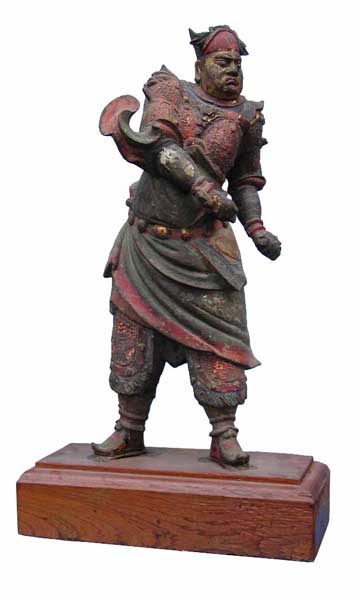
One of the stars of the Big Dipper
2026-04-15 11:51:31
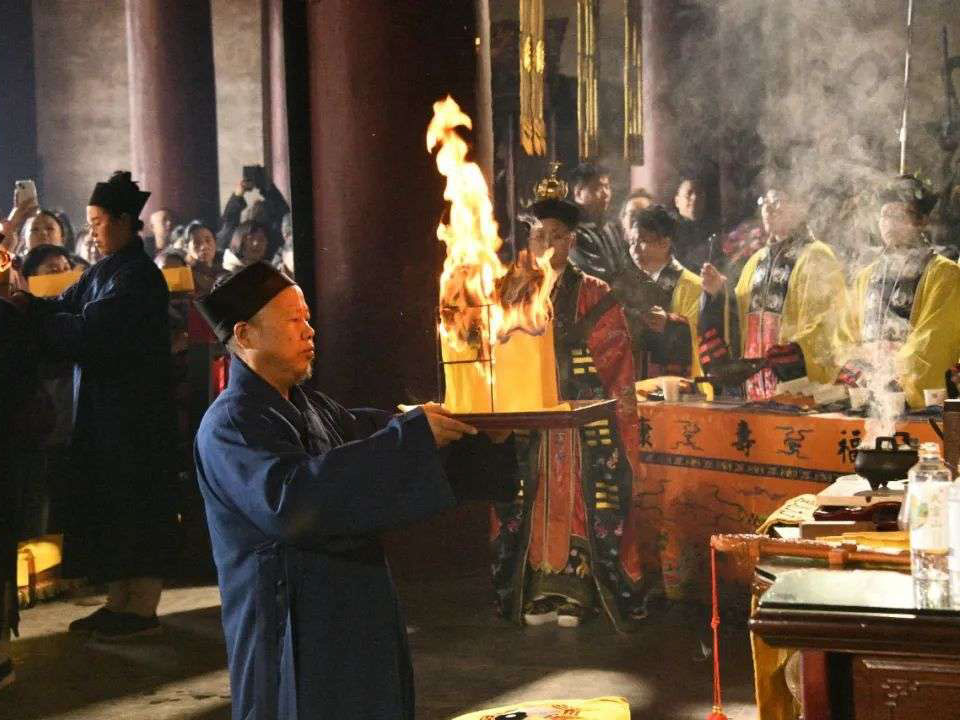
(1) The meaning of the ritual of fasting and Taoist ceremonies
2022-08-20 23:32:13
The original meaning of "zhai" was to be neat, harmonious an...
Yin GUI
2022-08-20 23:32:13
Chapter 27
2022-08-20 23:32:13
Chapter 72
2022-08-20 23:32:13
The couplet of the ancestral hall of the Wudang Mountain Temple
2022-08-20 23:32:13
Chapter 25
2022-08-20 23:32:13