


(1) The Origin of Taoism
2022-08-20 23:32:13
(1) Worship of ghosts and gods
The worship of ghosts and gods has existed since the primitive society. The ancestors regarded the sun, the moon, the stars, wind, rain, thunder, lightning, mountains, rivers and peaks as all governed by gods, thus developing a sense of awe and paying homage to them. At that time, in addition to believing that all things had spirits and thus developing a worship of nature, the ancestors also held that the soul did not perish after death, and thus a worship of ghosts emerged. Various funeral rituals and rituals for worshipping and exorcising ghosts gradually took shape as a result. The Annals records: "When the Yellow Emperor passed away, his minister Zuo Che took his clothes, hat and a few staffs to worship him in a temple." By the Shang Dynasty, the prehistoric nature worship had developed to the belief in God and destiny, initially forming a god-centered system of deities. When encountering problems, shamans would ask God for answers through 卜筮. The primitive ghost worship has developed into ancestor worship based on blood ties and combined with clan relations, and its ancestral worship activities are held regularly. During this period, religious professionals specializing in communicating with ghosts, gods and humans emerged - the shamans. Among them, witchcraft involves subduing deities through singing and dancing, and there is also a set of talismans to drive away evil spirits. Zhu, with words that please the gods, is the ritual person responsible for welcoming and praying to the gods in religious sacrificial activities. They treat diseases, 卜筮 auspiciousness and inauspiciousness, draw talismans and recite incantations, etc. At that time, both the state and society were dominated by the shamans. During the Zhou Dynasty, the belief in ghosts and gods further developed, and the ghosts and gods worshipped had formed three systems: celestial gods, human and ghost, and earth deities. And the worship of ancestors and deities is placed on par with the sacrifice to heaven and earth, known as revering heaven and honoring ancestors. It is said that all things originate from heaven and human beings from their ancestors. The reason why Taoism became a polytheistic religion in later times originated from the ancient belief in ghosts and gods. In later times, the Taoist practice of sacrificial ceremonies and Taoist rituals was also closely related to the ancient rituals and systems of worshipping ghosts and gods.
(2) Belief in immortals
The belief in immortals can also be traced back to the primitive society of ancient China. One of the pieces of evidence is the Shan Hai Jing. This scripture records the myths and religious beliefs of the primitive society in our country, and its content is quite rich and systematic. It provides a basis for the distant origin of Taoist immortality studies. In the Shan Hai Jing, the belief in immortality was put forward. He put forward the existence of immortals and feathered scholars. It describes the immortal Tian Du. It records the sacrificial rituals and strange alchemy techniques. In the primitive society of ancient times, some people had already begun to study immortals. According to historical records, the Yellow Emperor Xuanyuan "studied immortality while fighting" and "sought enlightenment from Guangchengzi". Later, he achieved success in his cultivation and ascended to heaven on a dragon in broad daylight by Dinghu Lake. By the Warring States Period, the belief in immortals had become quite widespread. At this time, many works recording the legends of immortals emerged, and these books contained a considerable amount of text about the legends of immortals, fairylands, and elixirs. As described in "Zhuangzi: Free and Easy Wandering", there is such a description: "On the mountain of Miao Gu She, a god lives there. His skin is as white as ice and snow, and he is as graceful as a virgin. He does not eat grains, breathes the wind and drinks the dew, rides on the clouds, and rides the wind and dragons, roaming beyond the four seas." Other works, such as the "Tang Wen" chapter, "Huang Di" chapter, and "King Mu of Zhou" in the book "Lie Yu", as well as Qu Yuan's "Li SAO", "Tian Wen", and "Nine Songs", all depict the fairyland as beautiful and mysterious. The immortals in these works are also depicted as extraordinary figures who are free from the cycle of life and death, extremely serene and empty, unburdened by material things, and free and unrestrained, capable of soaring through the clouds. Similar descriptions are also found in the "Huainanzi" and "Records of the Grand Historian" of the Han Dynasty. With the emergence of the concept of immortals, alchemists seeking fairylands and immortals and spreading the formula to become immortals came into being. They combined the doctrines of immortals and alchemy with Zou Yan's (a renowned alchemist of the Warring States Period) theory of Yin-Yang and the Five Elements to form the Fangxian Dao, which was mainly popular among the upper classes of the Yan and Qi states. Its form was disintegrated and transformed, relying on ghosts and gods, with the hope of achieving immortality and becoming an immortal. From the middle and late Warring States Period (475 BC - 221 BC) to the reign of Emperor Wu of Han (Liu Che, 140 BC - 87 BC), under the instigation of alchemists (also known as immortals) and emperors, generals and ministers, the famous event of going to the sea to seek the elixir of immortality in Chinese history broke out. King Wei of Qi, King Xuan of Qi, King Zhao of Yan, Emperor Qin Shi Huang, Emperor Wu of Han and others all sent alchemists to the Three Sacred Mountains on the sea in search of immortals and elixirs of immortality, and the scale of their efforts grew larger and larger. At that time, the most renowned alchemists included Song Wuji, Zheng Boqiao, Zou Yan, Xu Fu, Lu Sheng, Li Shaojun and others. The unique belief in immortals in our country has been passed down through the ages. By the middle and late Eastern Han Dynasty, it was inherited by Taoism and became the core content of Taoist beliefs. After Emperor Wu of the Han Dynasty, the Fangxian Dao gradually combined with the Huang-Lao School and evolved into the Huang-Lao Dao.
(3) The Huang-Lao School of the Han Dynasty
During the Western Han Dynasty, the reigns of Emperor Wen and Emperor Jing (179-141 BC) governed the country with the philosophy of "quietness and non-action" of Huang-Lao, allowing the people to rest and recuperate. They tried not to interfere in various social production activities and the lives of the common people, allowing them to develop naturally. Thus, a political doctrine mainly based on the thoughts of Huang-Lao Taoism was formed, which is known as "the art of the ruler's southern direction". The historical circle refers to this period as the "Reigns of Wen and Jing". Therefore, the studies of Huang-Laozi flourished. The Huang-Lao School originated approximately in the middle of the Warring States Period in the State of Qi. The content of the Huang-Lao School in the Han Dynasty was rather complex. Besides the aforementioned "The Art of the Ruler's Southern direction", it also included the thoughts of Yin-Yang and the Five Elements as well as the ideas of immortals. After Emperor Wu of Han, Liu Che, ascended the throne, he abolished all schools of thought except Confucianism, but still held the belief in immortals in high regard. At this time, the alchemists began to combine the theory of immortals with that of the Yellow Emperor, and started to integrate the study of immortals with the study of Huang-Lao. Those who called immortals were all attributed to the Yellow Emperor. In the fourth year of the Yuanding era of Emperor Wu of the Han Dynasty (113 BC), the alchemists of Fenyin obtained a precious tripod from the soil and presented it to the emperor. They said that the Yellow Emperor had also obtained a precious tripod in the same year, widely held Fengshan ceremonies, and often met with the gods. It is also said that the Yellow Emperor was a deity waiting for the twelve floors of the five cities. It is also said that the Yellow Emperor fought and learned to be an immortal, then fought with supernatural powers, and finally rode a dragon to ascend to heaven. After hearing this, Emperor Wu of Han was extremely envious and exclaimed, "Alas!" If I were as sincere as the Yellow Emperor, I would regard my wife as if she were a worn-out shoe!" At this time, the emperors and officials had already regarded the Yellow Emperor as a deity. By the Eastern Han Dynasty, people not only continued to Revere the Yellow Emperor but also held Laozi in high regard. According to the "History of the Later Han Dynasty: King Ying of Chu", "In his later years, Ying was even more fond of Huanglao and learned to be the Buddha (the pagoda), fasting and offering sacrifices." In the eighth year of Yongping (65) during the reign of Emperor Ming of Han, an edict was sent to King Ying of Chu, stating: "The King of Chu will recite the humble words of Huang-Lao, visit the Benevolence Shrine of the Pagoda, keep a pure vegetarian diet for three months, and swear an oath with the gods." Wang Fu, who served as the magistrate of Chongquan during the Yongping period (58-75) and as the governor of Yizhou during the Yuanhe period (84-86), praised in the "Stele of Laozi and the Holy Mother" : "Laozi is the Dao. He was born before the formless, rose before the primordial, walked at the primordial of the primordial, floated in the six void, entered and exited the netherworld, observed the unjudged mixture, and discerning the undistinguished clear and turidity." At this time, Laozi was revered as the embodiment of the "Tao". By the time of Emperor Huan of the Eastern Han Dynasty (147-167), the combination of the study of immortals and the study of Huang-Lao had officially formed the Huang-Lao Way. The "Biography of Wang Huan" in the "History of the Later Han Dynasty" records: "During the reign of Emperor Huan, he served the Huang-Lao Sect and completely destroyed all the ancestral temples." Emperor Huan of Han was a devout believer in the Huang-Lao Way. In the eighth year of Yanxi (165), he sent people twice to "Zhiku County to worship Laozi". The following year, he personally enshrined Laozi in the Zhuolong (Palace), set up a canopy for him to sit on, and used the heavenly music in the suburbs. At this time, Laozi had become the most revered deity. (From the "History of the Later Han Dynasty: Sacrifices") Huanglao Taoism emerged after Fangxian Taoism and thus transitioned to Taoism, being an important part of the birth of Taoism. The Yellow Emperor and Laozi, who were revered by Huanglao Taoism, were later regarded as the supreme deities by Taoism. The Huang-Lao theory also became the theoretical foundation of Taoism in later generations.
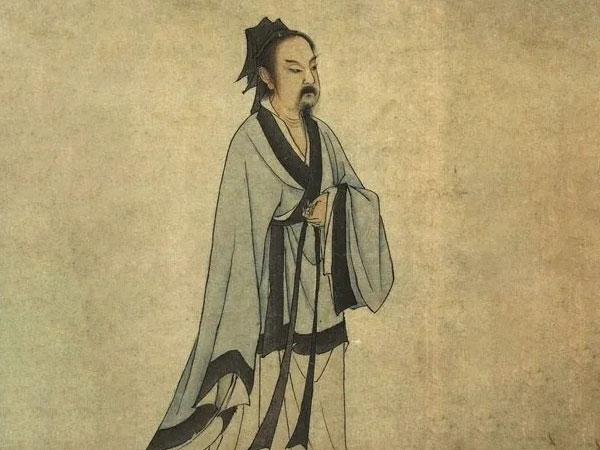
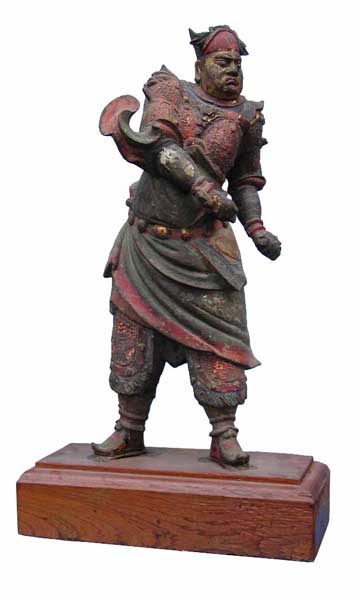
One of the stars of the Big Dipper
2026-04-15 11:51:31
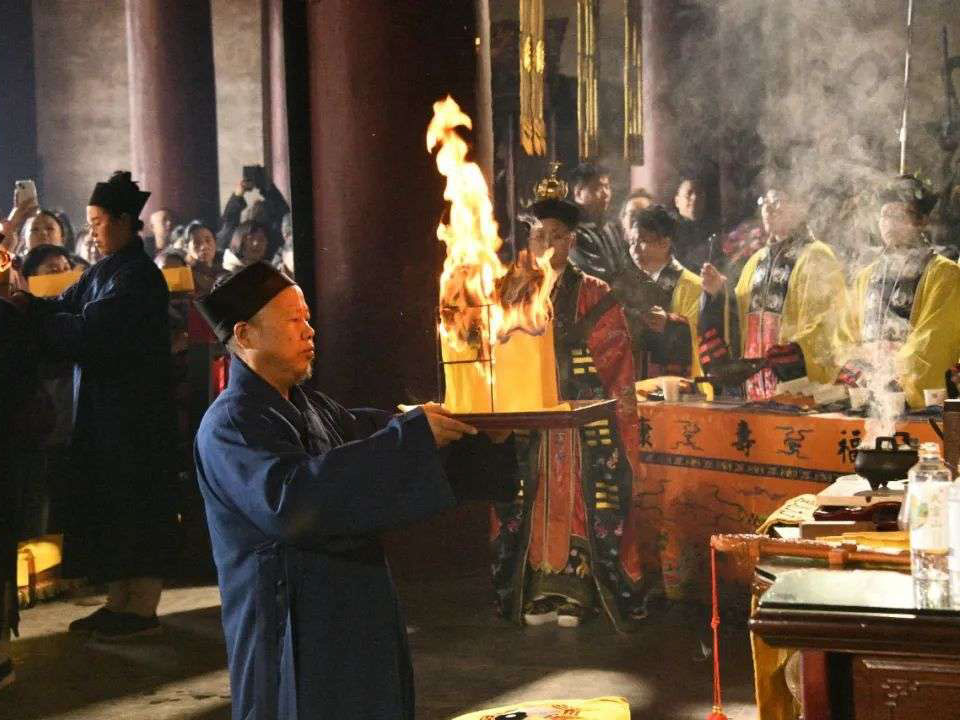
(1) The meaning of the ritual of fasting and Taoist ceremonies
2022-08-20 23:32:13
The original meaning of "zhai" was to be neat, harmonious an...
Yin GUI
2022-08-20 23:32:13
Chapter 27
2022-08-20 23:32:13
Chapter 72
2022-08-20 23:32:13
The couplet of the ancestral hall of the Wudang Mountain Temple
2022-08-20 23:32:13
Chapter 25
2022-08-20 23:32:13