


Zhang Qingye
2022-08-20 23:32:13
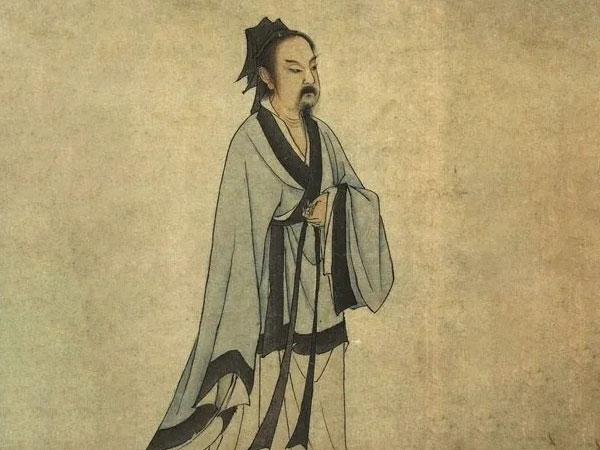
Zhang Qingye (1676-1763) was a Taoist priest in Wudang during the Qing Dynasty. His original name was Zihuan and his pseudonym was Zimu Daoren. According to the "Brief History of Taoism on Wudang Mountain" citing the "Concise Dictionary of Taoism", Zhang Qingye was from Changzhou (now Suzhou, Jiangsu Province). He was good at writing and calligraphy in his youth and was also skilled in poetry. He once traveled far and wide, and when he reached Taizi Slope on Wudang Mountain, he became a disciple of the immortal Yu Taiyuan and became a monk to cultivate the Tao. In the seventh year of the Yongzheng reign (1729 AD), he presided over the Wu Hou Shrine, keeping only the Qing Xu and studying the "Yin Fu Jing" every day and night. In the eighth year of the Qianlong reign (1743 AD), An Hongde, the governor of Huayang, and Xia Shao, the governor of Chengdu, renovated the Qingyang Palace and invited Qingye to preside over the palace affairs. Zhang Yilao expressed his gratitude and resigned. So he recommended his disciple Wang Yicui to take the position. He himself shuttled between the Wuhou Shrine and the Qingyang Palace. Several years later, a hanging bell was erected in the Qingyang Palace to receive Taoists from all directions. For a time, a large number of Taoists gathered, forming a vast jungle. He was moved by the fact that "the origin and development of the immortal school are almost extinct today", and in order to promote the essence of the Dao, he wrote "Xuanmen Jiebai". The book holds that the foundation of spiritual cultivation lies in purity and truthfulness, and the three teachings are the dominant ones, namely filial piety, fraternal duty, loyalty and trustworthiness. It advocates the promotion of convenient means and the accumulation of good deeds. In the 19th year of the Qianlong reign, he compiled "Yin Fu Fa Mi", which developed the theory of the Southern School of Taoism. Meng Wentong's "Postscript to the Secret Collation of Yin Fu Fa" states that this book "integrates the Confucianism and Buddhism of the Tang Dynasty and later, but selects their essence", all of which are "a way to understand the heart and gain self-enlightenment, and thus not a classic for general interpretation of sentences." It is said that Zhang also wrote "The Collected Works of Tan Dong". Zhang Qingye passed away in the 28th year of the Qianlong reign (1763 AD) at the age of 87.
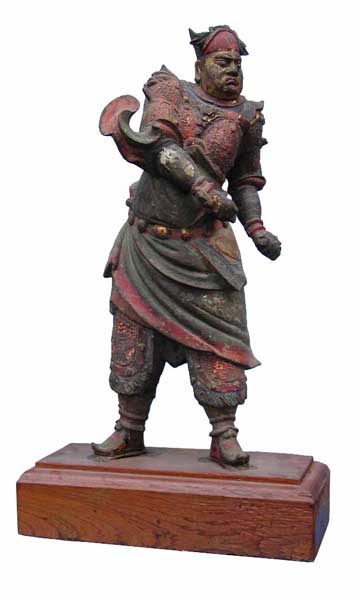
One of the stars of the Big Dipper
2026-04-15 11:51:31
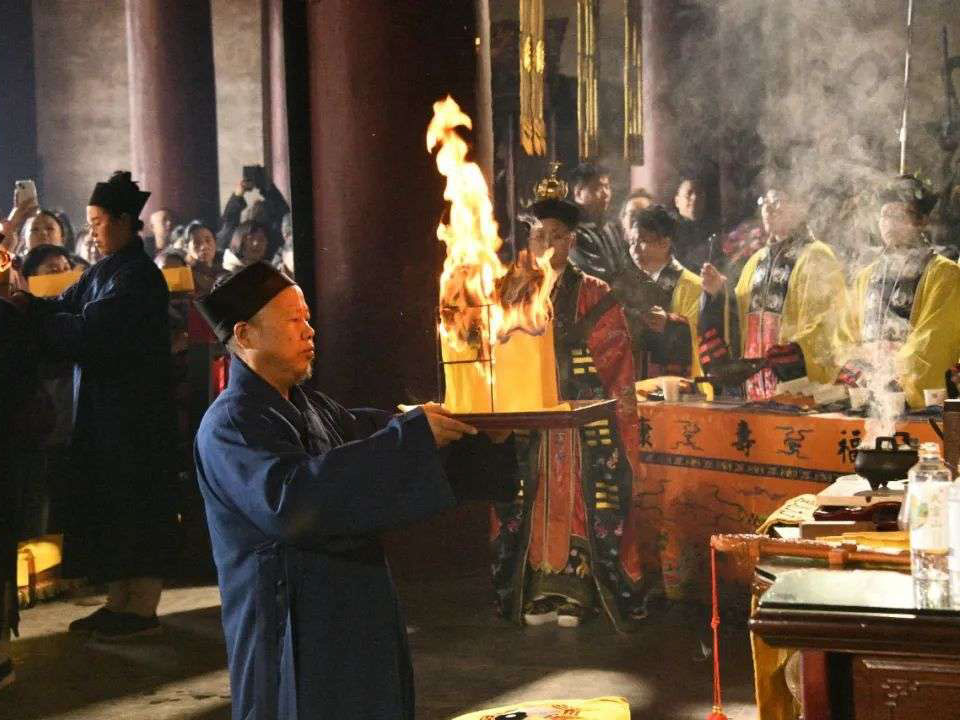
(1) The meaning of the ritual of fasting and Taoist ceremonies
2022-08-20 23:32:13
The original meaning of "zhai" was to be neat, harmonious an...
Yin GUI
2022-08-20 23:32:13
Chapter 27
2022-08-20 23:32:13
Chapter 72
2022-08-20 23:32:13
The couplet of the ancestral hall of the Wudang Mountain Temple
2022-08-20 23:32:13
Chapter 40
2022-08-20 23:32:13