


Zhang Shouqing
2022-08-20 23:32:13
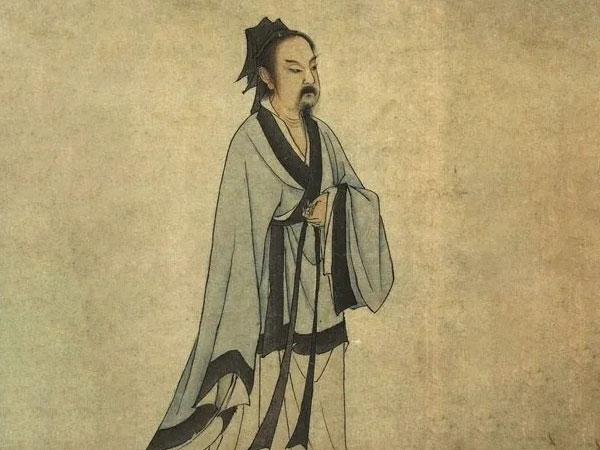
Zhang Shouqing, whose given name was dong 囦 and whose pseudonym was Yuexia sou, was from yidu, hubei province (the old name is still used). The Taoists of Wudang during the Yuan and Ming dynasties were particularly renowned in the Yuan Dynasty. According to the "Great Mountain Taihe Mountain Annals" of the Ming Dynasty, Zhang Shouqing studied Confucianism at a young age and later held a minor official position. In the 21st year of the Zhiyuan era (1284 AD, the first year of the Zhi era of Emperor Shizu), at the age of 39 (born in the second year of the Xianchun era of Emperor Duzong of the Southern Song Dynasty, that is, 1266 AD), he became a monk on Wudang Mountain to visit his master in September of the same year upon hearing the name of Lu Dayou, a high-ranking Taoist priest of Wudang. At that time, Lu Dayou was also certain that this disciple of his would come to become his disciple and had already mentioned it to the other disciples. So, when Zhang Shouqing came to become his disciple, Lu Dayou said, "I have been waiting for you for a long time." So he imparted to him the method of cultivating golden elixirs and clarified the subtle and profound essentials. In the second year after Zhang Shouqing arrived at Wudang Mountain, that is, in the 22nd year of Zhiyuan, his teacher Lu Dayou passed away. So he took Ye Yunlai, Liu Daoming and Zhang Daogui as his teachers. After that, he followed his master and fellow Taoists to clear mountains and build roads, establish temples, plant trees to revitalize the mountains, reclaim wasteland for farming, and offer incense. He spared no effort and achieved remarkable merit. Later, he led some of the Taoist followers to establish the Nanyan Tianyi Zhenqing Palace, which was completed after twenty-seven years of hard work. In the third year of the third lunar month (1310 AD), the empress dowager replied that she had heard that Zhang Shouqing was highly accomplished in Taoism and sent a mission to hold a 金箓 grand ceremony and recruit him into the palace. In the first and second years of the reign of Emperor Renzong of the Yuan Dynasty, the capital suffered from continuous drought. The imperial family summoned Zhang Shouqing to the capital to pray for rain, and his prayers were answered repeatedly. The empress dowager bestowed generous rewards. But Zhang Shouqing would bestow rewards upon all his followers, "not a single penny for personal gain." Zhao Mengð « youdaoplaceholder3 ¯, then a Hanlin scholar who was in charge of writing imperial edicts for the court, praised him, saying, "His conduct is truly unique and unparalleled. It is rare in the world to praise his noble morality. This time upon his return to the mountain, the imperial court bestowed upon Zhang Shouqing a plaque of the Nan Yan Palace and awarded him the title of "The Immortal of the Mystic and the Supreme Harmony", and he was in charge of the official affairs of the Wudang Sect. Before and after this, the various palaces and temples in Wudang were also successively incorporated into the official system, with positions such as deputy director and abbot A and B being established. Regarding Zhang Shouqing's visit to the capital to pray for rain during the reign of Emperor Huangqing and his situation, the Yuan Dynasty poet Fan Deji (1272-1330 AD) composed a five-character poem titled "Sending Zhang Lian Back to Wudang Mountain" at that time, in order to send Zhang Shouqing back to the mountain, providing a detailed account. The poem goes: Zhang Jun, a native of Yingzhou, came to Wudang as a guest. When he first came to Wu, he only wore the Xie Gong clogs. Hundreds of disciples, a little more to serve. Slay the thatched ox and erect ten thousand pillars; gaze at the golden and green from the air. Thirty years of hard work, never resting on the bed at night. To discipline ghosts and gods, one's clothes are as short as ink. In the first year, a winter drought broke out and Zhu set fire to the four countries. The wild valley is scorched, and in June, the Kinden is red. The imperial court did not love him either. He sacrificed GUI Bi. The shamans and the long history have no news of their singing and dancing. When the emperor was waiting for the imperial edict to act, the ministers and nobles did not recognize him at first. One day, the language of heaven was passed down, and strategies for alleviating drought were sought. The ruler and his subjects are humble and foolish; fate is unpredictable. Yin and Yang have opening and closing, and this is truly the responsibility of the wise. The nobleman continued his speech, saying that things are now full of thorns. An imperial edict has been issued to the governor of Jingguang to obtain the grain and silk for transportation. If this is to be resolved from the inverted hanging, only Duan Ze will be responsible for the sacrificial affairs. When you hear this, you still insist on giving in, and your heart is filled with internal worry and caution. The white jade gate is adorned with flying seals, and the bold and painstaking efforts are devoted to the painting. In fact, my talent is rather limited; in fact, my learning is 迮 lacking. I have a heart full of desire to assist the emperor in his virtue. The empress has always loved the people, but now they are suffering from drought. Or if there is a cause for the crime, the emperor will also reissue it. There are various ways to express gratitude and different forms of incantations and prohibitions. In the first class, I offer clear water; in the second class, I examine metal and stone. At night, when the night prayer was given, the sumptuous and refreshing system was set up. For the Dongshi Gate of the altar, it is the sacred book of the Dharma spirit. In the courtyard, the black Wu flag flutters in the shade of black millet. With a wave of his hand, Junlin's anger soared to the heavens. Command the Eastern dragon and roll the water on the east side of the sea. Command the Western dragon and roll the water slightly westward. In the north and south as well as the central area, each side takes the lead in their duties. On a certain day in the year of the Rat, fifty carvings were missed. I stand on the altar and must not offend the paintings. Fenglong and Feilian, and Bi Li. You will gallop with the wind; you will strike with lightning. Your clouds are like Feng Gouli, and your rain will surely be three feet long. You do not obey your oath, nor fear God's command. When the fruit responds, the marsh will be in turmoil for seven days. Often when people are in a difficult situation, if you do not exert your strength. When a high official reports to the emperor, he is sure to praise him. You can favor names, you can wear 禓. If you are called the sage of the emperor, you will be treated with sincerity. How dare I take the credit of heaven? The lack of caution lies in the urgency of planning. ... . In the first year of the Yanyou era, when Emperor Renzong of the Yuan Dynasty bestowed the title of "Divine Parent" upon the Xuanwu Emperor of Wudang Mountain, he also specially issued an edict to Zhang Shouqing. The imperial edict reads: "I commend the cultivators and those who have achieved enlightenment. They are both physically and mentally excellent. They live in seclusion in the mountains and forests, with pure and complete essence and energy. They can stir up thunderstorms. It is truly a rare sight in this world." If one wishes to offer praise, he should bestow it upon Huan Han. Master Ningzhen Lingmiao Baohe, the abbot and palace attendant of Tianyi Zhenqing Palace on Wudang Mountain, Zhang Shouqing, dedicated himself to the study of Laozi, enshrined the Xuan Di Shrine, climbed to the top of the ten-thousand-foot peak, and constructed a thousand-room mansion. Though the function is accomplished by subduing ghosts, the ability to act is sufficient to convince people. The ghost snake often copes to reveal its true form, while the tiger and Wolf follow its galloping and hide. When the pure heart is firmly established, the profound transformation becomes more prominent. Having prostrated himself at the lecture hall for thousands of generations, he has not been able to threaten to lie on the bench for thirty years. Close ministers have given words of praise, and the empress dowager has issued an order to seek advice. Despite frequent droughts, Fang Yu is worried about the disaster of the earth. Early prayer is bestowed with great honor. Adding a cardia crown hairpin enhances the luster of the rock gorge. Yu Xi, Zhen An Hou Fu, Zhenqing is the spiritual shrine of the Southern Ji, assisting my family. Xuanwu, the king of the north, can only spare no effort to pray, hoping that a few blessings and honors will come to honor him. ... It is advisable to bestow upon him the title of "The Immortal Who Responds to the Supreme Harmony with the Profound and Mysterious Nature", and it is recommended that Zhang Shouqing approve this. According to the "Brief History of Taoism in Wudang", Zhang Shouqing was a key figure in the history of Taoism in Wudang, bridging the past and the future. Following up on the above, it is manifested that he is the direct disciple of Lu Dongyun (Dayou), a successor of the Wudang School, and has inherited the talisman and flute mantle of the Five Dragons Ancestral Mountain School. Under the tutelage of Zhang Daogui and others, he received the Qingwei Zhengfa of Huang Shunshen (dong 囦) and the quanzhen Dao passed down by wang zhenchang. As Ren Ziyuan, a high-ranking Taoist priest of Wudang in the Ming Dynasty and the compiler of the "Great Mountain Taihe Mountain Annals", put it, it "continued to promote the incense and traditions, expounded the mysterious customs, enlightened humanity and heaven, and restored the teachings of the Tao." Both the primordial and the acquired are proficient." A new Wudang School was formed, which integrates the internal refinement of the Golden Elixir Great Way and the external practice of the Clear and Subtle Thunder Method, and integrates various schools into one. It can be said that before this, the so-called Ben Shan Sect was merely a monopoly, and with the ups and downs of history, the essence of the "Ben Shan Sect" was not fixed either. If a certain school was established early, has great merit, a large number of members and authoritative Taoist priests, it can become a local sect. The establishment of Zhang Shouqing's new Wudang School truly initiated the Wudang Taoist style of inclusiveness and absorption. Qi Xia is manifested in his saying, "With the unity of the Dao, it has been proclaimed in all directions, spread throughout the four seas, and stands alone in Wudang." (Ren zi 坘) Before and after Zhang Shouqing took charge of the Taoist affairs of the entire mountain, he recruited more than four thousand disciples. At that time, among the Taoist figures of the era, the number of disciples they took on was almost unparalleled. Therefore, it undoubtedly strengthened the religious organization of Wudang Taoism and expanded its influence throughout society. Moreover, at that time, he also ordered his disciples to compile and publish Taoist books, such as the "Xuantian Shangdi Qisheng Lu", "Qisheng Jiaqing Tu", "Qingwei Xuanshu Zao Gao Yi", "Qingwei Shenli Mi Fa" and other Taoist books in the "Daozang", all of which were related to him. Zhang Shouqing founded the Wudang Taoist School, with the five characters "Shou, Dao, Ming, Ren, and De" at the beginning of the genealogy. The "General Book of All True Sects" currently preserved in the Baiyun Taoist Temple in Beijing lists the "Zhengyi School of Celestial Master Zhang Zhenren", "Xihe School of Sa Zhenjun", and "Qingwei School of Celestial Master under Zhengyi School of Longhu Mountain", all of which are successors of the Wudang School and serve as evidence of the spread of the Wudang Taoist School to various regions at the end of the Yuan Dynasty. After the great rise of Taoism in Wudang, Zhang Shouqing retired at the height of his power and secluded himself in Qingwei Weihua Rock (now five li south of Tianzhu Peak on Wudang Mountain, at the back of Qingwei Palace) to intensively practice the Wuji ShangDao. Among the fellow cultivators on the same rock was Immortal Zhang Sanfeng. It passed away without any illness. The year of death is unknown. According to the "Complete Works of Zhang Sanfeng", Zhang Sanfeng first ascended the Wudang Mountain at the age of 77 (1324 AD) during the reign of Emperor Taiding of the Yuan Dynasty and practiced in seclusion for nine years. At this time, it was most likely that he would hide together with Zhang Shouqing in the subtle Huayan of the Qing Dynasty. If this inference is accurate, then Zhang Shouqing was between 60 and 70 years old at that time. The end of the year is unknown.
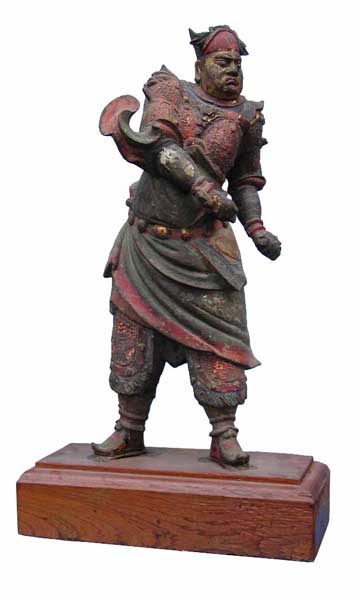
One of the stars of the Big Dipper
2026-04-15 11:51:31
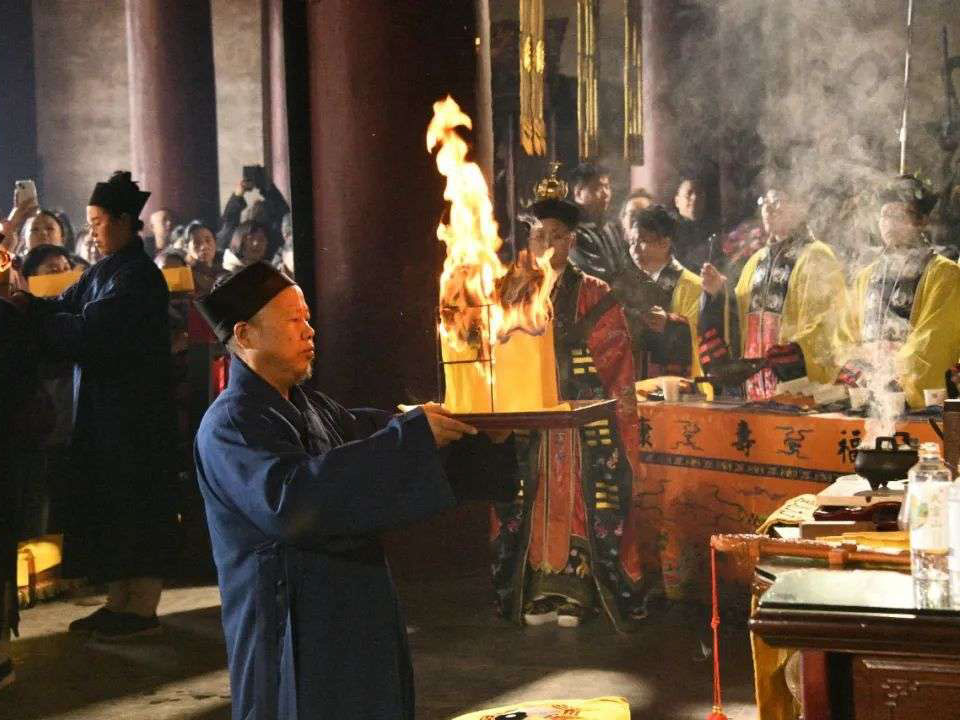
(1) The meaning of the ritual of fasting and Taoist ceremonies
2022-08-20 23:32:13
The original meaning of "zhai" was to be neat, harmonious an...
Yin GUI
2022-08-20 23:32:13
Chapter 27
2022-08-20 23:32:13
Chapter 72
2022-08-20 23:32:13
The couplet of the ancestral hall of the Wudang Mountain Temple
2022-08-20 23:32:13
Chapter 19
2022-08-20 23:32:13