


Li Mingliang
2022-08-20 23:32:13
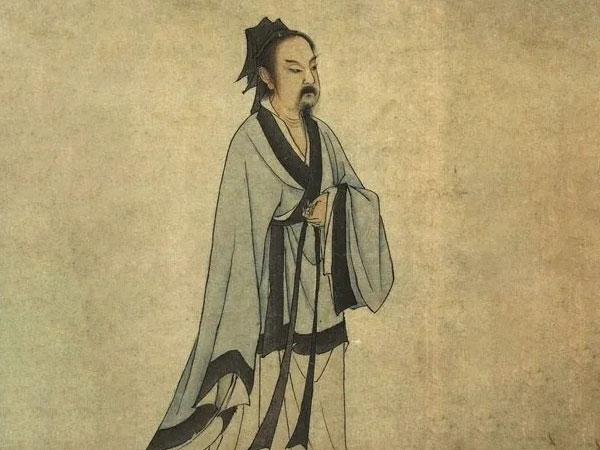
Li Mingliang, styled Haoranzi. A Taoist priest of Wudang in the Yuan Dynasty. According to the "Brief History of Taoism in Wudang", Li was from Yangxi, Xingde Township, south of Ancheng (now west of Anfu County, Jiangxi Province). He was born in the 23rd year of the Zhiyuan era of the Yuan Dynasty (1286 AD) and came from a prominent family. He was intelligent and highly talented in his childhood. When he grew up, he did not care about his family's property and had the aspiration to cherish the world. Dade (1297-1307 AD) roamed between Liang and Chu. He then entered Wudang and became a disciple of Lin Daofu, the Longyanzi of the Quanzhen Sect. Lin is a disciple of Wang Zhenchang, the founding master of the Five Dragon Palace in the early Yuan Dynasty. Wang Zhenchang always served Quanzhen, so Li Mingliang is the direct descendant of Wang Zhenchang of the Quanzhen Sect of the Five Dragon Palace. After receiving his master's teachings, Li Mingliang built a thatched cottage into a nunnery, sat upright in it, never touching a mat, and practiced diligently for fifteen years. Later, Wu Quanjie, the grand master of the Xuan Sect, appointed him as the director of the Five Dragons Palace. Later, during the Dingchou period of the Yuan Dynasty (1337 AD), he was bestowed the title of "Master Tongxuan Lingying Mingde, a highly accomplished scholar of the religious school". During his tenure as a counselor, he, together with Shao Minggeng, raised funds to build the main hall of the Five Dragons Palace, the Jade Statue Pavilion and the temple pavilions and terraces of Huayang Rock. Serve the public wholeheartedly, not for personal gain. Deeply revered by the Taoist community. In his later years, Li Mingliang was fond of playing with the "I Ching". He once said that the master taught people to apply the great principles of the "I Ching", to live in simplicity and to cultivate themselves and others. For a time, scholars from outside the world came in droves upon hearing the news, and there were many disciples. Li Mingliang is also excellent in both writing and painting. Today, in Huayang Rock of Wulong Palace, there exists the "Self-Portrait Stele of Haoranzi" created by Li Mingliang in the fifth year of the Zhizheng era (1345 AD). The figure on the stele has a flowing beard and a graceful demeanor, standing before the ancient pines and gnarled rocks. The brushstrokes of the portrait are simple and unrestrained, smooth and vivid. They are outwardly clumsy but inwardly soft, with a needle wrapped in the softness. It is evident that his skills are extraordinary. There is a self-praising poem attached to the stele. The poem goes: "If the body is depicted with ink, the nature of the sky is bright and clear, yet the pen cannot mold it. The load of the heaven is silent and stinky. Where is this clear light?" From the image to the poem, one can see his noble demeanor and integrity. The year of Li Mingliang's death is unknown.
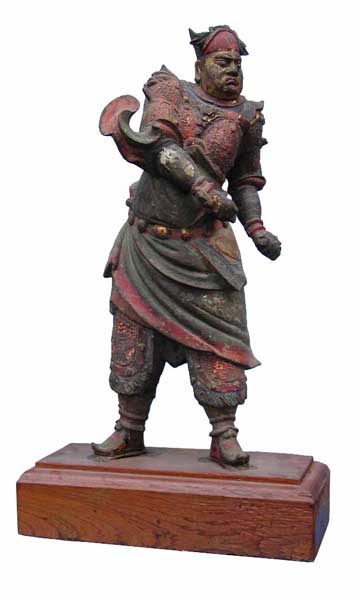
One of the stars of the Big Dipper
2026-04-15 11:51:31
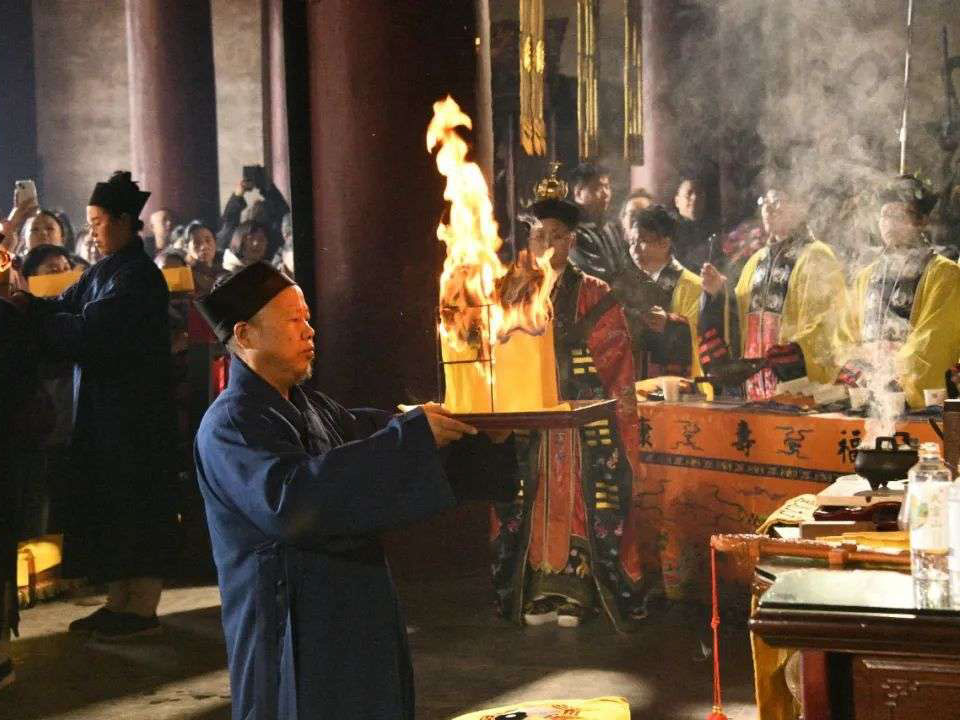
(1) The meaning of the ritual of fasting and Taoist ceremonies
2022-08-20 23:32:13
The original meaning of "zhai" was to be neat, harmonious an...
Yin GUI
2022-08-20 23:32:13
Chapter 27
2022-08-20 23:32:13
Chapter 72
2022-08-20 23:32:13
The couplet of the ancestral hall of the Wudang Mountain Temple
2022-08-20 23:32:13
Chen Xingchang
2022-08-20 23:32:13