


Zhang Daogui
2022-08-20 23:32:13
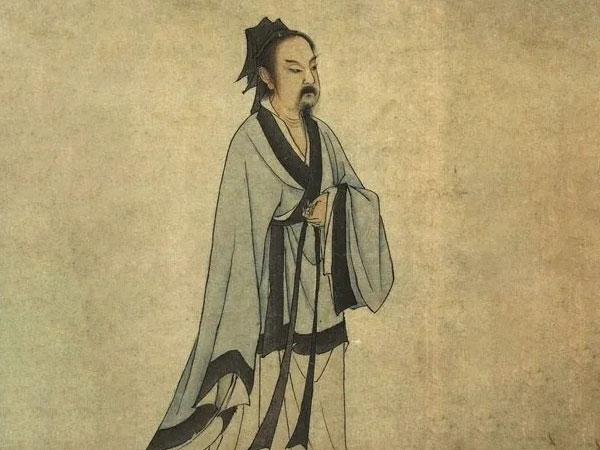
Zhang Daogui, whose given name was Yunyan and pseudonym was Lei Weng, was from Changsha, Hubei Province. A Taoist priest of Wudang in the Yuan Dynasty. According to the "Great Mountain Taihe Mountain Annals" of the Ming and Qing Dynasties, Zhang Daogui was exceptionally intelligent in his youth and was well-known far and wide. During the Zhiyuan period (1264-1294 AD), he became a monk on Wudang Mountain and studied under Wang Zhenchang. In the year of Yihai of the Zhiyuan era (1275 AD), Kao Wang entered the mountains and, together with Lu Dayou, led his disciples to open up the path of incense offering in the Wulong Palace. Zhang Ye also became a military advisor at the beginning of the Zhiyuan era. Zhang Daogui studied the Quanzhen Sect before Wang Zhen. As the various sects of the Five Dragons Palace were mixed and cohabited, he later sought guidance from Huang 囦 Zhenren of the Qingwei Sect of the Ben Shan sect together with Ye Yunlai and liu Daoming, and obtained the true lineage of Qingwei. Later, he studied in seclusion in the Five Dragons Palace and benefited all directions. Zhang Daogui's writing is profound and profound. Whenever I talk to my disciples, my words are elegant and captivating, and just a few words can inspire their comprehension. According to historical records, Zhang Daogui was also the first Wudang Taoist priest disclosed in historical documents to be highly proficient in Wudang internal martial arts. According to the mountain Chronicles, Zhang Daogui often roamed the martial arts world. At that time, in the martial arts world, his boxing skills were praised as "capable of capturing the essence of falling flowers and flowing water, and fitting the charm of leisurely clouds and secluded birds." He roamed the martial arts world and once left an inscription: "Forget the sun, lie high and gaze at the green mountains." From this, it can be seen that the Wudang Neijia Boxing style has been passed down for a long time in the Wudang Taoist school since the Yuan Dynasty, deeply rooted in it, and has been widely spread among the common people. Zhang Daogui was one of the famous Taoists on Wudang Mountain in the middle of the Yuan Dynasty. He had over two hundred disciples. He selected his disciples to teach him the art of alchemy, 符箓 and boxing, so that each of them could find their own place. Among his disciples, only Zhang Shouqing stood out the most. At the beginning of the Hongwu period of the Ming Dynasty, Zhang Daogui left Wudang for a wandering life. He was away for many years and his whereabouts were unknown. Occasionally, he was seen in Jiangsu. In his later years, he returned to the mountains and passed away in a natural nunnery near the Five Dragons Palace. The years of birth and death are unknown. If Zhang Daogui became a monk at the age of fifteen to twenty in the early Yuan Dynasty and passed away at the end of the Hongwu period of the Ming Dynasty, he would have lived to be approximately between 140 and 150 years old. Zhang Daogui composed many poems throughout his life. After his ascension, his disciples collected his verses in a stereotyped form and compiled them into a volume titled "Observation of Objects and Poems" (also known as "Admonitions of the World"). According to historical records, all those who have read this book in later generations have been full of praise and admiration, clapping their hands in admiration. It's a pity that the book is now lost.
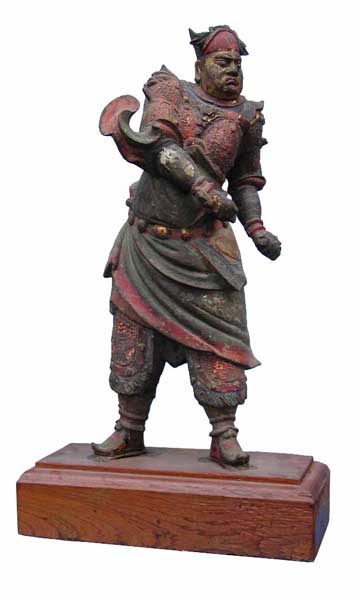
One of the stars of the Big Dipper
2026-04-15 11:51:31
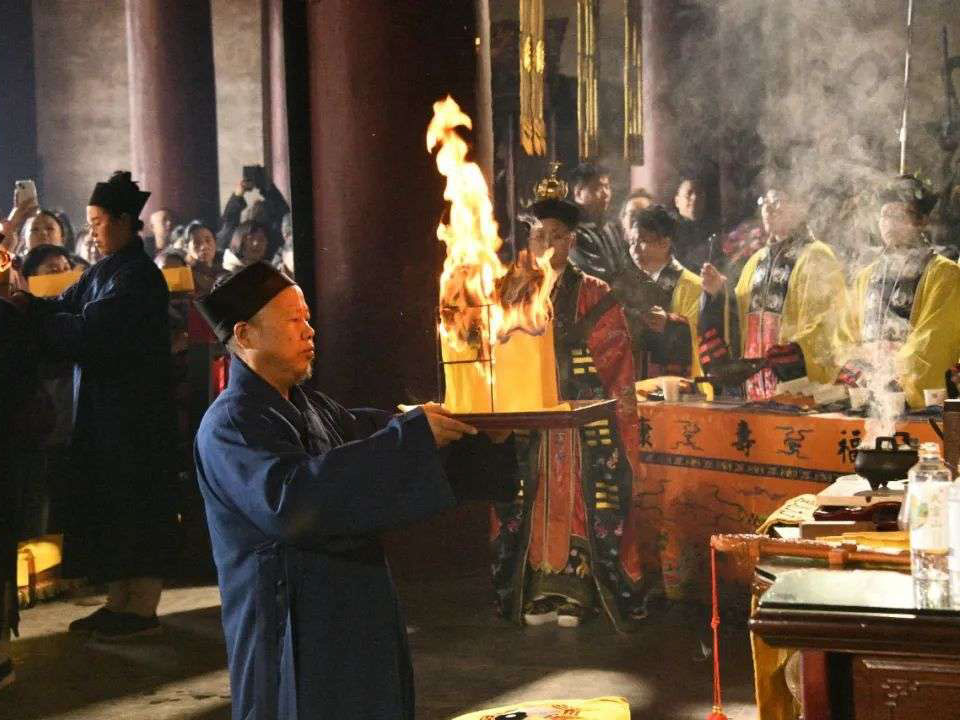
(1) The meaning of the ritual of fasting and Taoist ceremonies
2022-08-20 23:32:13
The original meaning of "zhai" was to be neat, harmonious an...
Yin GUI
2022-08-20 23:32:13
Chapter 27
2022-08-20 23:32:13
Chapter 72
2022-08-20 23:32:13
The couplet of the ancestral hall of the Wudang Mountain Temple
2022-08-20 23:32:13
Chen Xingchang
2022-08-20 23:32:13