


Zhuge Liang
2022-08-20 23:32:13
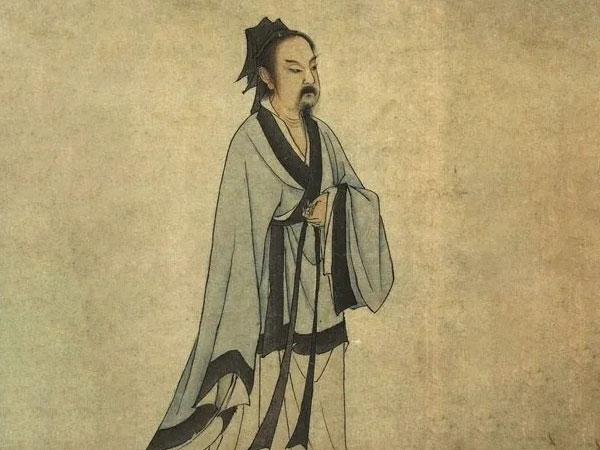
Zhuge Liang, a person of The Three Kingdoms period, was born in Yangdu County, Langya Kingdom (now Yinan County, Shandong Province). When he was 14 years old, he and his two siblings followed their uncle Zhuge Xuan to Yuzhang Commandery (now Nanchang City, Jiangxi Province). Not long after, he followed his uncle to Xiangyang (now Xiangfan City, Hubei Province) to seek refuge with Liu Biao. After their uncle's death, Zhuge Liang and his two siblings settled down in a place called Longzhong, about thirty li west of Xiangyang City, by purchasing land. Zhuge Liang was of extraordinary talent. He lived on the Wolonggang in Longzhong and, in his spare time from farming, read extensively among the various schools of thought, demonstrating a high level of knowledge and talent. According to the "Collected Works of Zhuge Liang", Zhuge Liang had made many friends with famous scholars from Jingzhou at that time. He humbly sought their advice and his knowledge became increasingly extensive. At that time, Sima Hui, a renowned scholar of ancient Chinese classics, was known as Mr. Shuijing. He taught the Tao in the Xiangyang area and had many disciples. According to the "Immortal Mirror", Sima Hui, seeing that Zhuge Liang had the talent to manage the world, said to him, "With your talent, you should visit a wise teacher again to enrich your learning." Feng Gongjiu from Lingshan, Runan, is well-versed in the grand strategies of politics and military affairs. I often seek his advice. His knowledge is beyond our reach. You can humbly ask him for it." Zhuge Liang was very pleased and followed Sima Hui to become Feng Jiu's disciple. Zhuge Liang stayed at Feng Jiu's place for a year, but Feng Jiu taught him nothing. But Zhuge Liang still served his teacher with great respect. It was not until Feng Jiu was convinced that Zhuge Liang was indeed a student of both good character and academic excellence that he finally imparted to him the Three Talents Secret 箓, the military Art Picture, and the lonely Void flourishing. These books include those on Taoism, astronomy and meteorology, and military strategy. Most of them are subjects that Zhuge Liang had never touched upon before, which benefited him greatly. Several months later, Feng Jiu saw that he had grasped the subtleties of the work he had been taught and recommended it to him, saying, "In Nanjun, there is a Wudang Mountain. This mountain has seventy-two peaks, thirty-two rocks and twenty-four streams, with extraordinary scenery." The Tianzhu Peak and Zixiao Peak on this mountain are the highest. There are many Taoist masters in seclusion between these two peaks, among whom the most notable is the Master of the Arctic Sect, who is proficient in the Six secret texts such as the "Langshu", "Yuce", "Jinjian", and "Lingfu", as well as the Five Elements Taoist methods. What you mainly learned from me was military strategy, but you didn't delve deeply into Taoist arts. This is clearly insufficient. If this continues, you will fall into the extreme left path. So, I will take you to become a disciple of the Arctic Master and further study the Dharma." So, Zhuge Liang followed Feng Jiu up to Wudang Mountain. After the leader of the Arctic Sect took Zhuge Liang as his disciple, he also put him to a test. Every day, he was made to cut firewood and carry water, and was fed with polygonatum odoratum. After living like this for a long time and seeing that he was sincere, he imparted to him the art of Taoism. Then he was ordered to go down the mountain and travel the world. After that, Zhuge Liang also visited Feng Jiu and the leader of the Arctic Sect again, but in the end, he gained nothing. So, he continued to cultivate the land in seclusion in Longzhong. Knowing that Zhuge Liang had already achieved great success, when Liu Bei later visited Sima Hui to inquire about the affairs of the country, the first person Sima Hui recommended to him was Zhuge Liang. After this, a series of touching experiences occurred, including Liu Bei's "three visits to the thatched cottage" and Zhuge Liang's appointment as the prime minister of Shu, which finally demonstrated his political and military genius. According to the later research on Longzhong and Wolonggang, there seems to be a dispute between Nanyang and Xiangyang. As recorded in "The Collected Works of Zhuge Liang", "Deng County of Nanyang in Liang's home was twenty li west of Xiangyang City and was called Longzhong", the current Xiangyang should be taken as the correct one. There are two reasons: First, Xiangyang was under the jurisdiction of Nanyang Prefecture at that time and should have been called Nanyang. Second, Xiangyang is adjacent to today's Yicheng County. There is a place called Denglin, which has a long history. During The Three Kingdoms period, it is very likely that Denglin was used to name Deng County. It is highly possible that Longzhong came under the jurisdiction of this Deng County. According to the Daoist school, there are differences among those who are detached from the world, those who live in the world, those who practice seclusion, and those who govern the world. Zhang Zifang of the Han Dynasty and Zhuge Liang of The Three Kingdoms period can be regarded as representatives of the schools that live in the world and govern the world respectively. Judging from the life of Zhuge Liang, he learned a great deal of Taoist knowledge from Feng Jiu and the North Pole Master, including politics, military affairs, astronomy, calendar, medicine, 符箓, etc. All of these were fully demonstrated during his career of assisting Liu Bei in his efforts to conquer the world. But the only thing he failed to learn was the art of nurturing immortals, which led to his death due to illness before he could enjoy his natural age. Perhaps this was also the result of his Taoist masters seeing that he was a person with the potential to govern the world and had the ambition to do so, and thus teaching him in accordance with his aptitude. This article partially refers to the article "Zhuge Liang and Wudang Mountain" by Mo Chaomai in the 1989.1 issue of "Wudang".
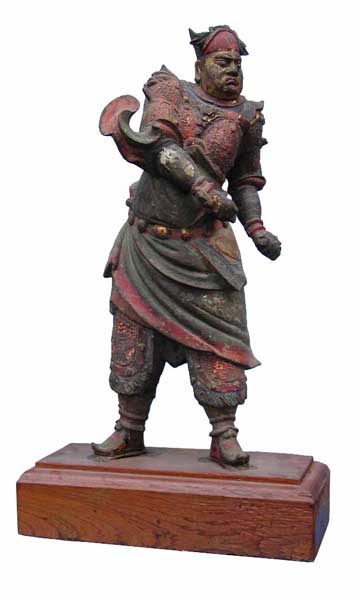
One of the stars of the Big Dipper
2026-04-15 11:51:31
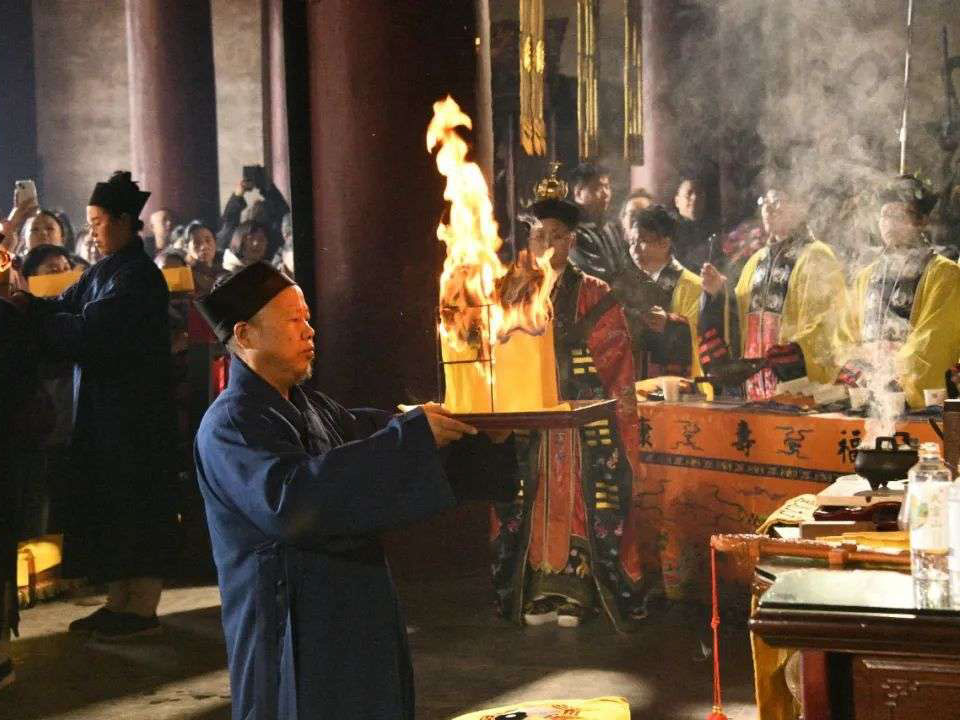
(1) The meaning of the ritual of fasting and Taoist ceremonies
2022-08-20 23:32:13
The original meaning of "zhai" was to be neat, harmonious an...
Yin GUI
2022-08-20 23:32:13
Chapter 27
2022-08-20 23:32:13
Chapter 72
2022-08-20 23:32:13
The couplet of the ancestral hall of the Wudang Mountain Temple
2022-08-20 23:32:13
Chen Xingchang
2022-08-20 23:32:13