


Mantis Fist
2022-08-20 23:32:13
During the late Ming and early Qing dynasties, Wang Langzhe (also known as Wang Lang) from Shandong went to the Shaolin Temple to learn martial arts. After mastering the art, he fought with Han Tong. After losing the battle, he rested under a tree and racked his brains over a way to defeat the enemy. Seeing a mantis coming down from a tree, he played with it by scratching grass. The mantis, on the other hand, hooked and attacked with one stroke after another, with precise changes and nimble movements. He then took the mantis back to the temple and spent all day trying it out, eventually developing techniques such as hooking and luring the Diao CAI mantis. One day when Wang Lang was practicing under a tree, an ape took his clothes. He chased the ape but couldn't get close to him. He chased for a long time before the ape abandoned its clothes and left. Wang Lang thought about it for a long time, imitated the ape's footprints and changed the angles, and thus studied the monkey's footwork. At this point, Wang Lang's Mantis Fist was initially formed. Before long, someone wrote a boxing manual. The first one is the "Preface to the Short Essays of the Eighteen Arhats", which states: "The Short Essays were written by Master Fuju of Shaolin. The annotations are detailed and accurate, and the principles are profound..." . There are also "The Essentials of Short Combat", "Eight Strikes and Eight Non-strikes", "Eight Rigid and Twelve Principles", "Long Fist is Short Combat, short Combat requires Long Fist", and so on. Those who practice Mantis Boxing "take this as the general manual, or call it the old manual". It can be seen that at that time, there was only one type of mantis Fist. Later, it was passed down again and again, gradually evolving, and eventually divided into three major schools. These three major schools are described one by one. Plum Blossom Mantis Fist and its characteristics: Plum Blossom Mantis Fist was passed down by Du Lianru in Weihai, Shandong Province. Later, it spread to Northeast China, the south and all over the country. Its fist is rather rigid, so some people call it "Hard Mantis". The body posture requirements are: twist the waist and sit the hips, balance the mind and form, and cultivate both internal and external aspects. The step shapes include horse step, bow step, void step, ding step, tadging step, land rover step and jade ring step. The mnemonic: "Riding a horse to climb a mountain in the posture of swallowing a Tuo, and defending against the enemy in the posture of leaping a tiger" is known as the Eight postures of the Mantis and is the basic skill of the Plum Blossom Mantis Fist. There are many sets of the Plum Blossom Mantis Boxing, including the Herding Boy Guiding the Way, the White Ape Stealing Peaches, the Breaking Step, the Interception, the Plum Blossom Sugar Storage Overturning, the Hook Technique, the Mantis Papping the Cicada, the Mantis Spreading Its Wings, the Mantis Walking, the Eight Elbows, the Summary one to Seven sets, and the weapon is the Mantis Knife. Guns, swords, staffs, etc., their techniques include palm, hook, claw, fist and finger. The technique can be summarized in twelve words: lifting, holding and sealing, sticking and assisting, and calling for smooth delivery. The movements are flexible and diverse, very alert, and can move forward and backward freely, with both spirit and form. It has the most explosive power and vigor. All kinds of force techniques are complete. The leg and foot techniques include flicking, kicking, sweeping, hanging, copying, kicking, swinging and kicking. As well as the reverse pointed foot, the axe blade foot, the lifting foot and the pestle foot. Buckle feet, etc. In particular, the elbow techniques are highlighted. There are four sets of eight-elbow routines, among which the elbow techniques include sticking the elbow, folding the elbow, pulling the elbow and turning the elbow. Pushing the elbow, turning the elbow, throwing the elbow, facing the elbow upwards, lifting the elbow, and so on are not just eight elbows; they are just called eight elbows. In the practice of Mantis Boxing, the part of the forearm from the elbow to the ulna of the forearm and the top of the arm is all called the elbow in the combat techniques. Thus, there are more elbow techniques, such as "arm elbow" and "Mi elbow". The score says: "Twelve beats of the whole body, flash to earn double hands." The twelve strikes are: "head, feet, hands, elbows, shoulders, knees, chest, back, abdomen, buttocks, root, heart and position" (the character "root" means harmony). A button is like a button. Therefore, there is also the saying of "the clothes picker's buckle". It's truly a case of being hit all over and everywhere. Therefore, the Plum Blossom Mantis Fist is a martial art that combines long and short elements, as well as hardness and softness. In conclusion, it is highly combative and belongs to the short-strike type of boxing. The mnemonic for practice: The day and night of Zi, Wu, MAO and you return. Do not indulge in drinking and sexual activities. There is a sequence between light and heavy strikes. Do not stop when the sun is approaching and the moon is approaching. In the past, I became an Arhat by following this. We learn to become extraordinary men. No matter how many times we hammer and refine, it still seems too little. Why waste a hundred days of effort? The boxing techniques and combat characteristics of the Seven-Star Mantis Fist. The Seven-Star Mantis Fist is said to have been passed down by Jiang Hualong. The content and combat characteristics of the Seven-Star Mantis and the Plum Blossom Mantis are largely similar. Their practice methods are named after the Seven-star Step and are also known as the Seven-star Fist. The Seven Star Fist emphasizes the "Seven Star Form", which actually consists of seven parts, namely the head, shoulders, elbows, fists, knees, hips and feet, as various combat techniques. There are over 30 sets such as Seven-Star Fist, Breaking Step, Interception, Plum Blossom Wheel, Plum Blossom Fist, White Ape Stealing Peaches, White Ape Emerging from the Cave, White Ape Climbing Branches, Chasing Cicadas, Eight Elbows, and Abstract. The weapon routines include knives, spears, swords, staff, walking sticks, shooting stars, three-section staff, big tips, big knives, double hooks, etc. Its force technique is relatively hard but also has soft force, which is a force technique that combines hardness and softness. There are long hands and short hands, and the longer one can strike far. Its short parts include the shoulders, elbows, hips and knees. The body technique takes the waist as the axis and the hips as the core. The main characteristics of the boxing style are: simple, brisk and powerful. It neither strikes nor punches; when struck, it strikes immediately. It is a combination of punches and punches. As the saying goes, "If you don't fight, it's just one moment; if you fight, it's ten times in a row." This is the general requirement for the boxing techniques and combat skills of the Mantis Fist. It is not something that can be achieved overnight to reach this goal. The Liuhe Mantis Fist is a mantis fist passed down by Lin Shichun of the Chuanlin family in Zhaoyuan County, Shandong Province. As Lin was a farmer, he had few disciples. His teacher, Wei SAN, was called "Duck Palm" because his left index finger, middle finger, ring finger and little finger were webbed together. Later, it was learned that his name was Wei De Lin, a bandit who was actually in rebellion against the Qing Dynasty and aimed to restore the Ming Dynasty. He escaped from prison and fled to Lin Shichun's home for refuge. Claiming to be the second-generation disciple of Wang Lang. The Liuhe Mantis Fist is a school within the Mantis Fist series. In the past, it was extremely popular in places like Huangxian and Zhaoyuan in Shandong Province, with a large number of practitioners. It later spread to Northeast China, Beijing, the south, as well as Hong Kong and Taiwan. Compared with other types of mantis Boxing, Liuhe Mantis Boxing has obvious differences. Judging from its appearance, it is rather gentle. In terms of its routine, it is mainly characterized by subtle strength and softness, with little explosive power. Its strength is mostly internal, so some people call it the "soft mantis". In terms of body movements, it is required to be different from the chest and back techniques of Tai Chi, the chest straightening and abdomen drawing in of Changquan, and also different from the tight back and empty chest of 八卦掌. Instead, it requires a broad chest and a solid abdomen, loose shoulders and extended arms, a waist like a drill pipe, and hands only on the wheels. And it requires both internal and external cultivation, as well as equal emphasis on meaning and form. The step shapes and techniques include bow step, horse step, advance trailing step, forward swing step, backward swing step, triangle step, sliding step, flash trick step, sitting step, flowing step, etc. Its sitting posture is similar to the three postures of Xingyi Quan, and its left and right flash steps and triangular steps are similar to the footwork of Tongbei Quan. Among them, the advanced backward step is to draw in the front foot, lift the heel, take a big step forward quickly, drag the rear foot in, approach very rapidly forward, swing back and forth and rotate with the body, approaching the outer door. The triangular step and the flash trick step are even more flexible and diverse. There are five types of hand shapes: fist, palm, finger, hook and claw. When making a fist, if the middle finger protrudes, it is called a pointed fist or a cone-shaped punch. There are sixteen characters in the techniques, namely, hook, embrace, knife, pick, smash, hang, split, stick, stick, lean, flash, gain, move, and more entanglement, rotation and wind sweeping force techniques. So there is a saying of "carp sweeping the tail, stick and ox whip" (stick is pronounced as "kun", meaning to pull, which is a local language in Shandong). Leg techniques such as flicking, kicking, sweeping, hanging, copying, kicking, swinging and kicking, as well as reverse pointed kicks and axe-blade kicks, etc. When using techniques in combat, the emphasis is on being fast, close and tight, with each hand linked in a chain and continuous strikes. Apply what you practice. The "Five Leaks Hand" and the "Entangled Silk Hand" are highly combative short-strike boxing techniques. The eye technique requires that when the hand moves, the eyes follow. There is a saying that "the spirit is like a cat catching mice, and the eyes are like an eagle catching a chicken." The Liuhe Mantis Fist is thus called the "Horse Monkey" mantis by some people. Because its movements resemble those of a horse monkey, with loose and long arms, the shoulders are relaxed and the arms are extended to strike far away. Therefore, there is a saying of "horse monkey image and mantis technique". The practice was continuous and seamless, very coherent and compact, as well as very expansive and elegant. The routines of the Liuhe Mantis Fist include: Three Chui (this is the basic form of the fist), the Hand Circle, the Immortal Hand Adze, the Iron Thorn, the hidden flower under the leaf, the Facing Lamp, the Double Seal, the Hidden flower in the mirror, and the Short Chui, etc. The force techniques of the Liuhe Mantis Fist are mainly characterized by covert hardness and force, with little explosive power, but not completely absent. When analyzed, its force techniques are quite comprehensive, including over 20 types of force techniques, which can be divided into two major categories: the main force and the auxiliary force. There are six types of main forces: obvious firmness, hidden firmness, obvious softness, wind sweeping force, sealing force and sawing force. There are as many as 19 types of auxiliary forces, such as long force, short force, sticky force, etc. There are mainly several methods for practicing martial arts skills: 1 Practice catching an iron ball. 2. Practice grabbing jars. 3. Practice pushing bricks or dumbbells 4 Exercise 5 of Twisting a Thousand-pound stick Exercise 6 of Slapping the sandbag seat Strip Practice 7. Small bean bucket practice 8. Kicking and hanging sandbag Practice 9. Practice by lifting stone poles or dumbbells. All the above-mentioned exercises are designed to enhance the strength, hardness and intensity of the arms, fists, wrists and fingers. There is another prescription. After each practice, wash and scald to relax the muscles and promote blood circulation. From "Zhongding International Wushu Network"
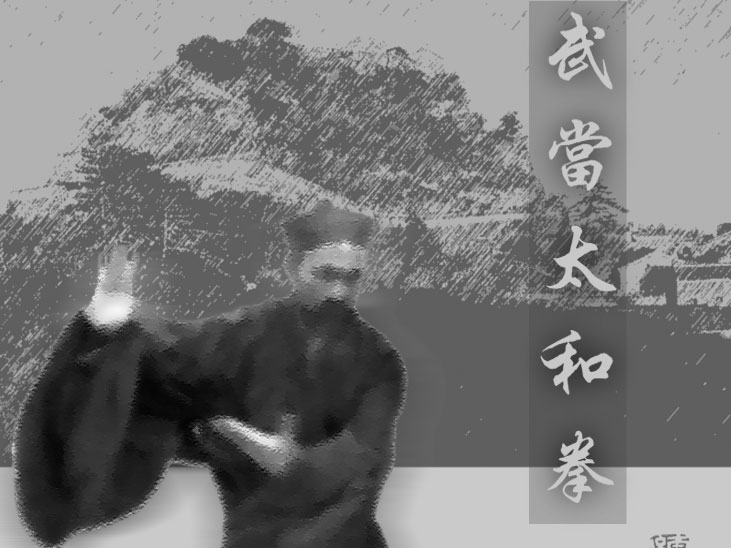
Verified by Zhang Sanfeng with the same name and pronunciation
2022-08-20 23:32:13
The main hall of Taizi Rock
Annotations on the 24 Poems of Jin Dan ⑥
2022-08-20 23:32:13
The tomb statue of Taoist Priest in Wulong Palace
Commentary on the Taiji Elixir Classic: "A Simple Explanation of Dao Yan" ①
2022-08-20 23:32:13
The white tiger in the Dragon and Tiger Hall of Fuzhen Templ...
"Xuan Yao Chapter - Part 1: A Song about Taoist Love.
2022-08-20 23:32:13
The dougong brackets in the main hall of Fuzhen Temple