


Verified by Zhang Sanfeng with the same name and pronunciation
2022-08-20 23:32:13
Throughout history, people with the same surname and name have existed from generation to generation. The theory of association is not surprising, especially among famous figures in Taoism. In order to distinguish the true from the false, we have carefully verified the relevant historical materials that share the same surname, name and pronunciation as Zhang Sanfeng's. This is helpful for identifying the true from the false and eliminating misunderstandings. 1. According to the "Yilin"; written by Xu Zhenqing (1479-1511), Zhang Cida was said to be a person of the Song Dynasty, from 掾 in Bi prefecture. He once went to Mount Hua from the governor to pay homage to Mr. Chen Tuan. After the gentleman had seated the guests and the host, he set up his couch on the left again, as if there was something to attend to. The governor was suddenly enlightened. Then a person arrived, dressed in a blue robe and a green scarf, Xiao Ruye. The master bowed to him and sat down. The Taoist priest moved to the left and sat upright on the couch, looking haughty and unyielding. The governor was displeased. Sir, you are extremely respectful. Please ask: "Sir, what are you carrying in your sleeve?" May we be blessed with mutual blessings! The Taoist then took out three jujubes of different colors. He gave the white one to Mr. Chen, swallowed the red one himself, and threw the green one to the governor. The governor became even more displeased and offered it to 掾, 掾, and then ate it. The Taoist suddenly emerged. The governor asked the master, "What Taoist is it?" Sir, you are truly respectful! The master said, "This is the Pure Yang True Man. The governor regrets that he cannot catch up with him. Zhang Gong attained enlightenment later on." In the early days of the country, there were often tourists. Whenever there was a strange sight, when the governor opened his residence in Beiping, he would often summon them, saying that they were supernatural and that he was very eager to ascend the throne. He then sent Minister Hu to travel all over the sea and mountains to seek them out." Li Rong of the Qing Dynasty wrote "The Annals of Mount Hua" and both "The Annals of Huazhou" transcribed this article. Xu Zhenqing actually combined Zhang Cida of the early Song Dynasty with Zhang Sanfeng of the Ming Dynasty as one person, confusing the facts. Later, a few people also supported his claim. In fact, Zhang Sanfeng himself had already answered this question in his works. The preface of the "Xuan Yao Chapter" states: "During the Yanhu period, I was fortunate enough to be favored by heaven. When I first entered Zhongnan, I met Mr. Fire Dragon and asked if he was a junior of Tu Nan." Du Mu's "Tan Zuan" is also the best evidence. It is said: "Zhang Sanfeng left behind some inscriptions. When he was young and fond of the Tao, he traveled far and fast but achieved nothing. At the end of his life, he met Mr. Lu Long on Mount Song and taught him the true art. He then achieved enlightenment. Mr. Lu was a junior in the south." Although the time and place recorded in the two books are different, the encounter with Chen Tunan's junior brother is consistent, not Chen Tunan himself. It is truly absurd for Xu Zhenqing to forcibly link two people from completely different periods together. This might be because Xu Zhenqing was deeply perplexed by the belief that immortals do not die, or perhaps it was because "Cida" sounds the same as "Pota" in Chinese, and thus he associated it with Zhang Sanfeng. In any case, Xu Zhenqing confused The Times, and his claim cannot hold water. There is also a question as to whether Mr. Fire Dragon is a disciple of Chen Tunan. Let's not discuss it for now. 2 According to the "Epitaph of Wang Zhengnan";, Huang Zongxi (1610-1695) of the Qing Dynasty wrote: "Shaolin was renowned throughout the land for its martial arts and bravery. However, when it came to fighting, people could also take advantage of it." There is a so-called internal martial art that uses stillness to counteract movement. If it is violated, the opponent will fall immediately. Therefore, Shaolin is called an external martial art. It was built on Zhang Sanfeng of the Song Dynasty. Sanfeng was a martial artist of Wudang. Weizong summoned him, but his way was blocked and he could not advance. At night, Emperor Yuan taught him the boxing techniques. Later in the Ming Dynasty, he killed over a hundred bandits alone. The art of the Three Peaks was passed down in Shaanxi a hundred years later, among which Wang Zong was the most renowned. Chen Zhou in Wenzhou also learned it from Wang Zong and used it to teach the people in his hometown, thus spreading it to Wenzhou. During the Jiajing period, Zhang Songxi was the most famous. There were three or four of his followers. …… It was passed down in Siming. …… Shan Sinan …… The biography of Sinan is that of Wang Zhengnan. Huang Baijia inherited his father's teachings and wrote "Neijia Quan Fa". Wang Yuyang's comment on Li Chao's words in "Strange Tales from a Chinese Studio" is similar to his. In the 11th year of the Yongzheng reign (1733), the "Ningbo Prefecture Annals" recorded a biography of Zhang Songxi stating: "Zhang Songxi 鄞 was a skilled warrior, having studied under thirteen grandmasters. His method is said to have originated from Zhang Sanfeng of the Song Dynasty, who was a scholar of alchemy in Wudang." The "Yinxian Annals" also has a record of Zhang Songxi. Huang Zongxi's theory has had a significant influence on later generations, especially in the sports field. Even the "Complete Works of Zhang Sanfeng" cannot avoid it. Now, by tracing the causal origins and reviewing the literature, can this gap be filled? We sincerely invite experts to offer their guidance. In the 11th year of the Chunxi era of Emperor Xiaozong of the Southern Song Dynasty (1184), Dong Huangsu compiled the "Xuantian Shangdi Qisheng Lu", which records 127 stories about true martial arts, starting from "Jinque Shenghua" and ending with "Xu Gong Ci Yu". Regarding the matter of Emperor Xuan and martial arts skills, there is a "Divine General's Teaching Method" in sixty-one articles. In the first month of the first year of the Ganxing era (1022), Zhang Xiaoning, the commander of the Zhongzhou Garrison and the commander of the Qian Army, reported:... Xiao Ning, imitating his father's offerings, was sincere and unrepentant. Yesterday, he held a martial arts test for the imperial court. Yu once dreamed of the True Martial Prince, the Divine General He Kui, who personally taught him spear skills, archery, and horseback riding. Suddenly, he had a profound understanding. Among the two hundred people presented for examination in front of the hall, only Xiaoning ranked first. He should be appointed as a third-class palace attendant, which is the protection of Zhenwu to this point. …… Zhang Xiaoning was appointed as the defense commissioner of Yingzhou. In Article 114, "Hu Qing Abandoned His Occupation", "Dongjing Xianpingli,..." Hu Qing makes a living by selling cooked food. …… I entered an ancient temple to take shelter from the rain and stay overnight. About three o 'clock in the morning, I saw a divine figure with hair, a sword and golden armor. …… Having practiced martial arts for no more than two years, he passed the national palace examination and demonstrated outstanding skills in various fields such as archery, horseback riding, spear and staff. Among a thousand people, I was ranked first by the imperial pen and was first granted the rank of the third class of palace attendants. Then the supervisor of the temple descended and asked, "What kind of art is there?" And where can one learn martial arts? So proficient. Qing Ju Zou: Encountering a divine being. …… Hu Qing, who once served as the chief inspector of Runzhou, devoted his entire life to the Zhenwu lineage." There are similar stories in the book, but due to space limitations, only two are recorded. However, there is no story in the book about Emperor Weizong of the Song Dynasty teaching martial arts and weapons to Zhang Sanfeng and Zhenwu. Some people say that the compiler might have overlooked something. If that's the case, let's take a look at the works of the Yuan Dynasty to clear up their doubts. The Taoist priest Zhao Daoyi of the Shengshou Wannian Palace on Fuyun Mountain in Jiangxi Province compiled the "Comprehensive Guide to the True Immortals of All Ages" (in the category of records and biographies in the "Daozang - Dongzhen Section"). The book was completed in the thirteenth year of Zhiyuan (1276) and was later continued. It is a biography of Taoist figures. This book compiles the comprehensive biographies of immortals throughout history and is a highly valuable work. The author is also a well-versed and erudite scholar who has read extensively. In the "Comprehensive Mirror", the characters start with the Yellow Emperor Xuanyuan and end with Jin Peng Tou. There are 781 male immortals and 120 female immortals, totaling 901 people, among whom Zhang Sanfeng is not included. Liu Daoming wrote "The Collection of the True Immortals of Wudang's Blessed Land". He was from Jingmen and a Taoist priest of Wudang Mountain. The book was completed in the 28th year of the Zhiyuan era (1291) and consists of three volumes. In the lower volume, "The Ancient and Modern Mingdao", there are brief biographies of the immortals of Wudang, starting from Yin Xi Zhenren of the Zhou Dynasty and ending with Ye Yunlai of this dynasty (Ye passed away in the 23rd year of the Zhiyuan era). A total of 21 immortals of Wudang are recorded in the book. As a result, there was no such person as Zhang Sanfeng, a Wudang elixir. Logically speaking, those who had dealings with the Daoist emperors of the Song Dynasty should have been recorded in great detail, but unfortunately, they were not (this book is in the "Biography" category of the "Daozang - Dongshen Section"). Bo Bolan (also known as Bu Lanxi), Yue Xuan and others compiled the "General Annals of the Yuan Dynasty". It was not until the 22nd year of Zhiyuan (1285) and the 7th year of Dade (1303) that this book was completed. Unfortunately, only a very small number of fragments have survived to this day. Coincidentally, among the fragments, there is a part about the Xiangyang Road. In Volume 360, the Xianshi of Junzhou is still intact. Among them, there are a total of 11 figures of Buddhism and Taoism, but there is no one named Zhang Sanfeng. Some people say that since the early Song Dynasty, of course, the Wudang elixir Zhang Sanfeng was not included in the list of immortal and Buddhist figures? (Yuan Yitongzhi is included in Zheng Zhenduo's Xuanlantang Series Sequel.)" Please take another look at the "Great Mountain Taihe Mountain Annals" written by Ren Ziyuan of the Ming Dynasty. It was completed in the sixth year of the Xuande reign (1431). (Note: This mountain annals was continued by later generations by imperial decree from the Chenghua reign to the eighth year of the Hongzhi reign.) It is the first mountain annals of Wudang Mountain in the Ming Dynasty. In the "Collection of Immortals Annals", there were a total of 28 immortals from Yin Xi to Deng Qingyang, among whom Zhang Sanfeng was written as Zhang Zaifeng. There is no mention of the Wudang Elixir Zhang Sanfeng at all. Not even a single word about him is mentioned in the entire mountain chronicle. How strange and outrageous! From the perspective of local Chronicles of Hubei Province, during the Zhengde period, Wu Tingju compiled the "Huguang Tujing Zhi"; during the Wanli period, Xu Xuemo compiled the "Huguang General Zhi"; during the Tianshun period, Zhang Hengxiu compiled the "Xiangyang Prefecture Zhi"; during the Wanli period, Hu Jia compiled the "Xiangyang Prefecture Zhi"; during the Qianlong period, Chen E compiled the "Xiangyang Prefecture Zhi"; during the Kangxi period, Dangju Yi compiled the "Junzhou Zhi"; during the Guangxu period, Jia Hongzhao compiled the "Continuation of Junzhou Zhi"; and during the Jiajing period, Shen Dan wrote the "Taihe Mountain Zhi". Fang Sheng's "Taiyue Zhi Lue", Lu Chonghua's "Da Yue Taihe Shan Zhi" during the Longqing period, and Wang Gai's "Da Yue Taihe Shan Ji Lue" during the Qianlong period, among others, did not record "Wudang Elixir Zhang Sanfeng". The phrase "Zhang Sanfeng, the alchemist of Wudang" by the ancient sage Huang Zongxi is a word-of-mouth among martial arts practitioners and can only be used as a reference! Someone asked: There is a saying in the world that the Three Peaks are used for battles. Some elixirs have such records. In today's terms, it is called a technique in the room. Song Linhong wrote in "Shan Jia Qing Shi? Jin Dan Zheng Lun" : "He also desires the Three Peaks of Yellow and white art. This is a fool." Yuan Yu Yan wrote in "Xi Shang Fu Tan" : "It is said that the supreme masters of the Three Peaks of CAI Zhan, under the names of the Yellow Emperor and Xuan Su, believed that Rong Cheng and Peng Zu had longer lives. Therefore, all those who achieved great success mastered this technique." The Elixir scriptures and notes only mention the Three Peaks but do not mention the surname Zhang, making it hard to believe. It was only after Huang Zongxi proposed Zhang Sanfeng that such a chaotic situation emerged. Among the Ming Dynasty documents we have come into contact with, except for a very few local Chronicles that use "feng" as "feng", some use "feng" as "feng", and there is also a way of writing "feng" as "feng". 3 Zhang Zichong, who sold firewood to serve his mother, often said, ";I have no worries and wish to see Mr. Lu." One day, he went up the mountain to cut wood. Suddenly, a man in blue clothes came to his home and told his wife that he was hungry. His wife replied, "I haven't cooked yet. I only steamed a dou of glutinous rice. I'll wait for you to make wine. I can eat a little." He finished eating it. My wife was furious and said, "My husband is addicted to alcohol. I'm being blamed!" The Dao said, "If you are not tired, you can draw a jar of water, cover it with the remaining grains, and then brush your sleeve away." He rushed home. His wife informed him and opened a jar of wine. He was startled and said, "Mr. Lu has arrived." …… Later, he left his wife's residence in the temple and founded Cuiyun Nunnery, where he resided without a fixed abode. During the reign of Emperor Guangxu, Xu Zhaofeng and Zhang Jingqi compiled the "Annals of Shaowu Prefecture", which stated: "In the Ming Dynasty, Zhang Zichong, styled Sanfeng, was known by his common name Zhang Laopa and was a servant of the Shaowu Garrison." Those who compiled the annals of the prefecture did not read the "Min Book" carefully, so they made up far-fetched interpretations. There are also verifications about Zhang Zichong in the annals, which can be traced back to the late Tang Dynasty. If he were truly immortal, that would be even more outrageous. 4 In Li Rihua's (1565-1635) work "Zitaoxuan Zizi? Yizi", it is written that "Zhang Ta La was on Baiyue Mountain. When he encountered snow, he would be overjoyed for several feet. He took off his clothes and lay naked in it. For a long time, his breath was steaming as if he had cooked a wok of rice." Seeing people approaching, he stretched and indulged himself, exclaiming, "Happy!" I once secretly asked this: "The utmost Yin can sense the utmost Yang. The snow energy touches my elixir fire. They are all fusing together because of this." In another work, "Notes from Liuyan Zhai", there is also a record of this person. In the "Annals of Weizhou Prefecture" during the reign of Emperor Kangxi, it was written, "Who is the scruffy immortal?" During the Jiajing period, he stayed at the Bridge Nunnery in Xiguo Town, Xiuning. This person is also recorded in the Annals of Xiuning County. Min Linsi wrote in the "Huangshan Annals" that "Huang Wuxin, who lived in seclusion at the Haijing Nunnery on Huangshan, once demolished and built a fairyland on Baiyue to worship Zhang Laopa." The "General Annals of Jiangnan" during the Qianlong period states: Zhang Laopa "passed away on Qiyun Mountain". During the Wanli period, Lu Dian of Xiangyang wrote the "Qi Yun Mountain Annals", which did not record Zhang Pula as a person. The impostor is very smart. He uses his slovenly reputation to elevate his own moral standards. Local Chronicles do not attribute it to Zhang Sanfeng. Some in the Taoist circle claim it to be Zhang Sanfeng, but there is no record in the literature, so it is not reliable. 5 According to the "Taoyuan County Annals"; of the Tongzhi period, it is recorded that "Zhang Yi, No. 1 Sitting Tomb, also known as Zhang La Ta." During the Chongzhen period of the Ming Dynasty, people from Zoushi in this county did not live in thatched huts. They sat on wild graves day and night, naked and unaware of the cold even in the dead of winter with rain and snow. When entering the city to seek food and drink, if people ask for it, they will accept it; if they are willing to offer it, they will refuse. If they get money and silver, they will give it to the poor. When people speak to them, they would punch their fists into their ears without answering, and then no one knew where they ended up. The "Continued Compilation of the Annals of Cili County" records that this is basically the same. Some Zhi Cheng was associated with Zhang Sanfeng of Pingyue. This might be related to Zhang Yi, Quan Yi, Xuan Yi and Ta La. One was a prominent figure in the early Ming Dynasty, and the other was an insignificant figure in the late Ming Dynasty. It is hard to link them in terms of time, and it seems that they are not reliable either. In the "Annals of Jian GUI County" during the Jiaqing period, there is a poem about the Seven Star Rock by Yang Benren and Zhang Sanfeng: "The rock is so famous that I chose to sit on Yao's bench. I have always been associated with the mountains and rivers." The water is as clear as the sky, making one swallow in autumn; the mountains are so pure that they do not stir the smoke at night. A cup evokes the world of humanity, and all things merge into a celestial realm within a cave. Drunken by the long pine, I wait for the bright moon; the wind and sheng blow clear, revealing the heavens. Yang Benren served as the Inspector General of Guangxi during the Jiajing period. His official achievements are not recorded by Zhang Sanfeng. In the Ming Dynasty, military officials included left and right military commanders and a first-rank official. The governor and the prefect are of the first rank. Inspector General, Second Rank. This Zhang Sanfeng had no influence on later generations either. It is recorded here for reference. From the above, it can be seen that the compilers of the "Zhi Cheng" failed to explore the true essence and attached themselves to the assumptions of immortality and divine elixirs, causing all kinds of misunderstandings and coincidences. Later writers and books, in pursuit of fame and fortune, pretended to be Zhang Sanfeng and flaunted their own cultivation, spreading false information and causing even greater harm to future generations! Therefore, the controversy over Zhang Sanfeng's character has continued to this day without end. It is indeed necessary to clarify it.
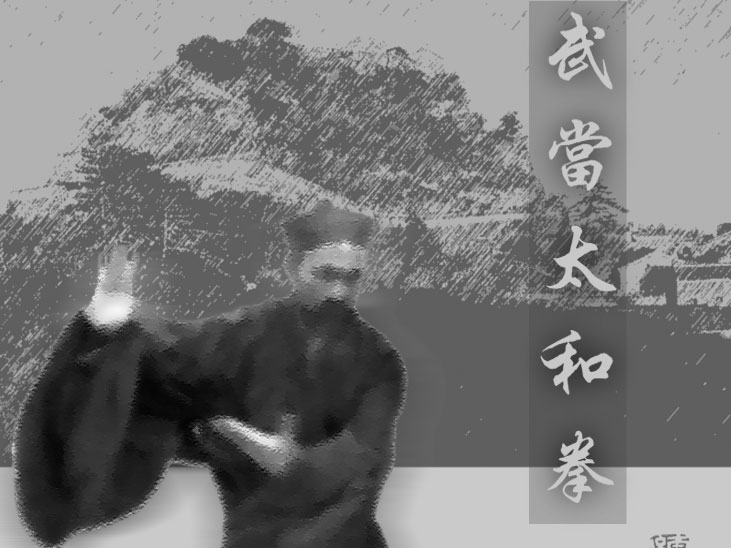
Wudang Divine Skill: Two-Finger Zen
2022-08-20 23:32:13
Taiqing in the Liangyi Hall of Nan Yan Palace
A detailed investigation into Zhang Sanfeng's birth and death years
2022-08-20 23:32:13
Wudang Quarry
Evidence that Zhang Sanfeng created Tai Chi
2022-08-20 23:32:13
The plaque of the Golden Summit Lingguan Hall

The Four strictnesses of the strict school are achieved through three paths
2022-08-20 23:32:13
The Holy Father of the Wansheng Pavilion in Taihe Palace