


The old and new forms of Chen-style Tai Chi
2022-08-20 23:32:13
After Chen Wangting, the ninth generation of the Chen family in Chenjiagou, Wanwende, created Tai Chi, there have been successors in every generation, and there are no shortage of skilled Tai Chi masters. However, in the feudal society, the concept of sects was very strong in the martial arts circle. Many martial arts styles were passed down within families and were reluctant to be passed on to other surnames. It was not until Chen Changxing, the fourteenth generation descendant of the Chen family, passed it on to Yang Luchan from Yongnian, Hebei Province by chance that Tai Chi was passed on to the Chen family's main branch. Yang Luchan learned Tai Chi and became Yang Wudi. He went to the palace in Beijing to teach Tai Chi and passed it on to his descendants, promoting it. As a result, Yang Luchan became famous all over the world, and his master Chen Changxing also became the most prestigious Tai Chi master in the Chen family. There are all kinds of stories circulating in the martial arts world about Yang Luchan learning martial arts, which are quite legendary. Some say that Yang Luchan learned boxing through the introduction of the Yongnian Taihetang Pharmacy. He went to Chenjiagou three times, a total of eighteen years. Some say he worked as a farmhand in Chen Dehu's family, some say he disguised himself to steal punches, and so on. But one thing is certain: Yang-style Tai Chi originated from Chen Changxing. It is said that Chen Youben, a fourteenth generation of the same generation as Chen Changxing, modified the boxing form, which is now known as the new form or the small form. His disciple Chen Qingping taught Wu Yuxiang, who created the Wu-style Daji Quan. Therefore, Chen Youben and Chen Qingping are also quite famous. The so-called new frame and old frame refer to these two types. Most of the boxing styles taught in Chenjiagou in the early days were the old forms of Chen Changxing. During Chen Fakuo's time, he was Chen Changxing's great-grandson and the 17th generation inheritor of the authentic style. Of course, he taught Chen Changxing's old forms. In 1928, when Chen Fakuo went to Beijing to pass on the art, the first 83 forms he taught were Chen Changxing's old forms. It was never heard that he changed his boxing style. In the early 1960s after his death, his son, the 18th generation grandmaster Chen Zhaokui, came to Shanghai to teach boxing. I heard from him that this boxing was the 83rd form of the old frame of Chen Changxing. However, Chen Fakuo's grandson, Chen Xiaowang, spent his childhood in Chenjiagou and never learned boxing from his grandfather. Instead, he learned the first 75 forms from his cousin Chen Zhaopi in Chenjiagou. However, in 1985, he wrote a book titled "Chen-style Tai Chi Chuan Passed Down Through Generations", taking this set of 75 forms popular in Chenjiagou as the old Chen-style passed down through generations. After Chen Zhaopi's death in 1972, in 1973, Chen Zhaokui went to Chenjiagou to teach a set of 83-style Tai Chi. The Tai Chi masters in Chenjiagou, including Chen Xiaowang, called this set of 83-style "new Frame" to indicate that their original 75-style was an old and authentic Tai Chi frame. However, the 75 forms of the first line in "Chen-style Tai Chi Chuan Passed Down Through Generations" cannot be presented as evidence of Chen Changxing's old form, so it is quite controversial. Chenjiagou is the birthplace of Chen-style Tai Chi. The place is old, but the current Tai Chi is not necessarily old. Because Chen Fakuo, the great-grandson of Chen Changxing and the 17th generation master, went to Beijing in 1928. The 83-style Tai Chi he taught in Beijing is the old form. When I went to Chenjiagou in 1981, I heard a few true words from Chen Boxian, the dean of the Tai Chi School, and several elderly people. They said, "The old form (referring to the 75 forms) is the new form, and the new form (referring to the 83 forms that Chen Fakuo taught in Chenjiagou before 1928) is the old form!"
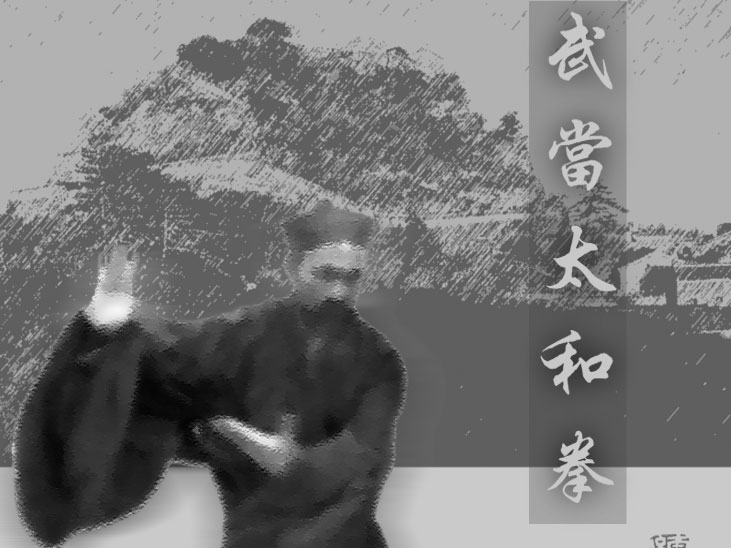
Wudang Divine Skill: Two-Finger Zen
2022-08-20 23:32:13
Taiqing in the Liangyi Hall of Nan Yan Palace
Verified by Zhang Sanfeng with the same name and pronunciation
2022-08-20 23:32:13
The main hall of Taizi Rock
Wudang snake-shaped sword
2022-08-20 23:32:13
The Jade Maiden of the Wansheng Pavilion in Taihe Palace
The hand of Yu Yu from the Dan Gong Sect
2022-08-20 23:32:13
Zhao Caishen in the Wansheng Pavilion of Taihe Palace
Zhang Sanfeng's original style Tai Chi
2022-08-20 23:32:13
Zhenwu of the Wansheng Pavilion in Taihe Palace