


Wudang Culture Roundtable: How Can Wudang Architectural Aesthetics Empower Cultural Tourism and Rural Construction
2026-08-14 09:41:13
Editor's Note
Wudang, stretching eight hundred miles, is a place of outstanding natural beauty and a cultural heritage that has lasted for a thousand years. As a brilliant gem of China's fine traditional culture, Wudang culture integrates Taoist philosophy, ecological wisdom, the essence of health care, the charm of martial arts and architectural aesthetics. It accumulates the wisdom of Eastern life and spiritual pursuit, and is a precious cultural heritage of the Chinese nation. Under the new circumstances, promoting the creative transformation and innovative development of traditional culture has become an important issue of The Times. How Wudang culture can break away from the deep mountains and integrate into the contemporary era, and how it can empower modern development and nourish people's lives with traditional wisdom, are the core issues that we have been continuously delving into and exploring. For this reason, Qin Chu Network has specially launched the column "Masters Talk about Wudang Culture", welcoming scholars, researchers and enthusiasts of Wudang culture to freely express their insightful views and jointly explore the practical path for the dynamic inheritance of Wudang culture, so that the wisdom of the thousand-year-old Wudang culture can shine into all aspects of modern life.
Let's talk about Wudang Culture
How can the architectural aesthetics of Wudang empower cultural tourism and rural construction
Tension with relaxation

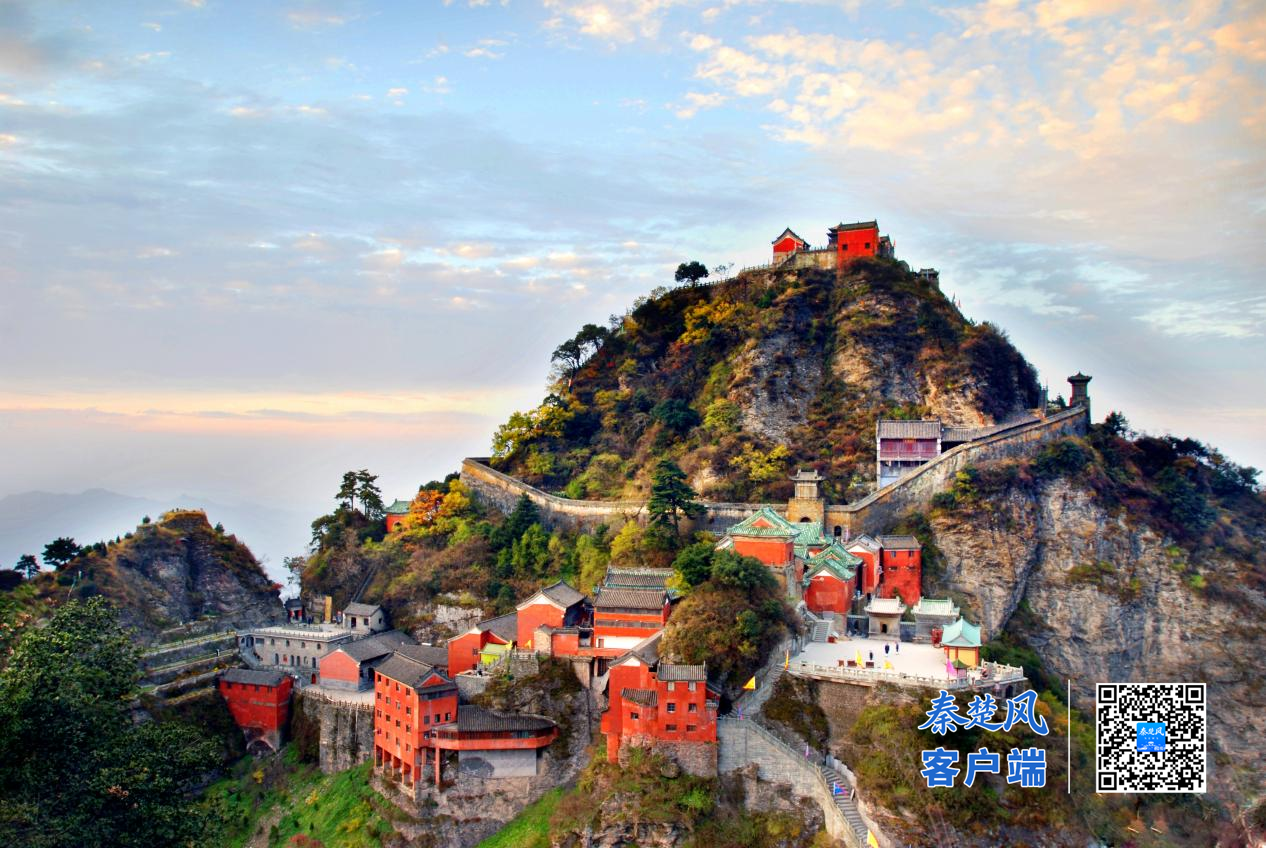
Wudang Golden Summit Photo by reporter Zhang Jianbo
"Each eave conceals the universe, and each tile carries the cultural heritage." " The ancient architectural complex of Wudang Mountain, with its wisdom of harmony between man and nature and its spatial philosophy of following the laws of nature, has become a peak model of traditional Chinese architectural aesthetics. It has been highly praised by UNESCO as "a blend of ancient wisdom, historical architecture and natural aesthetics". From the solemn symmetry of the Zixiao Palace to the sheer cliff and suspended palace of the Nan Yan Palace, from the meandering nine-bend Yellow River wall at Taizi Slope to the gilded copper casting of the Golden Hall, the architecture of Wudang is not only a frozen epic but also a precious aesthetic resource that can be transformed, inherited and empowered.
In the current context where the integration of culture and tourism and rural revitalization have been fully implemented, taking the architectural aesthetics of Wudang as the core, through the protection and revitalization of ancient buildings, the reshaping of rural landscapes, and the creation of cultural and tourism scenarios, how to forge a distinctive development path of "aesthetic empowerment, cultural and tourism traction, and common prosperity in rural areas" is worthy of our in-depth consideration.
Aesthetic Foundation: From the ancient architecture of Immortal Mountains to the cultural soul
Architecture is a three-dimensional reader of regional culture. The architectural aesthetics of Wudang are deeply rooted in the Taoist philosophical thoughts of "harmony between man and nature" and "following the way of nature", forming a unique system of "conforming to the mountain terrain, concealing the wind and gathering the energy, the mutual generation of Yin and Yang, and the combination of hardness and softness". Unlike the grandeur and dominance of northern imperial architecture and the delicacy and grace of Jiangnan gardens, the architecture of Wudang adheres to the core principle of "not competing with nature but coexisting with mountains and waters", perfectly integrating layout, form, materials and the terrain of the mountain. The red walls and black tiles reflect the green mountains, the upturned eaves and corners lift the flowing clouds, and the exquisite mortise and tenon joints conceal the craftsmanship. Every detail carries the cosmology and aesthetic pursuit of Taoism.
After visiting Wudang, Xu Xiake, a geographer of the Ming Dynasty, praised: "I have accumulated the records of the five Great Mountains, and Xuan Mountain stands out among them." What amazed him was not only the elegance of the Wudang mountains and waters, but also the wonder of the seamless integration of architecture and nature. The artisans of Wudang are well aware of the principle of "following the way of nature". When choosing a site, they first investigate the mountain terrain and water veins, and the layout conforms to the topography and landforms. The Zixiao Palace is backed by the Zhanqi Peak, forming a layout of "concealing wind and gathering energy". The Nan Yan Palace is built on a sheer cliff, and its architecture blends seamlessly with the mountain. Taizi Slope is built along the mountain, and the nine-bend Yellow River Wall offers a changing view with every step. This aesthetic, which combines a sense of ceremony with ecological nature, provides a profound cultural soul for the contemporary integration of culture and tourism and offers a practical aesthetic sample for rural construction.
The core of the integration of culture and tourism lies in culture, and the key to rural revitalization lies in the appearance. The architectural aesthetics of Wudang, with its high recognition and strong adaptability, have become an important link connecting mountains and waters, culture and industries. In recent years, the surrounding areas of Wudang Mountain have capitalized on this resource, revitalized ancient villages and old houses, and created distinctive business forms, achieving a virtuous cycle of "beautiful villages, vibrant culture, and prosperous villagers".

The Nine-Bend Yellow River Wall at Taizi Slope. According to Wudang Online
The Rebirth of ancient buildings: Conservation and Revitalization in Parallel
The ancient architectural complex of Wudang is a World Cultural Heritage Site. Its protection and revitalization are the foundation for exerting aesthetic empowerment. For many years, Wudang Mountain has adhered to the principle of "restoring the old as it was and minimizing intervention", and has carried out meticulous renovations on core relics such as the Zixiao Palace, Nan Yan Palace, Taizi Slope and the Golden Hall. The construction team strictly adheres to ancient techniques, restores traditional craftsmanship such as mortise and tenon joints and roof curves, and selects wood, bricks and tiles consistent with the original materials to preserve the historical texture to the greatest extent.
During the roof renovation of the Zixiao Palace, the artisans continued to use the traditional techniques for laying ceramic tiles. Each tile went through multiple processes such as material selection, shaping, firing and glazing. The renovation of the Nan Yan Palace adopted the "suspended operation and minimal disturbance" approach, thus preserving the unique landscape of the "cliff suspended palace". As the largest existing copper-cast and gilded building in China, the Golden Hall has been meticulously renovated, allowing this "Golden Hall Beyond the Clouds" to continue to shine brightly.
In addition to the core temples, Wudang Mountain has also intensified its protection efforts for the surrounding ancient villages and residences, establishing a hierarchical protection mechanism and listing signs for the protection of ancient buildings and relics of historical value. At the same time, books such as "Construction Techniques of Wudang Ancient Architecture" were compiled and compiled, construction techniques competitions were held, and local craftsman teams were cultivated to ensure that the thousand-year-old techniques were passed down from generation to generation.
The ultimate goal of protection is to activate and utilize. Wudang Mountain has created immersive cultural and tourism scenes based on its ancient architectural complex: Taoist etiquette performances, Wudang martial arts, and guqin gatherings are held in Zixiao Palace and Yuxu Palace. Set up study tour routes at Taizi Slope and Nan Yan Palace, and offer courses such as mortise and tenon joints and painting experiences, allowing tourists to shift from "enjoying the scenery" to "reading the culture". Many teenagers experience the subtleties of traditional craftsmanship through mortise and tenon joints. Photography enthusiasts and architecture lovers came especially to capture the beauty of light and shadow of the buildings in Wudang with their lenses.
At the same time, promote the integration of cultural and creative industries based on the architectural symbols of Wudang. Extract elements such as upturned eaves, mortise and tenon structures, red walls and black tiles, and develop products like bookmarks, ornaments, tea sets and clothing to create a cultural and creative street with an architectural theme and enhance the aesthetic recognition of "Xianshan Wudang". In 2023, the sales of Wudang Mountain architectural-themed cultural and creative products exceeded 10 million yuan, becoming a new growth point for cultural and tourism consumption.

Zixiao Palace on Wudang Mountain. Netizen @BoZai Travelogue
Rural Reconstruction: From "All Villages Looking the Same" to Harmonious and Beautiful Villages
At present, the issue of "all villages looking the same" has become a prominent problem in rural revitalization. The architectural aesthetics of Wudang provide a practical aesthetic model for the reshaping of rural landscapes, promoting the dual improvement of the "appearance level" and "connotation" of rural areas.
Guided by the architectural aesthetics of Wudang, adhering to the principle of "respecting nature and preserving the native land", a characteristic rural landscape of "white walls, black tiles, following the terrain and elegant courtyards" in the northwest of Hubei Province is shaped. The planning draws on the concept of "conforming to the mountain terrain and gathering wind and energy", and rationally arranges the layout in combination with the natural terrain to avoid large-scale land leveling. Carry out "micro-renovation" on traditional villages, preserving local elements such as blue bricks, grey tiles, wooden doors and Windows, and stone-built courtyard walls. Extract Wudang symbols like upturned eaves and sloping roofs and integrate them into the renovation of residential buildings and the construction of cultural squares, achieving the goal of "one village, one feature; one courtyard, one scenery".
In Shiyan, a number of samples of harmonious and beautiful villages have emerged one after another:
Lujiazhai Village, relying on the architectural aesthetics of Wudang, has renovated idle old houses to create a cluster of "Hidden Immortal Homestays". The wooden beams and columns and carved window lattices are retained, and upturned eaves and latticed Windows are added. The courtyard draws on the concept of "changing scenes with every step", and native plants such as bamboo, orchids and chrysanthemums are planted to create a simple and elegant space for the homestay. Nowadays, this place has become a popular check-in spot for Internet celebrities, driving up the income of villagers.
Renjiawan in Tumen Town, Yunxi, has focused on the protection of ancient residences from the Ming and Qing dynasties. It has carried out meticulous renovations on over ten ancient buildings, restored ancient streets and alleys as well as ancient docks, created a tour route for the ancient village, and set up a folk custom exhibition hall inside the ancient residences. This village has transformed from an "empty village" to a "internet-famous ancient village", attracting tens of thousands of tourists every year and driving the development of industries such as catering, accommodation and agricultural product sales.
Yunxi Shagou Village has implemented the "One House, Two Doors" model to revitalize idle rural houses and transform them into rural inns. The exterior features white walls, black tiles, upturned eaves and sloping roofs. The interior is equipped with modern facilities, achieving the goal of "ancient charm in appearance and comfortable interior". The courtyard is planted with Wudang Taoist tea and Chinese herbal medicine, creating a unique scene for each household. This has achieved a win-win situation for both living and reception, attracting young people who have worked outside to return and start businesses.
In addition, many places in Shiyan City have created public facilities with Wudang architectural features, such as cultural squares, rural libraries, and intangible cultural heritage workshops. They have also set up architect-themed landscape ornaments on both sides of the roads, effectively enhancing villagers' sense of happiness and gain.

Lujiazhai Village, Wudang Mountain. According to Hubei Daily
Business format integration: Aesthetic Spaces invigorate rural industries
The architectural aesthetics of Wudang not only enhance the rural landscape but also promote the in-depth integration of "architectural aesthetics + cultural tourism + rural industries", transforming the scenery into industries and converting aesthetics into the driving force for revitalization.
Relying on the renovated ancient buildings and rural residences, develop theme homestays, rural restaurants and other business formats. All the homestays around Wudang Mountain create differentiated experiences with architectural aesthetics at their core. For instance, "Taiji Villa" takes Taiji culture as its theme, adopts a symmetrical layout, and creates a Taiji landscape. Despite its high housing prices, it is still in short supply. The rural restaurant creates a dining environment with the architectural features of Wudang, offering Taoist and local dishes to enrich the cultural and tourism experience.
Transform ancient residences into cultural Spaces such as village history museums, intangible cultural heritage workshops, and aesthetic libraries. The intangible cultural heritage workshop invites inheritors to carry out experience activities such as wood carving and stone carving, and tourists can make handicrafts by themselves. The intangible cultural heritage workshop of Caodian Village has developed architecture-themed products based on the Wudang woodcarving technique and sold them across the country both online and offline, which has driven the increase of villagers' income.
Create high-quality cultural and tourism routes to connect ancient villages, ancient paths and ancient buildings. Integrate the resources of core scenic spots and surrounding rural areas, and launch the "Ancient Architecture of Xianshan + Rural Countryside" route, such as the "Wudang Mountain - Lujiazhai - Renjiawan" route, allowing tourists to "see ancient architecture on the mountain and enjoy the countryside at the foot of the mountain", and drive the development of industries along the line.
Develop study Tours and offer courses such as ancient architecture construction, local culture creation, and landscape sketching. Wudang Mountain has built a research and study practice base based on its ancient architectural resources, allowing teenagers to learn construction techniques and make architectural models under the guidance of skilled craftsmen. The study tour industry has driven the development of related industries such as catering, accommodation and transportation, injecting a flow of people and capital into rural areas.
Promote the integration of "aesthetics + health care", and draw on the concept of "preserving the wind and gathering the energy" to create a rural health care base. Qinghui Pu Village has built the "Wudang Health and Wellness Valley". The buildings are built along the mountains, and the surrounding area is planted with Chinese herbal medicines and Taoist tea. Tourists can practice Tai Chi and taste medicinal cuisine, achieving a deep integration of health and wellness with rural tourism and further broadening the income channels for villagers.
The architectural aesthetics of Wudang not only carry the thousand-year-old Chinese cultural heritage but also embody the wisdom of contemporary development. From the preservation and inheritance of ancient buildings on immortal mountains to the restoration of the appearance of rural residences, from the aesthetic creation of cultural and tourism scenes to the activation of the vitality of rural industries, architectural aesthetics, with its subtle and imperceptible power, promotes the quality improvement and efficiency enhancement of cultural and tourism integration, and helps the rural landscape take on a brand-new look. This distinctive development path of "aesthetic empowerment, cultural tourism guidance, and common prosperity in rural areas" provides a practical sample for the empowerment of rural revitalization by traditional architectural aesthetics across the country.
(The author is a master's student in regional industry and a researcher of Wudang culture.)

Love never stops at reaching. "Wudang, I'll be back again!"
2026-06-26 15:11:19
Love never stops at reaching. Diego, an Italian youth, hiked...
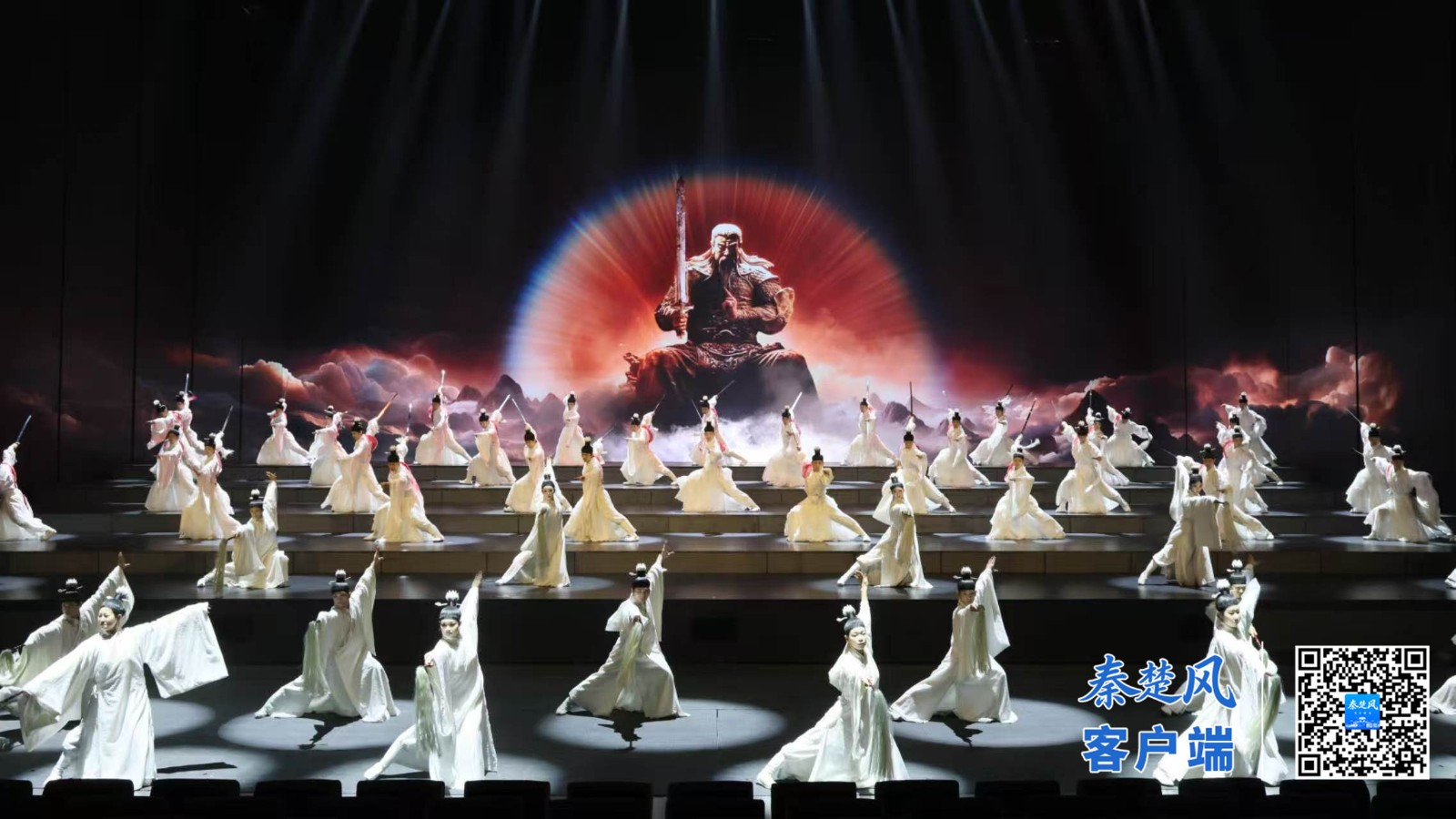
Announcement on the Adjustment of Performance Time for "Wudang Yimeng
2026-04-09 22:56:30
Dear visitors: In order to further optimize the experience o...
Special offer air tickets for Shiyan Wudangshan Airport starting from 200 yuan in March have been released
2026-04-10 00:01:36
The warm March breeze is here. Saying goodbye to the high pr...
Female visitors can enter the park at half price! Wudang Mountain Scenic Area is offering discounted tickets
2026-04-09 22:02:47
Qin Chu Feng News (Correspondent Tan Mengjie) To celebrate I...
101 Reasons to Stay in Hubei: Wudang Jack: Please Call Me "Old Nei"
2026-04-09 22:03:58
Jack, an American young man who has practiced martial arts o...
Shiyan Wudangshan Airport has newly opened routes to Harbin and Zhuhai. Low-priced air tickets are now available for grabs
2026-04-09 21:56:47
Here it comes! Finally here it comes! Starting from March 31...
On the Golden Summit of Wudang Mountain, which is 1,612 meters above sea level, this "long-lived family" is little known
2026-04-09 22:07:49
Qin Chu Wind News (Shiyan Media Reporters Lu Wei and Liu Kun...
Because of the beautiful scenery of Wudang, people come to stay for the city's best views. "Shiyan, the city of immortal mountains and clear waters" is making all-out efforts to attract tourists
2026-04-09 22:06:08
On the evening of March 11th, at the foot of Wudang Mountain...