


The Stele of the main hall of Yuanhe Temple
2022-08-20 23:32:13
The tombstone you are seeing now is that of Wei GUI, an official supervisor who was in charge of the Huguang Administrative Department during the Chenghua period of the Ming Dynasty. The emperor of the current dynasty bestowed upon the tombstone inscription: "The tomb of Duke Wei, the former imperial edict of the Ming Dynasty to be in charge of the military and civilian affairs of the three provinces and eight prefectures, as well as the internal officials and eunuchs." This is a physical example of the eunuchs '" pre-governance and military regulation "in the Ming Dynasty. Historically, when Emperor Yongle of the Ming Dynasty was a vassal prince, he rose in rebellion due to important intelligence sent by eunuchs and eventually ascended the throne. Therefore, he violated Zhu Yuanzhang's ancestral precept that "eunuchs were not allowed to preside over politics or command troops" and relied on eunuchs as his confidants. Especially in the middle and late Ming Dynasty, the emperor was deeply involved in the inner palace and relied on eunuchs to issue orders, exerting a significant influence on the political life of the Ming Dynasty. Wei GUI was a eunuch in the middle of the Ming Dynasty. He was appointed to guard Wudang in the first year of the Chengdai era and stepped down in the eighth year of the Hongzhi era. He governed Wudang Mountain for 30 years. During Wei GUI's tenure on Wudang Mountain, the emperor continuously granted him greater power and established the "Huguang Administrative Office", which was in charge of over forty prefectures and counties in eight provinces. At that time, neighboring prefectures and counties such as Jingzhou, Xiangyang, Yunyang, Xichuan, Baihe in Hanzhong, Luonan, and Shangnan were all within Wei GUI's jurisdiction. Wei GUI was a very accomplished eunuch. When he was in Wudang, there was a famine year when countless displaced people flocked to the Wudang area. The local officials proposed a plan to kill the displaced people. Wei GUI, on the other hand, advocated for reclaiming land to pacify the people and presented it to the court, which was approved. He saved a large number of displaced people and won the hearts of the people. During the Chenghua period of the Ming Dynasty, "Wei GUI prepared his own funds" and built the Ying 'en Palace beside the Ying 'en Bridge in Shiban Tan. On the 24th day of the 10th lunar month in the 17th year of Chenghua, the emperor issued an imperial edict to inform the whole country, bestowing the name "Ying 'en Palace" and selecting Taoist officials to burn and repair it. After Wei GUI's death, he was buried in the Sanhuang Temple outside the former Junzhou City, which covers an area of 1,248 square meters and is equipped with stone-carved offerings such as a turtle-carried stele and a stone lamp stand.
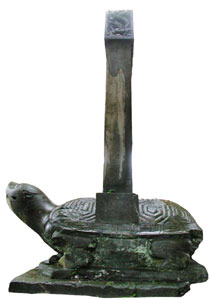
Wulong Palace Imperial Stele Pavilion No. 1
2022-08-20 23:32:13
Wulong Palace Imperial Stele Pavilion No. 1
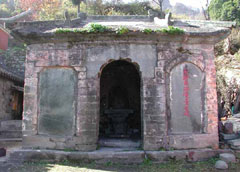
The Middle view of the Yuan Dynasty stone hall
2022-08-20 23:32:13
The Middle view of the Yuan Dynasty stone hall
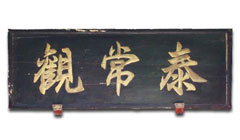

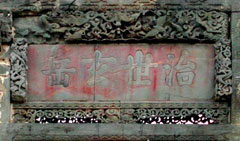
The Mystic Mountain for governing the world
2022-08-20 23:32:13
The Mystic Mountain for governing the world
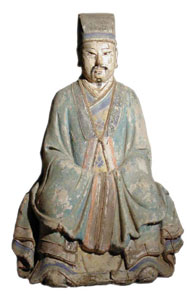
The main hall of the Five Dragons Palace has three statues
2022-08-20 23:32:13
The main hall of the Five Dragons Palace has three statues
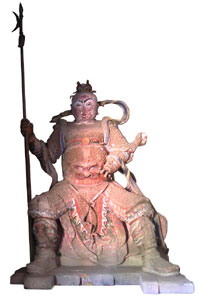
The white tiger in the Dragon and Tiger Hall of Zixiao Palace
2022-08-20 23:32:13
The white tiger in the Dragon and Tiger Hall of Zixiao Palac...
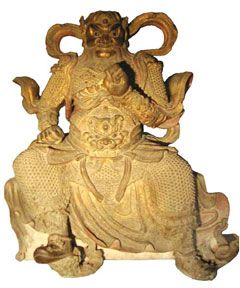
The main deity statue in the main hall of Yuanhe Temple
2022-08-20 23:32:13
The main deity statue in the main hall of Yuanhe Temple