


Yuanhe View
2022-08-20 23:32:13
Yuanhe Temple, whose full name is "Yuanhe Relocation School Mansion". Historical records state: "In ancient times, Emperor Yuan had the name Yuanhe Relocation of the School Mansion," thus it was named Yuanhe Temple. During the Yuan and Ming dynasties, every March in the early spring, pilgrims from all directions would "shoulder to shoulder for hundreds of miles and come cheering". After the Yuan Dynasty buildings were abandoned at 圯, in the tenth year of yongle in the Ming Dynasty, an imperial decree was issued to build 44 rooms including the Xuan Emperor's palace, the mountain gate, 廊庑, and the east and west abbots. After the Jiajing period of the Ming Dynasty, it was further renovated and expanded, making its architectural scale second only to that of the Yuzhen Palace. There are 37 existing cultural relic buildings with a total construction area of 1,479 square meters, which is a term for internal cultivation in Taoism. It refers to the body fluids produced by rinsing the mouth with breath, and there is a saying that "constant consumption of Yuanhe eliminates the five grains." xiao (pronounced in the fourth tone), is a unit in the military organization and also the name of a military camp. In history, Emperor Wu of the Han Dynasty established eight military academies. During the Jin Dynasty, there were seven armies and five military academies, each with 700 to 1,200 troops. To this day, the military still retains the positions of "general" and "colonel". The relocation of the Yuanhe Campus can be understood as: The Yuanhe Temple was the residence of the military commander of Emperor Zhenwu. In Taoist cultivation, the extremely important position that "Yuanhe" holds in health preservation is emphasized. Emperor Yongle of the Ming Dynasty once issued an imperial edict at the foot of Wudang Mountain, stating, "If a Taoist priest does not adhere to his own religion, causes trouble and harms the community, or damages the ancestral traditions, the milder cases will be immediately condemned and expelled from the mountain..." For serious cases, the punishment should be based on the severity of the crime. As a result, Yuanhe Taoist Temple gradually evolved into a place to punish Taoist priests who violated the rules.
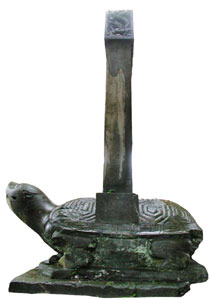
Wulong Palace Imperial Stele Pavilion No. 1
2022-08-20 23:32:13
Wulong Palace Imperial Stele Pavilion No. 1
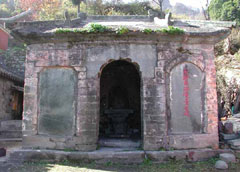
The Middle view of the Yuan Dynasty stone hall
2022-08-20 23:32:13
The Middle view of the Yuan Dynasty stone hall
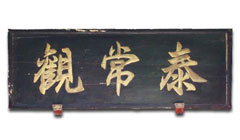

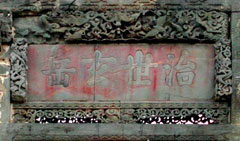
The Mystic Mountain for governing the world
2022-08-20 23:32:13
The Mystic Mountain for governing the world
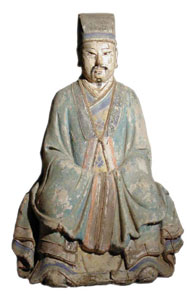
The main hall of the Five Dragons Palace has three statues
2022-08-20 23:32:13
The main hall of the Five Dragons Palace has three statues
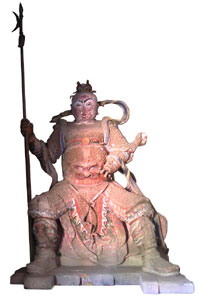
The white tiger in the Dragon and Tiger Hall of Zixiao Palace
2022-08-20 23:32:13
The white tiger in the Dragon and Tiger Hall of Zixiao Palac...
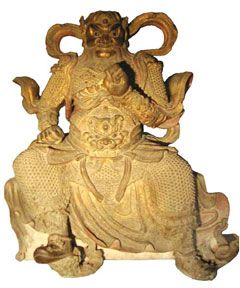
The main deity statue in the main hall of Yuanhe Temple
2022-08-20 23:32:13
The main deity statue in the main hall of Yuanhe Temple