


The main hall of the Five Dragons Palace is truly martial
2022-08-20 23:32:13
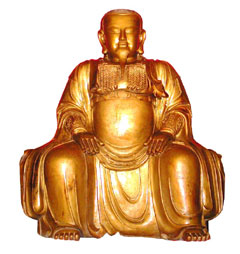
This gilded bronze seated statue of Zhenwu, standing at a total height of 1.9 meters, is the largest bronze statue currently preserved on Wudang Mountain. It represents the highest level of smelting technology in China in the 15th century. Its casting technology and sculpture art are extremely superb. The beauty of its shape and the precision of its craftsmanship can be described as ingenious and exquisite. It has been listed as a first-class national cultural relic and an artistic masterpiece. After Emperor Chengzu Zhu Di seized the throne through military prowess, he began to "build the Forbidden City in the north and the Wudang Mountain in the south", constructing royal temples on Wudang Mountain to achieve his goal of ideological governance. In Wudang Mountain, there is a legend about the image of Zhenwu that is very worthy of people's reflection. It is said that Zhu Di gathered many skilled craftsmen to make the statue of Zhenwu, but Zhu Di was not satisfied with any of them. Pitifully, some of these craftsmen were beheaded, some were imprisoned, and some were exiled. Later, there was a Goryeo craftsman surnamed Ji who guessed the emperor's intentions and risked his life to enter the palace to meet the emperor. So the craftsman sculpted the True Martial God in the likeness of Zhu Di. The emperor was overjoyed as a result. This is the legend of the "True Martial God, Yongle Statue" on Wudang Mountain. If this legend is true, when people see this real deity statue, they will actually know the image of Emperor Chengzu Zhu Di of the Ming Dynasty. Judging from the statues of the true martial gods of successive dynasties on Wudang Mountain, the statues of the Ming Dynasty are clearly different from those of the Song and Yuan dynasties. Because in the Song and Yuan dynasties, most of the statues were made by folk artisans, while in the Ming Dynasty, most of the statues were bestowed by the imperial court and created by artisans from the Ministry of Works. These artisans mostly came from professional families and had ancestral craftsmanship and skills passed down through generations. Coupled with the country's abundant financial resources, they were naturally more exquisite.
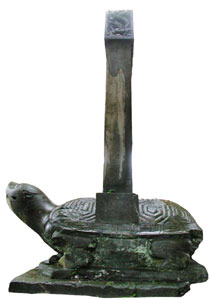
Wulong Palace Imperial Stele Pavilion No. 1
2022-08-20 23:32:13
Wulong Palace Imperial Stele Pavilion No. 1
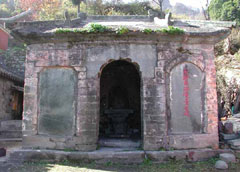
The Middle view of the Yuan Dynasty stone hall
2022-08-20 23:32:13
The Middle view of the Yuan Dynasty stone hall

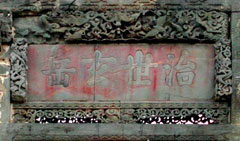
The Mystic Mountain for governing the world
2022-08-20 23:32:13
The Mystic Mountain for governing the world
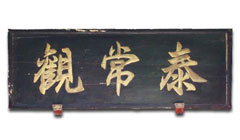
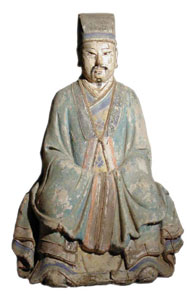
The main hall of the Five Dragons Palace has three statues
2022-08-20 23:32:13
The main hall of the Five Dragons Palace has three statues
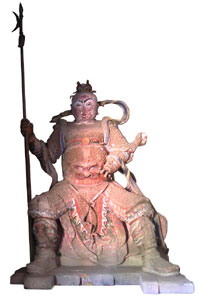
The white tiger in the Dragon and Tiger Hall of Zixiao Palace
2022-08-20 23:32:13
The white tiger in the Dragon and Tiger Hall of Zixiao Palac...
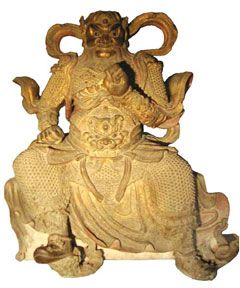
The main deity statue in the main hall of Yuanhe Temple
2022-08-20 23:32:13
The main deity statue in the main hall of Yuanhe Temple