


The Azure Dragon in the Dragon and Tiger Hall of the Five Dragons Palace
2022-08-20 23:32:13
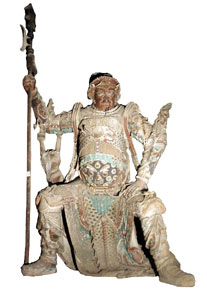
In the Dragon and Tiger Hall of the Wulong Palace, there are two huge clay statues of a blue dragon and a white tiger, each five meters tall, which are the largest existing clay statues on Wudang Mountain. Its design reflects the solemn and majestic personality of the guardian deity of Wudang Mountain, while also featuring distinct makeup and adornment colors of northern ethnic minorities. Because this statue is particularly tall, to prevent the arm holding the weapon from being too heavy and breaking, the designer ingeniously arranged for a small green dragon and a white tiger to play on it, but in fact, they were supporting the arm to make it more stable. According to historical records, the statues of the blue dragon and the white tiger were created by Liu Chuxuan, a favored disciple of the renowned Yuan Dynasty sculptor Liu Yuanyi. Moreover, all the clay statues of deities in the imperial palaces and temples built on Wudang Mountain were designed and shaped by him personally. This clearly shows how precious they are. The important palaces and temples on Wudang Mountain are equipped with Dragon and Tiger Halls, where the blue dragon and the white Tiger are enshrined, aiming to enhance the solemnity of paying homage to the Great Emperor Zhenwu. According to records, the Azure Dragon is the god of the East, possessing the supernatural power to protect the territory and support the officials and salaries of the common people. Among the two qi, it belongs to Yang; among the five elements, it belongs to wood; and in the human body, it protects the soul and governs the liver. The White Tiger is the deity of the West and has the ability to control the laws of lightning. Among the two qi, it belongs to Yin; among the five elements, it belongs to metal; and in the human body, it strengthens the lungs and governs the kidneys. Here, the Azure Dragon and the White tiger belong to the same hall, which also implies the Taoist practice of health preservation techniques, that is, to nourish the qi of the lungs and liver. In the "Taishang Yuanbao Jinting Wuwei Miao Jing", it is said: "The two qi are metal and wood." The golden white color, its virtue and majesty, its spirit like a tiger, and the energy of the lungs, is thus called the white tiger. The color of wood is green. Its virtue is gentle and its spirit is like that of a dragon. Therefore, the energy of the liver is called "green dragon". The statues here are highly symbolic. The "divine" white tiger is depicted with a peaceful expression, while the "gentle" green dragon is depicted with a fierce form. According to Taoism, when the two return to their original nature, they can regulate, nourish and balance the two qi.
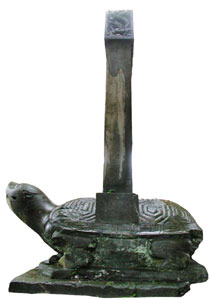
Wulong Palace Imperial Stele Pavilion No. 1
2022-08-20 23:32:13
Wulong Palace Imperial Stele Pavilion No. 1
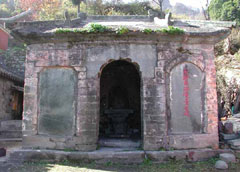
The Middle view of the Yuan Dynasty stone hall
2022-08-20 23:32:13
The Middle view of the Yuan Dynasty stone hall

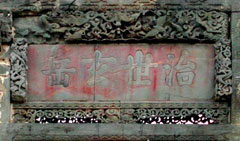
The Mystic Mountain for governing the world
2022-08-20 23:32:13
The Mystic Mountain for governing the world
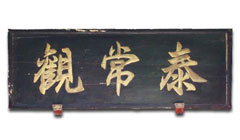
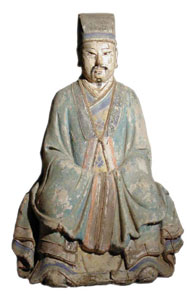
The main hall of the Five Dragons Palace has three statues
2022-08-20 23:32:13
The main hall of the Five Dragons Palace has three statues
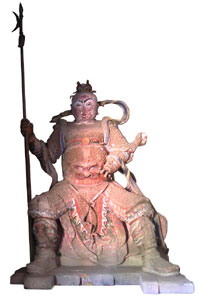
The white tiger in the Dragon and Tiger Hall of Zixiao Palace
2022-08-20 23:32:13
The white tiger in the Dragon and Tiger Hall of Zixiao Palac...
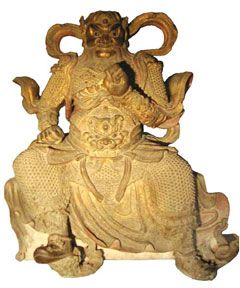
The main deity statue in the main hall of Yuanhe Temple
2022-08-20 23:32:13
The main deity statue in the main hall of Yuanhe Temple