


Chen Tuan from Lingxu Rock
2022-08-20 23:32:13
According to research, there was already a special temple dedicated to Chen Tuan on Wudang Mountain in the Song Dynasty. In Wang Xiangzhi's "Yudi Jisheng" of the Song Dynasty, it is said: "Xiyi Nunnery is located on Wudang Mountain." The "General Annals of the Great Yuan" records: "Xiyi Nunnery is located on Wudang Mountain." Chen Tuan lived in seclusion here. During the Yuan and Ming dynasties, there were statues of Immortal Chen Tuan enshrined in places such as the Wulong Palace and Lingxu Rock. Chen Tuan, styled Tunan, was also known as Fuyaozi. Emperor Taizong of the Northern Song Dynasty bestowed upon him the title "Mr. Xi Yi", and thus he was also known as Chen Xi Yi in history. He was a renowned Taoist, scholar and poet in ancient times, with profound knowledge and a rich body of writing. During his youth, Chen Tuan was well-versed in the sayings of various schools of thought in the classics and history. "By the age of fifteen, he had thoroughly studied the Book of Songs, The Book of Rites, the Book of Documents, the Book of Mathematics, and even books on prescriptions and medicines." In the Later Tang Dynasty, he failed to pass the imperial examination and thus did not seek official positions but took pleasure in the mountains and rivers. "Abandoning all family property, scattering to send off people, I only set off with a stone clang." He became a renowned poet of the Later Tang Dynasty in his fifties. During the late Tang and Five Dynasties period, China experienced a long time of turmoil, and many Confucian scholars secluded themselves in the mountains and forests. Chen Tuan then lived in seclusion on Wudang Mountain for over 20 years. This historical fact is recorded in many places in the official histories, local Chronicles, Taoist books and notes of scholars during the Song and Yuan dynasties. Chen Tuan lived in seclusion on Wudang Mountain and left behind many relics, such as the "Sleeping Happiness and Longevity" in Nan Yan Palace, the chanting platform in Wu Long Palace, and the alchemy furnace in Ziran An, etc. Chen Tuan completed his theory and practice of internal alchemy on Wudang Mountain, enriching and perfecting the thought of Yi learning. Most of his major works were written while he was in seclusion here. Especially when he "studied the subtleties before painting" at Lingxu Rock, he independently created the "Wuji Tu" and the "Taiji Xian Tian Tu", which had a great influence on later generations. In his later years, Chen Tuan went to Mount Hua. As for why he moved to Mount Hua, although the explanation at that time was somewhat deified, it also indicated that he had achieved great success in his practice of health preservation on Wudang Mountain. One account is that Zhao Daoyi's "Xianjian" records: One night, the master stood in the courtyard, and a golden man holding a sword shouted, "Your path has been accomplished; there should be a place to return to it." Chen Tuan believed that autumn was the gathering and return of all things. Autumn was in the west, so he moved to Mount Hua, the Western Peak. Another account is that Zhang Lu's "Taihua Xiyi Zhi" records: When the master was reciting the I Ching and practicing Taoism in Wudang, the Five Qi Dragon King transformed into an old man and said to him, "This is the place where Xuanwu resides. Mount Hua is where the master lives in seclusion." So the five dragons soared through the air and rode the wind to carry them to Mount Hua. The third account is recorded in Liu Daoming's "The True Collection of the Blessed Land of Wudang" : Chen Tuan, due to his far-reaching reputation and the overwhelming number of visitors, was tired of welcoming him and thus moved to Mount Hua.
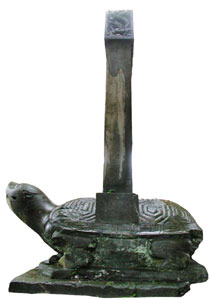
Wulong Palace Imperial Stele Pavilion No. 1
2022-08-20 23:32:13
Wulong Palace Imperial Stele Pavilion No. 1
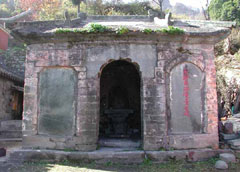
The Middle view of the Yuan Dynasty stone hall
2022-08-20 23:32:13
The Middle view of the Yuan Dynasty stone hall

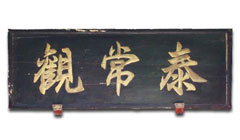
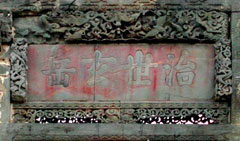
The Mystic Mountain for governing the world
2022-08-20 23:32:13
The Mystic Mountain for governing the world
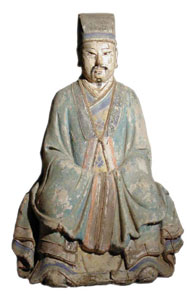
The main hall of the Five Dragons Palace has three statues
2022-08-20 23:32:13
The main hall of the Five Dragons Palace has three statues
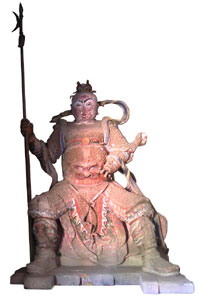
The white tiger in the Dragon and Tiger Hall of Zixiao Palace
2022-08-20 23:32:13
The white tiger in the Dragon and Tiger Hall of Zixiao Palac...
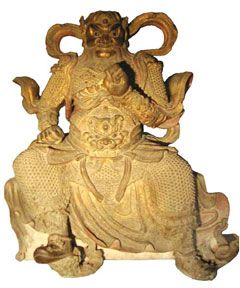
The main deity statue in the main hall of Yuanhe Temple
2022-08-20 23:32:13
The main deity statue in the main hall of Yuanhe Temple