


The Theory of the True Collection of Jade Machinery
2022-08-20 23:32:13
The Yellow Emperor asked, "The spring pulse is like a taut string; why does it become taut?" Qi Bo said to the sun: "The spring meridian is the liver and the wood in the east. It is the origin of all things. Therefore, when its qi comes, it will be weak, light, and slippery. The auspicious meridian is straight and long. Thus, the sun meridian is taw-like, and this is the opposite of illness." The emperor said, "Why add and reverse?" Qi Bo said: "If the qi comes solid and strong, this is called excessive, and the illness is external." If the qi is not substantial but weak, this is called deficiency, and the disease lies in the middle. The day of the emperor: If the spring pulse is too much or too little, what kind of illness will it cause? The day of the fear: If it is too much, it will make people forgetful, suddenly causing dizziness and sudden illness. If it is insufficient, it will cause chest pain and back pain; if it is insufficient, the ribs will be full. Emperor's Day: Good. The summer pulse is like a hook; how can it be so forceful? Fang Bo Ri: The summer meridian represents the heart and the fire in the south. It is the reason why all things thrive and grow. Therefore, when the qi comes and goes, it is abundant and wanes. Releasing the sun hook can lead to illness. Emperor Ri: How to go against it? On the day of Qi Bo: When the qi comes and goes, it is also abundant. This is called excessive, and the illness is external. When the qi does not come in abundance but goes out in abundance, this is called deficiency, and the disease lies in the middle. Emperor Day: What are the diseases when the summer pulse is too much or too little? If it is too much, it will cause the body to feel hot and painful, which is called immersion. If it is not met, it will cause annoyance, with coughing up saliva above and qi leakage below. Emperor's Day: Good. The autumn veins float, but how can they float? The Qi Bo Day: The autumn meridian refers to the brain and the metal in the west. It is the reason why all things harvest. Therefore, when the qi comes, it is light and weak, floating; when it comes, it is quick and then dissipates. If the qi is released, it will float; otherwise, it will cause illness. Emperor Ri: How to go against it? When the qi comes, the hair becomes stiff in the middle and the sides are weak. This is called excessive and the disease is external. When the qi comes, the hair becomes fine. This is called "not reaching it in time", and the disease lies in the middle. Emperor's Day: What are the causes of diseases when the autumn pulse is too much or too little? On the day of Qi Bo, if it is too much, it can cause backache due to adverse qi flow, and it is warm and damp. If it is not in time, it will cause shortness of breath, shortness of breath and coughing, blood can be seen in the upper qi, and a sickly sound can be heard in the lower qi. Emperor's Day: Good. The winter meridian is like nourishment. How to nourish it? The Qi Bo Day: The winter meridian is the kidney and the water in the north. It is the reason why all things are stored together. Therefore, its qi comes deep and extensive, so it is weak every day. Otherwise, it will cause illness. Emperor's Day: How to add and reverse? Reading "Fear of the sun" : When the qi comes, it is like hitting a stone and getting old. This is said to be too much, and illness is outside. When all the excess is in full, it is said to be insufficient; the illness lies in the middle. Emperor's Day: What are the symptoms when the winter pulse is too much or too little? The day of fear: If it is too much, it can relieve one's shock, causing pain in the spine and a lack of energy, and making one reluctant to speak. If it is not done in time, it will make one feel as anxious as if they were ill or hungry, have a clear conscience in the morning, experience pain in the spine, feel full in the lower abdomen, and have difficulty urinating. Emperor's Day: Good. The day of the Emperor: It is the sequence of the four seasons and the variation of their reversals. However, which one is the sole ruler of the spleen meridian? Qi Bo said, "The spleen meridian is a scholar who stores it alone to irrigate the four lists." Emperor Day: Then, can the good and evil of the spleen be discernible? The good is unseen, while the evil is visible. Emperor's Day: How can the evil be seen? Qi Bo said, "If it comes like the flow of water, this is called excessive, and the illness is outside." Just as a bird's appearance is old, this is called not being in time; the illness lies in the middle. Emperor's Day: The master said that the spleen is a solitary storage, and the central part should be filled four times as much. What are the diseases when it is too much or too little? The day of Qi Bo: If it is too much, it will make one unable to raise all four branches. If it fails to do so, one will not forget the nine orifices: The king noted it as "anger". ② Change: The "Ji Jing" refers to it as "yellow and red". Under the "change" in the "Thousand Gold Formula", there is "yellow and red". A master of the sword is called Chongqiang. The emperor suddenly rose, paid his respects again and bowed his head: "Good." I have grasped the essence of the pulse, which is the most profound in the world. The five colors' veins change, the touch remains constant in the south, and the Dao lies in unity. If the spirit does not return, and if it does return, it does not return, then the opportunity has been lost. The most essential of the number, close to the minute, was written on jade tablets and kept in the ① Prefecture. Each county read it and it was called the Jade machine. The Five storehouses receive qi from what they give birth to, pass it on to what they overcome, abandon qi from what they give birth to, and die from what they do not overcome. If a disease leads to death, it must first spread to a point where it cannot be sustained. Only then will the disease lead to death. This is because of the reverse flow of qi, and thus he died. The liver receives qi from the heart, which is then transmitted to the spleen. Qi is stored in the kidneys and reaches the lungs, leading to death. The heart receives qi from the spleen, which is then transmitted to the lungs. Qi is stored in the liver and eventually reaches the kidneys, leading to death. The spleen receives qi from the lungs, which is then transmitted to the kidneys. Qi is stored in the heart and eventually reaches the liver, leading to death. The lungs receive qi from the kidneys, which is then transmitted to the liver. Qi is stored in the spleen and eventually reaches the heart, leading to death. The kidneys receive qi from the liver, which is then transmitted to the heart. Qi is stored in the lungs and eventually reaches the spleen, leading to death. All these are cases of reverse death. One day, one night, and one fifth of the time, this is why it is about the early and late stages of life and death. The Yellow Emperor said, "The five compartments are interconnected, and each has its own sequence of movement. When the five compartments are ill, each will pass on its own superiority." If it is not cured, the method of three months or six months, three days or six days, and the five storehouses are passed on, it will surely die. This is the second best of the following transmission. Therefore: Distinguishing oneself from Yang, one knows the origin of illness. To be different from the Yin, one knows the time of life and death, meaning to know until one is trapped and dies. Therefore, wind is the chief of all diseases. Now, when cold wind invades people, it makes their hair stand straight and their skin close and feel hot. At this time, they may sweat. When there is swelling and pain due to numbness and pain, one can apply hot water or moxibustion with fire to relieve the pain. If not treated, the patient will suffer from lung obstruction, which is called lung arthralgia, accompanied by coughing and ascending qi. If not treated, the lung will spread to the liver. The disease is called "day liver arthralgia", also known as "day jue". There is pain in the hypochondrium and loss of appetite. At this time, it can be pressed with a shrill sound. It is incurable. When the liver transmits to the spleen, the disease is called spleen wind. It is characterized by itching, abdominal heat, restlessness and yellowish complexion. At this time, massage, medicine or bath can be used. It is not treated. When the spleen transmits to the kidney, the disease is called daily hernia and masses. The lower abdomen is hot and painful with white patches. It is also called gu. At this time, it can be treated by pressing or taking medicine. The disease is characterized by the transmission of the kidney to the heart. The affected tendons and meridians are pulled together and become rapid. The disease name is 瘛. At this time, moxibustion or medication can be used. If the Dharma is cured, after ten days, he shall die. The kidney transmits to the heart, and the heart then transmits back to the lung, causing chills and fever. If one dies at the age of three, this is the second most serious illness. However, when it suddenly occurs, there is no need to treat it through transmission, or if its transmission is not inferior to that of others, the fear, sorrow, joy, anger and anger cannot be treated as secondary, thus causing serious illness. Therefore, when one is extremely weak due to excessive joy, the kidney qi follows; when one is angry, the liver qi follows; when one is sad, the lung qi follows; when one is afraid, the spleen qi follows; when one is worried, the heart qi follows. This is the way. Therefore, there are five types of diseases, fifty-five and twenty-five variations, as well as their transmission and transformation. "Chuan" is the name of "cheng". The large bone of the cypress tree is withered, the large flesh is sunken, the chest is full of qi, and it is difficult to breathe. Its vital energy and form are expected to die in June. The true treasure pulse is seen, which is the date of the child's birth. The bones are emaciated, the flesh is sunken, the chest is full of qi, breathing is difficult, and internal pain extends to the shoulders and nape. It is expected that the child will die within a month. When the true concealment is seen, the body is hot, the flesh is falling out, and the abdomen is broken. The child will die within ten days. The bones were withered and emaciated, with a large amount of meat filling underneath. The marrow of the shoulder had dissipated internally, and the movements had deteriorated. The true treasures had not been seen. He was expected to die at the age of one. Seeing his true treasures, he was given a date. The bones are emaciated, the flesh is sunken, the chest is full of qi, there is pain in the abdomen, the heart is uncomfortable, the shoulders, neck and body are hot, the intestines are broken and the flesh is lost, the eyes are sunken, the true concealness is visible, the eyes cannot see people, death is immediate. Those who can see people will die when they can no longer bear it. When the body is in a state of acute deficiency and suddenly strikes, the five internal organs are completely blocked, the meridians are unobstructed, and the qi does not flow. It is like drowning and cannot be controlled. The first reason is: the original work is "internal organs", and according to the comparison of (Tai Su), the meridians will never come. If a person breathes for five or six times, the body and flesh do not fall off, even if the true internal organs are not seen, it is still like death. When the true liver meridian arrives, it is as swift as following the blade of a knife, and the pressure is severe, like pressing the strings of a zither or a lute. The color is bluish-white and lacks luster, and the hair is broken, indicating death. When the true heart reaches the pulse, one must fight with firmness, as if following the will, the seedlings are abundant, their color is red and black, lacking luster, and their hair is broken, which is death. When the true lung meridian reaches, it is large and weak, like a human figure in a feather, with a white and red color and lack of luster, and the hair is broken, indicating death. When the true kidney meridian reaches, it is extensive and complete, like a fingertip hitting a stone, with a black and yellow color and lack of luster, and the hair is broken, indicating death. When the true spleen meridian arrives, if it is weak and intermittent, with a yellowish-blue color and lack of luster, and the hair is broken, it indicates death. All those who saw the true Storehouse channels died without being cured. The Yellow Emperor said, "Why did I see Zhenzang die every day?" Qi Bo said, "The five viscera are all endowed with qi that emerges." The stomach is the foundation of the five internal organs. Those who store qi cannot reach the great Yin of the hand by themselves; it must be due to the qi of the stomach and even the great Yin of the hand. Therefore, each of the five Treasuries, in accordance with its own time, leads to the hand Taiyin. Therefore, when evil energy prevails, essence and energy decline. Therefore, when the illness is severe, the stomach qi cannot reach the hand sun along with it. As a result, the true storage qi is seen alone. When it is seen alone, the illness overcomes storage, and thus death occurs day after day. The emperor said, "Good." The Yellow Emperor said: "When treating diseases, observe the shape, qi, color, the strength or weakness of the pulse, and the new or old cause of the illness, and then treat it. There is no time to wait." When the form and qi are in harmony, it is said to be curable. When the color is superficial, it is said to have changed. The pulse follows the four seasons and is said to be treatable. If the pulse is weak and slippery, it indicates the presence of stomach qi. It is easy to treat when life returns. Take it with the right timing. When the form and qi are out of balance, it is said to be difficult to treat. The color is not lustrous and it is hard to achieve. When the pulse is firm and solid, it is said to be even stronger. If the pulse goes against the four seasons, it is incurable. One must examine the four difficulties and clearly inform them. Those who go against the four seasons will have the lung meridian in spring, the kidney meridian in autumn, the heart meridian in autumn, and the card meridian in winter. All of these will be extremely dull and astringent, and their fate will be reversed day by day. The four seasons do not hide the form. In spring and summer, the pulse is deep and sluggish, while in autumn and winter, it becomes floating and large. This is called going against the four seasons. When the disease is characterized by heat, the pulse is still; when there is diarrhea and the pulse is large; when there is blood loss and the pulse is solid; when the disease is in the middle and the pulse is firm; when the disease is in the outside and the pulse is not firm, it is difficult to treat. The Yellow Emperor said, "I have heard the truth and falsehood to determine life and death. I wish to hear the truth." Qi Bo said: "Five excesses lead to death, and five deficiencies lead to death." The emperor said, "I wish to hear about the five realities and the five deficiencies." "Qi Bi Ri: The pulse is severe, the skin is hot, there is abdominal distension, the front and back are blocked, and the tubes are blocked. This is called the five excesses." The glands are fine, the skin is cold, qi is scanty, diarrhea occurs before and after, and one eats and drinks not long after. These are called the five deficiencies. The emperor said, "Why were there any living people at that time?" Qi Bo said: When the porridge and porridge enter the stomach, the excretion and injection cease, and the weak become active. When the body sweats profusely, it becomes vigorous. This is the sign.
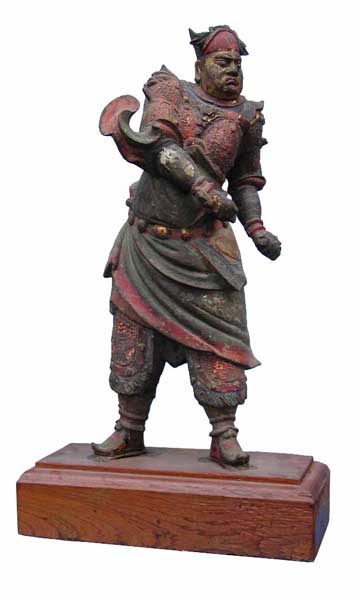
One of the stars of the Big Dipper
2026-04-15 11:51:31
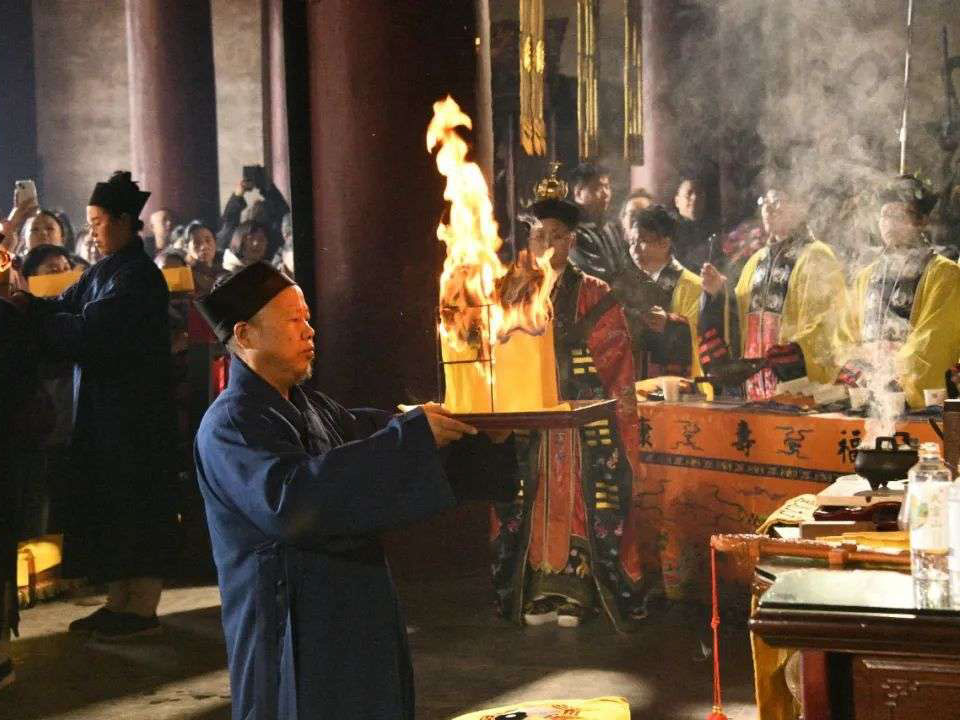
(1) The meaning of the ritual of fasting and Taoist ceremonies
2022-08-20 23:32:13
The original meaning of "zhai" was to be neat, harmonious an...
Yin GUI
2022-08-20 23:32:13
Chapter 27
2022-08-20 23:32:13
Chapter 72
2022-08-20 23:32:13
The couplet of the ancestral hall of the Wudang Mountain Temple
2022-08-20 23:32:13
Chen Xingchang
2022-08-20 23:32:13