


Explanation
2022-08-20 23:32:13
In the "Records of The Three Kingdoms: The Book of Wei - The Biography of Zhong Hui", Pei Songzhi quoted He Shao's "Biography of Wang Bi" as saying: "Bi annotated Laozi, providing him with a brief overview, a unified theory, and a concise discussion of the Dao." To understand its meaning, the term "Zhilue" refers to the matter rather than the title of the book. The book written is called a Daoist treatise. Today, the Zhonghua Book Company's collated and annotated version of "Records of The Three Kingdoms" states: "Bi annotated the 'Tao Te Ching', provided it with summaries and explanations, and established a rational and unified system. He wrote 'A Brief Discussion on the Dao'." Mr. Lu Yulie's "Collation and Interpretation of Wang Bi's Collected Works" states: "Bi annotated the 'Tao Te Ching' and composed the 'Zhi Lue', which led to the unification of reason and wrote the 'Dao Lun Lun'." This is because both "Zhi Lue" and "Dao Lue Lun" are book titles. The books written by Wang Bi, such as the "Jingji Zhi" in the "Old Book of Tang", the "Yiwen Zhi" in the "New Book of Tang", the "Yiwen Zhi" in the "History of the Song Dynasty", and Gao Sisun's "Zilue", are all titled "Laozi Zhiliang Lue", and Zheng Qiao's "Tongzhi" is also titled "Laozi Zhiliang Lue", either in two volumes or one volume. Only Lu Deming's "Commentary on the Classics" and "Yuan GUI of the Book Office" composed "A Brief Explanation of Laozi", "Yuhai" composed "A Brief Explanation of Laozi", and Chao Gongwu's "Reading Notes of the County Office" composed "A Brief Discussion of Laozi". Chao Gongwu further stated that "there are all ten chapters and eight chapters". His works have been lost since the Song Dynasty. However, in the "Daozang - Zhengyi Section", there is a volume titled "Laozi's Minor Instructions and Examples", and in Zhang Junfang's "Yunji Qiqian", there is another volume titled "Laozi's Guidance and Examples". Wang Weicheng, a modern scholar, believed that the lost text of Wang Bi's "Laozi's Guidance and Examples" was compiled into "Laozi's Guidance and Examples" and published in the "Peking University Quarterly Journal of Sinology". Mr. Lu Yulie included it in "Wang Bi's Collected Works and Explanations". However, Mr. Yan Lingfeng's "Bibliography of the Knowledge and Views of the Philosophers of the Zhou, Qin, Han and Wei Dynasties" holds that "Laozi Weizhi Lilue" (where "zhi" is written as "zhi") should be the original name of Wang Bi's book, and it is suspected that the character "wei" has been removed from "zhi". During the Pre-Qin and Han dynasties, people like Zhuang Zhou, Han Fei, He Shang Gong and Sima Tan had different understandings of old age. Wang Bi, who valued Wu's learning, inherited most of it from Zhuang Zhou. In this article, the section "This is the main point" compares the similarities and differences between Taoism and the various schools of thought, and discusses that Taoism is the source of the various schools of thought. It is a general discussion of the various schools of thought, which is mostly inherited from Sima Tan and further leads to the "Mingben" chapter of the "Baopuzi". Since the literary works of Sima Tan and Wang Bi, scholars have developed a kind of learning that emphasizes "key points" and "general points", which is indeed a crucial factor in the advancement of academic research. Based on this, the significance of Wang Bi's article needs no further elaboration. Now, I add Dong Li to seek advice from scholars. This article is based on the 1980 edition of Mr. Lu Yulie's "Collation and Interpretation of Wang Bi's Collected Works" published by Zhonghua Book Company. The original text was in vertical traditional Chinese characters, but now it has been changed to horizontal simplified Chinese characters, and punctuation and paragraphes have also been adjusted. This article was collated and compiled by Xiaoyu.
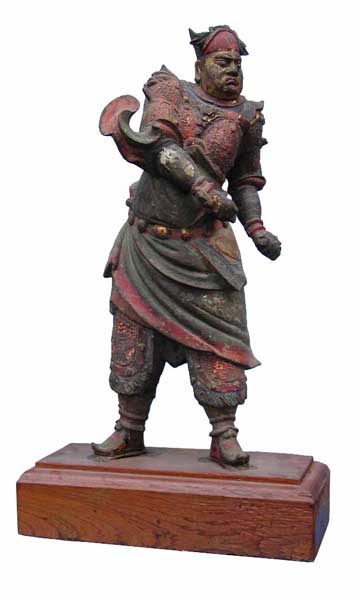
One of the stars of the Big Dipper
2026-04-15 11:51:31
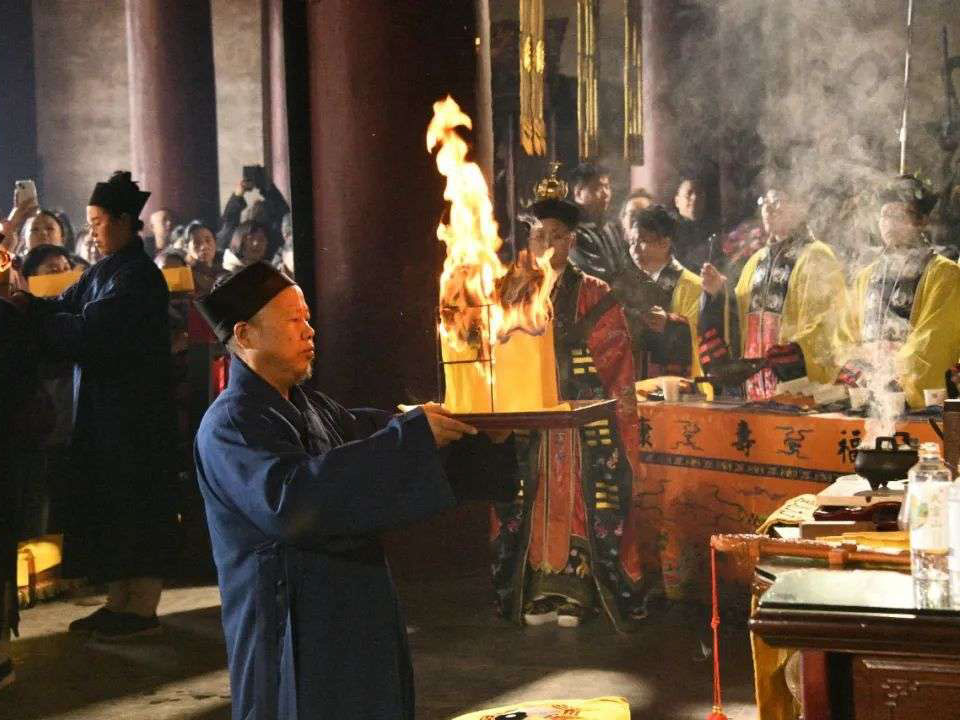
(1) The meaning of the ritual of fasting and Taoist ceremonies
2022-08-20 23:32:13
The original meaning of "zhai" was to be neat, harmonious an...
Yin GUI
2022-08-20 23:32:13
Chapter 27
2022-08-20 23:32:13
Chapter 72
2022-08-20 23:32:13
The couplet of the ancestral hall of the Wudang Mountain Temple
2022-08-20 23:32:13
Chen Xingchang
2022-08-20 23:32:13