


Weiming
2022-08-20 23:32:13
Laozi said: The Dao can be weak, it can be strong, it can be gentle, it can be firm, it can be Yin, it can be Yang, it can be secluded, it can be bright, it can embrace the universe, and it can respond to the boundless. Knowing is shallow but not knowing deep; knowing is beyond but not knowing within; knowing is coarse but not knowing the essence. Knowing is not knowing, not knowing is knowing. Who knows what is knowing is not knowing? What is not knowing is Zhihu! The Dao cannot be heard; when heard, it is not revealed. The Dao cannot be seen; when seen, it is not revealed. The Dao cannot be expressed; when spoken, it is not revealed. Who knows what is not revealed in form? Therefore, "If everyone in the world knows that what is good is good, then it is not good!" Those who know do not speak; those who speak do not know. Wenzi asked, "Can a person speak in small words?" Laozi said, "What is not allowed?" Is it true that only words speak! A person who knows what is meant by words does not speak with words. Those who compete for fish tend to be weak, while those who chase after beasts tend to follow. This is not something to be happy about. Therefore, when it comes to words, one speaks; when it comes to actions, one acts. Those with shallow understanding will not compete for anything. "There is a principle for words and a ruler for affairs. It is because of ignorance that I do not know." Wenzi asked, "Are there laws for governing a country?" Laozi said: "Nowadays, those who pull their carts, when they call out to evil spirits in front, respond to them later. This song of pulling a cart to encourage strength, although it is the sound of Zheng, Wei, Hu and Chu, does not have the same meaning as this." Governing a country with courtesy does not lie in literary debate. With the flourishing of laws and regulations, there are many thieves. Laozi said: "The Dao is not upright yet can be upright, just as a mountain forest can be used as timber. Timber is not as good as a mountain forest, a mountain forest is not as good as clouds and rain, clouds and rain are not as good as Yin and Yang, Yin and Yang are not as good as harmony, and harmony is not as good as the Dao." The Dao, "It is the form without form, the image without substance." It does not convey its meaning. Between heaven and earth, it can be refined and transformed. Laozi said: When a sage establishes a teaching or governs a state, he must examine its beginning and end, and see the kindness it has bestowed. Therefore, if the people know books, their virtue will decline; if they know numbers, their benevolence will decline; if they know principles, their trust will decline; if they know machinery, their reality will decline. The zither does not sound but each of its twenty-five strings responds with its own sound; the zither does not move itself but each of its thirty radii rotates with its own force; the strings have their own speed and speed, and then they can form a melody; the chariot has its own fatigue and rest, and then it can travel far. Those who make sounds are silent; those who have the force to turn are non-turning. When the upper and lower levels follow different paths, it is easy to govern and chaos will follow. Those with high positions and broad paths will follow, while those with major events but small paths will be in danger. A small virtue harms righteousness, a small kindness harms the way, a small argument harms governance, and harshness harms virtue. The great righteousness is not perilous, so the people are easy to guide; the supreme governance is carefree, so the people are not traitors; the supreme loyalty restores integrity, so the people are not false or hidden. Laozi said: When the law of sitting together is established, the people will be resentful; when the order of reducing titles is issued, the meritorious officials will rebel. Therefore, those who observe the traces of the brush and the pen do not know the root of order and chaos; those who are accustomed to the practice of military formation do not know the power of temple warfare. The sage first enjoys blessings within the great pass and worries about troubles beyond the unseen. The fool is confused by small gains and forgets great harm. Stories benefit the small but harm the big, and gain one thing but forget another. Therefore, benevolence is greater than loving others, and wisdom is greater than knowing others. Loving others means no resentment or punishment, and knowing others means no chaos in governance. Laozi said: "The vastness of a river does not last more than three days when it overflows; when it is windy or rainy, it does not cease for a moment." Those who have no accumulation of virtue and are not worried will lose it; those who are worried will thrive; those who are happy will perish. Therefore, the good will turn the weak into the strong and misfortune into fortune; the way will be full and never satisfied. Laozi said: "Tranquility and harmony are the nature of human beings. Proper appearance and regulations are the rules of affairs. Understanding the nature of human beings ensures self-nourishment without contradiction, and knowing the rules of affairs ensures that actions are not chaotic." Send out one number, disperse without competition, but converge into one tube, which is called the heart. To see the root and know the branches, to hold onto one and respond to all, is called art. To know what to do when living, to know what to do when walking, to know what to ride on when doing things, and to know where to stop when moving is called the Way. What makes others highly virtuous and praise oneself is the power of the heart; what makes others lowly and slander oneself is the fault of the heart. Words come from the mouth but should not be confined to others; actions come from the near but should not be restrained from the far. Things are hard to succeed but easy to fail; fame is hard to establish but easy to be ruined. Ordinary people tend to underestimate minor harm and are prone to trivial matters, which eventually leads to trouble. When misfortune comes, it is born of man; when fortune comes, it is formed by man. Misfortune and fortune are of the same origin, and benefit and harm are adjacent. They are not perfect and cannot be distinguished. Therefore, wisdom and consideration are the gateway to misfortune and fortune, and movement and stillness are the pivot of gain and loss. They must not be carefully examined. Laozi said, "All people know the mechanisms of order and chaos, but not the possessions of all life. Therefore, the sage discusses the matters of the world and plans the strategies of handling affairs." The sage can be both Yin and Yang, gentle and firm, weak and strong. He is always in a state of movement and stillness. He achieves great things based on resources, perceives the opposite of things when they pass by, observes the changes in events when they occur, transforms into images, and responds to changes when they occur. Therefore, he can act without any hindrance throughout his life. A story may be something that can be spoken of but not practiced, something that can be done but not expressed, something that is easy to do but hard to achieve, or something that is hard to achieve but prone to failure. What is feasible but unspeakable is selection and rejection; what is expressed but unattainable is deception and falsehood; what is easy to do but difficult to achieve is task; what is difficult to achieve but prone to failure is name. These four are what the sages pay attention to and what the wise see alone. Laozi said: The Tao respects the minute details, does not act without propriety, and strictly warns against all kinds of attacks. Thus, disasters do not arise; plans for blessings do not reach; fears that disasters will pass. On the same day, if one is faced, the one who is shielded will not be harmed; the foolish are prepared to achieve the same merit as the wise. When love accumulates, it brings blessings; when hatred accumulates, it brings disasters. Everyone knows how to help those in trouble, but no one knows how to prevent them from arising. It is easy to prevent them from arising; instead, it is about helping those in distress. Nowadays, people do not aim to prevent diseases from arising but to help them, even though gods and humans cannot plan for them. The origin of misfortune is beyond solution. The sage lives in seclusion to avoid danger and waits in silence for the right time. The petty person does not know the door to fortune and misfortune. When they act, they fall into punishment. Even if they prepare in a winding way, it is not enough to make a golden body. Therefore, the sages first avoid disasters and then seek benefits; first stay away from disgrace and then seek fame. Thus, the sages often engage in activities beyond the intangible and do not pay attention to what has already been accomplished. As a result, disasters come without cause and cannot be tainted without praise. Laozi said: The way for ordinary people is to have a small heart, a great will, a complete wisdom, a square conduct, many abilities, and few deeds. Those with small desires tend to worry about potential problems before they arise, be cautious of minor misfortunes, and dare not indulge their desires. Those with great aspirations embrace all nations, all the common people, the convergence of right and wrong, and the center is the hub. Those with perfect wisdom have an endless beginning and end, flowing far and wide, like a deep spring that never dries up. Those who walk upright stand firm without scratching, are plain and white without being stained, are not easily swayed when poor, and do not waver in their aspirations when they achieve success. Those who are versatile are well-equipped with both civil and military tools, maintaining a proper balance between movement and stillness, and appropriately arranging and displacing items. Those who have few tasks can take advantage of the essentials to accommodate the crowd, adhere to conventions to govern the masses, and remain calm to avoid restlessness. Therefore, those with a narrow mind are confined to the minute details. Those with great aspirations have no regrets. Those with perfect wisdom know everything. Those who act in a proper way may refrain from doing something. Those who are capable of many things cannot be cured. Those who have few things to do are those who hold onto what they have. Therefore, the sage, when it comes to doing good, never fails to do small things; when it comes to making mistakes, never fails to correct them. It is extremely precious not to use shamans or sorcerers, and ghosts and gods dare not act first. However, being cautious and wary day by day is the result of achieving unity through non-action. The wisdom of a fool is already scarce, yet the things he does are numerous. Therefore, his actions are bound to run out. Therefore, through political education, it is easy and bound to succeed; through cultism, it is difficult and bound to fail. Abandoning the easy and bound to succeed and engaging in the difficult and bound to fail is the result of ignorance and delusion. Laozi said: "The rise of fortune is continuous, while the emergence of misfortune is continuous. The number of fortune and misfortune is so small that it cannot be seen. The sage sees it from beginning to end, so it must be observed." A wise ruler's rewards and punishments are not for himself or for the country. Those who are suitable for himself but do not benefit the country will not be rewarded, and those who are contrary to himself but beneficial to the country will not be punished. Therefore, when the meaning is contained, one should be called a gentleman; when the meaning remains, one should be called a petty person. The most common wisdom is to gain without working; secondly, to work without falling ill; and lastly, to fall ill without working. In ancient times, people tasted it but were reluctant to part with it; nowadays, people give it up but no longer enjoy it. Zhou was like 櫡 and Ji Zi sighed; Lu was buried as a puppet and Confucius sighed. Seeing what began, one can know what ended. Laozi said: "Benevolence is what people admire, righteousness is what people hold high. Those who are admired and held high by others, or those who die and lose their country, do not keep up with The Times. Therefore, those who know righteousness but not the power of the world do not reach the way." The Five Emperors valued virtue, the Three Kings relied on righteousness, and the five Uncles on strength. To follow the way of the emperors and Kings and bestow it upon the era of the five uncles is not the right way. Therefore, goodness is not the same as praise or vulgarity, nor is it the same as the trend or the left and right. To know what heaven does and what man does, one can provide guidance for the world. To know heaven but not man, one cannot associate with the common people; to know man but not heaven, one cannot wander with the Tao. To be upright and to be content with one's emotions means to be strong against the enemy; to use one's body to control things means to consume Yin and Yang. A person who has attained the Tao is externalized but not internalized. Externalization enables one to understand others, while ininternalization leads to the entire body. Therefore, internally, one has a certain degree of control, and externally, one can bend and stretch, move with objects, and remain steadfast in all movements. What is highly valued in the Tao is its ability to transform like a dragon. Adhering to one principle and pushing forward one line, even if it leads to perfection, is still not easy. Being confined to minor interests and blocking the major principles. The Dao is lonely and void. It does not act on things or on oneself. Therefore, those who act in accordance with the Dao are not the actions of the Dao or the bestowal of the Dao. What is covered by heaven and earth, illuminated by the sun and moon, warmed by Yin and Yang, nourished by rain and dew, and supported by morality, all are in harmony. Therefore, those who wear the great round shoes walk in the grand style, those who mirror the great Qing look at the great Ming, those who stand in the great Ping stand in the grand hall, and those who can wander in the netherworld shine with the sun and the moon. The formless is born of the tangible. Therefore, the true man entrusting himself to the spiritual platform and returning to the beginning of things, looking at the netherworld and listening to the silent, there is only enlightenment in the netherworld and only illumination in loneliness. To use something is not to use it; to use it is to use it. To know something is not to know it; to know it is to know it. The Way is what all things follow; virtue is what life supports; benevolence is the proof of accumulating kindness; righteousness is in harmony with the heart and in accordance with the needs of all. When the Dao is extinguished, virtue rises; in the middle age, one adheres to virtue without cherishing it; in the next age, one is always afraid of losing benevolence. Therefore, a gentleman cannot survive without righteousness; without righteousness, he loses his life. A petty person cannot survive without profit; without failure, he loses his life. Thus, a gentleman fears losing righteousness, while a petty person fears failure. By observing what they fear, fortune and misfortune are different.
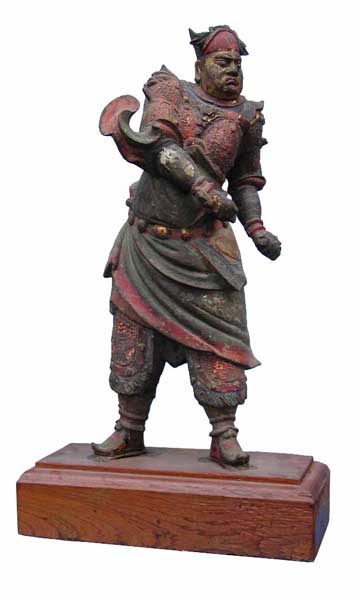
One of the stars of the Big Dipper
2026-04-15 11:51:31
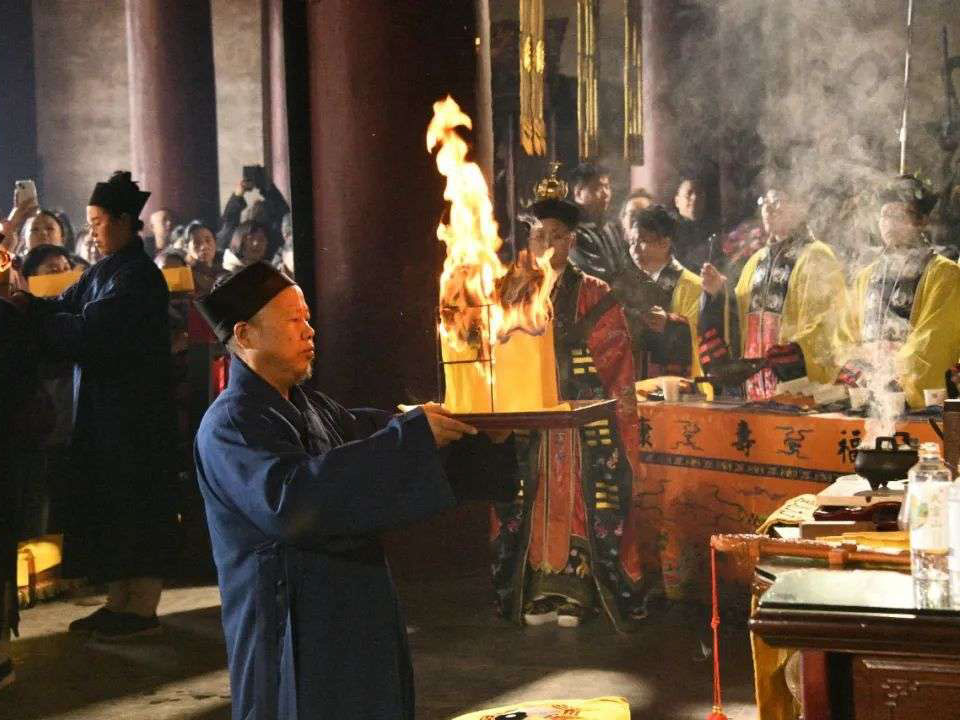
(1) The meaning of the ritual of fasting and Taoist ceremonies
2022-08-20 23:32:13
The original meaning of "zhai" was to be neat, harmonious an...
Yin GUI
2022-08-20 23:32:13
Chapter 27
2022-08-20 23:32:13
Chapter 72
2022-08-20 23:32:13
The couplet of the ancestral hall of the Wudang Mountain Temple
2022-08-20 23:32:13
Chen Xingchang
2022-08-20 23:32:13