


Morality
2022-08-20 23:32:13
Wenzi asked. Laozi said, "If one's learning is not profound, one's listening to the teachings will not be deep." All who listen will reach wisdom, will act, and will achieve fame and fortune. Without proficiency, one will not understand; without depth, one will not reach. Therefore, in school, listen with the spirit; in middle school, listen with the heart; in lower school, listen with the ears. Those who listen with the ears learn on the skin; those who listen with the heart learn on the muscles; and those who listen with the spirit learn on the bone marrow. Therefore, if one does not listen deeply, one does not understand clearly; if one does not understand clearly, one cannot fully grasp the essence; if one cannot fully grasp the essence, one cannot act. All the principles of listening should be humble and calm, with no excessive energy, no thoughts and no worries, no false vision with the eyes, no hasty listening with the ears, respecting the essence and accumulating research, and having a full and harmonious inner mind. Once one acquires them, one must adhere to them and persist in them for a long time. The Way of heaven has its origin and beginning. It starts from weakness and is formed by strength; it begins from shortness and scarcity and is formed by many strengths. A tree of ten feet begins with a handle, and a platform of a hundred feet begins at the bottom. This is the way of heaven. The sage follows this: the humble are thus humble, the retreating are thus humble, the thrifty are thus humble, and the humble are thus humble. The humble are noble, the retreating are ahead, the thrifty are broad, and the humble are great. This is what is accomplished by the Way of heaven. The Dao is the origin of virtue, the root of greatness, and the gateway to blessings. All things come into being, are accomplished, and find peace when they await it. The way of life, without action or form, cultivates oneself internally and governs others externally. When achievements are made and matters are established, it is close to heaven. It does nothing but does everything. No one knows its feelings or its truth. There is faith within it. When the emperor is virtuous, the world will be obedient and the state will always be stable. When the duke and marquis are virtuous, the people will be harmonious and the country will not be lost. When the scholars and commoners are virtuous, they will be upright and protect their families. When the powerful are virtuous, they will be defeated without fighting. When the weak are virtuous, they will gain without contention. When handling affairs, they will receive blessings upon success. When the ruler and minister are virtuous, they will be loyal and kind. When the father and son are virtuous, they will be filial and kind. When the scholars and commoners are virtuous, they will love each other. Therefore, when there is virtue, there is understanding; when there is no virtue, there is cruelty. From this perspective, it can be seen that the Tao is suitable for all people. The way is that small actions bring small blessings, while great actions bring great blessings. When all actions are carried out, the whole world will be respected. When respected, one will be cherished. Therefore, an emperor is the suitability of the whole world, and a king is the direction of the whole world. If the whole world is not comfortable, one will not follow. One cannot be called an emperor. Therefore, an emperor cannot succeed without people, and even if he gains people but loses the way, he cannot adhere to it. Those who have lost their way are arrogant and spoiled, slow to 倨 and haughty. When they see others, they are self-evident and self-aware. They are powerful and strong, causing trouble and making enemies. They are the leaders of war and the heads of chaos. If a minor person acts on them, they will suffer great disaster; if a major person acts on them, the country will be destroyed. The lesser sin is the lack of way, and the deeper resentment is the lack of virtue. This is the way of heaven. Laozi said: "The way of heaven is to make people, even if they are brave, unable to Pierce through; even if they are skillful, unable to strike at the target. If they cannot Pierce through or strike at the target, it is still a disgrace. It is better to make people, even if they are brave, unable to stab; even if they are skillful, unable to strike." If one dares not, it is not because he has no intention, but rather because he has no intention at all. If one has no intention, it is because he has no desire to benefit others. It is better to make all husbands and women in the world happy and all want to love and benefit him. If he does, he will be a ruler without a place or an official without a position, and all in the world will be willing to benefit him. Therefore, if one dares to die, one should; if one dares not, one should live. Wenzi asks about virtue. Laozi said: "To raise an animal, to nourish it, to fulfill it, to grow it, to benefit it without any disturbance, and to be in harmony with heaven and earth, this is called virtue." What is benevolence? It is said: "To not be proud of one's achievements for those above, not to be ashamed of one's illness for those below, not to be proud of the great, not to steal for the small, to love and be selfless, and to remain so for a long time, this is what is called benevolence." What is meaning? It is said that when one is in a superior position, one should assist the weak; when one is in a subordinate position, one should adhere to integrity. When one is successful, one should not act recklessly; when one is poor, one should not be swayed easily. One should always follow the right path and not be selfish or unjust. This is what is called meaning. What is propriety? It is said that when one is in a superior position, one should be respectful and strict; when one is in a subordinate position, one should be humble and respectful. One should yield and be gentle. When one is the female in the world, one should stand in a position where one dares not and cannot. This is what is called propriety. Therefore, when one cultivates virtue, subordinates will follow orders; when one cultivates benevolence, subordinates will not contend; when one cultivates righteousness, subordinates will be impartial and upright; when one cultivates propriety, subordinates will show respect. Once these four aspects are cultivated, the country will be at peace. Therefore, the birth of things is the Way, the growth of elders is virtue, love is benevolence, justice is righteousness, and respect is courtesy. Without raising and nurturing, one cannot grow; without being kind and loving, one cannot achieve success; without being upright and undisciplined, one cannot last long; without being disrespectful and unspoiled, one cannot be valued. Therefore, virtue is what the people cherish, benevolence is what the people hold in their hearts, righteousness is what the people fear, and propriety is what the people respect. These four aspects are the smoothness of literature, and the reason why sages govern all things is that they follow. A gentleman without virtue will be resentful, without benevolence will be contentious, without righteousness will be violent, and without propriety will be in chaos. If the Four classics are not established, it is called lacking the way. There is no such thing as a person who does not perish without the way. Laozi said: In the age of supreme virtue, merchants make their markets convenient, farmers enjoy their fields, officials are content with their duties, officials cultivate their ways, and the people are happy in their occupations. Therefore, wind and rain will not destroy them, grass and trees will not wither, rivers will produce maps, and Luo will produce books. When the world is in decline, there is no limit to the collection of taxes and the killing is endless. Those who resort to punishment and admonitions kill the virtuous men. As a result, mountains crumble, rivers dry up, and the flow of life never ceases, leaving no vegetables in the wild. Therefore, when the world is in order, the foolish cannot stand alone in chaos; when the world is in chaos, the wise cannot stand alone in order. The sage is peaceful and serene. Life is the ultimate virtue and conduct, and fate is the destiny. Thus, only after being destined can one act; only after The Times can one become enlightened; there must be a world and then a person. Wenzi asks Shengzhi. Laozi said: To know something by hearing is sainthood; to know something by seeing is wisdom. Sages have heard of the birth of fortune and misfortune and thus choose their paths; wise men have seen the formation of fortune and misfortune and thus choose their actions. Sages know the auspiciousness and inauspiciousness of the way of heaven, and therefore know the birth of fortune and misfortune; wise men have seen the formation of fortune first, and thus know the gates of fortune and misfortune. Those who have heard before are born into sages; those who have seen before are formed into wisdom. Those who have not heard and seen are foolish and confused. Laozi said: When a ruler loves righteousness, he trusts The Times and fulfills himself; he holds wisdom and uses it for the benefit of others. He is well-versed in all things but has shallow wisdom, and uses his shallow wisdom to enrich his extensive knowledge. This is unprecedented. If one only indulges in wisdom, there will surely be many losses. If one loves wisdom, one will run out of skills; if one loves courage, one will be in peril. If one loves giving, there will be no fixed position. If the position above is not fixed, there will be no hope below. If one conserves too much, one will be at odds with the people. If one takes less and gives more, there will be no result. Therefore, if one loves giving, it is the way of resentment. From this perspective, it can be seen that when wealth is insufficient, the way and art can be clarified. Wenzi asked, "What can be done about the ancient Kings who led the world astray by the way?" Laozi said: "Adhere to the one and do nothing, adapting to the changes of heaven and earth. 'The world is a great vessel that cannot be held onto or acted upon. Those who act on it will fail, and those who hold on to it will lose it.'" " To hold onto one thing is to see the small, and thus the small can form the great. To do nothing is to remain calm, and maintaining stillness can make the world upright. To be large, full but not overflowing; to be high, noble but not arrogant; to be large but not overflowing; to be full but not deficient; to be high but not arrogant; to be high but not dangerous; to be high but not deficient, therefore, one can always maintain wealth; to be high but not dangerous, therefore, one can always maintain nobility. Wealth and honor never leave one's side, and honor extends to descendants. This is the way of ancient Kings. Laozi said: "The people have the way to walk with them and the law to abide by. Righteousness cannot be consolidated, and authority cannot be maintained. Therefore, the ruler is established with one." When the ruler adheres to one principle, he is governed; when there is impermanence, there is chaos. The way of the ruler is not because of action, but because of non-action. The wise do not take virtue as their cause, the brave do not take force as violence, and the benevolent do not take position as benefit. This can be said to be one. The "one" means there is no suitable way; it is the root of all things. The ruler changes the law many times, and the state changes its ruler many times. People use their positions to express their likes and dislikes. The subordinates are afraid and cannot overcome the principle. Therefore, if the ruler loses one, the chaos will be even worse than having no ruler at all. The ruler must hold onto one before he can form a group. Wenzi asked, "How many ways of the king are there?" Laozi said, "One is enough." Wenzi said: In ancient times, there were those who reigned by the Dao and those who reigned by the military. What is the difference between them? It is said: To rule by the Way is virtue; to rule by war is also virtue. There are five types of military tactics: righteous soldiers, responsive soldiers, indignant soldiers, greedy soldiers, and arrogant soldiers. To punish the wicked and rescue the weak is called righteousness; to use the enemy when they come and add to one's own needs is called response; to contend over minor matters and thus fail to win the enemy's heart is called anger; to benefit others' land and desire their wealth and goods is called greed; to rely on the size of one's country and show pride in the number of its people, and to want to see the virtuous in the enemy's country is called arrogance. A righteous soldier will win when he responds to his troops, fail when he indulges them, die when he is greedy, and destroy when he is arrogant. This is the way of heaven. Laozi said: "Those who explain the Dao and entrust themselves to the wise are in danger; those who abandon numbers and use talents are in trouble. Therefore, one should adhere to one's principles and not be worried about what is lost, nor be happy about what is gained." What is accomplished is not what is done, what is gained is not what is sought, what is received is received but not taken, and what is given is given but not given. One is born in spring and dies in autumn. What is born is not virtuous, and what is killed is not resentful. Then one is close to the Way. Wenzi asked, "If a king wins his favor, what should he do?" Laozi said, "If rivers and seas are the same, 'they are tasteless and insipid, and should not be used properly.' Start small and then grow large." "Those who wish to be above others must follow their words; those who wish to be ahead of others must follow their footsteps." The world will follow their love and benevolence without being harsh. "Those who are in a high position will not be respected by the people; those who are at the forefront will not be harmed by the masses. The world will be willing to promote them without being disgusted." Even if the country is different from the common people, 蜎 are flying and moving, all people will be close, there will be no communication, and there will be no success. "Therefore, he is the most precious in the world." " Laozi said: "To hold onto the teachings of a lifetime, to avoid the customs passed down through generations, is like adjusting a zither with a glued pillar." A sage is one who ADAPTS flexibly to The Times, acts in accordance with the circumstances, changes things when the world changes, and changes customs when The Times shift. He discusses the world and enacts laws, and is always ready to act. The Kings of ancient times had different laws and regulations. It was not the same as the past; it was the change of The Times. Therefore, they did not follow the established laws but followed what they were supposed to be laws and changed accordingly. The sage's Dharma is observable; the reason for his practice cannot be predicted; his words can be heard; the reason for his words cannot be expressed. The Three Sovereigns and Five Emperors looked down upon the world, paid close attention to all things, lived and died together, changed in unison, embraced the Dao with sincerity, and observed the emotions of all things. They were friends with the Dao above and transformed into human beings below. If one wants to learn the way now, one cannot be clear and upright. If the Mystic Sage adheres to the Dharma books and implements the regulations, one will surely not be able to achieve governance. Wenzi Wenzheng. Laozi said: "Control them with the Way, cultivate them with virtue. Do not show off to the virtuous, do not apply force. If they are damaged, they will cling to one thing. There will be no advantage, no desire. Be square but do not cut, be honest but do not fill. Do not be arrogant or harsh. If you control them with the Way, the people will be attached. If you cultivate them with virtue, the people will be obedient. If you do not show off to the virtuous, the people will be sufficient. If you apply force, the people will be simple." Those who do not show off to the virtuous are thrifty. They do not exert force and dare not. They gather from below and bribe to take. They are thrifty to be complete and dare not be at ease. If not maintained, there will be separation; if not nurtured, there will be betrayal; if shown virtue, the people will contend; if exerted force, the people will be resentful. When the country is separated, its power is weakened; when the people betray it, the higher-ups lose their authority; when people contend with it, the underweight is wrongful; when the lower ranks resent the higher-ups, the position is in danger. If the four are sincerely cultivated, the right path will be near. Laozi said: "The upper speaker is used by the lower, the lower speaker is used by the upper, the upper speaker is used frequently, and the lower speaker is used by authority. Only the sage knows authority." When one speaks, one must keep one's word; when one promises, one must fulfill it. Among all the noble deeds in the world, if one is upright and attests to one's father, and if one is trustworthy and kills one's daughter, who can be more respected? Therefore, the sage discusses the straightness and curvature of matters and their flexibility and extension. There is no constant appearance. When one wishes well, one becomes a ruler; when one indulges, one 捽 father. This is the result of the situation. The principle of "power" is why the sage sees it alone. The one who first 迕 and then unites is called power. The one who first unites and then 迕 does not know power. The one who does not know power is actually ugly instead of good. Wenzi asked, "Master, it is said that without morality, one cannot govern the world. The Kings of previous lives, whether they had successors or not, each had their own lives without causing disaster or defeat. What is the reason for this?" Laozi said: From the emperor down to the common people, each lives their own life. However, there are differences in the thickness of life. There are times when countries and families fall in the world. This is because there is no morality. Day and night, never giving up, always on tenterhooks, constantly fearing danger and death; Indulging in desires and idleness leads to eternal downfall. Although Tang and Wu were virtuous, they did not achieve much in guiding Jie and Zhou to follow the right path and practice virtue. Morality is about mutual breeding and nurturing, mutual growth, mutual affection and respect. Though the deaf and the deaf are foolish, they do not harm what they love. If this truly makes all the people in the world have a heart full of kindness, how could disasters arise? If there is no way but no harm, it means that benevolence and righteousness have not yet been eradicated. Even if benevolence and righteousness have not yet been eradicated, the feudal lords will still look down upon their superiors. If the feudal lords look down upon their superiors, the court will not be respectful. Even if orders are not obeyed, benevolence and righteousness will be eradicated, and the feudal lords will betray them. The people will rule with their own hands, the strong will become weak, the big will invade the small, and the people will take attacking as their livelihood. Disasters will arise, and chaos will occur. Their downfall is inevitable. How can there be no disaster? Laozi said: "When laws are cumbersome and punishments are harsh, people's lives are deceitful. When there are many things at the top and many things at the bottom, seeking more leads to less, and restraining more leads to victory over less. Creating trouble with trouble and stopping it with trouble is like setting fire to prevent it from burning. Creating trouble with wisdom and preparing for it with wisdom is like splashing water to seek clarity." Laozi said: A person who loves benevolence means rewarding those who have no merit and releasing those who have committed SINS. A person who loves punishment means deporting those who have made achievements and dismissing those who have no SINS. Those who have no likes or dislikes, when punished, do not hold grudges; when given, do not act with virtue; when released, follow the right path; when they have no entanglements, they are like heaven and earth. Why not cover them up? To unite and harmonize is the ruler; to separate and punish is the law. When the people are punished without any regrets, it is called morality. Laozi said: "There is no fixed right or wrong in the world. Each world is what it is good about, not what it dislikes." Those who seek truth do not seek principles but rather conform to themselves. It is not to get rid of evil, to get rid of 迕 in the heart. Now I wish to choose what is right to live in and what is wrong to leave, not knowing what is meant by right and wrong in this world. Therefore, "Governing a large country is like cooking a small fish", just do not scratch it. When people are in harmony with each other, their words will be pertinent and their relationship will be strengthened; when they are distant, their plans will be appropriate and doubts will be revealed. Now I wish to be upright and treat all things well. How could I know what the world follows and rules me? If I were to rush away with the mundane world, it would be like running away from the rain; without it, I would not be disturbed. Desire lies in emptiness, but it cannot be empty. If one does not act empty but empties oneself, then all one desires will be achieved without fail. Therefore, what flows through the path is like the axle of a chariot. It does not move within itself but connects with the hub for a thousand miles and turns along the boundless source. Therefore, the sage follows the opposite path of the human body, does not transform but awaits transformation, and acts without doing anything. Laozi said: "If one is eager to fight and wins several times, the state will perish; if one is eager to fight, the people will fall; if one wins several times, the ruler will become arrogant; if the ruler becomes arrogant, the people will be dismissed; and if the state does not fall, there will be few." When the ruler is arrogant, he is arrogant; when he is arrogant, he is extremely cautious. When the people are dismissed, they are resentful; when they are resentful, they are extremely anxious. There has never been a situation where both the upper and lower levels are extremely cautious and do not perish. Therefore, "When one's achievements are accomplished, one retires. This is the way of heaven." King Ping asked Wenzi, "I have heard that you attained enlightenment through Lao Dan. Now, although the virtuous man has the way, he is in a time of debauding. With the power of one person, he wants to reform the people who have been in chaos for a long time. Is this mediocre ability?" Wenzi said: "Morality is about correcting decline as righteousness, rectifying chaos as order, and transforming corruption into simplicity. The revival of pure virtue and the peace of the world depend on one person." A person in charge is the teacher of the people, and the person above is the etiquette of the people below. When the person above is virtuous, the people below will eat. When the person above is virtuous, the people below will be benevolent and righteous; when the people below are benevolent and righteous, there will be no world of debunking. Virtue accumulates to make a king, resentment leads to death, stones accumulate to form a mountain, and water accumulates to form a sea. There is no such thing as achieving success without accumulation. Those who accumulate virtue will be supported by heaven, assisted by earth, and assisted by ghosts and gods. The phoenix emperor will use its court, the unicorn will swim in its suburbs, and the dragon will dwell in its marsh. Therefore, if the Way leads the world astray, it is the virtue of the world; if the way governs the world, it is the villain of the world. If one person enmity the world, even if one desires to last long, it is impossible to achieve. Yao and Shun thrived because of this, while Jie and Zhou perished because of this. King Ping said, "I have heard the order."
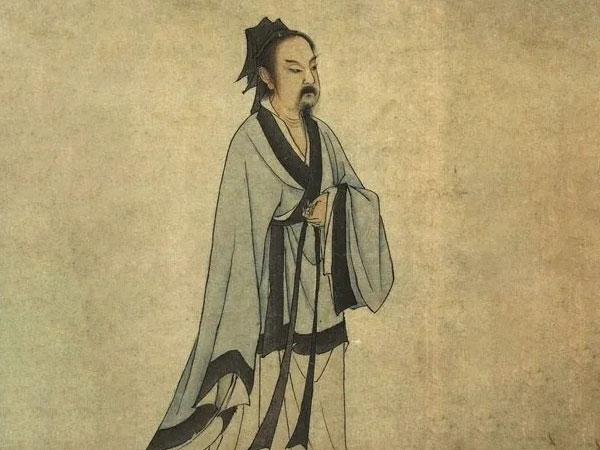
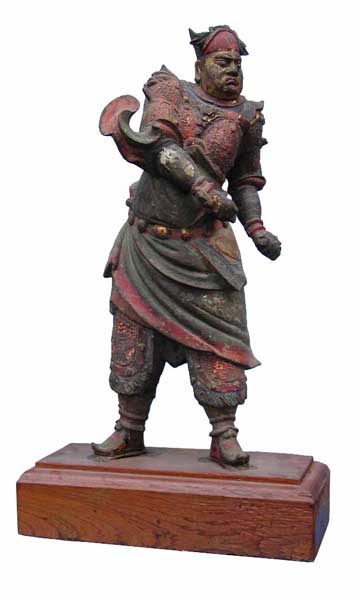
One of the stars of the Big Dipper
2026-04-15 11:51:31
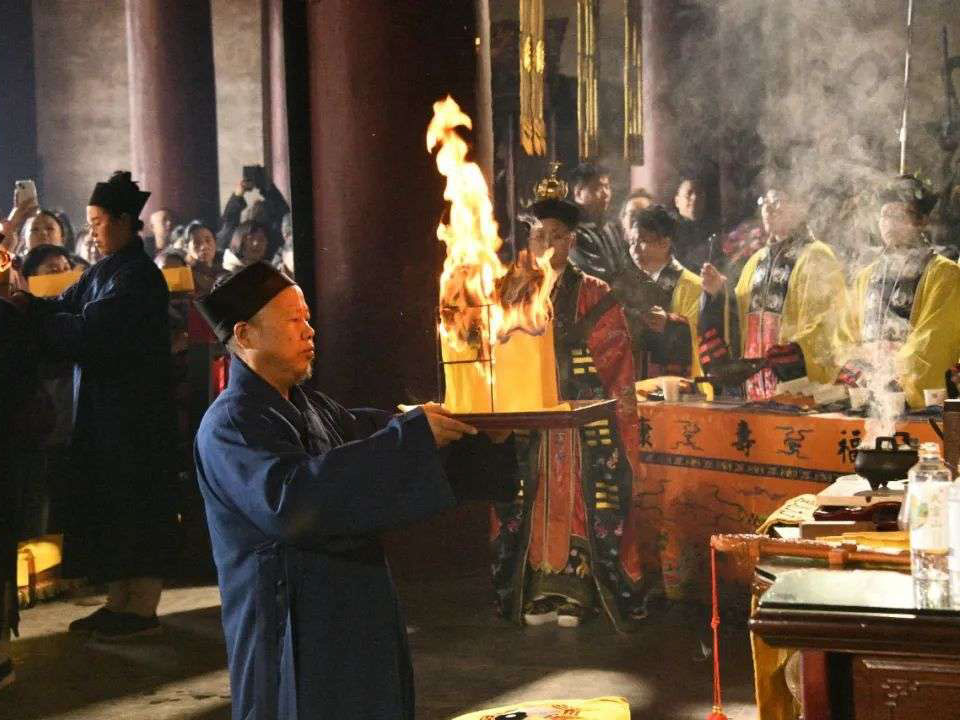
(1) The meaning of the ritual of fasting and Taoist ceremonies
2022-08-20 23:32:13
The original meaning of "zhai" was to be neat, harmonious an...
Yin GUI
2022-08-20 23:32:13
Chapter 37
2022-08-20 23:32:13
Chapter 47
2022-08-20 23:32:13
"Thunderbolt head"
2022-08-20 23:32:13
Zhao Yuanliang
2022-08-20 23:32:13