


A comprehensive review of the theory of reality and illusion
2022-08-20 23:32:13
The Yellow Emperor asked, "What are the concepts of reality and illusion?" Qi Bo's view to the Sun: When pathogenic factors are excessive, there is excess; when essence and energy are taken away, there is deficiency. Emperor's Day: What is the reality and illusion? For example? Qi deficiency is due to weak lungs, and qi reversal is due to cold feet. If it is not at the right time, one will live; if it is at the right time, one will die. All the remaining collections are like this. Emperor's Day: What does "Valuing Truth" mean? "Qi Bi Ri" : The term "Zhong shi" refers to a major febrile disease where the qi is hot and the pulse is full, which is called "Zhong Shi". Emperor's Day: What is the actual state of meridians? How to govern it? Qi Bo Day: All meridians are solid. The cun pulse is rapid while the Chi pulse is slow. Both should be treated. Therefore, if the day is slippery, it will follow; if it is rough, it will reverse. Both the virtual and the real start from their material categories. Adding five types of bone and meat can make it smooth and harmonious, and it can last for a long time. Saitian: If the qi in the collaterals is insufficient but the qi in the meridians is excessive, what should be done? Qi Bo said: "When the qi of the collaterals is insufficient but there is an excess of the qi of the meridians, the pulse mouth is hot while the ulcers are cold." Autumn and winter are reversed, while spring and summer are subordinate. It is used to treat the main disease. Emperor's Day: What if the meridians are weak and the collaterals are full? The Qi Bo Day: It is a condition where the meridians are weak and the collaterals are full. It indicates that the ruler is hot and the pulse is cold and astringent in the mouth. This day is characterized by death in spring and summer and rebirth in autumn and winter. Di Ri: What should be done with those who deal with this? On the day of Qi Bo: When the meridians are full and the meridians are deficient, moxibustion is applied to the Yin and acupuncture to the Yang. When the meridians are full and the collaterals are weak, it benefits Yin and moxibusts Yang. The emperor said, "What is meant by emphasizing emptiness?" Qi Bo Day: The upper part of the pulse and qi is weak and the ruler is weak ②, which is to regulate heavy deficiency. The emperor said, "How to govern it?" Qi Bo Ri: The term "qi deficiency" refers to impermanence. When the ruler is empty, one's steps return to a natural state. A weak pulse does not appear to be clear. In this way, if one is slippery, one will live; if one is sluggish, one will die. Emperor's Day: What if the cold air surges up and the pulse is full and solid? The day of Qi Bo: If one is solid and slippery, one will live; if one is solid and rebellious, one will die. The emperor said, "The pulse is solid and full, the hands and feet are cold, and the head is hot. What should be done?" The day of Qi Bo: One is born in spring and autumn and dies in winter and summer. A person with a floating and sluggish pulse and a sensation of heat throughout the body will die. Di Ri: What is it like when its form is complete and full? Qi Bo said: "If the form is complete and full, the pulse is rapid and firm, and the pstick is stiff and does not respond, then following this will lead to life; going against it will result in death." The emperor said, "What does it mean that if one follows, one will live; if one goes against, one will die?" Qi Bo Ri: The so-called follower means having warm hands and feet. It is said that the hands and feet are cold when they are pushed back. On the day of the Emperor: What should be done if there is fever due to lactation and the pulse is suspended and small? If the hands and feet are warm, one will live; if they are cold, one will die. Day of the Emperor: If there is a stroke and heat in the breast, wheezing, and shoulder breathing, what is the pulse like? On the day of Qi Bo: For those with wheezing, wheezing and shoulder breathing, the pulse is large and solid. If it is slow, they will live; if it is rapid, they will die. ① Yao: The original work 'Tian' was revised based on the Yuan Hu woodblock edition, the Ming Dynasty manuscript edition, and the Ming Neng Shi Edition. ② Deficiency of pulse and qi and deficiency of the ruler: In the Ming Dynasty copy, it is written as "deficiency of pulse and qi and deficiency of the ruler". O Back: How about bloody stool during intestinal movement? I am afraid of the sun: If the body is hot, one will die; if it is cold, one will live. The emperor said, "What about the white foam under the intestinal stele?" Qi Bo said, "If the pulse is deep, one lives; if it is floating, one dies." The emperor said, "What about the pus and blood beneath the intestinal stele?" Qi Bo said: If the pulse is completely blocked, one will die; if it is slippery and large, one will live. The emperor said, "What if the body is not hot and the pulse is not warm?" Qi Bo said: "Those who are slippery and large will live on a daily basis, while those who are suspended and sluggish will die on a daily basis. We should store them in time." The emperor said, "What about epilepsy?" Reading fear of the sun: The pulse is very slippery and has been self-regulating for a long time. The pulse is small, firm and rapid. The patient died. Emperor Day: What is the deficiency or excess of the pulse of epilepsy? Qi Bo Ri: If one is weak, he can be cured; if he is weak, he will die. Emperor's Day: What is the state of the deficiency and excess of the saliva? On the day of Qi Bo: The pulse is solid and large, and the disease can be treated after a long time. The pulse is suspended and slightly firm, and the disease has persisted for a long time and cannot be cured. The emperor said, "How can we know the degree of form, bone, pulse and tendons?" The emperor said, "In spring, we should focus on treating the meridians; in summer, on treating the area before the meridians; in autumn, on treating the six prefectures; and in winter, when the meridians are blocked, we should use less medicine than needles or stones." The so-called "few needles and stones" are not the case with 痈疽; the bucket and the abscess should not be returned in a timely manner. The abscess was nowhere to be found. When pressed, it did not respond to the hand. It came and went suddenly. Two were pricked on the side of Taiyin and two on the side of Yingmai. For axillary abscess with severe heat, if the foot is pricked by the Shaoyang meridian, the heat persists despite the pricking. If the palm of the hand is pricked by the Taiyang Meridian, the meeting points of the large bones are each pricked by three points. For a sudden abscess in the tendons and muscles, which is painful when divided, with incomplete sweating and insufficient cell qi, the treatment should be based on the meridian points. When the abdomen is swollen and cannot be pressed down, take the hand Taiyang Meridian, which is the curtain of the stomach. Remove three cun and five fen of the spine from Shaopeng Shu and use Yuanli Needle. Cholera, pricking the fifth point of Shu Bang, foot Yangming and Upper Bang. Five needles were pricked on the Jingmai meridian, five on each of the Taiming meridians of the hands, five on the Taiyang Meridian, one on the side of the Shaoming meridian of the hands, one on the foot Yangming meridian, and three on the five cun of the upper ankle. All those who treat the diseases of duckweed, plumpness, partial dryness, sand syncope, and qi fullness and rebellion, and are rich and noble, are the diseases of sorghum. When there is a blockage and obstruction, and the upper and lower parts are blocked, it is a disease of extreme worry. Sudden convulsions leading to deafness, partial blockage and obstruction, and sudden thinning of internal qi. Not from within, but from outside, the disease of stroke, thus the thinness remains. It is a disease caused by cold wind and dampness. The Yellow Emperor said: "Yellow abscesses and severe pain, epilepsy and convulsions, are the result of long-term rebellion." It is the result of the imbalance of the five compartments and the isolation of the six prefectures. Headache and tinnitus, as well as obstruction of the nine orifices, are all caused by the stomach and intestines.
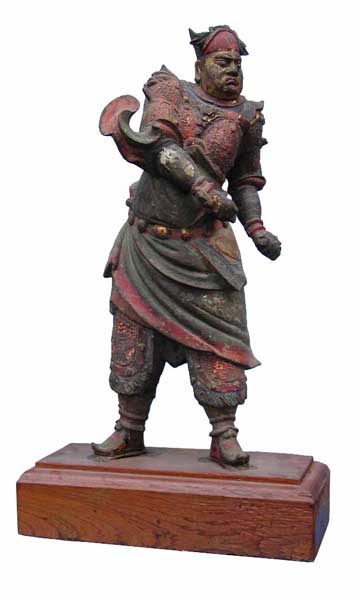
One of the stars of the Big Dipper
2026-04-15 11:51:31
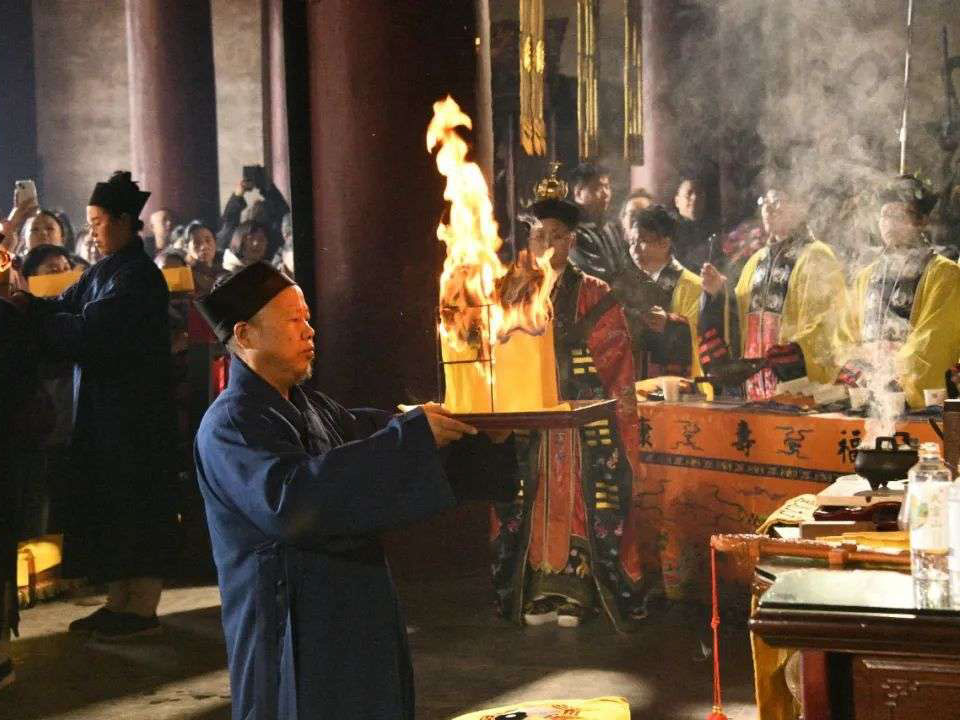
(1) The meaning of the ritual of fasting and Taoist ceremonies
2022-08-20 23:32:13
The original meaning of "zhai" was to be neat, harmonious an...
Yin GUI
2022-08-20 23:32:13
Chapter 27
2022-08-20 23:32:13
Chapter 72
2022-08-20 23:32:13
The couplet of the ancestral hall of the Wudang Mountain Temple
2022-08-20 23:32:13
Chapter 19
2022-08-20 23:32:13