


Chapter 76
2022-08-20 23:32:13
A person is weak in life and strong in death. When plants are alive, they are tender and brittle; when they die, they become withered and dry. Therefore, the strong are the ones who die, while the weak are the ones who live. Therefore, a strong army will be destroyed; a strong tree will be broken. Where there is strength, there is strength; where there is weakness, there is strength. When a person is alive, their body is soft; after death, it becomes stiff. When plants are growing, they are soft and fragile; once they die, they become dry, hard and withered. So the strong belong to the category of death, while the weak belong to the category of growth. Therefore, if one uses military force to show off their strength, they will be destroyed; if trees grow strong, they will be cut down and broken. All that is powerful is always in a subordinate position, while all that is weak is in a superior position. [Note] 1. Weak: It refers to the fact that a person's body is soft when they are alive. 2. Strength: It refers to the situation where a person's body becomes stiff after death. 3. Grass and trees: Before this, there are the two characters "all things". 4. Soft and brittle: It refers to the softness and fragility of the texture of grass and trees. 5. Withered: Used to describe the dryness of grass and trees. 6. The Dead: "Tu" means "class", belonging to the category of death. 7. Living beings: They belong to the category of survival. 8. A strong army will perish, a strong tree will break: One book reads, "A strong army will not win, a strong tree will lead to a strong army." [Quotation] This chapter repeatedly illustrates such a viewpoint through common phenomena in life: softness overcomes hardness. Laozi has always advocated valuing softness and dealing with weakness. From an intuitive perspective, he saw that when a person is born, their body is weak and delicate, but after death, it becomes hard. The same is true for plants and trees, which are weak and delicate when they are born, but after death, they become withered and dry. This intuitive and empirical understanding can be said to be the epistemological root of Laozi's thought of being weak and valuing softness. [Commentary] Laozi had a profound insight into society and life. He believed that in the world, everything that is strong is of the dead category, and everything that is weak is of the living category. Therefore, Laozi believed that in this life, one should not show off strength or strive to win, but should be gentle and modest, and have good self-cultivation in dealing with the world. We feel that this chapter once again expresses Laozi's dialectical thought. This kind of thinking stems from the observation and summary of natural and social phenomena. Here, whether weak or strong, whether a "living person" or a "dead person", it is the internal factors of the change and development of things that are at play. This conclusion also implies that what is strong has lost its vitality, while what is weak is full of vitality. The thoughts expressed by Laozi in this chapter are extremely wise. He vividly warns people through natural and social phenomena, hoping that they will not stand out everywhere and will not always be competitive. In fact, in real life, there are many such people, and such examples are too numerous to mention. Of course, this is also in line with Laozi's consistent ideological propositions.
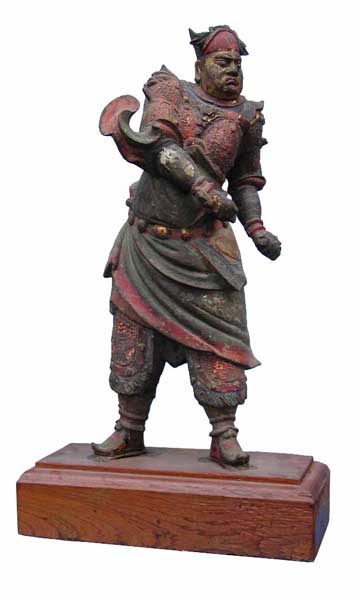
One of the stars of the Big Dipper
2026-04-15 11:51:31
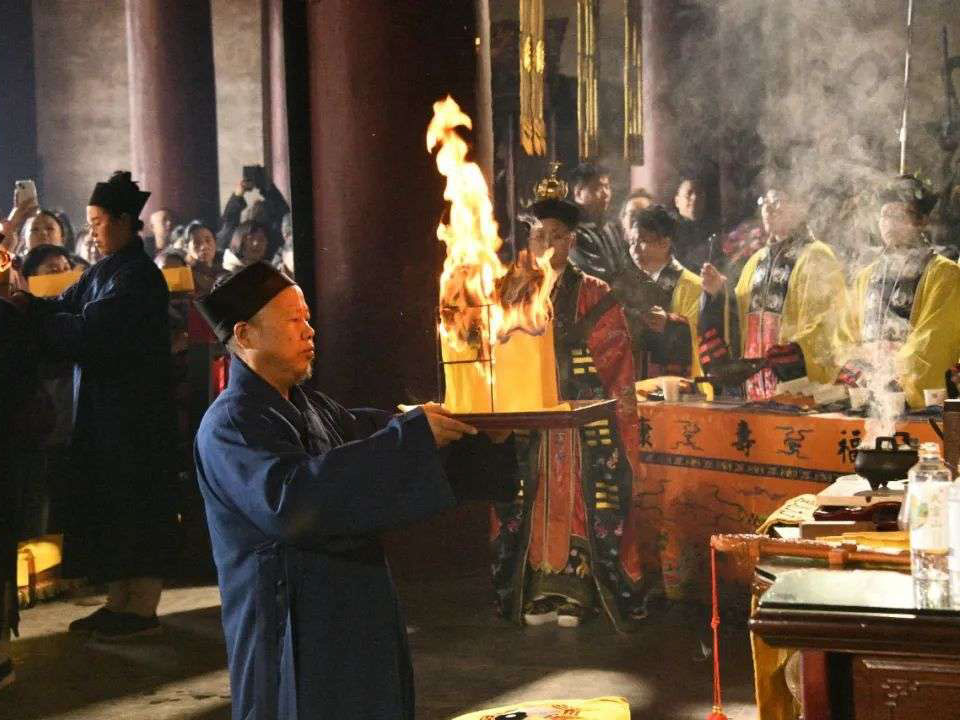
(1) The meaning of the ritual of fasting and Taoist ceremonies
2022-08-20 23:32:13
The original meaning of "zhai" was to be neat, harmonious an...
Yin GUI
2022-08-20 23:32:13
Chapter 27
2022-08-20 23:32:13
Chapter 72
2022-08-20 23:32:13
The couplet of the ancestral hall of the Wudang Mountain Temple
2022-08-20 23:32:13
Chapter 19
2022-08-20 23:32:13